Proteins
Lamb Neck
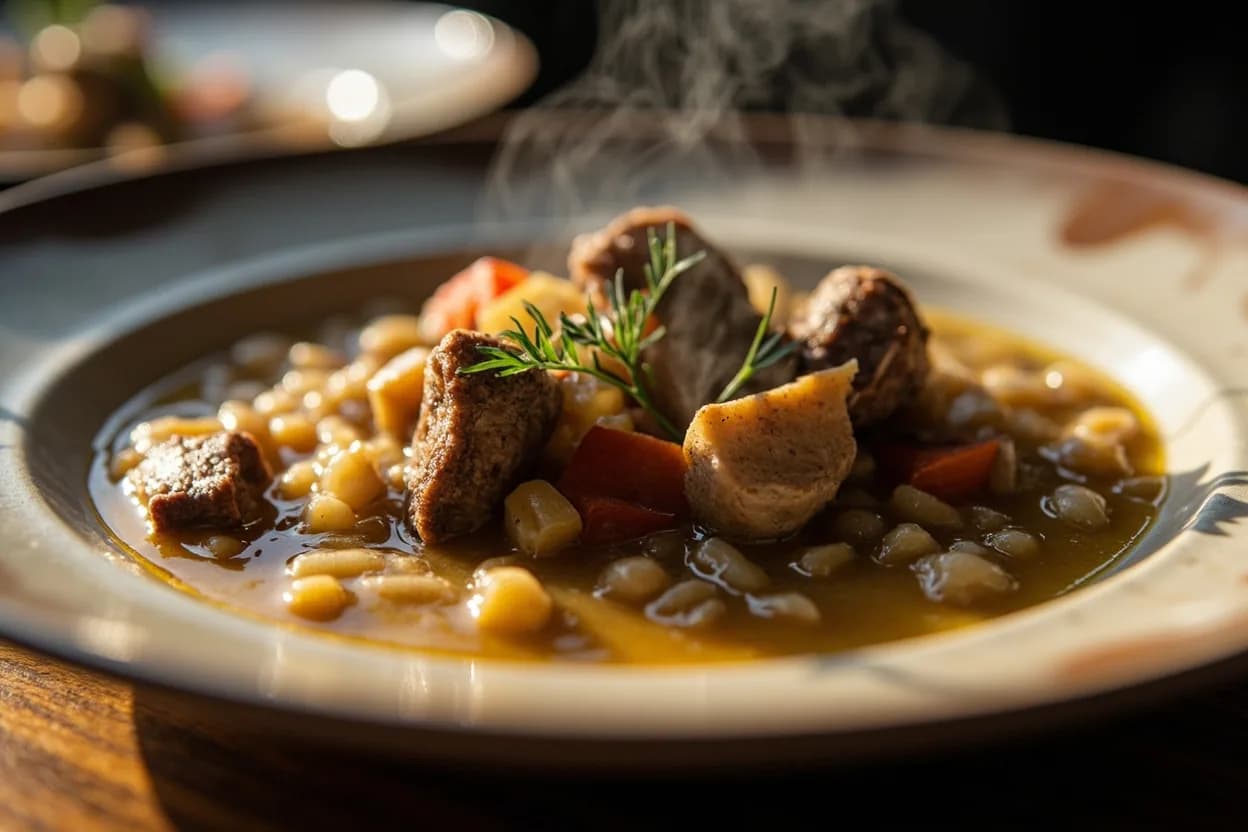
Inexpensive, well-exercised cut full of connective tissue and deep flavor; braised whole or as rounds until fall-apart tender for stews, tagines, and ragus.
Lamb neck is the cylindrical cut from the animal's forequarter, running from the head end through to where it meets the shoulder. It contains a chain of small cervical vertebrae wrapped in firm, well-exercised muscle and laced with silverskin and intramuscular fat. In Western retail it is often overlooked, which is exactly why informed cooks prize it: the very traits that make it awkward for quick cooking—dense muscle, heavy collagen, plenty of bone—make it extraordinary when given time and moisture.
What separates neck from leaner cuts like leg or loin is its collagen. Slow, moist heat converts that collagen into gelatin, giving the cooked meat a silken, almost unctuous texture that no dry-cooked lamb can match. The bones contribute marrow and minerals to the braising liquid, deepening everything they touch. Flavor is more assertive and robust than the milder primals, with the grassy, mineral character that distinguishes lamb from other red meats.
In the kitchen, neck is forgiving rather than demanding. It rewards patience: two to three hours of gentle simmering turns what looks like a tough piece of meat into something that shreds with a spoon. It is also the cut where lamb's traditional cuisines—Moroccan, Indian, Persian, Irish—do their most soulful work. Many cooks treat braised neck as a quiet weapon: cheaper than shoulder, more dramatic than shank, and able to stand up to bold spices, dried fruit, red wine, and long reductions without losing its identity.
- Measured in
- g
- Storage
- Refrigerate Sealed In The Coldest Part; Use Within A Few Days Or Freeze.
Find it in
Types & varieties
Sold intact with vertebrae and surrounding meat; ideal for braising whole and slicing, or cutting into rounds osso buco style.
Boneless cylindrical muscles from along the spine; often sold vacuum-packed. Versatile—braise, roast, grill, or grind.
Cross-cut steaks through the bone-in neck; thin and quick-cooking when grilled, but often braised to soften bone and connective tissue.
British butchery term for the thinner, more bony end of the neck nearer the head; traditionally used in mutton broths and Irish stew.
British term for the central section between scrag and best-end; bony, flavorful, and a classic stewing cut.
When sourced from older sheep, the flavor deepens substantially and the cook time extends; favored in South Asian and British traditional cooking.
The Collagen Argument
The reason lamb neck cannot be hurried is biochemistry. Connective tissue is largely collagen, a protein that contracts and toughens when heated quickly and dissolves into gelatin only after sustained, moist heat. At a bare simmer (around 180–190°F / 82–88°C), the conversion takes two to three hours. Higher temperatures can speed the process but also toughen muscle fibers if the liquid boils away; lower temperatures work, just over a much longer span—sous-vide at 160–170°F for 24 hours is a proven path to the same silky result. This is why a braised neck melts on the tongue while a grilled neck chop feels like shoe leather.
- Keep the braise at a bare simmer, never a rolling boil. Vigorous bubbling tightens muscle fibers and emulsifies fat into a greasy sauce.
- Salt late, ideally in the final 30 minutes. Early salting can draw out moisture and firm up the surface proteins before collagen has broken down.
- Acid (tomato, wine, vinegar) helps tenderize but can tighten surface proteins if added too aggressively early on. Deglaze with wine after browning; add tomatoes once the meat has begun to soften.
- Save the braising liquid. After removing the meat, skim fat, reduce to nappé consistency, and you have a sauce carrying the marrow, gelatin, and spice work of the entire dish.
- Re-braise the bones a second time for stock; they will yield a deep, mineral-rich liquid that outperforms any commercial lamb stock.
Common uses
Tips & pitfalls
- Brown the meat thoroughly in batches before braising—the Maillard crust is where much of the depth comes from.
- Trim only the thickest external fat caps; leave intramuscular fat and silverskin, as the collagen is the prize.
- Cook neck low and slow: at least 2 hours, ideally 2.5–3, until a fork slides in without resistance. Do not let the pot boil.
- Keep the lid on or use a tight seal; evaporative loss concentrates flavor but dries the meat if too much liquid escapes.
- Slice against the grain after resting, and shred for ragus—the grain runs in several directions on neck, so check before slicing.
- For neck rounds, tie with butchers' twine so they hold their shape during braising.
- Deglaze the pan with wine, stock, or even water after browning—those fond particles are pure flavor.
- For kebabs, marinate diced neck in yogurt, lemon, garlic, and spices for at least 4 hours to tenderize.
- Rest braised neck 10–15 minutes before serving so the gelatin sets and juices redistribute.
Nutrition
Energy
632 kJ · per 100 g
Where the calories come from
Protein
19.8g
40% DV
Carbs
0g
0% DV
Fat
8g
10% DV
Fiber
0g
0% DV
Sugars
0g
of which
Sodium
81mg
4% DV
Source · USDA FoodData Central · Lamb, New Zealand, imported, neck chops, separable lean only, raw
View on FDC →In the shops
Matched grocery products
No matched grocery products for Lamb Neck yet.
Good to know
- Primal Cut
- Neck (forequarter)
- Typical Weight
- Whole neck 1.5–2.5 lb (700 g–1.1 kg); neck fillet 8–14 oz (225–400 g) per piece
- Bone-in vs. Boneless
- Sold whole bone-in, as neck chops/cutlets, or as boneless neck fillet
- Flavor Profile
- Deep, rich, distinctly lamb; more assertive than leg or loin
- Collagen Content
- Very high; ideal for low-and-slow moist cooking
- Cooked Texture
- Silky, gelatinous, fall-apart tender when braised
- Cook Yield
- Loses 30–40% of raw weight during long braising
- Cook Time
- 15–20 min (browning) + 2–3 hr braising
Substitutes
- Lamb shoulder — Closest match in flavor and collagen; slightly fattier and meatier. Adjust cook time as shoulder may need 30–60 minutes more.
- Beef chuck — Works in stews and ragus, though flavor is beefier; increase cooking liquid seasoning to compensate.
- Beef neck — Direct structural analog with similar bone-to-meat ratio; longer cook time needed (3–4 hours).
- Pork shoulder / pork neck — Milder and slightly sweeter; pairs better with warmer spice profiles in Asian and Latin American dishes.
- Goat neck — Excellent substitute in curry and Caribbean preparations; very similar lean-to-fat ratio and connective tissue.
Pairs with
Also called
lamb neck fillet · neck of lamb · scrag end