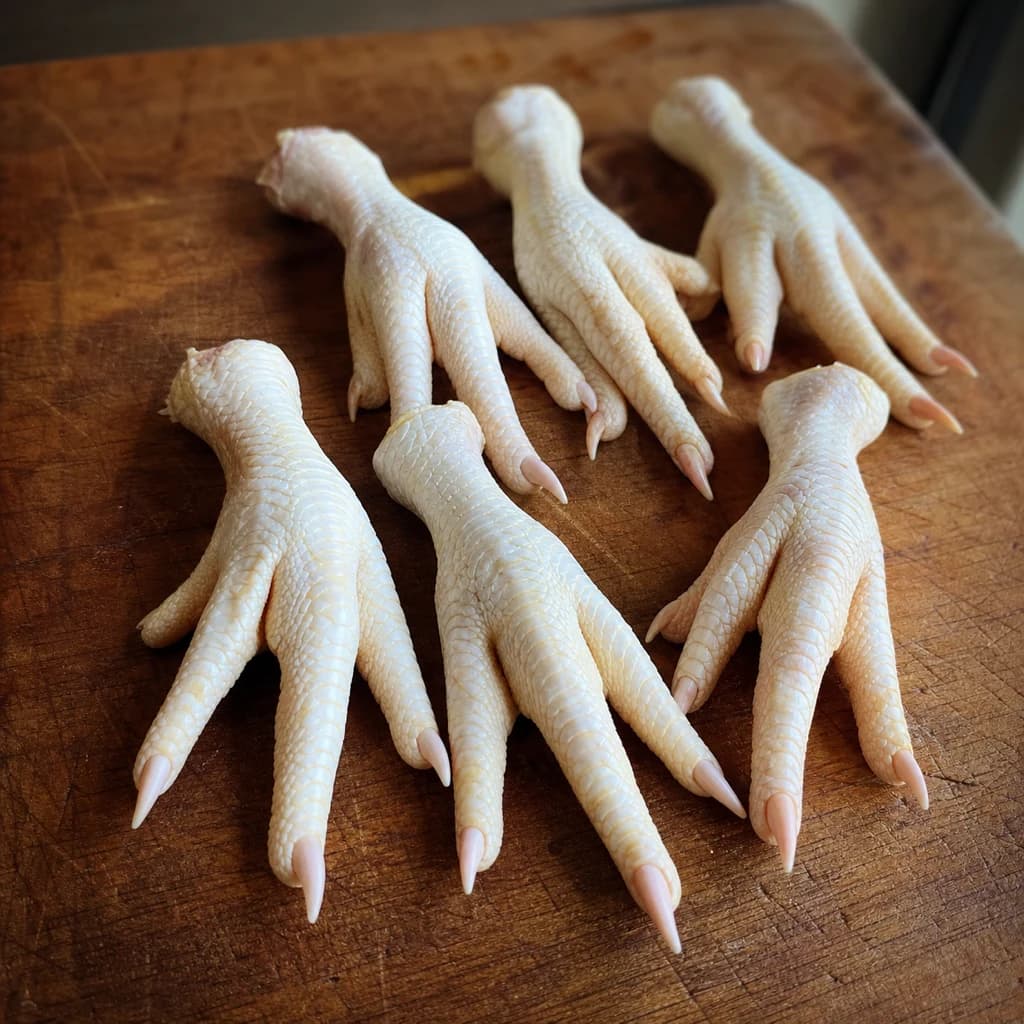
Natural form
Raw chicken feet showing their distinctive clawed toes and pale skin before preparation.
Establishes the unmistakable visual identity of chicken feet in their raw state so readers recognize them at market.
Proteins
Chicken Feet
Gelatin-rich feet braised or steamed; a dim sum favorite and stock booster.
Chicken feet are mostly skin, tendon, and cartilage, prized for the gelatin they release. They are deep-fried then braised in black bean sauce as a dim sum classic, simmered in stews, or added to stock for body and richness. In South Africa they are a popular street snack known as walkie talkies.
Chicken feet are purchased almost entirely for their structural role—collagen and cartilage that convert to gelatin—rather than for their flavor, which is neutral. The feet have no significant meat; what is eaten is the soft, yielding skin and the tenderized connective tissue surrounding the small bones. Cooked properly, they become silky and almost buttery in texture, a remarkable transformation from the raw, rubbery state.
In dim sum, the feet are often split and flattened to distribute sauce evenly and to make the small bones easier to navigate. This technique also reduces cooking time and ensures the cartilage breaks down completely. The gelatin contributed to stocks is genuine and effective—a broth made with chicken feet will set noticeably in the refrigerator, forming a solid jelly that melts smoothly when heated. Fresh feet are preferable for presentation dishes where appearance matters; frozen feet are perfectly adequate for stock and slow-cooked preparations where visual appeal is secondary. In many markets, particularly in Asia and the Caribbean, chicken feet are abundant and inexpensive; they remain among the most popular cuts globally but can be difficult to find in mainstream Western supermarkets, requiring an Asian grocery or specialty butcher.
- Measured in
- g
- Storage
- Fridge
Types & varieties
With nails intact; requires full prep at home
Easier to prep; increasingly common at specialty butchers
Widely available; may have been previously frozen or sold fresh and subsequently frozen; acceptable for stock and slow-cooked dishes
Already blanched, sometimes skinned; common in dim sum preparations; check for added salt or preservatives
Preparing Chicken Feet for Cooking
Proper preparation is essential before cooking chicken feet. The keratin claws must be removed with kitchen shears or a sharp knife—they are inedible and pose a choking hazard. After nail removal, blanch the feet in boiling water for 3–5 minutes, then rinse under cold water. This removes surface impurities, tightens the skin for easier handling, and helps prevent the skin from sloughing off during long cooking. For dim sum preparations, after blanching, score the feet along the inner surface and remove the thick pad of fat and any remaining feathers or stubble.
- Cut claws just above the first knuckle joint
- Blanch before any cooking method
- Score inner surface for dim sum dishes to distribute sauce
Cooking Times and Texture
Chicken feet require low, slow cooking to break down collagen into gelatin. At a gentle simmer, plan for 1.5 to 2 hours minimum. The feet are done when the skin is translucent and yielding, the small bones can be chewed through without effort, and the texture is silky rather than rubbery. Undercooked feet are unpleasantly chewy and may require another 30 minutes of cooking. For pressure cooking, 30–40 minutes at high pressure achieves equivalent results to 2 hours of simmering.
- Rubbery texture indicates insufficient cooking
- Skin should be translucent when properly cooked
- Bones should be soft enough to eat around, not to be discarded
Common uses
Tips & pitfalls
- Always cut off the keratin claws with kitchen shears or a sharp knife before cooking; they are inedible and can be a choking hazard.
- Blanch in boiling water for 3–5 minutes, then rinse under cold water. This removes impurities, tightens the skin, and makes subsequent handling easier.
- For dim sum preparations, after blanching, score the feet along the inner surface and remove the thick pad of fat and any remaining feathers or stubble.
- Cook low and slow—at least 1.5 to 2 hours at a gentle simmer—to fully break down the collagen and eliminate the rubbery, chewy texture.
- Undercooked chicken feet are unpleasantly rubbery. If in doubt, cook longer; the collagen will eventually convert to gelatin.
- Do not discard cooking liquid after braising or stock-making; the gelatin-rich liquid is valuable for soups, sauces, or as a base for risotto.
- When purchasing, smell for freshness. Avoid feet with a sour, ammonia, or overly gamy odor; the skin should be intact and yellowish to pale, not discolored.
- If deep-frying (as in South African walkie-talkies), double-fry: blanch first, then freeze briefly to set the skin, then fry at high heat until blistered and crispy.
Nutrition
Energy
900 kJ · per 100 g
Where the calories come from
Protein
19.4g
39% DV
Carbs
0.2g
0% DV
Fat
14.6g
19% DV
Fiber
0g
0% DV
Sugars
0g
of which
Sodium
67mg
3% DV
Source · USDA FoodData Central · approx. Chicken, feet, boiled
View on FDC →In the shops
Matched grocery products
No matched grocery products for Chicken Feet yet.
Good to know
- Primary component
- Skin, cartilage, and small bones; virtually no lean meat
- Collagen content
- Very high; yields rich gelatin when simmered
- Available forms
- Fresh, frozen, or parboiled/semi-processed
- Nail removal
- Required; the keratin claws must be cut off before cooking
- Blanching
- Standard first step; removes impurities and tightens skin for easier handling
- Storage (fresh)
- Refrigerated, use within 1–2 days; or freeze up to 3 months
- Storage (frozen)
- Keep frozen until ready to use; thaw in refrigerator
- Yield
- Approximately 50% edible after cooking, mostly skin and cartilage
- Flavor
- Mild; absorbs sauces and seasonings; the appeal is texture, not pronounced taste
- Nutritional note
- High in protein from collagen; not a significant source of lean protein
Substitutes
- Pork trotters (pigs' feet) — Closest substitute; similar collagen-to-gelatin conversion and cooking behavior; larger and meatier, so adjust quantity
- Turkey legs — For stock; contribute gelatin but have more meat; require longer cooking for equivalent collagen extraction
- Pork neck bones — For stock base; yield good gelatin but lack the skin element; use when feet are unavailable
- Duck feet — Similar texture and function; harder to find and slightly richer in flavor; acceptable 1:1 in stock
Pairs with
Also called
Walkie Talkies · Phoenix Claws
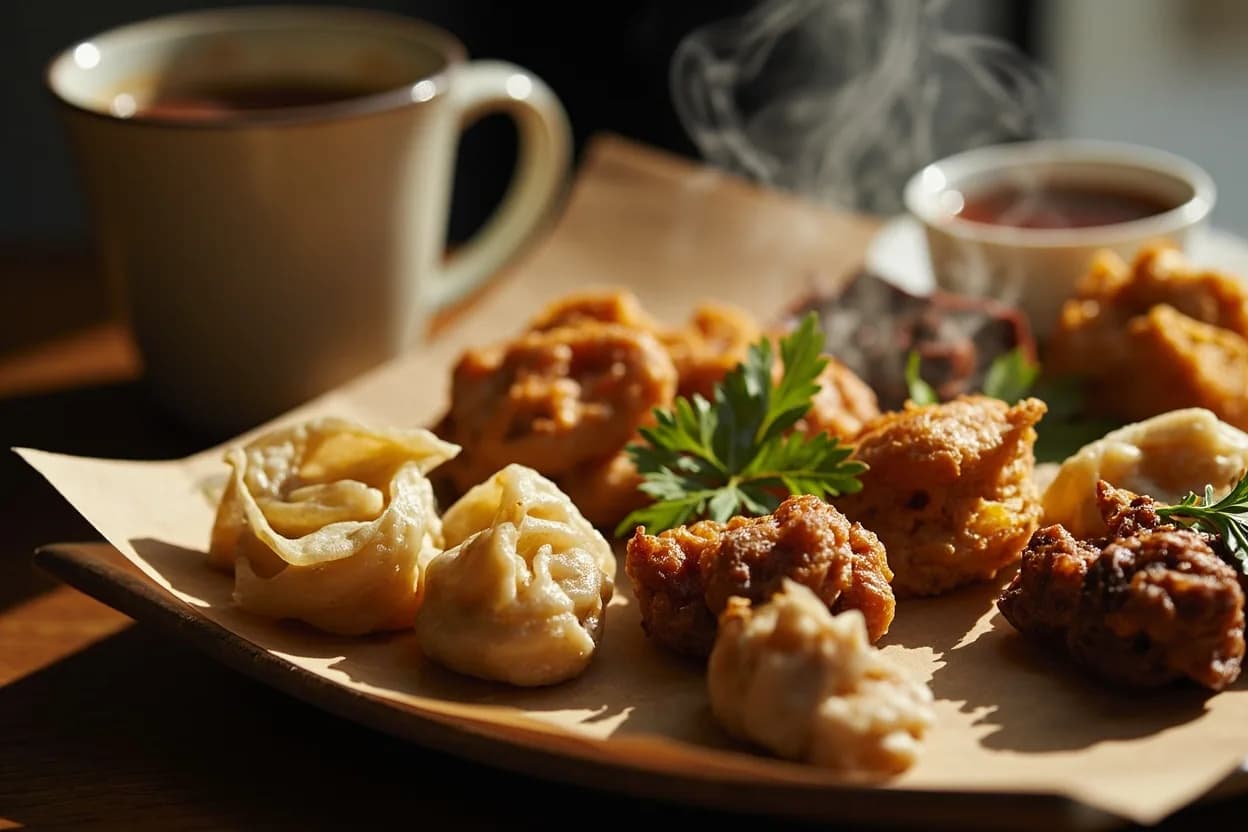
Appears in these dishes
Related
Egg
The kitchen's everything ingredient — bind, leaven, enrich, or fry
Chicken Breast
Lean, quick-cooking white meat for everyday dinners

Ground Beef
Versatile minced beef for burgers, ragù, tacos, and meatballs
Pork Loin
Lean, tender roasting cut that stays juicy with care
Salmon
Rich, rosy fish that roasts, grills, or cures beautifully

Egg White
Pure protein that whips to airy peaks for meringue and more
Egg Yolk
Rich, golden yolk for custards, mayonnaise, and pasta

Quail Egg
Tiny, speckled eggs for garnishing and elegant bites