Sauces & Pastes
Oyster Sauce
Thick, glossy oyster-based sauce that lends sweet-savory depth and sheen to stir-fries and gai lan; add near the end of cooking so it coats rather than scorches.
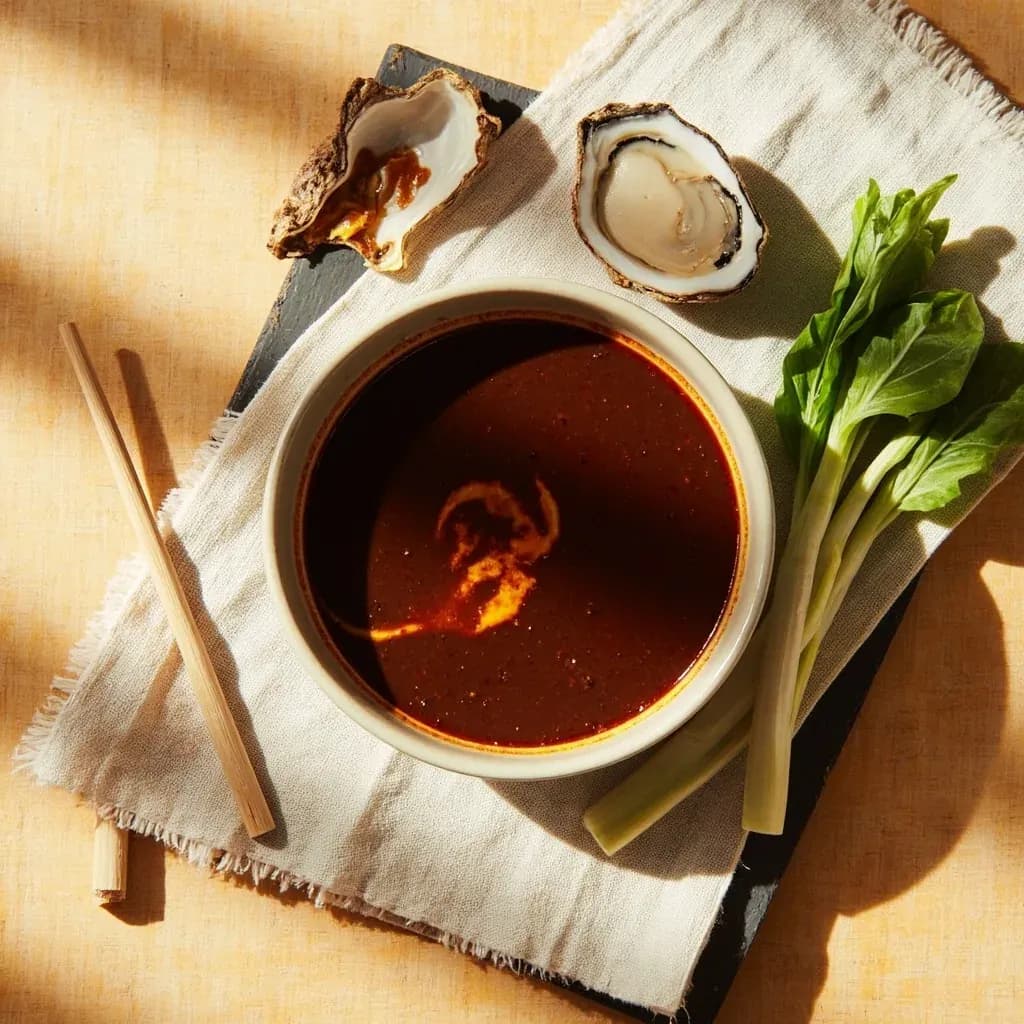
Oyster sauce is a thick, glossy, dark-brown condiment built on oyster extract, sugar, salt, and (in most commercial bottles) modified corn starch as a thickener. Commercialized in Guangdong in the late nineteenth century — the Lee Kum Kee origin story dates to 1888 — it spread from Cantonese kitchens into Thai, Vietnamese, and broader Chinese cooking because it solves a specific problem: delivering a wave of sweet-savory umami that clings to food rather than pooling at the bottom of the plate. In a finished dish it reads as caramelized depth and briny richness, not as seafood, because the oyster component is essentially a reduced essence rather than whole shellfish.
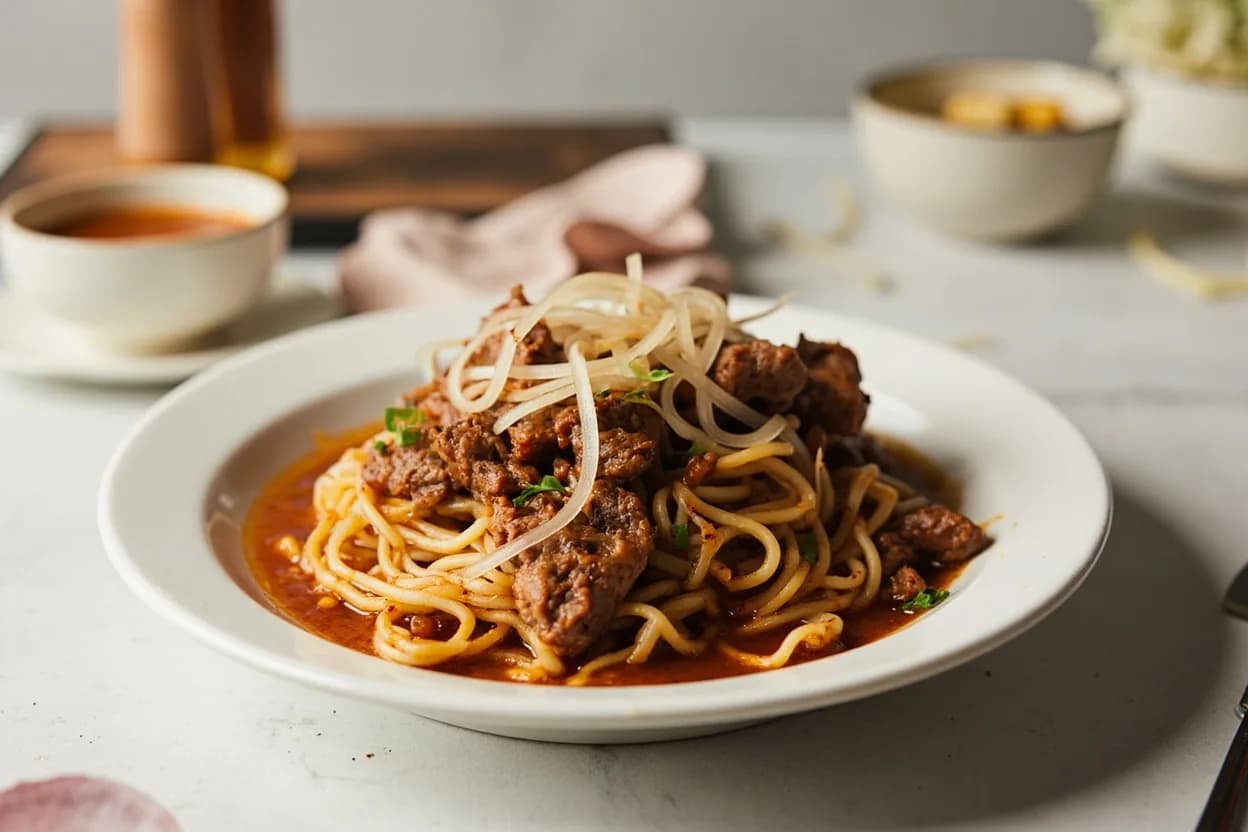
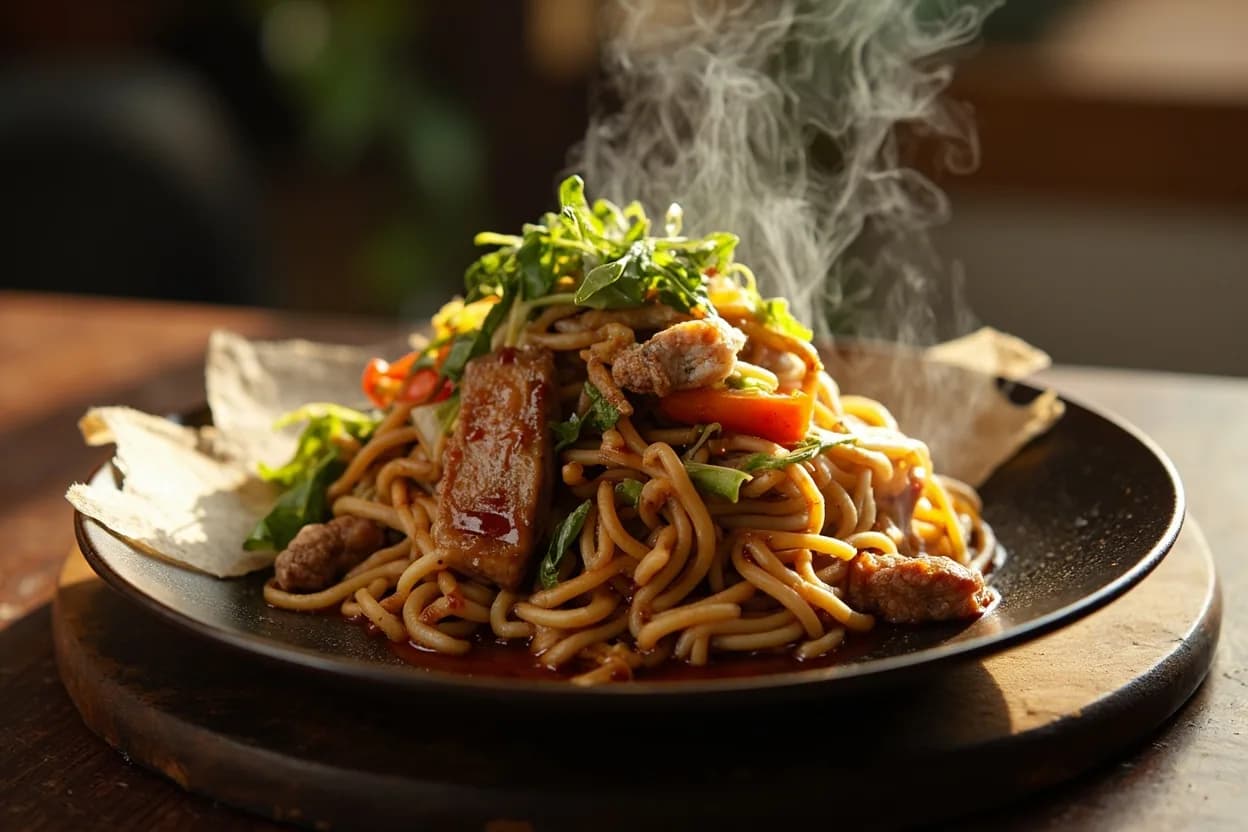
What separates oyster sauce from most other condiments in the Asian pantry is its behavior under heat. The sugar content is high enough to scorch quickly, and the volatile aromatics fade with prolonged cooking, so it is treated as a finishing and glazing sauce — added in the final one to three minutes, often after the pan has been deglazed or the vegetables blanched. Used that way, it reduces to a lacquered coat that defines dishes like stir-fried Chinese broccoli, beef chow fun, and pad see ew. Used too early, it goes flat and bitter.
Think of it as a partner to soy sauce rather than a replacement. Soy brings salt and sharp savor; oyster sauce brings sweetness, body, and a characteristic mahogany sheen. The two are almost always used together in Cantonese cooking, with oyster sauce doing the glazing work and soy doing the seasoning. For cooks avoiding shellfish, mushroom-based 'oyster-style' sauces built on shiitake extract now perform the same function and are used one-to-one.
- Measured in
- ml
- Storage
- Refrigerate
Allergens
Find it in
Types & varieties
The benchmark product, dating to 1888; thick, balanced sweet-salty profile with strong oyster aroma
Thinner and cheaper; fine for stir-fries where a heavy glaze is not the goal
Made from higher oyster solids; deeper umami and less added starch, favored in upscale Cantonese kitchens
Sweeter, milder, darker; the standard bottle in Thai-Chinese cooking and pad see ew
Thai brand, slightly more concentrated oyster flavor, common in Thai markets
Mushroom-based (shiitake); 1:1 substitute for shellfish-avoiding cooks
Mushroom-based vegan alternative, widely available in U.S. supermarkets
How Oyster Sauce Behaves in the Wok
Oyster sauce is a finishing and glazing condiment, not a braising liquid. The reason is structural: it carries enough sugar to caramelize and scorch on direct high heat, and its aroma compounds are volatile enough to dissipate over a long cook. In practical terms, this means three things in a stir-fry.
- Add in the last one to three minutes of cooking, after the protein is cooked through and the vegetables are nearly done.
- Reduce the liquid in the pan first — by pre-blanching greens, by pushing ingredients up the wok, or by letting any marinade water cook off — so the sauce glazes rather than slides off into a thin puddle.
- If a recipe uses oyster sauce as part of a longer braise (eggplant, tofu, mushrooms), it goes in during the last few minutes of simmering, not at the start.
Reading the Label
Most commercial oyster sauce contains no whole oysters. The 'oyster' component is an extract or concentrate — oyster essence boiled down with water — which is then blended with sugar, salt, and modified corn starch to set the body. Premium versions are built from higher ratios of oyster solids, which is why they read as more savory and less cloying on the finish. Thai-market bottles (Kame, Maekrua) run noticeably sweeter than Hong Kong and mainland China benchmarks; recipes from those regions are calibrated to that sweetness, so swapping a Thai brand into a Cantonese recipe, or vice versa, will shift the balance.
Regional Styles
Cantonese oyster sauce is the reference style: thick, dark, balanced between sweet and salty, and assertive enough to glaze a whole plate of vegetables. Thai-Chinese oyster sauce is sweeter, slightly darker, and used in larger volumes — pad see ew, for example, gets a generous pour. Vietnamese cooking uses oyster sauce similarly to the Cantonese style, often in stir-fries and as a marinade component. The differences are matters of degree, not of category, but they matter when a recipe specifies a brand.
Common uses
Tips & pitfalls
- Add oyster sauce in the final one to three minutes of cooking — prolonged high heat dulls the aroma and scorches the sugars.
- Reduce the liquid in the pan first (or pre-blanch vegetables) so the sauce glazes rather than slides off.
- A little goes a long way; start with about one teaspoon per serving and adjust — it is salty and concentrated.
- For a noodle-shop dumpling dip, thin the sauce roughly 1:1 with hot water and finish with a drop of sesame oil.
- Taste before adding extra salt — oyster sauce contributes significant sodium, and an over-salted dish is the most common mistake.
- Combine with soy sauce rather than replacing it: oyster sauce adds sweetness and body, soy adds salt and sharpness.
- Always refrigerate after opening; even shelf-stable bottles keep noticeably longer and taste better cold-stored.
- If a bottle has thickened in the fridge, stir in a teaspoon of hot water to bring it back to a pourable consistency.
Nutrition
Energy
213 kJ · per 100 g
Where the calories come from
Protein
1.4g
3% DV
Carbs
10.9g
4% DV
Fat
0.3g
0% DV
Fiber
0.3g
1% DV
Sugars
0g
of which
Sodium
2733mg
119% DV
Source · USDA FoodData Central · Sauce, oyster, ready-to-serve
View on FDC →In the shops
Matched grocery products
No matched grocery products for Oyster Sauce yet.
Good to know
- Origin
- Guangdong, China; commercialized in 1888 by Lee Kum Sheung, founder of Lee Kum Kee
- Primary ingredients
- Oyster extract, sugar, salt, water, modified corn starch (in most commercial versions)
- Color and texture
- Dark brown, almost mahogany; thick, viscous, glossy — coats a spoon and clings to food
- Flavor profile
- Sweet-savory umami with briny depth and a slight caramel note; not fishy
- Sodium level
- High — roughly 450–700 mg per tablespoon depending on brand
- Heat sensitivity
- Loses aroma and scorches easily over high direct heat; brief finishing heat is ideal
- Storage
- Pantry-stable unopened (18–24 months); refrigerate after opening and it keeps for many months
- Allergen note
- Contains shellfish; vegetarian and vegan mushroom-based alternatives are widely available
Substitutes
- Hoisin sauce — Closest pantry substitute; sweeter, no seafood depth, works in most stir-fries and glazes
- Vegetarian mushroom oyster sauce — Megachef or Lee Kum Kee vegetarian versions are 1:1 swaps built on shiitake umami
- Soy sauce + brown sugar + Worcestershire — Rough approximation: 1 tablespoon soy + 1 teaspoon brown sugar + 1 teaspoon Worcestershire per 1 tablespoon oyster sauce (note: Worcestershire contains anchovies, so this is not suitable for vegetarian or shellfish-free diets)
- Soy sauce + molasses + fish sauce — For deeper color and roundness when hoisin is unavailable
- Fish sauce + palm sugar + dark soy — A Thai-style stand-in for pad see ew and similar noodle dishes; very different flavor, needs tasting
Pairs with
Also called
oyster-flavored sauce
Appears in these dishes
Related
Soy Sauce
Salty, savory umami base for stir-fries and marinades
Hot Sauce
Tangy, fiery splash for eggs, tacos, and anything dull
Tomato Sauce
Simmered tomato base for pasta, pizza, and braises
Barbecue Sauce
Smoky-sweet sauce for grilling, glazing, and dipping
Pesto
Vibrant basil-and-pine-nut sauce for pasta and beyond

Fish Sauce
Funky, salty essence that brings deep umami to SE Asian dishes
Worcestershire Sauce
Tangy, savory umami splash for marinades, stews, and Caesar

Sriracha
Garlicky chili sauce with sweet heat for drizzling and dipping