Sauces & Pastes
Hoisin Sauce
Thick, sweet-salty fermented soybean sauce — the glaze for char siu and Peking duck, a base for stir-fry sauces, and the smear for mu shu pancakes and lettuce wraps.
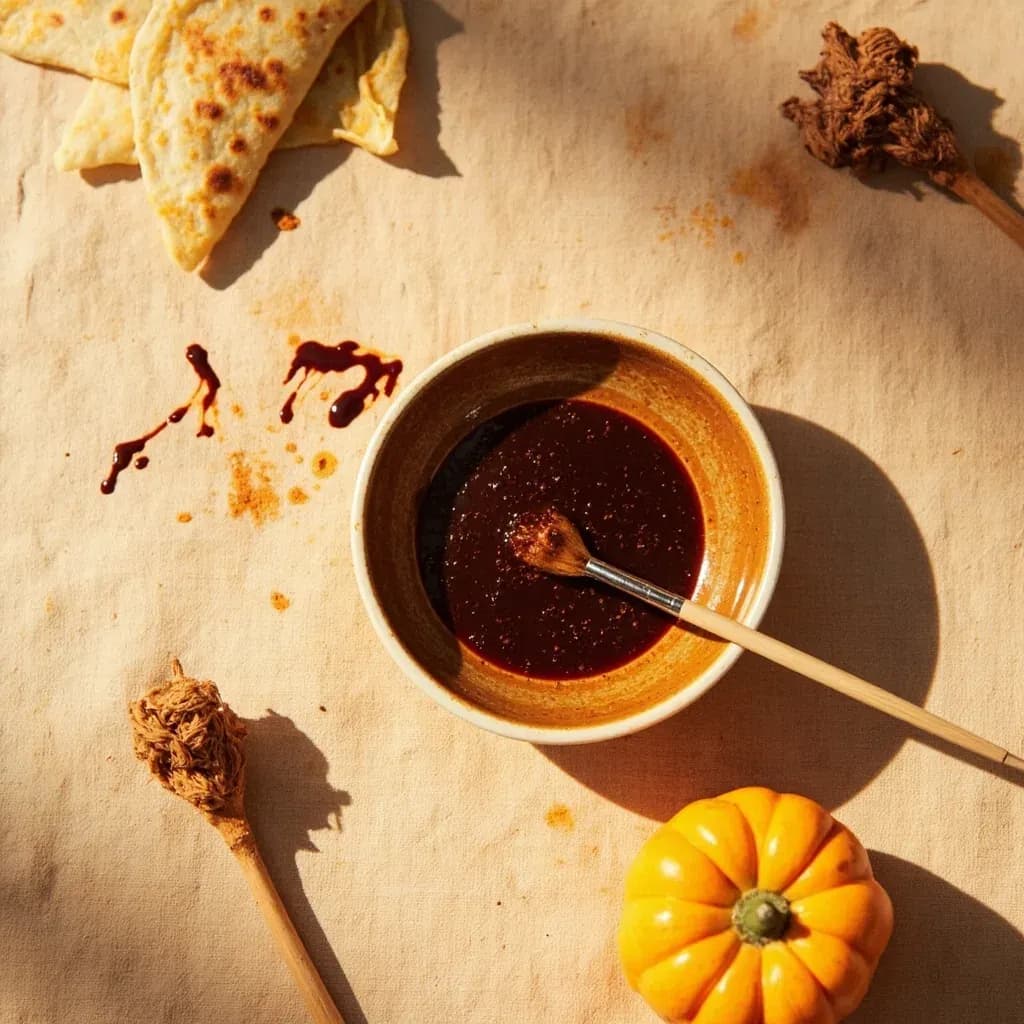
Hoisin is the dark, glossy, sweet-salty paste built on fermented soybeans, sugar, vinegar, garlic, and a thread of chili warmth. The name, a Cantonese romanization of 海鮮 (hǎixiān), is widely translated "seafood," but the sauce contains no seafood — a long-standing misnomer, with several folk etymologies pointing to a dried-seafood predecessor or simply to "hai xian" as a generic Cantonese term for "savory." It is the workhorse condiment of Cantonese cooking, anchoring the glaze for char siu, the smear inside mu shu pancakes, and the table sauce for Peking duck, and it has become one of the most-used Chinese sauces in Western kitchens for its convenience and depth.
In the pan or the oven, hoisin behaves like a concentrated, almost-candy sauce: the sugar content is high enough to scorch under direct heat, the salt content is high enough to push a finished dish over the edge if you add more soy without tasting, and the thick paste clings to meat better after a brief reduction. Out of the jar it reads as one-dimensionally sweet; balanced with rice vinegar, lime, or a few drops of sesame oil, it opens into a complex sweet-salty-umami condiment. Most commercial versions contain wheat flour, which is the main dietary caveat and the reason hoisin is rarely gluten-free even though soybeans are the headline ingredient.
The single most useful thing to know about hoisin is that it is a building block, not a finishing sauce. It wants other things: acid to cut the sugar, aromatics to build on, a fatty protein to glaze, or a starch to spread it on. Treated as a base rather than a condiment, it is one of the most efficient flavor moves in a Chinese pantry.
- Measured in
- ml
- Storage
- Refrigerate
Allergens
Find it in
Suits
Types & varieties
The benchmark — thick, sweet-salty, the basis for char siu, Peking duck, and mu shu. Lee Kum Kee, Koon Chun, and Pearl River Bridge all follow this template.
Thinner, runnier, with a sharper vinegar note and often more chili heat. Formulated as a phở table condiment, not a glaze.
Extra chili and garlic; common in Korean and Sichuan-leaning markets and in some Lee Kum Kee variants.
Higher soy content, less sugar, often no caramel coloring. Koon Chun Premium and select Taiwanese artisan jars fall here.
Pre-blended bottles marketed for char siu — hoisin plus honey, five-spice, and soy. Functionally a hoisin derivative.
Uses rice flour or tamari in place of wheat and soy; flavor is usually a little flatter than the standard. Strict vegetarians should still check labels — some older recipes include traces of dried seafood or animal-based stock.
Hoisin vs. Sweet Bean Sauce (Tianmianjiang)
The two jars sit next to each other on the shelf, look almost identical, and are routinely confused. They are different sauces built on different beans and aimed at different jobs. Hoisin is sweet, glossy, and built on fermented soybeans with a heavy hand of sugar and vinegar; tianmianjiang is savory, denser, and built on steamed yellow soybeans with a more muted, fermented-soy flavor and far less sugar. Hoisin glazes meat; tianmianjiang is the sauce of zhajiangmian and the braise in dishes like Beijing-style soybean-paste noodles. If a recipe calls for one and you only have the other, you can approximate: tianmianjiang plus a teaspoon of sugar and a splash of soy stands in for hoisin; hoisin thinned with soy and rice vinegar can stand in for tianmianjiang in a saucy noodle dish, though the result will be noticeably sweeter.
- Hoisin: fermented soybeans, sugar, vinegar, garlic, chili — sweet, glossy, glaze-ready.
- Tianmianjiang: yellow soybeans, salt, flour — savory, dense, sauce-for-noodles.
- Substituting one for the other works in a pinch, but expect a sweeter (hoisin-for-tianmianjiang) or more savory (tianmianjiang-for-hoisin) result.
Building a Working Char Siu Glaze
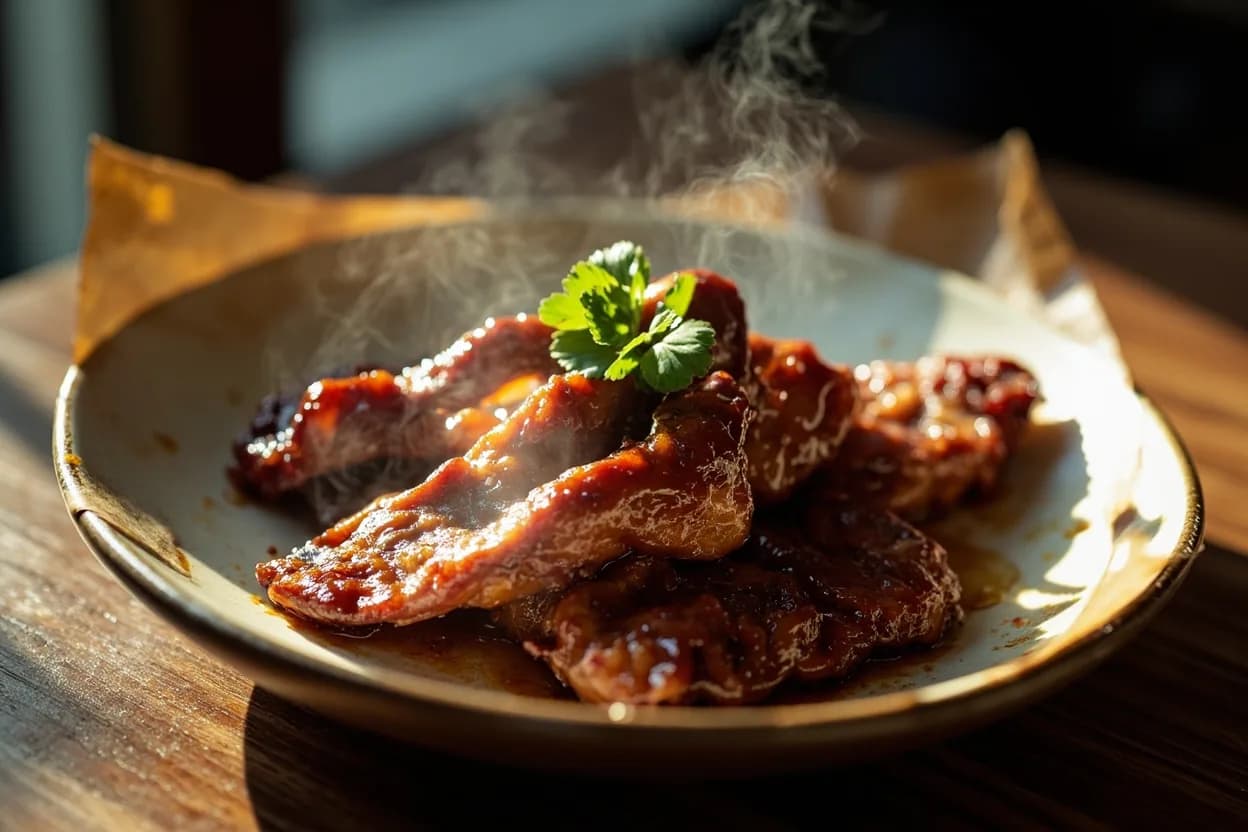
Most Cantonese BBQ shops build their char siu glaze from hoisin rather than cooking a sauce from scratch, and the ratio is forgiving enough to commit to memory. The working ratio is roughly 4 parts hoisin to 1 part honey to 1 part light soy, plus a generous pinch of five-spice and a splash of Shaoxing wine. Reduce the mixture in a small pan for 2–3 minutes until it thickens just enough to coat the back of a spoon, then brush onto the meat in the last 2–3 minutes of roasting or in the final seconds under a hot broiler. The honey extends the glaze, the soy deepens the color, the five-spice reinforces the spice notes already in the hoisin, and the Shaoxing wine cuts the sweetness and helps the sugars caramelize without scorching.
- Ratio: 4 hoisin : 1 honey : 1 light soy, plus five-spice and Shaoxing wine.
- Reduce briefly in a pan before brushing — raw hoisin is too thin to cling.
- Apply only in the last 2–3 minutes of cooking; the sugar blackens fast.
Common uses
Tips & pitfalls
- Reduce the sauce in a small pan for 2–3 minutes before brushing onto meat — raw hoisin is too thin to cling and will scorch over direct high heat.
- Always brush hoisin-based glazes in the last 2–3 minutes of cooking; the sugar content blackens fast under sustained heat.
- For char siu, the working ratio is roughly 4 parts hoisin to 1 part honey to 1 part soy, plus five-spice and a splash of Shaoxing wine.
- Taste before salting a dish — hoisin is already heavily salted, and adding more soy or salt will push the dish over the edge quickly.
- When using hoisin as a dip, loosen it with rice vinegar or a squeeze of lime; straight-from-jar hoisin reads as cloying in that role.
- Don't confuse it with tianmianjiang (sweet bean sauce) — they look similar, but tianmianjiang is savory, less sweet, and based on yellow soybeans.
- Store opened jars upside down in the fridge to keep the surface from crusting and discoloring.
- Check labels if you need gluten-free or strict vegetarian: most hoisin contains wheat flour, and some older recipes include traces of dried seafood or animal stock even though soybeans are the headline ingredient.
Nutrition
Energy
920 kJ · per 100 g
Where the calories come from
Protein
3.3g
7% DV
Carbs
44.1g
16% DV
Fat
3.4g
4% DV
Fiber
2.8g
10% DV
Sugars
27.3g
of which
Sodium
1615mg
70% DV
Source · USDA FoodData Central · Sauce, hoisin, ready-to-serve
View on FDC →In the shops
Matched grocery products
No matched grocery products for Hoisin Sauce yet.
Good to know
- Origin
- China; the name is a Cantonese romanization of 海鮮 (hǎixiān), misleadingly translated 'seafood'
- Primary base
- Fermented soybeans, bound with wheat or rice flour
- Texture
- Thick, smooth, glossy paste
- Color
- Deep reddish-brown to almost black-brown
- Flavor profile
- Sweet, salty, umami-rich, with garlic, mild chili warmth, and a fermented tang
- Contains gluten
- Yes — most commercial brands use wheat flour
- Sodium
- High — typically 500–900 mg per tablespoon depending on brand
- Storage (opened)
- Refrigerated, 6–12 months
- Storage (unopened)
- Shelf-stable at room temperature; check best-before date
Substitutes
- Sweet bean sauce (tianmianjiang) + sugar — Closest texture match; add about 1 tsp sugar per tablespoon of tianmianjiang plus a splash of soy to mimic the sweetness and color.
- Miso + sugar + rice vinegar + garlic — Roughly 1 tbsp miso, 1 tsp sugar, 1 tsp rice vinegar, ½ tsp grated garlic per tablespoon of hoisin. Works in glazes and marinades, less so as a dip.
- Gochujang + soy + honey — For a glossier, spicier substitute in stir-fries and glazes; roughly equal parts. Different flavor direction but works in char siu–style applications.
- Plum sauce (duck sauce) — Fruiter and thinner, but acceptable as a pancake spread or duck condiment in a pinch.
- American-style BBQ sauce — Not traditional, but the sweet-tangy profile covers for hoisin in casual Western-Chinese fusion like wraps and stir-fries.
- Black bean sauce + brown sugar — Use when you want the fermented soybean depth but a more savory direction; sweeten to taste.
Pairs with
Also called
hoi sin sauce · Chinese barbecue sauce
Appears in these dishes
Related
Soy Sauce
Salty, savory umami base for stir-fries and marinades
Hot Sauce
Tangy, fiery splash for eggs, tacos, and anything dull
Tomato Sauce
Simmered tomato base for pasta, pizza, and braises
Barbecue Sauce
Smoky-sweet sauce for grilling, glazing, and dipping
Pesto
Vibrant basil-and-pine-nut sauce for pasta and beyond

Fish Sauce
Funky, salty essence that brings deep umami to SE Asian dishes
Worcestershire Sauce
Tangy, savory umami splash for marinades, stews, and Caesar

Sriracha
Garlicky chili sauce with sweet heat for drizzling and dipping