Sauces & Pastes
Red Miso (Aka)
Long-aged, deeply fermented miso that is dark, salty, and assertive; stands up to hearty braises, ramen broths, and rich glazes—use a lighter hand than with white miso.
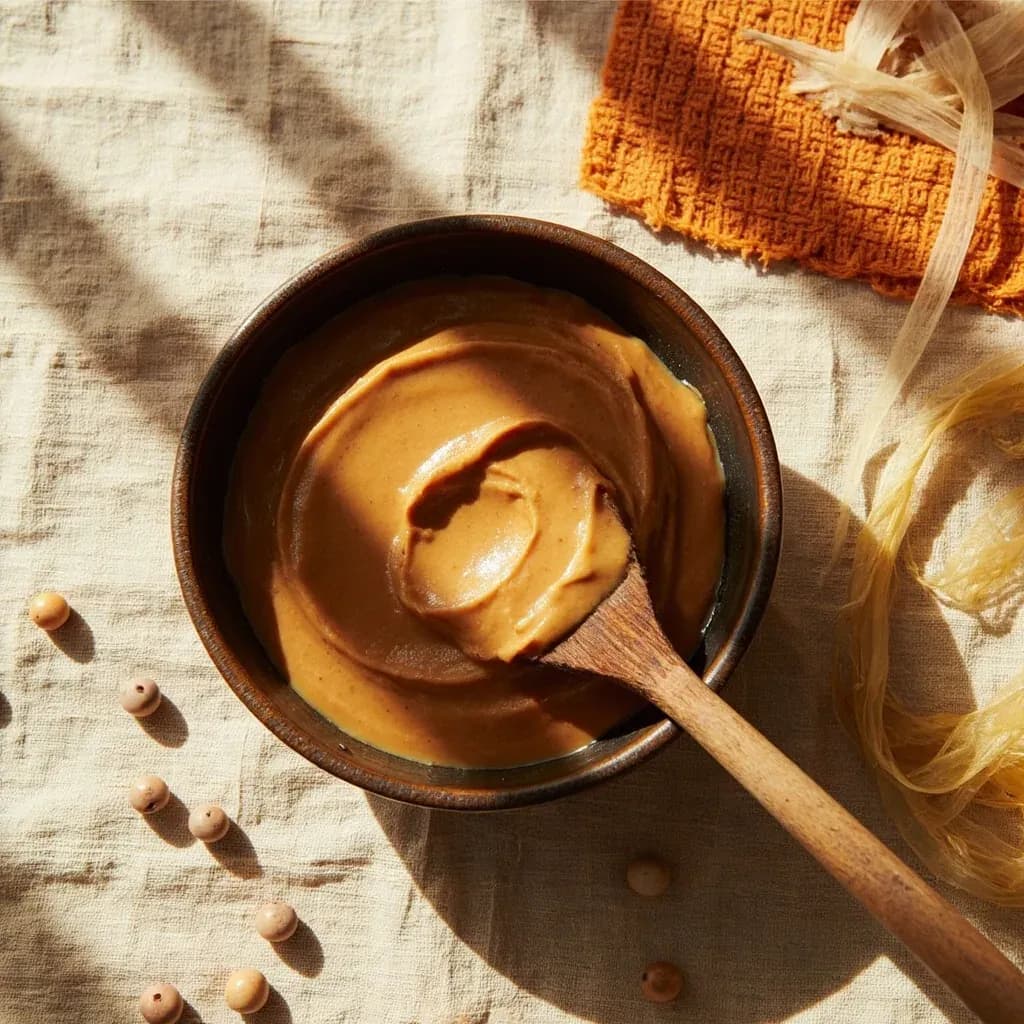
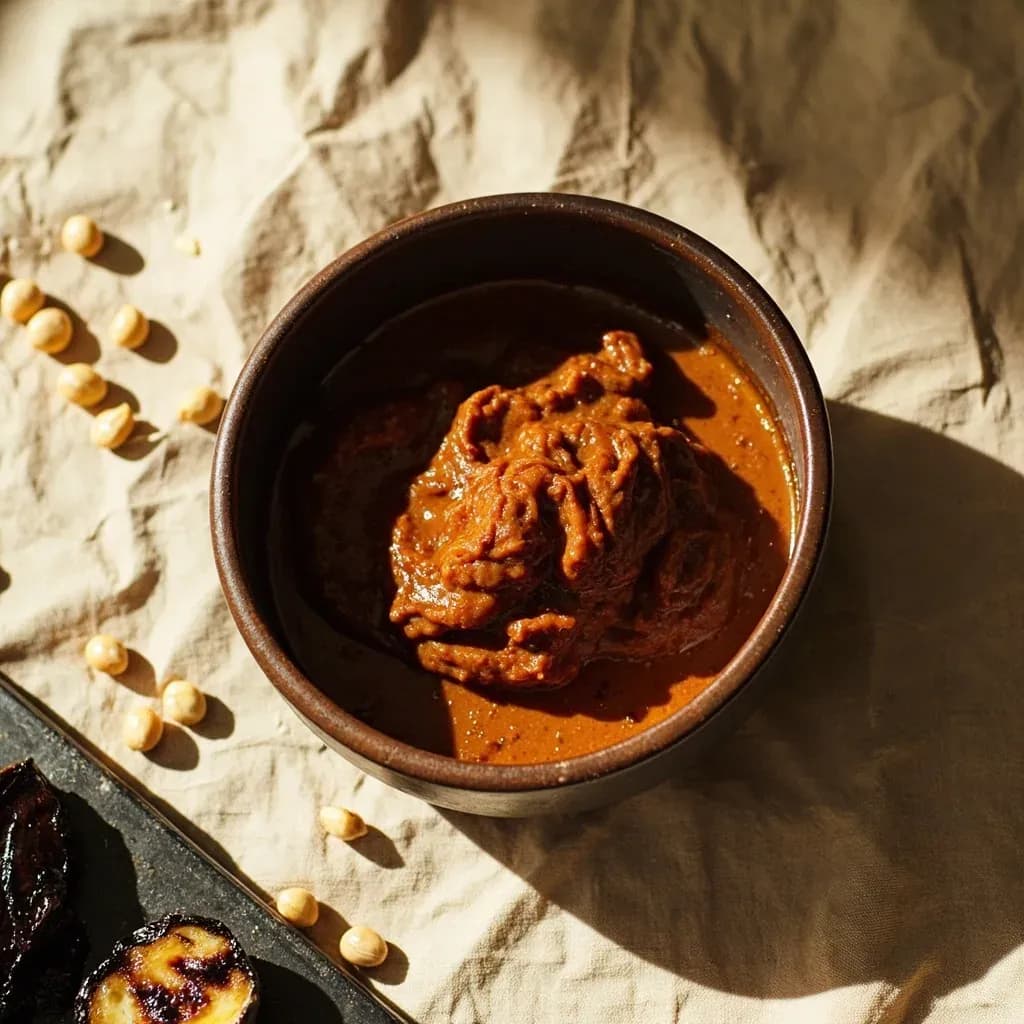
Red miso—aka miso (赤味噌) in Japanese—is the broad, deeply fermented half of the miso spectrum, distinguished from white (shiromiso) by longer aging, higher salt, and a dark reddish-brown to nearly black color. The color and complexity come from extended fermentation rather than added coloring: amino acids released from the soybeans react with sugars from the koji grain in slow Maillard-style browning, while the paste's high salt largely suspends further enzymatic activity and salt-tolerant yeasts and lactic bacteria carry the aging forward over months or years. The result is a paste that reads as savory, earthy, meaty, and occasionally winey, with a depth young white miso never approaches.
In the kitchen, red miso behaves like a seasoning more than a base. A small amount transforms a pot of dashi into something weighty enough to stand against pork belly, oily fish, or bitter greens, where a sweet, delicate saikyo miso would simply disappear. The trade-off is concentration: a typical red miso runs 11–13% salt by weight, well above saikyo (white) miso, so cooks used to white miso should reach for about half the volume. The dark color is not a sign of burning or staleness—mature red miso is supposed to taste this way, dense and assertive, and the same paste that overwhelms a delicate soup can carry a glaze or a long braise beautifully.
Storage and use are simple but worth knowing. Unopened tubs keep in a cool, dark cupboard; once opened, the jar belongs in the fridge for six months to a year, with plastic pressed directly to the surface to limit oxidation. Unpasteurized artisan miso continues to mature slowly in the jar, so flavors deepen over time. The most important habit: miso goes into a dish near the end of cooking, because a hard boil will mute the aromatics and over-darken the broth.
- Measured in
- g
- Storage
- Refrigerate
Allergens
Find it in
Suits
Types & varieties
Made from 100% soybeans with no grain koji, traditionally aged 2–3 years in huge cedar barrels weighted with stones; very dark, dense, intensely savory, slightly wine-like. A specialty of Okazaki, Aichi Prefecture and the deepest expression of the family.
From Miyagi Prefecture; rice-koji with relatively low salt, aged 1–2 years. A touch lighter and fruitier than Hatcho but still firmly in the red-miso family.
'Medium-hot' red miso—the everyday supermarket red, usually rice-koji, aged 6–12 months, with balanced salt and a rounded flavor.
'Sharp/hot-style' red miso with higher salt and longer aging, deeply assertive; common in Kansai and Tohoku regional cooking.
Reading the Label: Rice, Barley, or Soybean Koji
The koji grain used in fermentation shapes red miso's character as much as aging time does. Understanding the difference helps you pick the right tub at the store and predict how a recipe will behave.
- Rice-koji aka miso (kome-koji) is the most common supermarket style: clean, rounded sweetness underneath the salt, the safest choice for soups, glazes, and compound butters.
- Barley-koji miso (mugi miso) sits in the brown-amber middle ground; in its deeper, longer-aged form it is the closest everyday stand-in for red miso, with a maltier, slightly sweet edge.
- Soybean-only koji (Hatcho and similar styles) is the most intense, with no grain sugars to soften the profile—expect a wine-like, almost meaty savor. Start with about 25% less than the recipe calls for and taste.
- Color and texture tell you a lot: a darker, firmer paste signals longer aging and more concentration; a softer, looser red miso will be milder and easier to dissolve in cold applications like dressings.
Common uses
Tips & pitfalls
- Use roughly half the volume you would use of white miso—red miso is saltier and more concentrated, and overshooting is the single most common mistake when switching from shiro to aka.
- Always temper miso in a ladle of warm broth or dashi before adding to the pot; dumping it in cold or boiling liquid leaves clumps and uneven salt distribution.
- Never boil miso for long—a hard, sustained simmer dulls the aroma, darkens the broth, and can leave a muddy finish. Add it after the heat is off or at a bare shimmer.
- Bloom a spoonful in oil, butter, or rendered pork fat for 30–60 seconds before adding liquid when making glazes, stir-fry sauces, or compound butters; the caramelization is the difference between flat and deeply savory.
- If a dish tastes salty and flat at the same time, the fix is almost never more miso—reach for fat (butter, sesame oil, pork fat), sweetness (mirin, sugar, honey), or a splash of rice vinegar or citrus to round it out.
- Surface white or pink mold on aged, unpasteurized miso is normal and harmless—scrape it off along with the top centimeter and use the rest. Black mold, fizzy bubbles, or off smells mean the paste has spoiled.
- Press plastic wrap directly onto the surface of leftover miso in the jar before capping; this limits the oxygen that drives oxidation and surface mold.
- Toast a small spoonful in a dry pan over low heat for under a minute to deepen color and aroma when making glazes or finishing salts for grilled vegetables.
Nutrition
Energy
828 kJ · per 100 g
Where the calories come from
Protein
12.8g
26% DV
Carbs
25.4g
9% DV
Fat
6g
8% DV
Fiber
5.4g
19% DV
Sugars
6.2g
of which
Sodium
3728mg
162% DV
Source · USDA FoodData Central · approx. Miso
View on FDC →In the shops
Matched grocery products
No matched grocery products for Red Miso (Aka) yet.
Good to know
- Origin
- Japan
- Category
- Fermented soybean paste (miso)
- Primary ingredients
- Soybeans, salt, and koji (rice, barley, or—in Hatcho—no grain)
- Typical aging time
- 6 months to 3+ years; Hatcho traditionally 2–3 years
- Salt content
- Roughly 11–13% by weight, well above saikyo (white) miso
- Color
- Deep reddish-brown to near-black brown
- Flavor profile
- Salty, deeply savory, earthy, umami-forward; long-aged versions can taste meaty, winey, or slightly bitter
- Texture
- Thick, dense paste; coarse or smooth depending on producer
- Storage
- Unopened in a cool, dark place; refrigerated 6–12 months once opened
- Dietary notes
- Naturally vegan; gluten-free if made with rice or soybean koji; barley-koji (mugi) misos are not gluten-free
Substitutes
- Mugi (barley) miso — The closest everyday stand-in; brown-amber, similar salt level—use roughly the same quantity and expect a slightly sweeter, maltier edge.
- Hatcho miso — A drop-in substitute if you have it; even more intense than standard red miso, so start with about 75% of the amount and adjust.
- Korean doenjang — Same fermented-soybean family but made without koji; earthier, more pungent, often with a stronger ammoniac note—use about two-thirds the amount and add a pinch of sugar to round it out.
- Chinese doubanjiang or tianmianjiang — Not a flavor match; reserve for Sichuan or northern Chinese recipes where the bean-paste character is meant to read as Chinese, not Japanese.
- White (saikyo) miso plus soy sauce — Last-resort substitute for a Japanese recipe; the result will be sweeter and milder, so boost with salt or soy and a pinch of sugar to mimic aged depth.
Pairs with
Also called
aka miso · dark miso