Storage & Containers
Airtight Storage Container
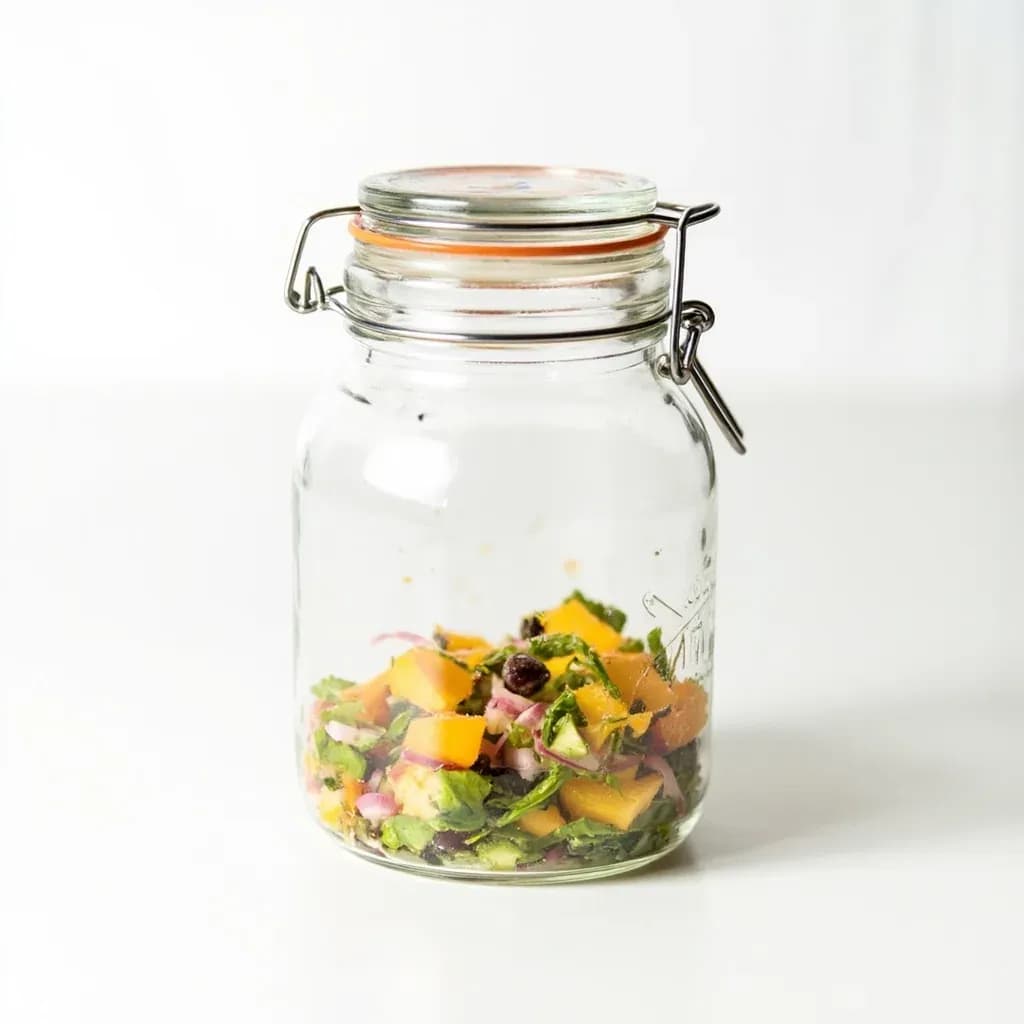
Sealed container with a gasketed lid that locks out air and moisture to keep food fresh.
An airtight storage container is a jar or tub with a gasketed, clamp or screw lid that forms a tight seal against air and moisture. Kitchens use them for pantry staples like flour, sugar, coffee, and dry goods, and for leftovers, to slow staling, keep crackers crisp, and lock in aroma. Clear bodies make contents visible, and a silicone gasket is what creates the true airtight seal.
An airtight storage container is one of the quietest workhorses in a working kitchen. At its core it is a rigid body paired with a lid that compresses a gasket — almost always food-grade silicone — against a smooth rim, sealing out air, moisture, and the pantry moths that thrive on both. The body can be plastic, glass, ceramic, or stainless steel; what makes the container airtight is the seal mechanism, not the wall material, and a stretched gasket on a beautiful jar will leak while a plain plastic tub with a fresh ring will hold a vacuum.
The modern form is a relative newcomer — the better part of eighty years old. Earl Tupper patented the first polyethylene "burp-seal" container in 1946, and Brownie Wise turned it into a household fixture through Tupperware parties beginning in 1951. The snap-lock containers with molded silicone gaskets that now dominate pantries — Lock & Lock, Sistema, Glasslock, and others — arrived in the late 1990s and 2000s, and the BPA-free shift after 2008 reshaped the plastic side of the market again. Glass and stainless bodies have become the first choice for what you reheat and what you want to see at a glance, though plastic still rules the lunch bag and freezer stash.
For everyday cooking, these containers are the difference between flour that turns musty in a humid pantry within weeks and flour that keeps for many months, and between coffee that tastes flat by the weekend and coffee that still has aroma on Thursday. For canning and true long-term preservation, however, the everyday snap-lock is not a substitute for tested two-piece Mason lids or proper preserving jars such as Weck and Le Parfait — those are designed for the sustained heat of a water-bath or pressure canner, while snap-locks are not.
Alternatives
Types & varieties
Four-corner or all-around press tabs compress a silicone gasket — Lock & Lock, Sistema, Glasslock, and Glad are the common makers
A single central button or tab depresses to release and clicks audibly when sealed — OXO Good Grips POP, Lock & Lock Easy Match
Hinged wire closure with a rubber or silicone ring, a European preserving classic — Le Parfait and Fido are the best-known
Stainless-steel side levers swing over a separate flat lid with a rubber ring — Weck is the classic German maker
Large-capacity pantry canisters with a threaded lid, often with a silicone gasket seated in the collar — OXO POP canister and most flour/sugar canisters
Rigid container paired with a hand pump (Vacu Vin) or a chamber-style electric pump (FoodSaver canister) that evacuates air through a valve in the lid
Threaded metal band plus a flat lid with a sealing compound — the standard for home canning and reliable for dry storage
All-metal body with silicone gasket and side clip, favored for camping and long-term dry storage — Planika, SIGG
Original polyethylene style where the flexible lid is pushed down while squeezing air out from a corner tab — the classic Tupperware form
Matching the container to the job
Body material matters because it changes what you can put in the container and how you clean it. Glass is the most versatile: it goes from fridge to microwave (with the lid off), tolerates hot liquids without staining, and shows you what is inside at a glance. Stainless steel is the most rugged and the best for camping, root cellar, or anywhere plastic would degrade, though you cannot microwave or see through it. Polypropylene and Tritan plastic are light and shatterproof, ideal for lunches, freezer stash, and the family bag, but they stain from turmeric, paprika, and curry, and they hold odors if not cleaned well. Stoneware and ceramic look handsome on the counter and keep contents cool, but they are heavy, and most have lids that are merely a snug fit rather than a true gasket seal — read the spec before you trust them with flour.
- Glass for anything you reheat, anything acidic (tomato sauce, citrus curds), and anything you want to see at a glance.
- Polypropylene or Tritan for freezer stash, school lunches, and anything you might drop on a tile floor.
- Stainless steel for camping, bulk dry goods in a basement, and long-term storage where light is also a concern.
- Ceramic and stoneware for countertop pretties where a tight seal is not critical — display, not preservation.
Gasket care and the water test
The seal is the whole game, and gaskets are consumables. Pull them out and hand-wash them on a regular schedule — once a month in a busy kitchen is reasonable. Trapped grease and food residue shorten the silicone and cause leaks long before the body shows wear. A stretched, cracked, or no-longer-flat gasket should be replaced; most manufacturers sell replacements separately for a few dollars.
- Before closing, dry the gasket groove and the rim — a single grain of rice or a drop of water breaks the seal.
- Hand-wash gaskets in warm soapy water and let them air-dry fully before reassembly.
- Run the water test on any container you suspect: fill, close, invert over a paper towel for one minute. Any damp spot means the gasket has failed.
Common uses
Tips & pitfalls
- Test a new snap-lock container by filling with water, closing, and shaking it upside down over the sink for ten seconds before trusting it for transport.
- Let hot food cool to at least room temperature before sealing, or leave the lid slightly ajar in the fridge to vent condensation.
- Never microwave with the lid fully sealed — vent or remove the lid so steam can escape and the gasket does not deform or pop off.
- For freezing liquids, leave 1–2 in (2.5–5 cm) of headspace and choose a straight-sided (not tapered) container so contents can expand upward without cracking glass or popping lids.
- Label the lid, not just the container — containers get reused and re-shuffled constantly, and a lid label survives the dishwasher better than a body label.
- Avoid storing oily spices (paprika, turmeric, curry blends) in white plastic; the pigments and oils stain permanently and can ghost into the next thing you store.
- For pantry canisters, choose square or rectangular shapes over round — they pack more efficiently on shelves and leave less dead air around the contents.
- Do not over-tighten screw bands on Mason jars for dry storage; fingertip tight is enough once the lid seats, and overtightening only jams the future seal.
Good to know
- Defining feature
- A gasket (most often food-grade silicone) compressed against a rigid rim to block air and moisture
- Common body materials
- Polypropylene, Tritan copolyester, soda-lime glass, borosilicate glass, stainless steel, stoneware/ceramic
- Common gasket material
- Food-grade silicone; older canning jars sometimes used nitrile or natural rubber
- Temperature tolerance
- Silicone gaskets roughly -40°F to 428°F (-40°C to 220°C); borosilicate glass bodies safe to about 500°F (260°C)
- Typical capacities
- From about 4 oz (113 g) portion cups up to 10 qt (9.5 L) pantry canisters and larger
- Origin of the modern form
- Earl Tupper patented the first polyethylene burp-seal container in 1946; Brownie Wise popularized it through home-sales parties from 1951
- Silicone-gasket era
- Snap-lock containers with molded silicone gaskets became mainstream in the late 1990s and 2000s (Lock & Lock, Sistema, Glasslock)
- BPA-free shift
- Major U.S. retailers phased out bisphenol-A in food-contact plastics after 2008; FDA banned BPA in baby bottles and sippy cups in 2012
- Dishwasher guidance
- Most glass and stainless bodies are top-rack dishwasher safe; gaskets should generally be removed and hand-washed to extend life
- Freezer headspace
- Glass jars need 1–2 in (2.5–5 cm) of headspace; plastic bodies should not be filled above the fill line to allow for expansion
- Microwave safety
- Lids must be vented or removed; sealed lids in a microwave build steam pressure and can warp the seal or pop the lid off
Also called
Airtight Storage Jar · airtight jar · sealed container · gasket-lid container
Related

Freezer Bags
Thick, sealable bags built to fight freezer burn

Storage Bags
Resealable bags for fridge storage and marinating

Storage Container
Lidded container for leftovers, prep, and meal kits

Glass Container
Oven-to-fridge glass that won't stain or hold odors

Plastic Container
Lightweight, stackable storage for everyday leftovers

Vacuum Sealer Bags
Airtight bags for long freezing and sous-vide

Reusable Bags
Washable silicone bags that replace single-use plastic

Mason Jar
Sealed glass jar for preserves, pickles, and storage