Wraps & Liners
Breathable Cloth Cover
A tight-weave cloth that covers dough, ferments, and bowls while letting them breathe.
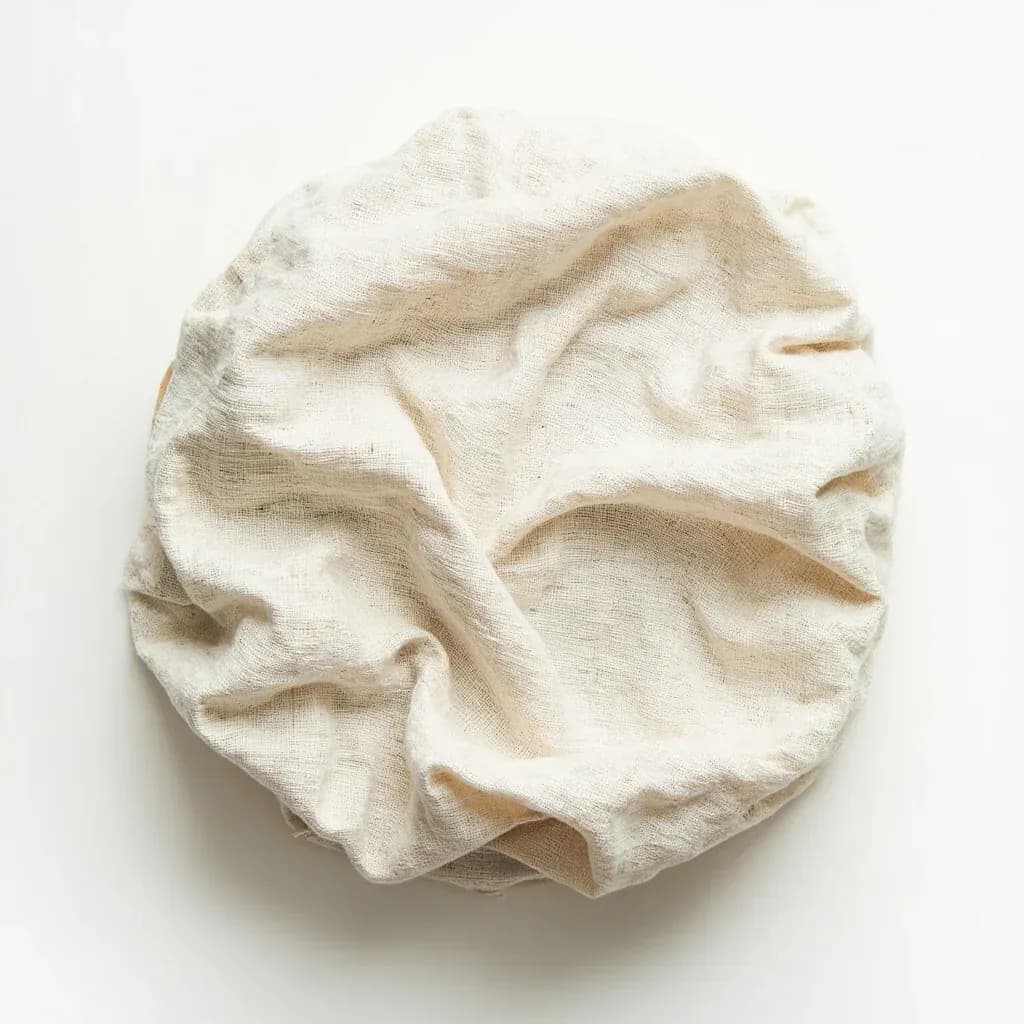
A breathable cloth cover is a tight-weave cotton or reusable fabric draped over bowls of rising dough, fermenting batter, or resting food to keep dust and insects out while air still circulates. Unlike plastic wrap, it lets moisture escape so a crust does not get soggy. Elasticated bowl covers are a fitted version of the same idea.
A breathable cloth cover is a piece of moderately woven fabric — almost always linen, sometimes a linen-cotton blend or silicone-coated cloth — used to cover dough, ferments, and ripening foods while still allowing carbon dioxide, water vapor, and a little oxygen to pass through. It is the cover of choice when you want to protect a surface from drafts, dust, and skinning without sealing it. A tea towel draped over a bowl of dough, a pleated couche holding shaped baguettes, and a round liner inside a banneton are all examples of the same idea in different formats.
The defining virtue of this supply is what it does not do: it does not seal. A dough covered with plastic wrap, a beeswax wrap, or a tight lid sits in its own exhaled gas; the surface stays wet, enzymes behave differently, and fermentation often ends gummy or collapsed. A breathable cloth, by contrast, lets the dough exhale, slows crust formation, and permits the gentler, more even rise that produces an open crumb and a clean final flavor. It is one of the small, quiet pieces of equipment that separates good bread and ferments from the over-sour, over-soft versions most home bakers blame on the recipe rather than on what they covered it with.
In practice the cloth is almost always linen because linen's long fibers release wet gluten cleanly, survive hot laundering, and stay permeable after years of wash cycles, whereas cotton pills and eventually felts into a less breathable mat. The dedicated French couche is essentially the same fabric in a longer, heavier cut, pleated and floured to act as a soft mold for shaped loaves rather than a simple drape.
Alternatives
Types & varieties
Heavy, untreated, often natural-colored linen with parallel folds (plis) used to hold shaped baguettes, bâtards, and round loaves during final proof; dusted with rice or wheat flour to prevent sticking.
Mid-weight linen or linen-cotton tea towel draped over bowls of dough during bulk fermentation; the everyday stand-in for most home cooks.
Lighter, more open weave; useful as a strainer or for very short ferments, but it can let dough skin over during long proofs.
Pre-cut round cloths sized to standard mixing bowls, often with an elastic edge; a tidier alternative to a draped towel for bulk rises.
A cloth insert cut to fit a proofing basket; keeps dough from picking up the basket's wicker pattern and is far easier to wash than the basket itself.
Modern linen or mesh coated with food-grade silicone that grips shaped dough, holds its form, and releases cleanly; used for loaves that need support during final proof.
A standard linen towel wrung out so it is damp rather than wet; laid over shaped tortillas, dumpling wrappers, or short proofs in dry kitchens to slow skinning.
Why not plastic wrap?
The instinct to seal the dough comes from a well-meaning place, but it works against you. Plastic wrap, beeswax wraps, and tight lids keep everything in: CO2 pools against the surface, the skin stays wet, lactic and acetic acids accumulate locally, and enzymatic activity at the surface runs ahead of the interior. The result is usually a gummy, slack, or over-acidified dough that is hard to score and bakes up with a pale, soft crust. A breathable cloth moderates the exchange — gas and vapor leave, oxygen trickles in — so the surface stays matte and the fermentation proceeds evenly. The same logic applies to cultured dairy, slow fruit vinegars, and bloomy-rind cheeses in their early stages.
- Plastic wrap seals: gas accumulates, surface stays wet, fermentation often goes sour and slack.
- A breathable cloth releases CO2 and water vapor while blocking drafts and debris.
- The cover should sit loosely with a little slack, never stretched taut or tucked under a lid.
- Use a damp (not wet) cloth only when the kitchen is dry; a wet cloth saturates the dough surface.
Choosing and caring for linen
Pure linen is the workhorse. It absorbs water without feeling soggy, releases shaped dough without tearing, and tolerates the hot washes that keep it sanitary between bakes. Cotton works in a pinch but pills and felts faster, which gradually closes the weave and reduces breathability. Fabric softener and dryer sheets are the enemies of this cloth: they deposit a hydrophobic film that wrecks permeability and can transfer residue to your dough. Wash hot, dry fully, and retire a cloth the moment it holds a sour smell or visible stains — that microbiome will throw off a starter or flavor a lean dough on its next use.
- Pick 100% linen or a high-linen blend; avoid loosely finished cottons for long-term use.
- Wash at 60-90 °C / 140-194 °F and dry thoroughly between uses to prevent mildew.
- Never use fabric softener or dryer sheets; they coat the fibers and reduce breathability.
- Replace a cloth that is threadbare, frayed, or carries a persistent sour or yeasty odor.
- Fold selvages inward so loose threads do not imprint or stick to the dough during long proofs.
- Keep a dedicated set for sweet/fermented doughs and another for savory work if you are sensitive to carryover flavor.
Common uses
Tips & pitfalls
- Choose linen over pure cotton: linen fibers release dough more cleanly and tolerate hot, repeated laundering without felting.
- Skip the fabric softener and dryer sheets — the hydrophobic film they leave behind reduces breathability and can transfer residue to the dough.
- Wash hot (60-90 °C / 140-194 °F) and dry the cloth completely between uses; trapped moisture is the main cause of mildew and off-odors.
- Drape loosely. The cover should sit with a little slack, not stretched taut or tucked in, so gas and vapor can move freely.
- For a long final proof in a dry kitchen, lightly dampen the cloth (wrung out so it does not drip) to slow skin formation on the dough.
- Flour the couche well for shaped baguettes and bâtards so the folds release cleanly; rice flour reduces the risk of a gummy seam.
- Replace any cloth that has developed a permanent sour or yeasty odor — its microbiome can throw off a starter or flavor a lean dough.
- Do not substitute plastic wrap, a beeswax wrap, or a sealed container when a recipe calls for a breathable cover; a sealed surface traps CO2 and changes the result.
Good to know
- Material
- Traditionally unbleached linen; linen-cotton blends and food-grade silicone-coated cloth are also common
- Weave
- Loose enough to pass CO2 and water vapor, tight enough to block drafts and limit surface drying
- Origin
- European (especially French) artisan bread-baking tradition; the dedicated couche cloth dates to 19th-century French boulangeries
- Also called
- Baker's linen, proofing cloth, couche, damp tea towel (in casual use)
- Common sizes
- Tea-towel format (~50x70 cm); long strips for couche (30-100 cm wide, sold by the meter); round cloths for bowl covers (30-40 cm diameter)
- Care
- Machine wash hot (60-90 °C / 140-194 °F); tumble or line dry fully; no fabric softener, no dryer sheets
- Replacement
- Replace when frayed, threadbare, or when it holds persistent odor or stains after washing
- Reusable
- Yes, indefinitely with proper washing and drying
Also called
Tight-Weave Cotton Cover · Reusable Bowl Cover · dough cloth · proofing cloth
Related

Aluminum Foil
Wraps, covers, and tents food for the oven and grill

Parchment Paper
Nonstick liner for clean, even baking and easy release

Wax Paper
Moisture-resistant sheet for wrapping and counter prep

Plastic Wrap
Clings tight to cover bowls and wrap leftovers

Silicone Baking Mat
Reusable nonstick liner that replaces parchment

Cheesecloth
Loose-woven cloth for straining stock and bundling herbs

Beeswax Food Wrap
Reusable wax wrap that molds around bowls and produce

Piping Tips
Shaped nozzles that turn frosting into stars and rosettes