Wraps & Liners
Cheese Bandaging Cloth
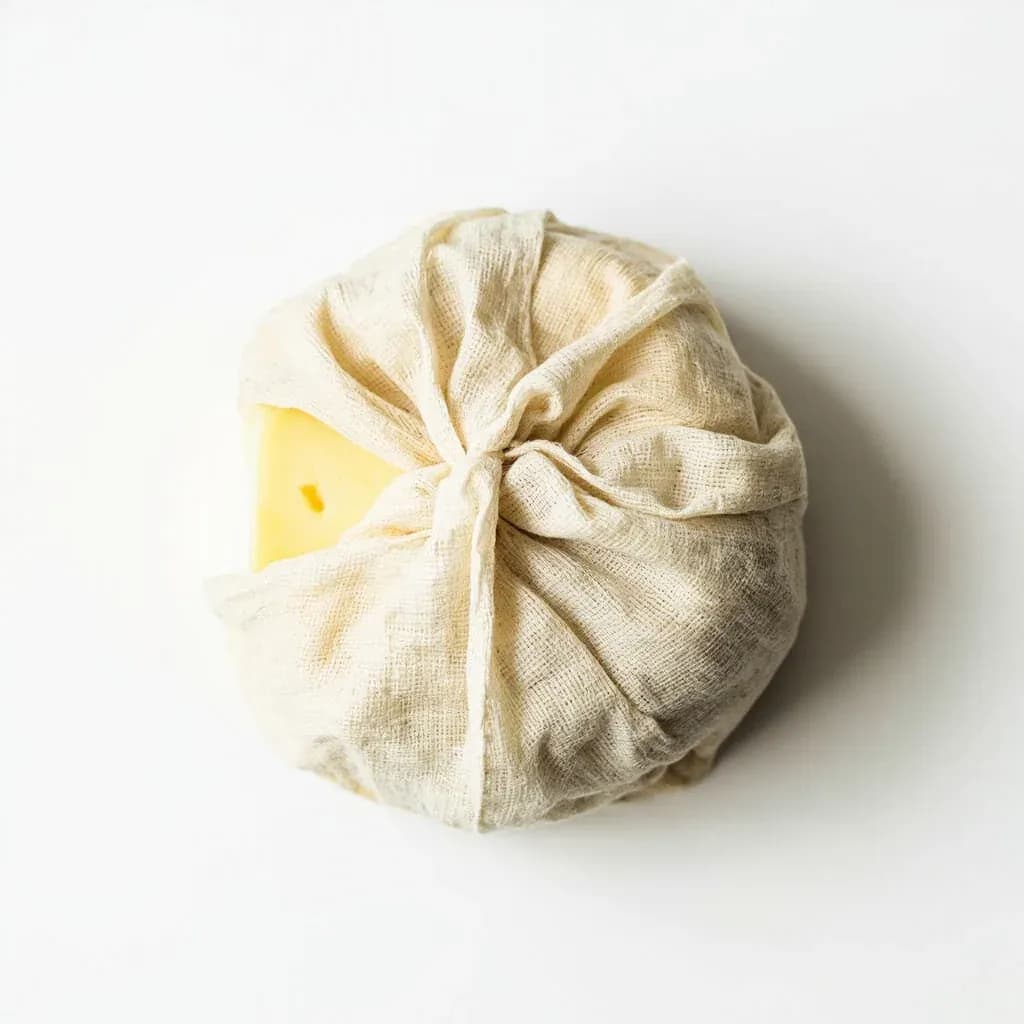
Loose-weave cotton cloth wrapped tightly around a cheese wheel to protect the rind while it ages.
Cheese bandaging cloth is a thin, breathable cotton fabric used to wrap traditional clothbound cheeses such as cheddar. It is pressed onto the wheel, usually with lard or butter, so it adheres and forms a protective skin that lets the cheese breathe while keeping moisture and pests out during long aging. The cloth wicks away excess whey and encourages a natural rind to form in the cellar.
Cheese bandaging cloth is a loose-weave, unbleached cotton fabric used to wrap wheels of hard, pressed cheese for the duration of their aging. It is heavier and more open than the fine cheesecloth sold for straining stocks and bundling herbs, engineered to hold its shape under tension so it can be pulled snugly around a wheel without tearing. The open weave does the work the cheesemaker cannot: it lets the wheel lose surface moisture slowly and evenly, while shielding the rind from handling, dust, and surface mould pressure. That controlled breathability is what allows a Cheddar or Cheshire to age for a year or more without cracking, slipping, or drying out.
The bandage also acts as a substrate for sealing the rind. In the traditional farmhouse method, the cloth is wrapped dry and then painted with lard, butter, or cheese wax, locking the wheel into a slow, even affinage. Re-coating every few weeks is part of the rhythm of clothbound cheesemaking. The cloth is, in effect, the cheese's skin — and on aged British wheels such as farmhouse Cheddar, Cheshire, Lancashire, and Dunlop, that clothbound rind has become a recognized mark of authenticity that distinguishes the farmhouse product from the waxed or vacuum-sealed industrial version.
For the home cheesemaker, the same cloth is reusable across many batches when sterilized and dried properly, and a single roll can be cut to fit wheels of any size. It is one of the few tools in cheesemaking that has changed little in two centuries, because the physics of moisture exchange through an open cotton weave is hard to improve on.
Alternatives
Types & varieties
The traditional format — dry, loose-weave cotton wrapped around the wheel and coated by the cheesemaker with fat or wax.
Cotton pre-impregnated with cheese wax, sold in ready-to-apply strips; convenient for farmhouse Cheddar and consistent across batches.
The classic Cheshire and Lancashire method: cloth rubbed with lard or butter (sometimes tinted with annatto) before wrapping, sealing the rind for long aging.
The British term for open-weave cotton in the same family; slightly finer than the heaviest bandage cloth but functionally interchangeable for wrapping and for draining soft curds.
Pre-cut cotton or cotton-poly strips sized to standard wheels, often with a built-in wax or plastic coating for one-step application.
How to bandage a wheel
The technique is simple in principle but unforgiving of shortcuts. The goal is a snug, wrinkle-free, slightly overlapping wrap that adheres to the cheese's surface and stays in place as moisture is lost over the following months. A loose bandage sags and creates air pockets where slip develops; a tight one with creases leaves ridges that never smooth out.
- Sterilize the bandage by boiling or simmering in plain water for 20–30 minutes, then air-dry fully — this strips loom oils, sizing, and residual lint that would mark the rind.
- Wrap the wheel while it is still slightly warm from pressing and the surface tacky; cold, dry wheels invite wrinkles and air pockets that breed unwanted mould.
- Cut a length roughly 1.5 times the circumference of the wheel, then overlap each pass by about one-third, pulling firmly so the cloth sits snugly against the rind.
- Smooth out creases as you go and tuck the trailing end under the previous wrap so nothing unravels as the cheese loses moisture.
- Label the bandage in pencil with the make date, batch, and target age — pencil writes cleanly on unbleached cotton, ink does not.
Coating and re-coating during aging
Once wrapped, the bandage is itself the substrate for the fat or wax that seals the wheel. In a traditional clothbound Cheddar cave, the wrapper paints the bandage with softened lard or butter every 4–8 weeks for the first several months of aging, then less often as the rind firms. Pre-waxed bandages need no such maintenance but seal the wheel more fully, giving up some of the breathability that plain cloth provides.
Common uses
Tips & pitfalls
- Always boil or simmer new bandage cloth in plain water for 20–30 minutes before first contact with cheese; this strips loom oils, sizing, and residual lint that would otherwise mark the rind.
- Avoid bleached, dyed, or 'easy-care' cotton — optical brighteners, dyes, and permanent-press finishes are not food-safe and can taint the rind.
- Do not substitute fine, high-thread-count cheesecloth meant for straining: it is too dense to breathe and will trap moisture against the rind, causing slimy slip or anaerobic spoilage.
- If using the traditional lard or butter coating, warm the fat just enough to spread easily — overheated fat soaks the bandage and chokes off the breathability the cloth is chosen for.
- Label each wrapped wheel directly on the bandage in pencil with the make date, batch, and target age; pencil writes cleanly on unbleached cotton, ink does not.
- Replace the bandage rather than patch it if it frays or tears during aging — patches create uneven rind and are nearly impossible to blend out.
Good to know
- Material
- Unbleached 100% cotton in an open weave, roughly 14–18 threads per inch — breathable but sturdy enough to wrap under tension.
- Also called
- Cheese bandage, cheese wrapping cloth, and (in the UK) butter muslin when used at the finer end of the same family.
- Distinct from
- Straining cheesecloth: bandage cloth is a heavier, more open weave that holds its shape; fine cheesecloth is too dense to breathe and will trap moisture.
- Standard width
- Sold in 4–6 in (10–15 cm) rolls for hand-wrapping wheels; wider yardage is available for larger or non-standard formats.
- Food safety
- Must be food-grade, unbleached, lint-free, and free of sizing or finishes; new cloth should be boiled for 20–30 minutes before first use.
- Reusability
- Reusable across many batches when washed at high temperature with unscented detergent and fully dried; replace if frayed, holed, or permanently stained.
- Breathability
- The open weave permits controlled moisture release while shielding the rind from handling and dust — the central function of the bandage.
- Traditional pairings
- Lard, softened butter, or cheese wax applied over the bandage, as in the Cheshire, Lancashire, and West Country Cheddar traditions.
Also called
Cheese Cloth Wrap · Cheese Bandage · Larded Cloth
Related

Aluminum Foil
Wraps, covers, and tents food for the oven and grill

Parchment Paper
Nonstick liner for clean, even baking and easy release

Wax Paper
Moisture-resistant sheet for wrapping and counter prep

Plastic Wrap
Clings tight to cover bowls and wrap leftovers

Silicone Baking Mat
Reusable nonstick liner that replaces parchment

Cheesecloth
Loose-woven cloth for straining stock and bundling herbs

Beeswax Food Wrap
Reusable wax wrap that molds around bowls and produce

Piping Tips
Shaped nozzles that turn frosting into stars and rosettes