Storage & Containers
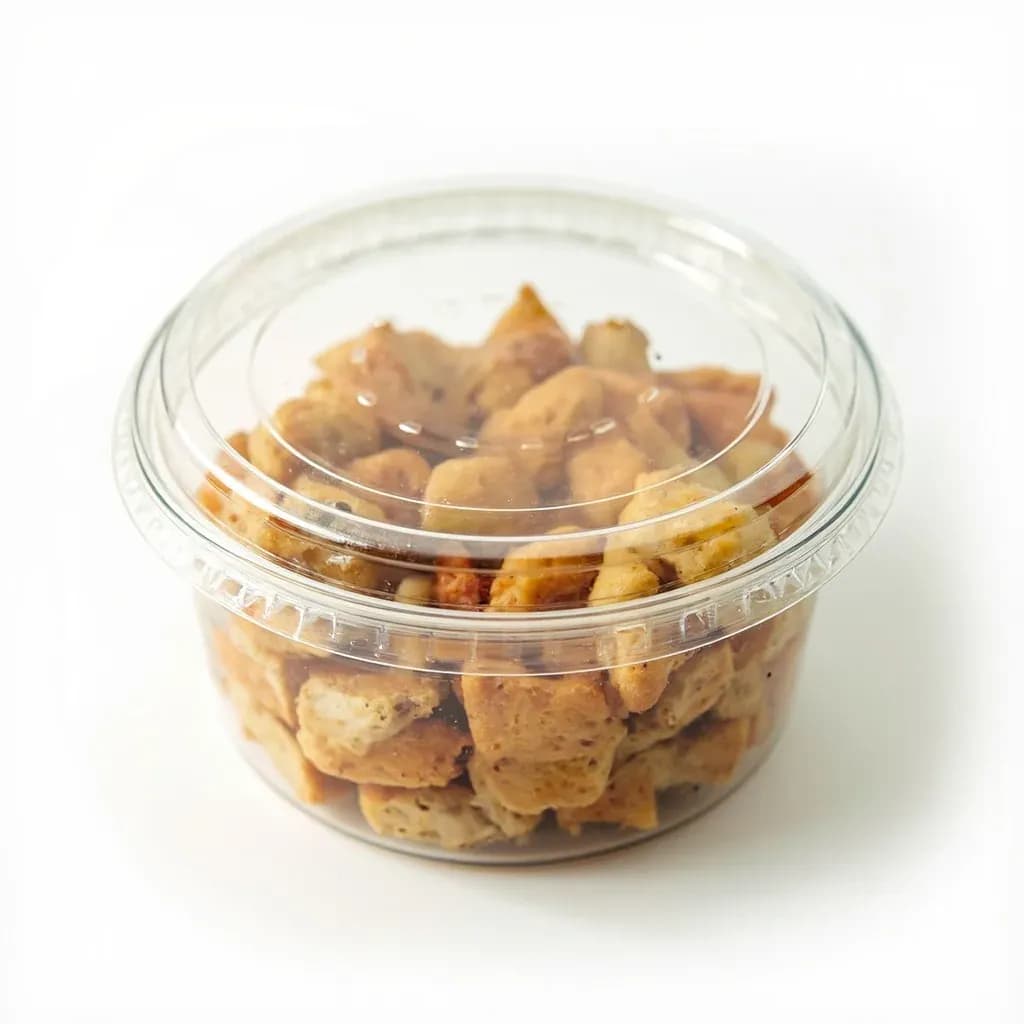
Deli Storage Container
Stackable round plastic tub used to store prepped ingredients, sauces, and stocks.
A deli container is a round, stackable plastic tub with a snap lid, sold in quart and pint sizes and ubiquitous in professional kitchens. Cooks fill them with prepped mise en place, sauces, dressings, and stocks for fridge and freezer storage. They nest to save space, take interchangeable lids across sizes, and many are clear so contents are easy to identify and label.
Deli containers are the workhorse of prep storage in both professional and home kitchens. The round shape promotes efficient stirring and scooping with a spoon or spatula, and the cylindrical walls resist the dead space that square containers create in refrigerator corners. The interlocking lid system, derived from commercial delicatessen operations that standardized portion control, creates a reliable seal that prevents spills during transport and protects contents from absorbing refrigerator odors. Available in reusable polycarbonate or polypropylene for durability, or disposable versions for single-service catering, these containers handle everything from a quarter-cup of minced garlic to a gallon of house stock. For most home kitchens, a set in 8-oz, 16-oz, and 32-oz sizes covers ninety percent of storage needs; commercial kitchens rely on 64-oz and 1-gallon sizes for batch prep of stocks, braises, and component batches. The most reliable reusable brands—Cambro and Carlisle—sell containers and lids separately, so budget accordingly and never mix lid and base brands due to slight rim diameter variations that compromise seals.
Alternatives
Types & varieties
The classic stackable tub with interlocking lid; the backbone of prep storage in any kitchen
Smaller sizes (1–8 oz) for mise en place components, dipping sauces, and single-service portions
Thicker walls, greater durability; brands like Cambro and Carlisle dominate professional kitchens
Built-in steam vent allows microwave reheating without removing the cover
Shallow round container with plate-like lid; ideal for salads and items requiring top visibility
Better refrigerator space efficiency than round; often grouped with deli containers
Lightweight polystyrene or polypropylene; intended for takeout and catering, not hot-holding
Choosing the Right Size
Match container capacity to your actual needs rather than defaulting to larger sizes. Oversized containers waste refrigerator space and increase the surface area of exposed contents to drying refrigerator air. The 8-oz size holds roughly one cup of liquid or a standard dice of two onions. The 16-oz handles a medium batch of sauce or dressed salad for four. The 32-oz is ideal for marinating a pound of protein or storing two days of prepped aromatics. Reserve 64-oz and 1-gallon sizes for batch-cooking stocks, braises, or component batches that will be portioned into smaller containers for daily use.
- 8 oz: Single portions, sauces, mise en place components
- 16 oz: Small-batch sauces, dressed salads, marinating one pound of protein
- 32 oz: Two to three days of prepped ingredients, grain or legume batches
- 64 oz to 1 gallon: Stocks, braises, and large component batches for portioning
Care and Longevity
Deli containers earn their cost through proper maintenance. Wash new containers before first use—manufacturing residue and warehouse dust accumulate during shipping. In the dishwasher, always remove lids with foam insulation rings to prevent warping from sustained heat; place on the top rack. Inspect rims regularly for cracks or deformation that compromise the seal. Stack containers with lids on to prevent rim damage. Replace containers that develop cloudiness, warping, or cracks—these indicate material degradation that affects both food safety and seal reliability. Commercial-grade containers from Cambro and Carlisle routinely last five to ten years with proper care; thinner disposable-grade containers are designed for single service use and should not be reused.
- Wash before first use to remove manufacturing residue
- Remove foam-insulated lids before dishwashing to prevent warping
- Inspect rims quarterly for cracks or deformation
- Stack with lids on to protect sealing surfaces
- Replace when cloudiness, warping, or cracks appear
Common uses
Tips & pitfalls
- Always cool hot foods to below 90°F before sealing—trapping heat creates condensation that breeds bacteria and dilutes sauces
- Label every container with contents and prep date using tape or removable sticker; replace labels when contents change
- Match manufacturer lots—mixing lids and bases from different brands risks poor seals and leaks, as rim diameters vary slightly
- Check temperature ratings before sous vide or hot-holding; polypropylene softens above 220°F and may warp under sustained heat
- For freezer storage, leave ½-inch headspace for liquid expansion; failing this causes cracked containers and messy freezer burn
- Use portion cups for mise en place during prep—they stack in hotel pans and fit standard 1/6 and 1/9 pan footprints
- Never use disposable polystyrene foam containers for hot-holding above 140°F—they can warp and may leach styrene
- Carry a spare lid box—damaged or lost lids are the most common reason deli containers leave service
Good to know
- Common Materials
- Polypropylene (#5 recyclable), PET (#1 recyclable), BPA-free polycarbonate
- Typical Sizes
- 4 oz, 8 oz, 16 oz, 32 oz, 64 oz (½ gal), and 1 gallon
- Temperature Range
- -40°F to 212°F for most; polycarbonate handles sustained heat better than polypropylene
- Dishwasher Safety
- Top rack recommended; remove foam-insulated lids to prevent warping
- Lid Types
- Interlocking rim (standard), vented (microwave reheating), plug-style (tamper-evident), flip-top
- Stackability
- Interlocking bases and lids allow stable vertical stacking when filled
- Microwave Safety
- PP, PET, and polycarbonate are microwave-safe with vented or off lid; never use polystyrene foam in microwave
- Freezer Safe
- All standard materials are freezer-compatible; allow ½-inch headspace for liquid expansion
Also called
deli-container · Deli Quart Container · quart-container · deli-tub
Related

Freezer Bags
Thick, sealable bags built to fight freezer burn

Storage Bags
Resealable bags for fridge storage and marinating

Storage Container
Lidded container for leftovers, prep, and meal kits

Glass Container
Oven-to-fridge glass that won't stain or hold odors

Plastic Container
Lightweight, stackable storage for everyday leftovers

Vacuum Sealer Bags
Airtight bags for long freezing and sous-vide

Reusable Bags
Washable silicone bags that replace single-use plastic

Mason Jar
Sealed glass jar for preserves, pickles, and storage