Storage & Containers
Deli Portion Cup
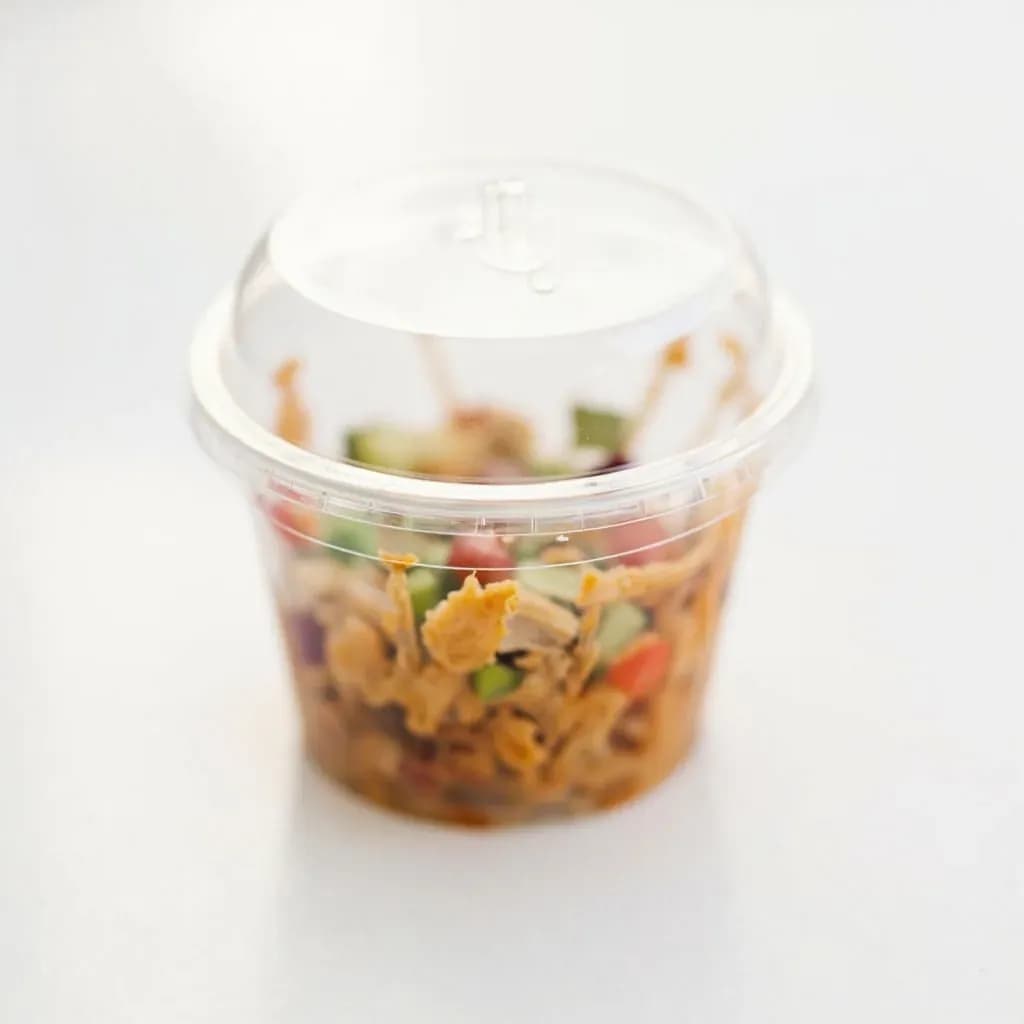
A small lidded cup for portioning sauces, dressings, and condiments to go.
A deli portion cup is a small plastic or paper cup, often with a snap lid, used to portion sauces, dressings, dips, and condiments for takeout and prep. Standard sizes from one to several ounces let kitchens pre-portion consistently and stack the cups for storage. They double as mise en place vessels at prep stations.
A deli portion cup is the small, lidded container tucked into takeout bags and stacked at the deli counter — built to hold a single serving of sauce, dressing, or condiment without leaking into the rest of the order. What makes it genuinely useful beyond quick-service restaurants is the marriage of a food-grade, leak-resistant body with a tight-fitting lid and a calibrated capacity ranging from roughly 0.5 oz up to about 5.5 oz. That combination turns a humble disposable cup into a precision tool for portioning, freezing, and even plating, because every cup holds the same volume and seals the same way every time.
Material choice matters more than brand. Polypropylene (PP) tolerates heat and freezing, polystyrene (PS) and PET stay clear and rigid for cold display, and PLA or molded fiber serve as compostable alternatives — but only where commercial composting actually exists. Lid style changes how the cup behaves in service: a flat snap-on lid is built for sealed transport of ketchup or ranch, while a dome lid adds headspace for whipped cream, garnishes, or layered mini desserts. The wrong cup for the job warps in the microwave, cracks in the freezer, or leaks in the delivery bag.
For the home cook, the workhorse trio of 1 oz, 2 oz, and 3.25 oz with matching flat lids covers nearly every condiment, dipping sauce, and small-batch freezing task. Buy polypropylene for anything that gets heated, PET or PS for cold presentation, and skip the eco-marketed PLA unless your local waste stream actually composts it.
Alternatives
Types & varieties
Opaque-to-translucent and the most heat-tolerant; microwave-safe — the workhorse of takeout sauce cups.
Crystal-clear, rigid, and brittle; popular for cold sauces and jello shots, but not microwave-safe.
Clear, shatter-resistant, recyclable (#1); good for cold to mildly warm foods and showcase presentation.
Plant-based bioplastic, clear; requires commercial composting facilities and is not backyard compostable.
Eco-marketed option, usually lined with PE or PLA; lids are typically molded fiber.
Compostable, sturdy, with a slightly rough texture; common for soup portions and as lids on paper cups.
Standard snap-on or press-in flat lid; the most common format for ketchup, ranch, BBQ, and dressings.
Tall lid with extra headspace for whipped cream, garnishes, layered parfaits, and tall condiments.
Attached flip lid that recloses; common for medications, snacks, and grab-and-go condiments.
Raised plug that snaps into the rim; useful for thicker sauces and finger-food items.
Choosing the Right Cup
Match the cup to the task and you avoid most portion-cup frustration. Use this quick decision tree when stocking a kitchen or planning a menu.
- Will it be heated or microwaved? Choose PP. PET and PS will soften or warp above roughly 160°F / 71°C.
- Is it going into the freezer? Choose PP or PET. PS can crack when very cold, and the cup needs about ½ inch of headspace because these plastics don't flex the way glass does.
- Does it need to look clear and clean under counter lighting for display? Choose PET or PS over the translucent PP.
- Are you serving whipped cream, a tall garnish, or a layered mini dessert? Use a dome-lid cup for headspace.
- Do you want compostable packaging? Choose PLA or molded fiber — but only if your waste hauler actually accepts commercial compostables, or you will simply contaminate the recycling stream.
Beyond the Takeout Bag
In a serious kitchen, portion cups do real work well outside the to-go box.
- Plating and service: quenelles of sauce, garnishes held during service, shallow molds for chilled layered desserts, mise en place for tasting flights.
- Mise en place and prep: pre-portion dressings on the side for lunch service, hold spice rubs and finishing salts next to the line, organize small hardware (corks, trussing needles) on the pass.
- Freezer library: freeze herb oils, demi-glace, stocks, purées, pesto, citrus juice, and even individual portions of caramel in 1 oz and 2 oz cups. Stack on sheet pans, label the lids, and pop out a puck of flavor whenever a recipe calls for it.
- Tabletop and picnic: portion salad dressings, dipping sauces, and condiments for outdoor service so the host isn't passing a heavy bottle across a blanket.
- Non-food reuse: PP cups wash well in the top rack and become paint wells, seed-starting pots, bead organizers, and small-parts trays in a workshop drawer.
Common uses
Tips & pitfalls
- Match the lid to the specific cup series — capacities overlap across brands, but lids rarely cross-fit, even when the numbers look identical.
- Choose PP for anything hot or microwaved; PS and PET will soften or warp above roughly 160°F / 71°C.
- When freezing liquids, leave about ½ inch of headspace — disposable plastics don't flex the way glass does, and an overfilled cup will crack as the contents expand.
- Write on the flat area of the lid with a Sharpie before filling; round, glossy lids are almost impossible to label once they're wet or greasy.
- Compostable PLA cups will not break down in a home compost bin and will contaminate recycling if tossed in — they need a commercial composting facility.
- Snap lids on over a clean, dry rim. A smear of sauce or oil on the lip is the most common cause of leaks in a delivery bag.
- Stack filled cups on a sheet pan with a sheet of parchment between layers to keep them from sliding or nesting during transport.
- Reuse sturdy PP cups for seed-starting, paint wells, bead storage, or small-parts organization; they survive the top rack of a dishwasher dozens of times.
Good to know
- Also called
- Sauce cup, portion cup, condiment cup, sample cup, deli container
- Typical sizes
- 0.5 oz, 1 oz, 1.5 oz, 2 oz, 3 oz, 3.25 oz, 4 oz, 5.5 oz (15–165 mL)
- Common materials
- Polypropylene (PP), polystyrene (PS), PET, PLA, poly-coated paper, molded pulp
- Lid styles
- Flat snap-on, dome, hinged, press-in plug, flat recessed
- Heat tolerance (PP)
- Microwave-safe to roughly 220°F / 104°C; PS and PET soften near 160°F / 71°C and are not microwave-safe
- Freezer tolerance
- PP and PET hold up well; PS can crack at very low temperatures
- Recyclability
- PP (#5), PET (#1), and PS (#6) recyclable where accepted; PLA and molded fiber need commercial composting
- BPA status
- Most modern disposable portion cups are BPA-free; verify labeling for hot-food use
- Bulk cost
- Roughly $0.02–$0.10 per cup-and-lid set in commercial 500–2,500 count cases
Also called
Portion Cup · Condiment Cups · sauce cup · souffle cup
Related

Freezer Bags
Thick, sealable bags built to fight freezer burn

Storage Bags
Resealable bags for fridge storage and marinating

Storage Container
Lidded container for leftovers, prep, and meal kits

Glass Container
Oven-to-fridge glass that won't stain or hold odors

Plastic Container
Lightweight, stackable storage for everyday leftovers

Vacuum Sealer Bags
Airtight bags for long freezing and sous-vide

Reusable Bags
Washable silicone bags that replace single-use plastic

Mason Jar
Sealed glass jar for preserves, pickles, and storage