Baking
Phyllo Dough
Paper-thin pastry sheets layered with fat for flaky pies like baklava and börek.
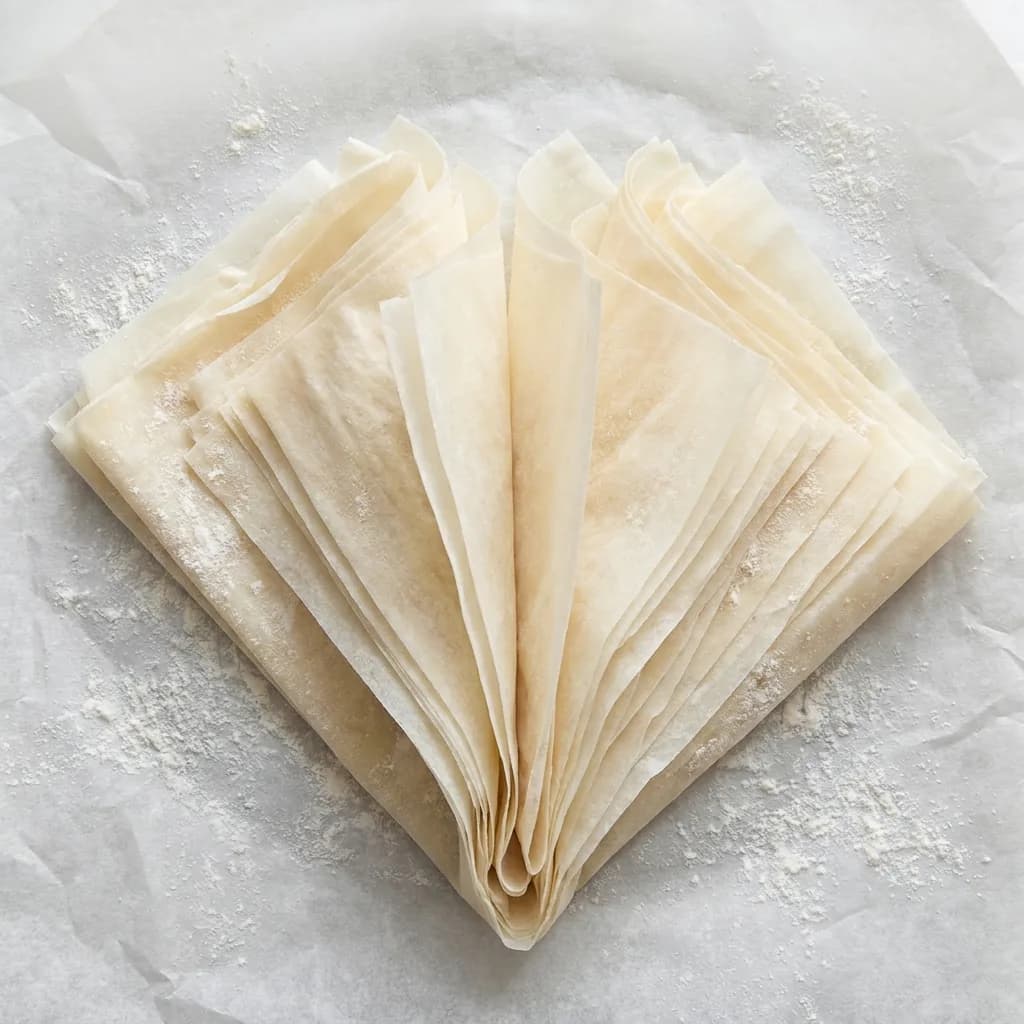
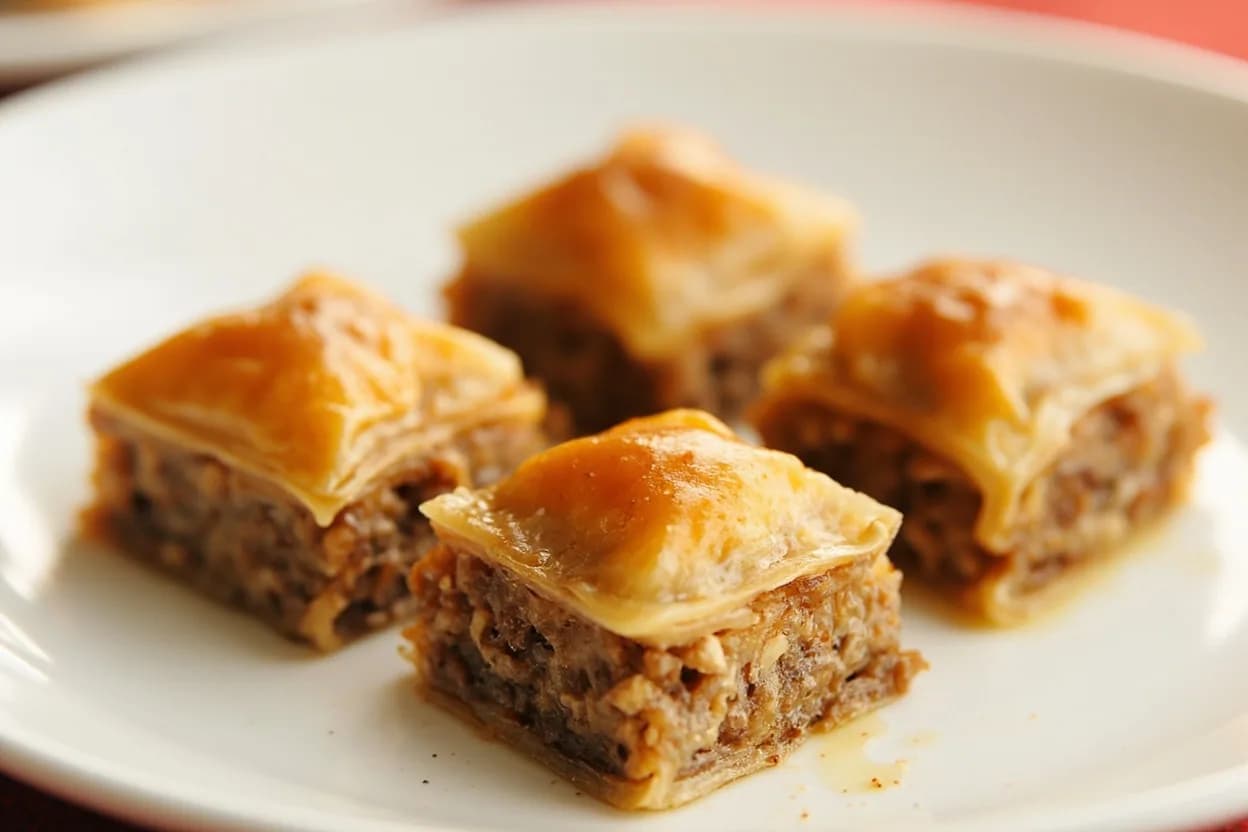
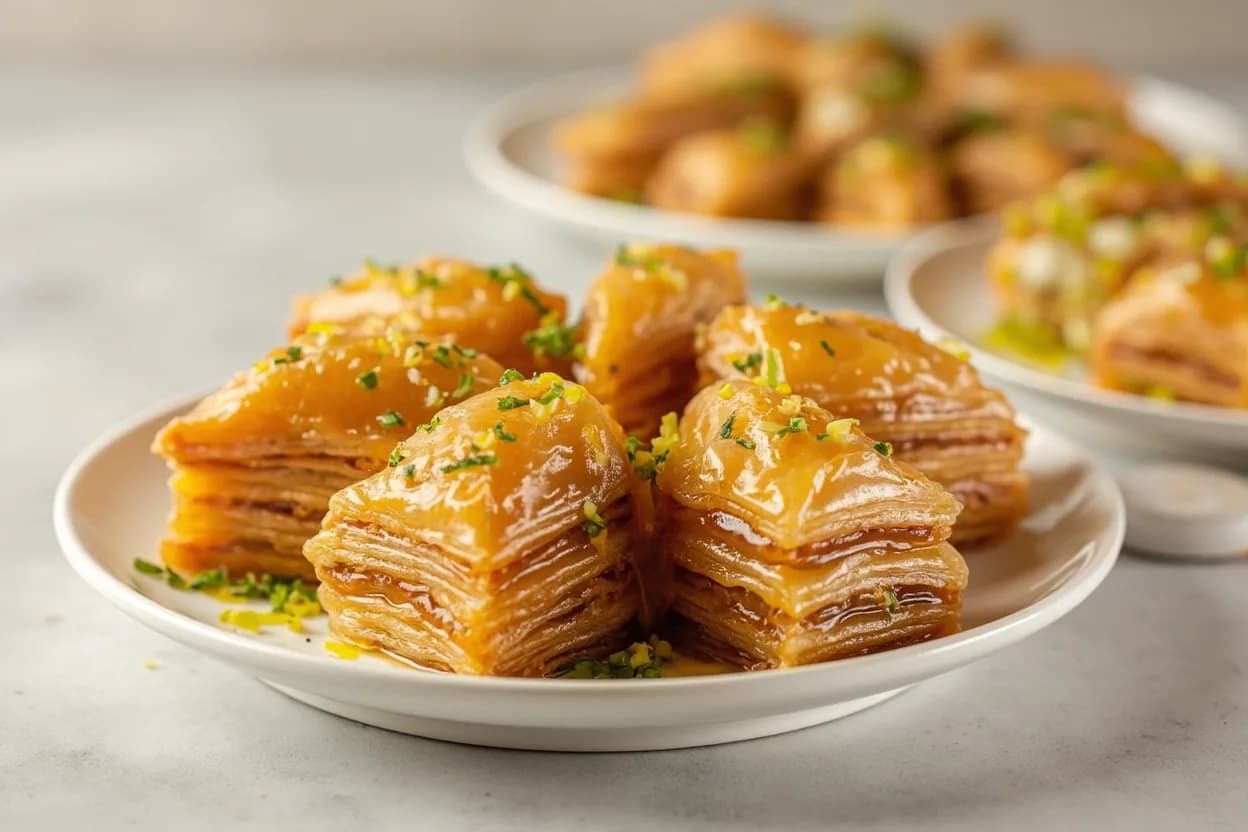
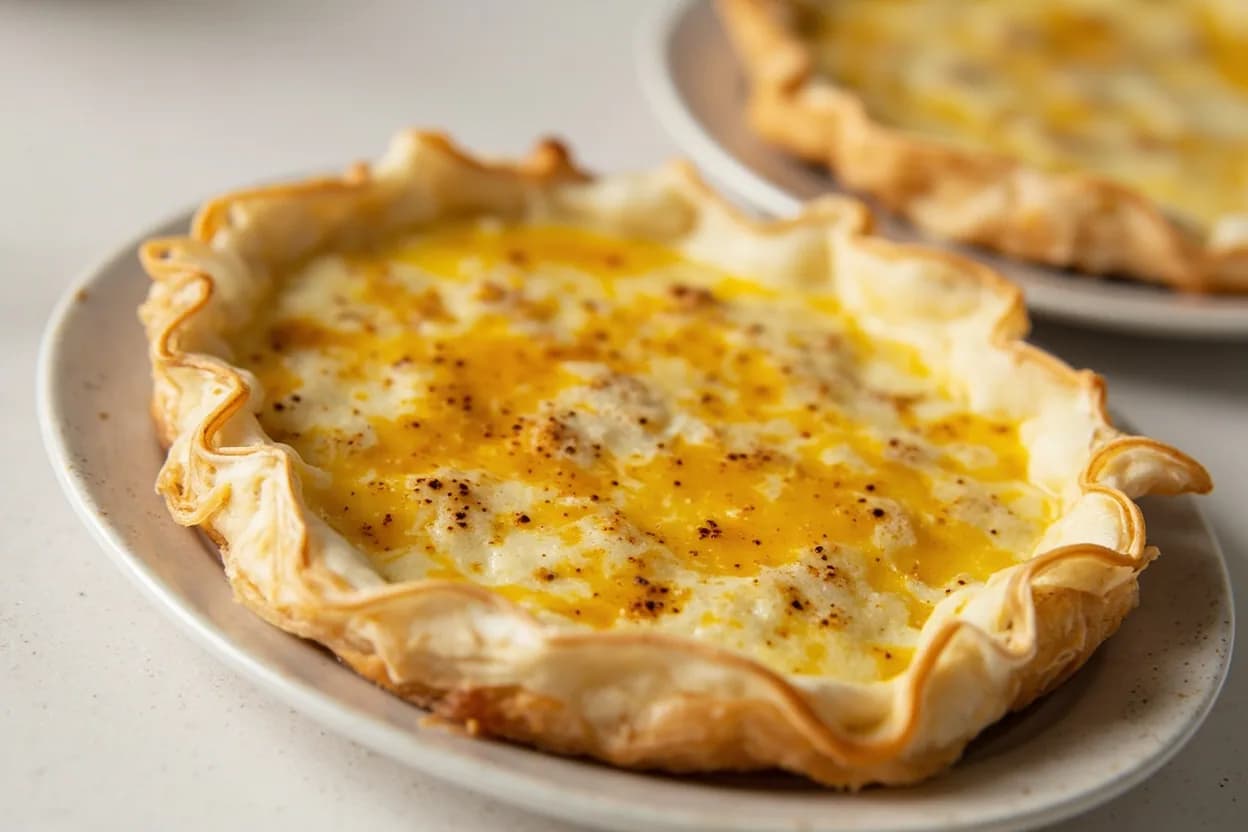
Phyllo (filo) dough is unleavened pastry stretched into tissue-thin sheets, used across the Eastern Mediterranean, Balkans, and Middle East. Sheets are brushed with butter or oil and stacked to build the shatteringly crisp layers of baklava, spanakopita, and börek. It dries out fast, so sheets are kept covered while assembling.
Phyllo dough—whose name derives from the Greek word for leaf—is an unleavened pastry of extraordinary delicacy. Made from a simple dough of flour, water, oil, and sometimes vinegar or egg, it is rolled and stretched until each sheet becomes translucent and gossamer-thin. The dough itself contains no fat; its signature flakiness comes entirely from brushing melted butter, oil, or ghee between dozens of paper-thin layers before baking. This lamination technique, which predates modern commercial production, creates hundreds of distinct, crisp strata that shatter satisfyingly at the bite. Fresh phyllo is the most fragile and is used within a day or two of purchase, while frozen phyllo—thawed slowly and handled with care—produces nearly identical results for home cooks. The dough is the foundation of some of the Eastern Mediterranean and Balkan world's most beloved pastries, from nut-laden baklava to spinach-feta spanakopita, and its versatility extends well beyond traditional applications to savory appetizers, potpie toppings, and creative desserts.
- Measured in
- g
- Storage
- Fridge
Allergens
Types & varieties
Found at Greek or Middle Eastern bakeries and specialty grocers; most fragile; use immediately or within 1–2 days of purchase
Most widely available in supermarkets; quality is reliable; thaw slowly in the refrigerator for 8–12 hours before opening the package
Austrian counterpart; similar thin, elastic dough but slightly thicker; acceptable substitute for many applications, especially desserts
Square, smaller, and thicker than phyllo; not a true substitute but workable in emergencies for small appetizers like crispy cups
Can be rolled very thin and used in place of phyllo for certain savory applications, particularly in South Asian-inspired dishes
Understanding the Phyllo–Puff Pastry Distinction
Phyllo and puff pastry are often confused but behave very differently. Phyllo contains no fat in the dough itself and relies entirely on layering butter or oil between paper-thin sheets to create flaky texture. Puff pastry incorporates fat directly into the dough and creates steam-leavened layers through lamination. This distinction matters: phyllo produces a crisp, flat, layered result, while puff pastry rises dramatically into a puffy, flaky mass. For authentic baklava and Balkan-style pies, true phyllo is the correct choice. For potpie toppings where you want lift and dimension, puff pastry is preferable—though phyllo works well when you want a thin, shatteringly crisp lid.
- [object Object]
- [object Object]
- [object Object]
Selecting and Inspecting Frozen Phyllo
When purchasing frozen phyllo, examine the packaging carefully before buying. Look for boxes with no frost discoloration and check that the box feels solid throughout—damaged, crushed, or bulging boxes indicate the product has thawed and been refrozen, and these sheets will be brittle, cracked, and nearly impossible to work with. Quality frozen phyllo should feel uniformly frozen and rigid. Store it in your freezer until ready to thaw, and plan ahead: an overnight refrigerator thaw is non-negotiable for best results.
- [object Object]
- [object Object]
- [object Object]
Common uses
Tips & pitfalls
- Thaw frozen phyllo slowly in the refrigerator for 8–12 hours; rapid thawing at room temperature causes it to tear and become brittle
- Keep unopened phyllo sheets covered with a damp (not wet) kitchen towel during assembly to prevent drying and cracking
- Work quickly once a sheet is uncovered; exposed phyllo dries and becomes brittle within minutes at room temperature
- Brush each layer generously with melted butter, oil, or ghee—this is what creates the flaky, distinct layers that define phyllo pastries
- If a sheet tears, don't panic; patch it with a piece from another sheet and brush with butter—the tear will seal during baking
- Use a soft-bristled pastry brush to avoid piercing the delicate dough
- Sprinkle a thin layer of oil or melted butter directly on the stack of sheets before separating them—this makes peeling easier and prevents tearing
- Preheat oven to at least 350°F (175°C); phyllo crisps best with high initial heat that sets the layers quickly
- Let baked phyllo dishes cool slightly before cutting—this allows the layers to set and prevents excessive crumbling
Nutrition
Energy
1251 kJ · per 100 g
Where the calories come from
Protein
7.1g
14% DV
Carbs
52.6g
19% DV
Fat
6g
8% DV
Fiber
1.9g
7% DV
Sugars
0.2g
of which
Sodium
483mg
21% DV
Source · USDA FoodData Central · Phyllo dough
View on FDC →In the shops
Matched grocery products
No matched grocery products for Phyllo Dough yet.
Good to know
- Origin
- Eastern Mediterranean and Balkans; name from Greek φύλλο (fyllo), meaning "leaf"
- Composition
- Flour, water, oil, and sometimes vinegar or egg; completely unleavened—no yeast or leavening agents
- Typical Dimensions
- Approximately 12 × 17 inches (30 × 40 cm) per sheet
- Thickness
- Translucent when held to light; a single sheet is less than 1 mm thick when rolled out
- Fat in Dough
- None—the dough itself is low-fat; all fat is applied between layers during assembly
- Yield
- One standard package contains 16–20 sheets; a single pie typically requires 8–12 sheets
- Storage (Fresh)
- Refrigerated, use within 1–2 days; keep tightly wrapped in plastic wrap
- Storage (Frozen)
- Up to several months in the freezer; thaw overnight in the refrigerator—never at room temperature
- Skill Level
- Manageable with practice; patience matters more than speed
Substitutes
- Strudel Dough — Closest in texture and method; available at specialty stores; can be rolled thinner if needed to mimic phyllo more closely
- Puff Pastry — Contains more fat and rises dramatically; not interchangeable in traditional recipes but workable for savory potpie toppings or when you want a puffy result
- Wonton Wrappers — Smaller and significantly thicker; acceptable for small appetizers like crispy cups when phyllo is unavailable; brush with butter and bake until crisp
- Homemade Phyllo — Flour, water, oil, and a splash of vinegar; kneaded, rested, then rolled paper-thin using a long rolling pin and hand-pulling technique—labor-intensive but produces the most authentic results
Pairs with
Also called
Petë · Yufka · Thin Phyllo Sheets · Filo Dough · Filo Pastry
Appears in these dishes

Related

All-Purpose Flour
The do-anything flour for bread, cakes, sauces, and dredging

Bread Flour
High-protein flour for chewy, well-risen breads
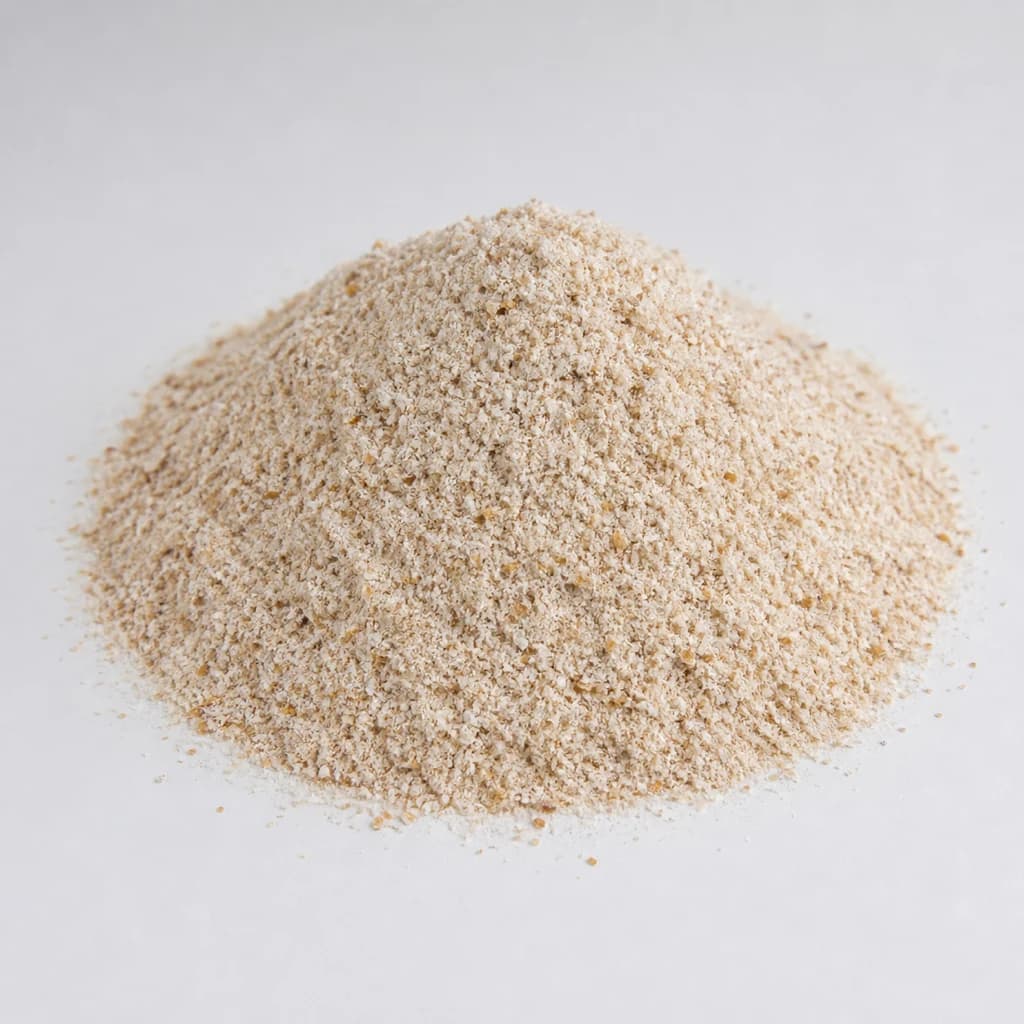
Whole Wheat Flour
Nutty, whole-grain flour for hearty breads and bakes
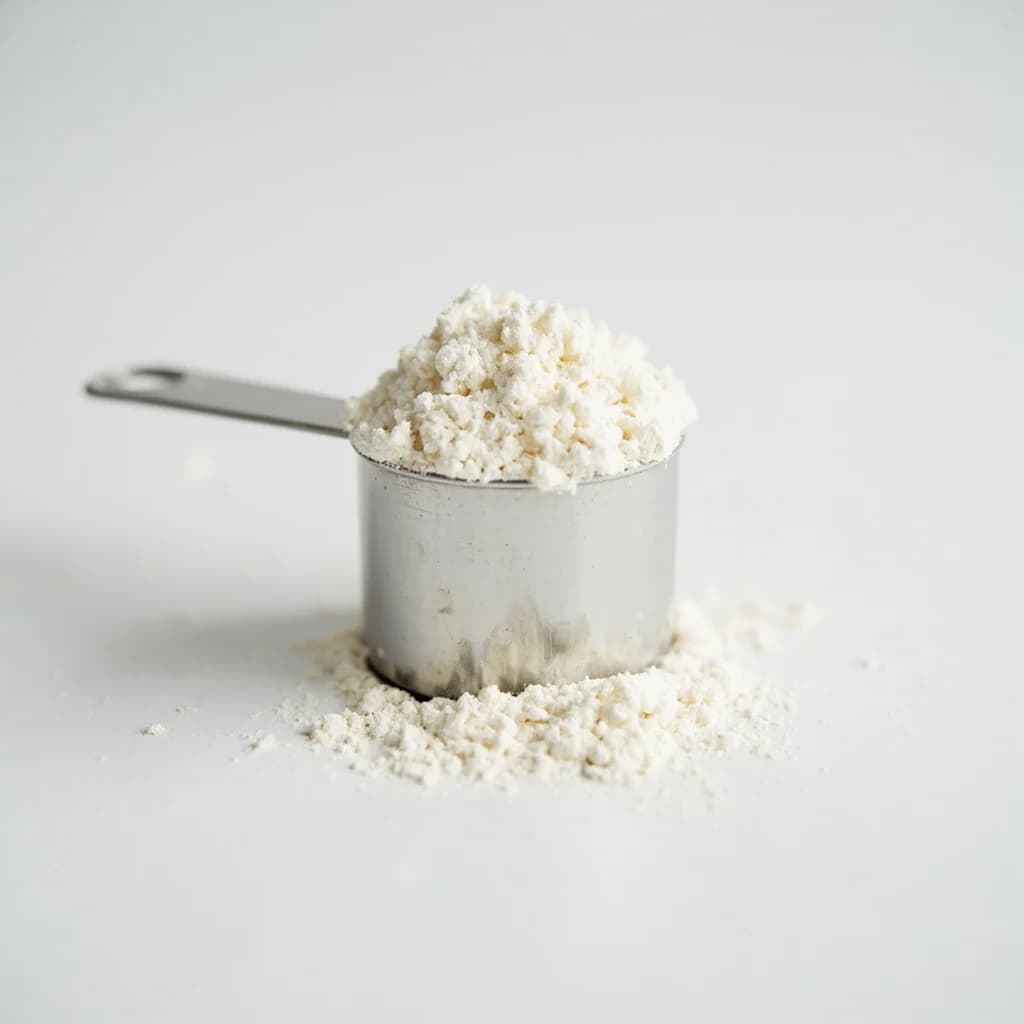
Cake Flour
Fine, low-protein flour for tender, delicate cakes
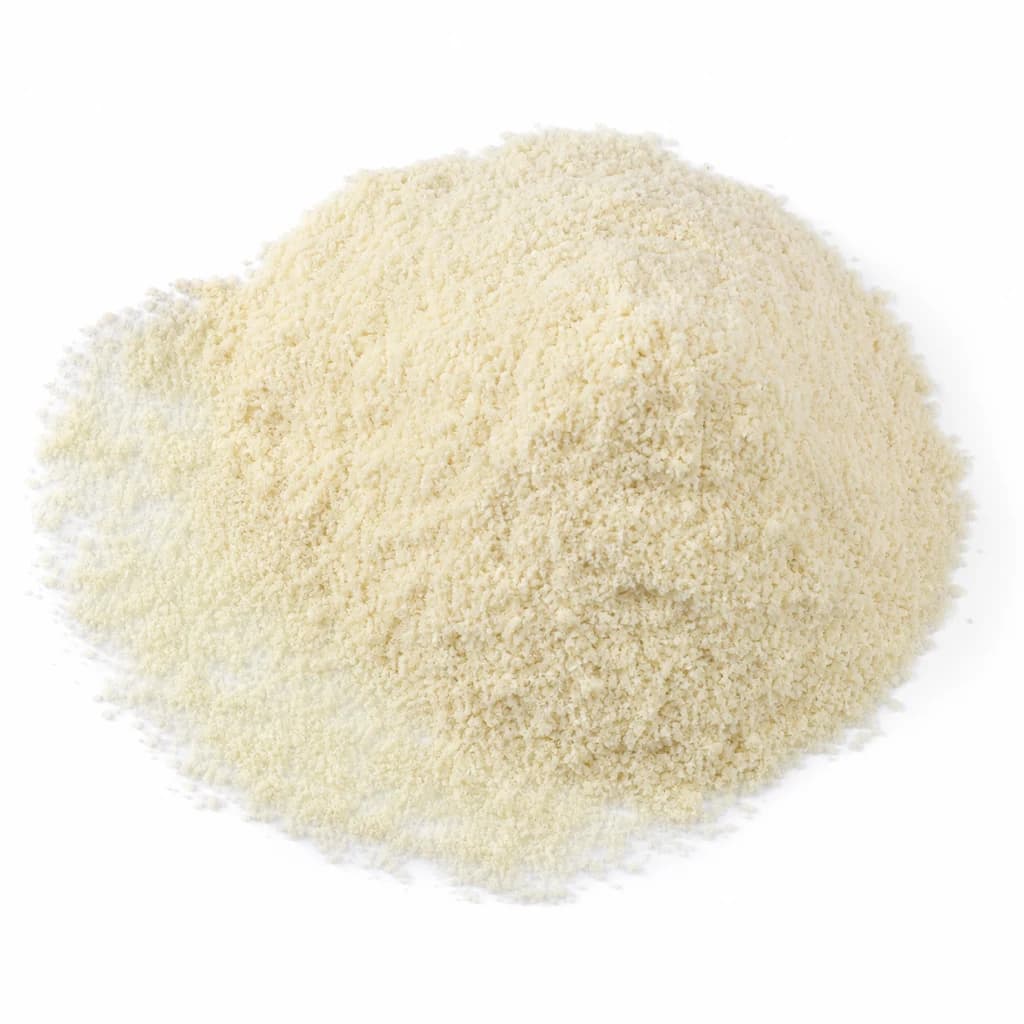
Almond Flour
Nutty, gluten-free flour for macarons and tender bakes

Baking Powder
All-in-one leavener for fluffy cakes, pancakes, and biscuits

Baking Soda
Pure leavener that needs acid to lift — and tenderize
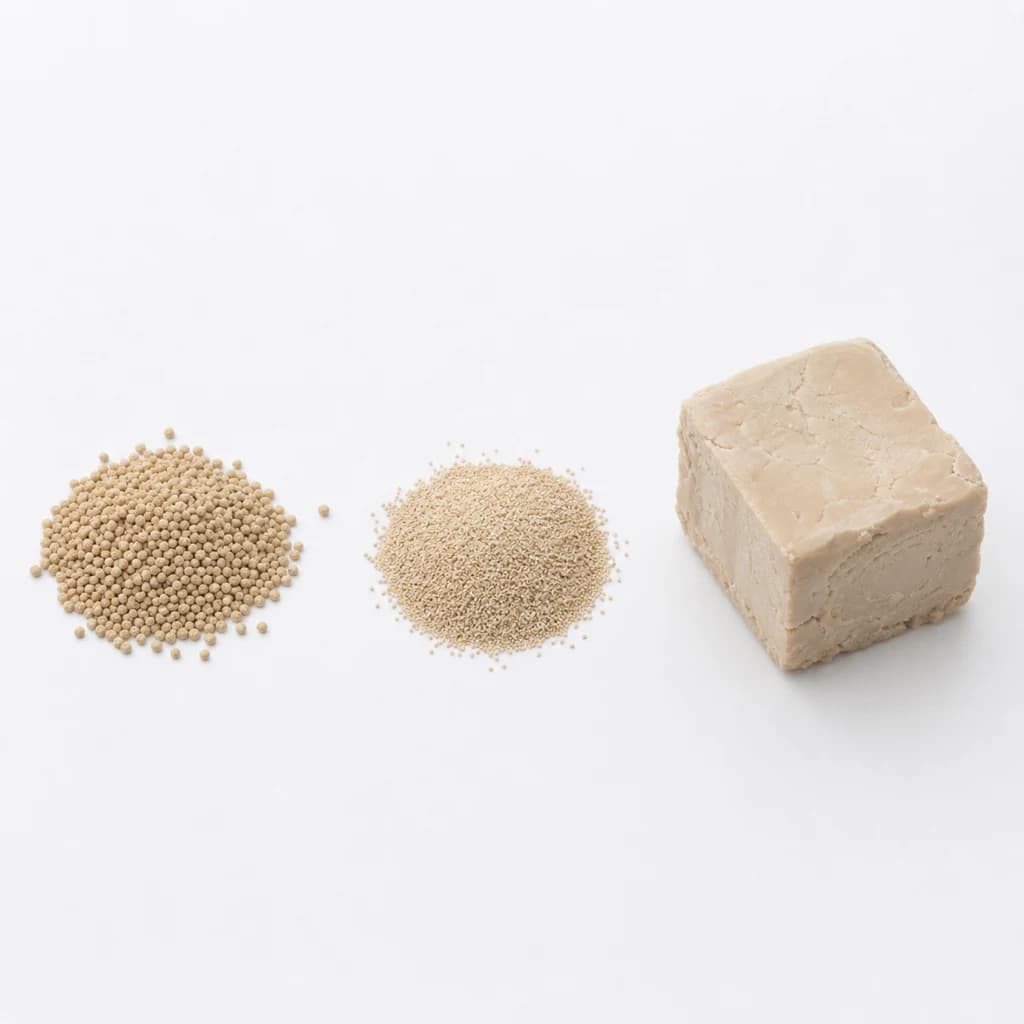
Yeast
Living leaven that makes bread rise and dough come alive