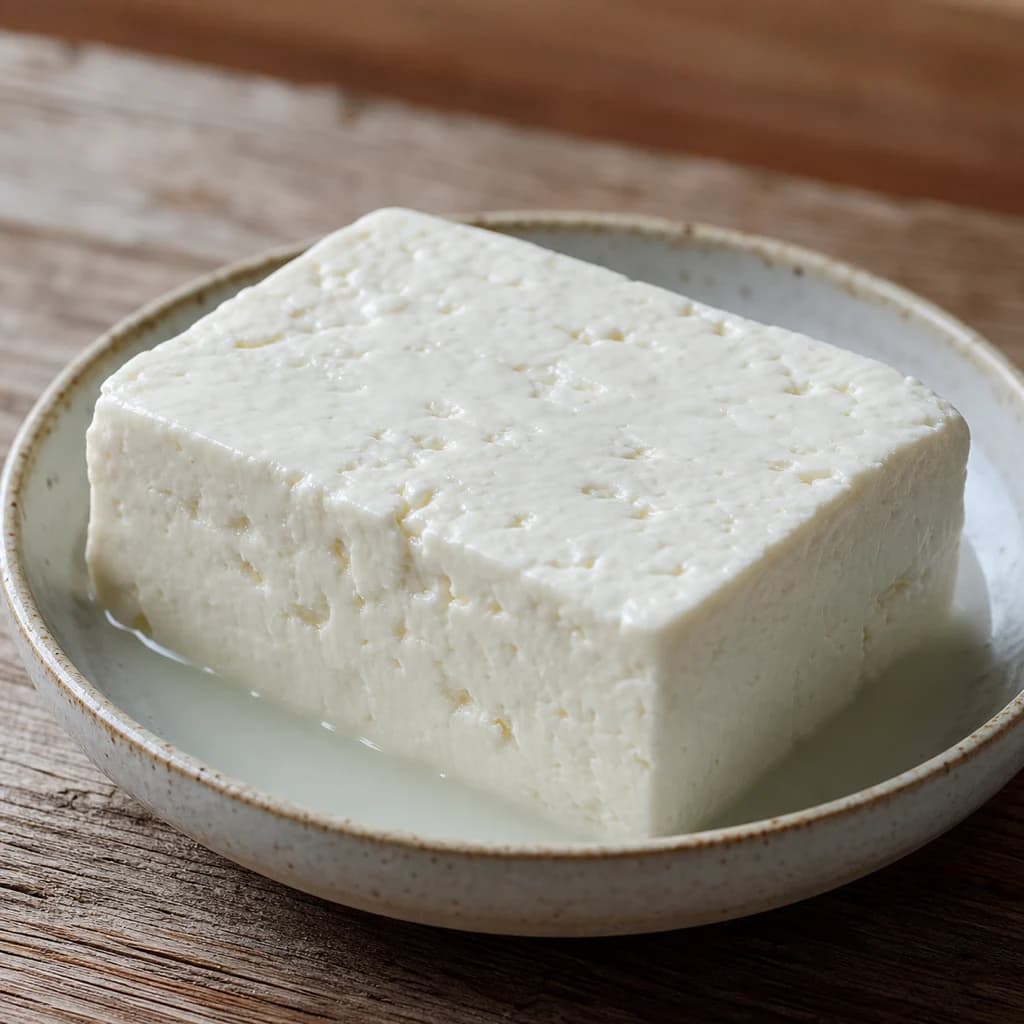
Natural form
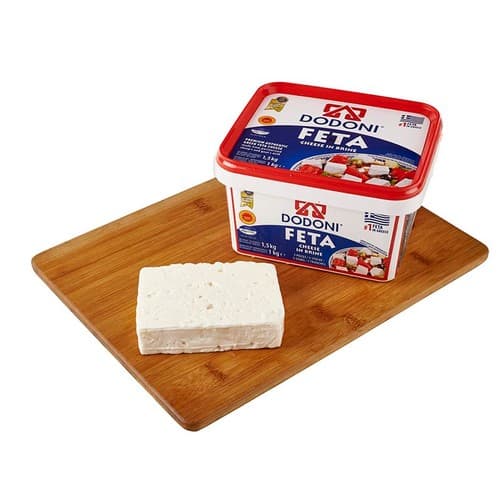
A block of white brined feta rests in its brine, showing the cheese's moist, crumbly texture.
Shows the defining form of feta — a dense white block stored in cloudy salt brine — teaching readers to recognize it before purchase or use.
Dairy & Eggs
Feta / White Brined Cheese
Salty, tangy brined white cheese crumbled over salads and baked into pastries across the Balkans and Mediterranean.
Feta and its many regional cousins are white cheeses cured and stored in brine, traditionally from sheep's or goat's milk. The result is salty, tangy, and crumbly, used in Greek salad, spinach pies, and countless Balkan and Middle Eastern dishes. Versions like sirene, telemea, and brined Bulgarian cheese share the same brined, briny character.
Feta is a white, brined cheese with roots in ancient Greece—Homer's Odyssey references a similar cheese stored in caves—and it remains the defining flavor of Mediterranean and Balkan cuisine. True PDO Greek feta is produced exclusively from sheep's milk (minimum 70%) with goat's milk rounding out the balance, sourced from designated regions including Thessaly, Macedonia, Thrace, Epirus, and the Peloponnese. The curd is cut, lightly pressed, and aged in brine for a minimum of two months; the characteristic white color comes from washing the curd to remove yellow beta-carotene pigments and most lactic acid bacteria before salting. This process, distinct from hard-aged cheeses, yields a cheese that is crumbly yet sliceable, intensely salty and tangy, with underlying buttery and herbal notes that reflect the animals' grazing on wild plants.
What makes feta unusual is its behavior in cooking: it melts only partially, forming creamy pockets rather than a homogeneous blend, and it sweats and shrinks when exposed to direct high heat. This is why traditional recipes either add it at the end of cooking or subject it to indirect heat within pastry or foil. The brine is not incidental—it is essential to maintaining the cheese's moisture and flavor, which is why quality feta is always sold submerged in brine rather than sealed in plastic cups of water. When properly selected and stored, feta adds a complexity of salt, tang, and richness that few other cheeses can replicate in Mediterranean cooking.
- Measured in
- g
- Storage
- Fridge
Allergens
Types & varieties
Produced in designated Greek regions; minimum 70% sheep's milk; tangy with herbal complexity; the benchmark standard
Aged in oak or chestnut barrels using older methods; subtle texture and flavor differences; increasingly rare commercially
Cow's milk dominant; milder and less tangy than Greek feta; widely used in Balkan cuisine; sold in blocks or pre-crumbled
Variable quality; often labeled 'feta' outside EU; saltier and denser than Greek PDO; common in processed foods
6–12 months aging; more crumbly, sharper, saltier; suitable for grating or crumbling over finished dishes
Understanding the Brine
The brine is not a byproduct—it is the lifeblood of the cheese. A 3–7% salt solution maintains the moisture balance, prevents spoilage from unwanted bacteria, and keeps the cheese's surface from drying and cracking. When you open a container of feta, you should see the cheese fully submerged. If the brine looks cloudy or smells off, discard it and prepare a fresh solution. Store-bought 'feta in water' is an inferior product—the water dilutes the brine's preserving effect and the cheese loses flavor rapidly. Always transfer opened feta to a clean glass container with enough fresh brine to cover it completely.
- Use 1 cup water + 2 tablespoons fine salt dissolved completely as a substitute brine
- A small piece of white bread pressed into the brine will help keep the surface moist and extend shelf life by a few days
- If mold appears on the surface (not just the brine), discard the entire block—surface removal is not sufficient
Buying Feta: What to Look For
The label matters. In the European Union, only cheese produced in Greece from milk of local sheep and goats can legally be called 'feta.' Outside the EU, the term is loosely applied to many imitations. Look for these indicators of quality: the ingredient list should specify sheep's milk (or sheep's and goat's milk) as the primary ingredient; the cheese should be submerged in brine; and the texture should be sliceable, not mealy or dry. Avoid pre-crumbled feta except for convenience—the exposed surfaces dry out quickly and lack the creamy pockets of a fresh block.
- PDO certification on the label guarantees authentic Greek production
- Blocks hold up better than crumbles for most cooking applications
- Younger feta (2–3 months) is softer and better for slicing; older feta (6+ months) is crumblier and sharper
Common uses
Tips & pitfalls
- Buy feta submerged in brine, not pre-packaged in sealed plastic cups with water—the brine is essential for flavor and texture retention
- Taste before using: feta varies enormously in saltiness; if too salty, soak chunks in cold water or milk for 15–30 minutes, then pat dry thoroughly
- Store opened feta in its original brine in a sealed container; if brine is depleted, dissolve 1 cup water + 2 tablespoons salt and use that to cover the cheese
- Never freeze whole blocks—ice crystals destroy texture, making it rubbery and watery when thawed; freeze only pre-crumbled feta on a tray for baked dishes
- Add feta at the end of cooking or use indirect heat—direct high heat (>150°C/300°F) causes it to sweat, shrink, and turn rubbery
- Press crumbled feta gently with paper towels before baking in phyllo or pastry to prevent a soggy bottom
- Use a fork to break feta rather than pressing—this preserves air pockets and creamy pockets within the crumble for better texture in salads
- Quality feta should not taste one-dimensionally salty—look for tang, butter, and lactone finish on the palate before purchasing
- For a cleaner crumble in composed salads, chill the block 30 minutes, then cut with a sharp knife instead of crumbling with fingers
- When blending feta for dips or sauces, bring it to room temperature and add a splash of cream or olive oil—cold feta blends unevenly and stays grainy
- Avoid 'feta-style' cheeses made entirely from cow's milk in Mediterranean cooking—they lack the grassy, animal tang that defines the cheese in traditional preparations
Nutrition
Energy
1109 kJ · per 100 g
Where the calories come from
Protein
14.2g
28% DV
Carbs
3.9g
1% DV
Fat
21.5g
28% DV
Fiber
0g
0% DV
Sugars
0g
of which
Sodium
1139mg
50% DV
Source · USDA FoodData Central · Cheese, feta
View on FDC →In the shops
Matched grocery products
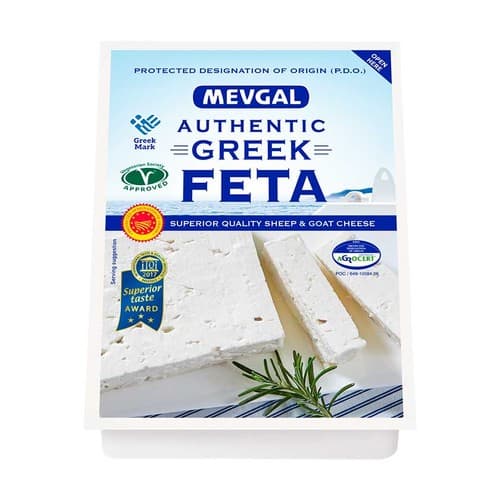 €3.99
€3.99DOP Feta Cheese
MEVGAL · kg · Bonpreu
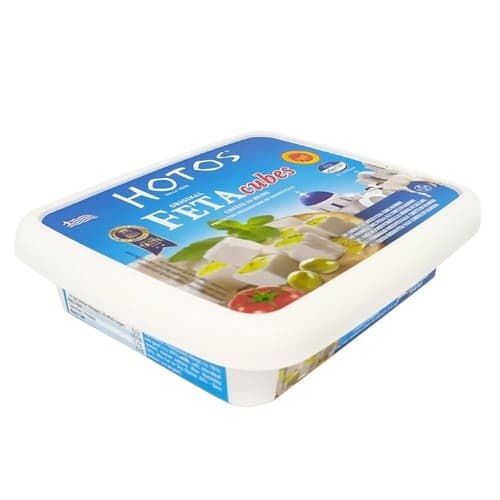 €2.50
€2.50HOTOS Feta Cheese Cubes
HOTOS · kg · Bonpreu
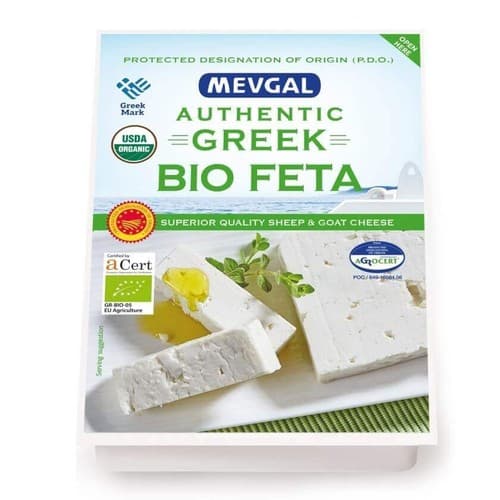 €4.49
€4.49Organic Feta Cheese
MEVGAL BIO · kg · Bonpreu
 €5.50
€5.50DODONI PDO Feta Cheese Sliced in Portion
DODONI · ud · Bonpreu
Good to know
- Origin
- Greece; documented production since 8th century BCE; PDO protected since 2002
- Primary Milk
- Sheep's milk (70–100%) with up to 30% goat's milk; avoid all-cow milk 'feta-style' products
- Texture
- Crumbly, firm but sliceable; breaks along natural fracture lines; becomes more crumbly with age
- Flavor
- Salty, tangy, mildly sour; buttery and herbal undertones; sharpness varies with aging
- Brine
- 3–7% salinity; cheese must remain fully submerged to preserve texture and flavor
- Shelf Life (Opened)
- 2–4 weeks refrigerated in brine; quality deteriorates sharply after this window
- Aging
- Minimum 2 months; 6–12 months for sharper, more crumbly aged varieties
- Heat Sensitivity
- Exceeds 150°C (300°F) causes sweating, shrinking, and rubbery texture
Substitutes
- Bulgarian Sirene — Closest flavor and texture; use 1:1; may be slightly milder, so taste and adjust seasoning accordingly
- Ricotta Salata — Saltier and drier; crumbles well but lacks feta's tang; use sparingly as it does not melt
- Goat Cheese (Chèvre) — Similar tang but creamier texture and less salt; good for spreads, not salads or crumbling applications
- Halloumi — Wrong texture (springy, not crumbly) and mild flavor; acceptable only for grilling, not crumbling applications
- Paneer — Mild, non-melting white cheese; lacks salt and tang; acceptable in Indian or fusion contexts only
- Queso Fresco — Mild and crumbly but lacks feta's tang and salt; better suited for Mexican or Latin American dishes
Pairs with
Also called
Feta · Djathë i Bardhë · Sirene · Telemea · Bulgarian Cheese · White Brined Cheese · Tzfat Cheese · Brânză
Appears in these dishes




Related

Whole Milk
Rich, full-fat milk for drinking, coffee, sauces, and baking
Butter
Golden fat for searing, baking, and finishing a sauce
Yogurt
Tangy, creamy culture for breakfast, sauces, and marinades
Cheddar Cheese
Sharp, melty cheese for sandwiches, gratins, and grating
Skim Milk
Fat-free milk for lighter drinking, coffee, and cooking
Heavy Cream
Rich cream that whips, enriches sauces, and sets ganache

Sour Cream
Tangy, thick cream for dolloping, baking, and dips
Mozzarella
Soft, milky cheese that melts into stretchy pizza pulls