Produce
Red Onion
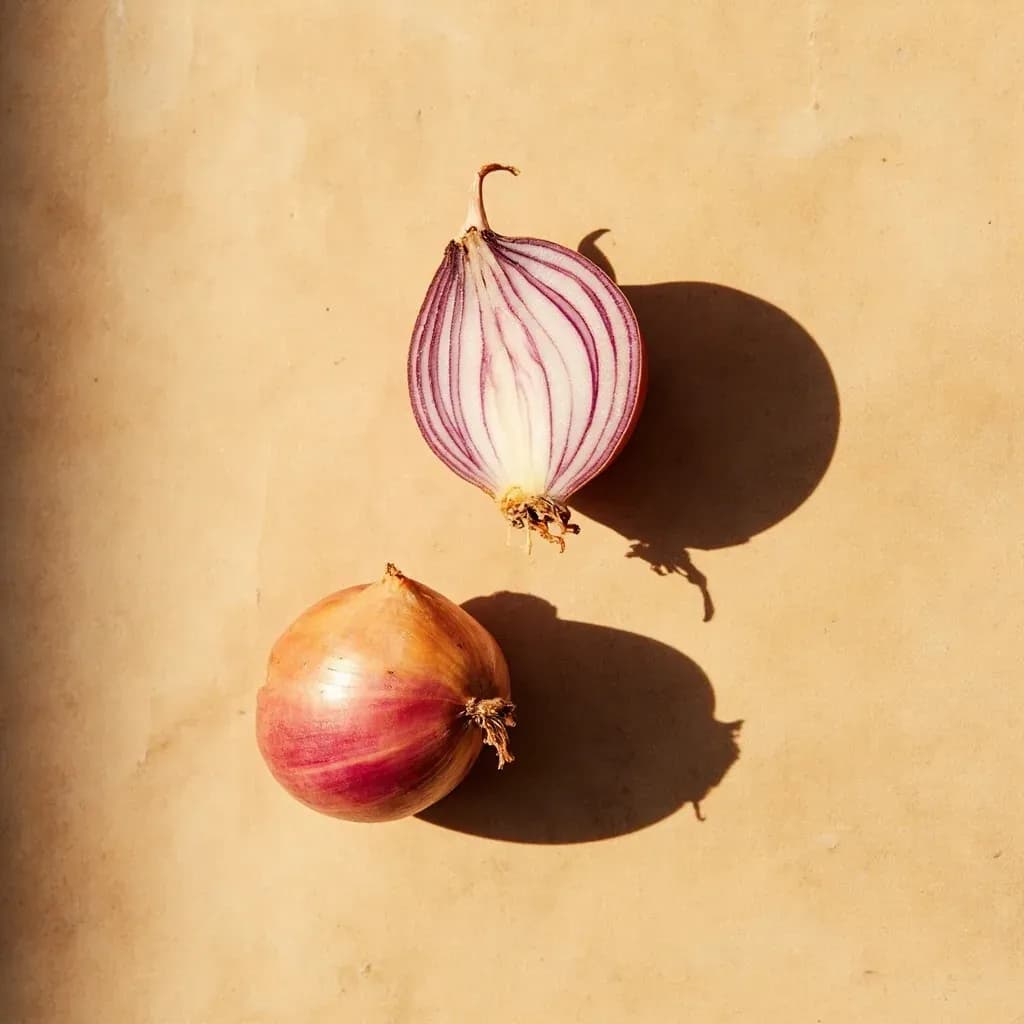
Mild, faintly sweet purple-skinned onion crisp enough to eat raw in salads, salsas, and sandwiches; quick-pickles to bright magenta and softens when cooked.
Red onion is the purple-skinned Allium cepa distinguished by anthocyanin pigments — the same water-soluble flavonoid family that colors blueberries and red cabbage — concentrated in its outer skin and the first few rings beneath. That pigment load gives it two culinary advantages yellow onions can't match: vivid color in raw applications and pickles, and a noticeably milder, sweeter bite that lets it sit raw in salads without dominating the dish. The trade-off is structural: red onions hold their shape better than yellow when cooked but lose their signature color, fading from purple-red to a muddy brownish-pink in long sautéing or braising.
The pigment chemistry matters at the stove. Anthocyanins are pH-sensitive — they shift toward bright magenta in acid (vinegar, citrus juice, wine) and toward bluish-purple in alkaline conditions, which is why a quick-pickle brine turns the rings jewel-toned while a long simmer in a neutral or alkaline braising liquid washes the color out. Red onions also deliver the crisp, juicy snap that raw salads depend on, and carry less of the sulfurous syn-propanethial-S-oxide precursor that makes you cry and lingers as a sharp aftertaste — though they are not tear-free.
Reaching for a red onion is a deliberate visual and flavor choice. It announces itself on the plate — magenta crescents in a Greek salad, fuchsia threads crowning a taco, rose-colored pickles beside grilled meat — and it carries a Mediterranean and Latin American accent that yellow onions don't. Use it where color and mildness both count; switch to yellow when you want deep caramelization or a long-cooked foundation.
- Measured in
- each
- Storage
- Dark Cool
Find it in
Suits
Types & varieties
Sweet, elongated red onion from Calabria, Italy; IGP-protected; traditionally eaten raw on bruschetta or in salads
Heirloom from Connecticut, pre-1800; large, flattened, deep purple-red skin; pungent with excellent storage
Heirloom from Southport, Connecticut; medium globe, deep red skin, firm white flesh tinged with red
Short-day heirloom developed in Texas; mild, sweet, popular across the American South
Short-day type from Louisiana; spicy, firm, good keeper, widely grown for Southern markets and export
Long-day hybrid; uniform, deep red skin, mild flavor, strong storage — a leading Northern US type
Long-day hybrid; medium size, glossy red skin, mild and sweet, popular for slicing into salads
Why the color changes: anthocyanin chemistry in the kitchen
The purple-red of a red onion is not a stable dye — it is a pH-reactive pigment. The cyanidin-based anthocyanins in the outer rings exist in different molecular forms depending on the acidity of their environment, and those forms have different colors. In an acidic medium (pH below about 4) the pigment reads as a vivid magenta-red, which is exactly what happens when you pour vinegar over sliced rings. In a neutral to slightly alkaline medium it drifts toward bluish-purple, and in a strongly alkaline or long-simmered environment it degrades altogether, leaving the brownish-pink of a sautéed red onion.
Two practical implications follow. First, if you want the color to stay bright — in pickles, salsas, or a quick dressed salad — finish or dress with acid. Second, if you want the color to disappear quietly — as in a long-cooked braise where you don't want purple streaks in the sauce — let the onions cook down without an acid hit, and the pigment will break down on its own.
- Acid (vinegar, lime, lemon, wine) → bright magenta-red, intensifies with time
- Neutral or lightly salted liquid → color holds briefly, then fades to pink
- Long cooking without acid → anthocyanins degrade; onion turns brownish-pink
- Alkaline ingredients (baking soda, hard water) → can push color toward bluish or greenish before it fades
Common uses
Tips & pitfalls
- Soak thinly sliced rings in ice water for 10–15 minutes to crisp them and dial back sharpness; drain and pat dry before dressing so the dressing clings.
- Use a very sharp knife — a dull blade crushes cells, releases more sulfur compounds, and makes both the onion sharper and the cook tearier.
- Cut the root end last to minimize cell rupture and reduce the eye-stinging syn-propanethial-S-oxide vapor.
- For the brightest pickle color, use white distilled or rice vinegar; apple cider and balsamic dull the magenta toward brown.
- Add a small pinch of sugar to quick-pickle brine — it balances the acidity and brings out the onion's natural sweetness without softening the crunch.
- To keep a sauté reddish, cook over high heat briefly and finish with a splash of vinegar or lemon; a long low sweat will fade the color regardless.
- Common mistake: storing whole red onions in plastic. They need airflow; use a mesh bag or open basket in a cool, dark, dry spot, and never alongside potatoes (onions absorb moisture and sprout in the humid microclimate; potatoes spoil faster from the moisture and gases onions release).
- Refrigerate cut onions promptly in a sealed container; whole bulbs keep best at cool (not cold) room temperature with airflow, since refrigeration of whole bulbs encourages moisture, soft rot, and sprouting once they warm back up.
Nutrition
Energy
167 kJ · per 100 g
Where the calories come from
Protein
1.1g
2% DV
Carbs
9.3g
3% DV
Fat
0.1g
0% DV
Fiber
1.7g
6% DV
Sugars
4.2g
of which
Sodium
4mg
0% DV
Source · USDA FoodData Central · Onions, raw
View on FDC →In the shops
Matched grocery products
 €2.40
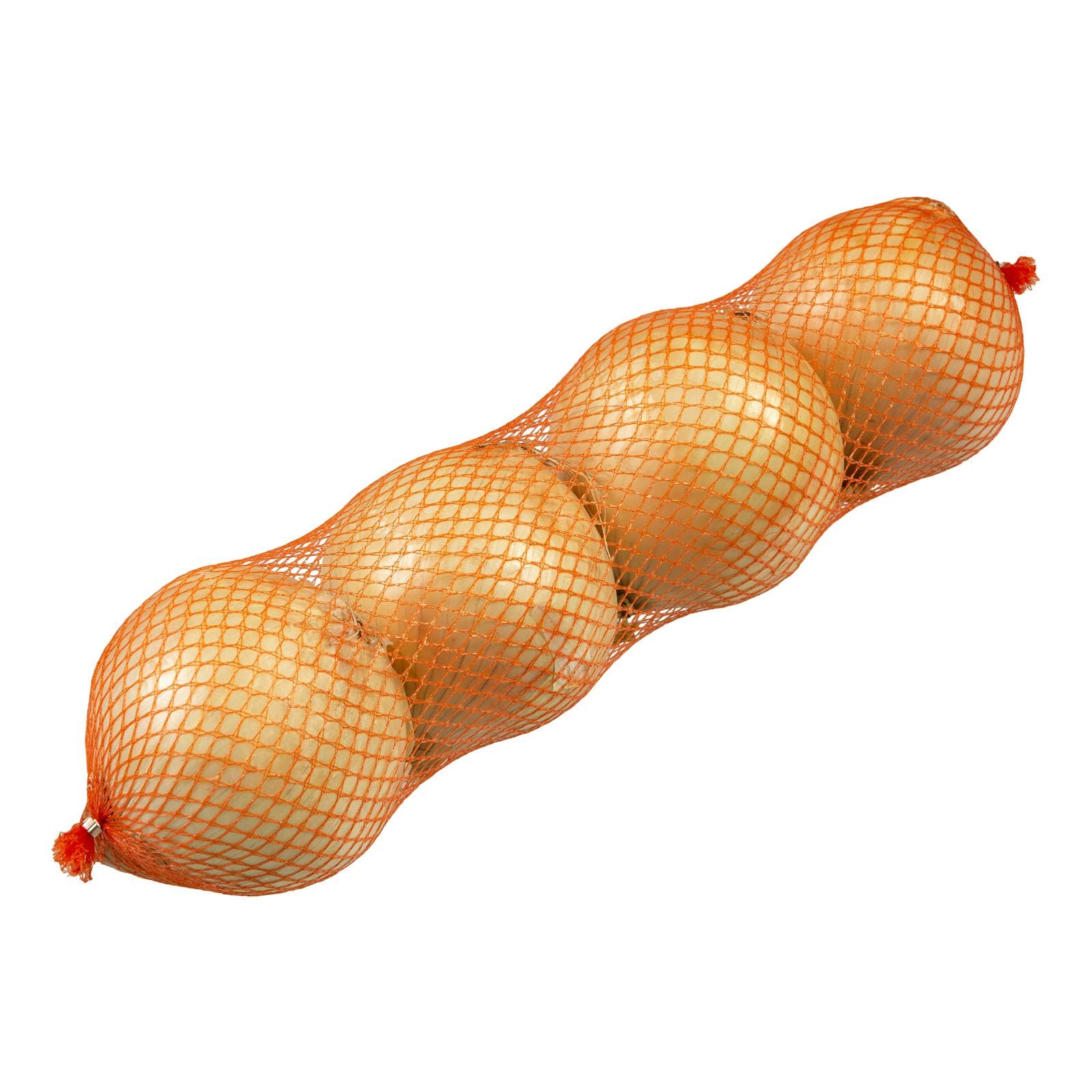
€2.40Onions
1 kg · Mercadona
 €2.50
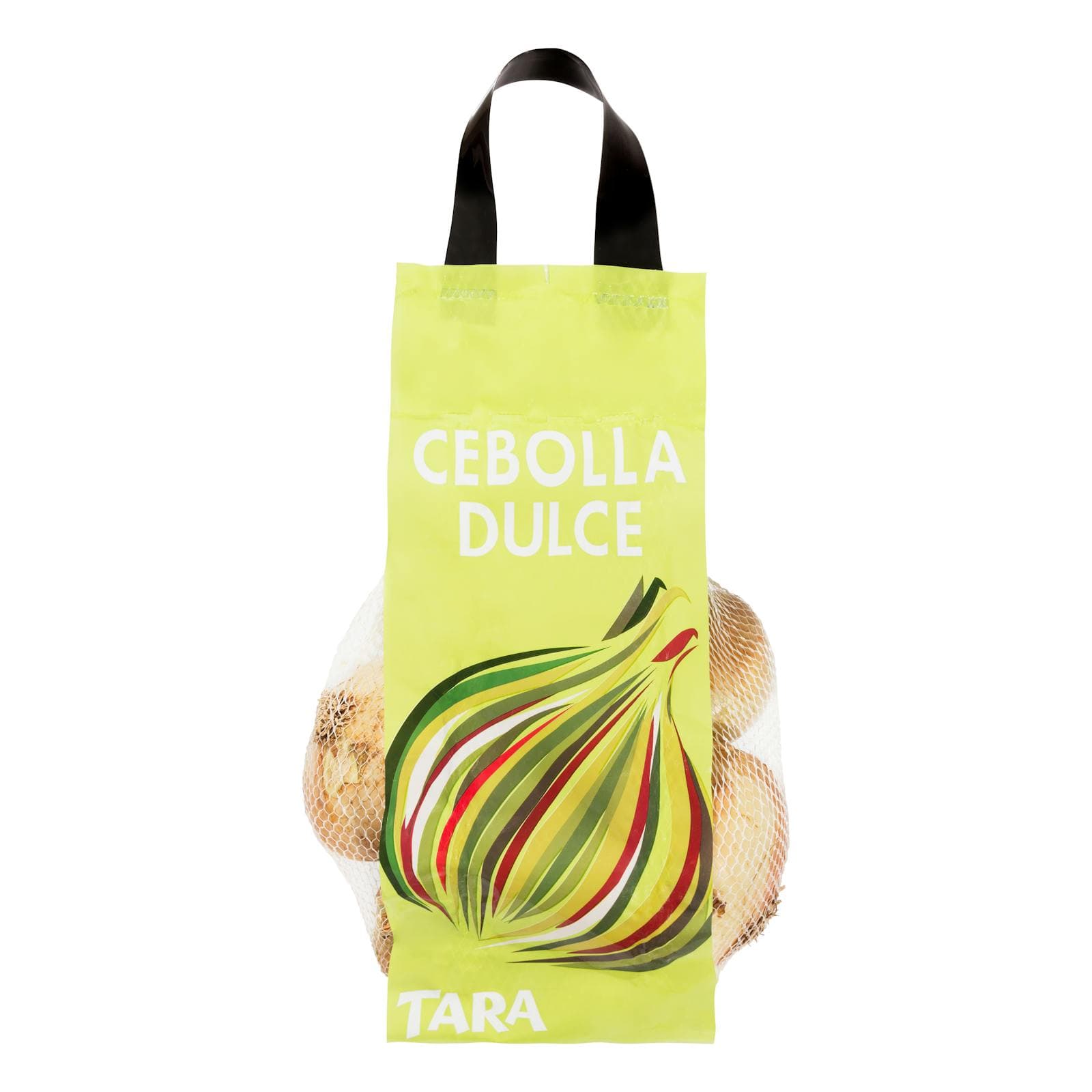
€2.50Sweet Onions
1 kg · Mercadona
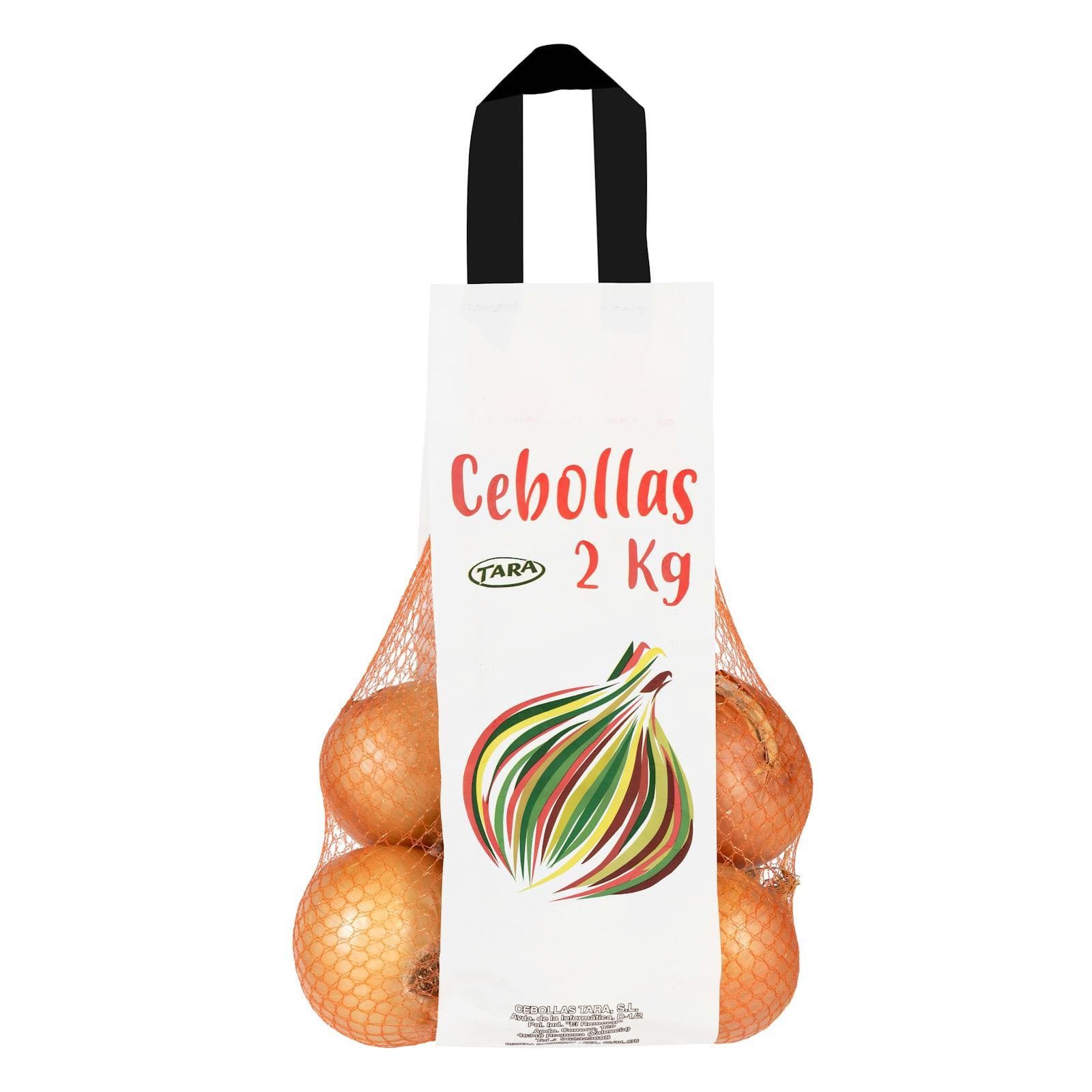 €3.90
€3.90Onions
2 kg · Mercadona
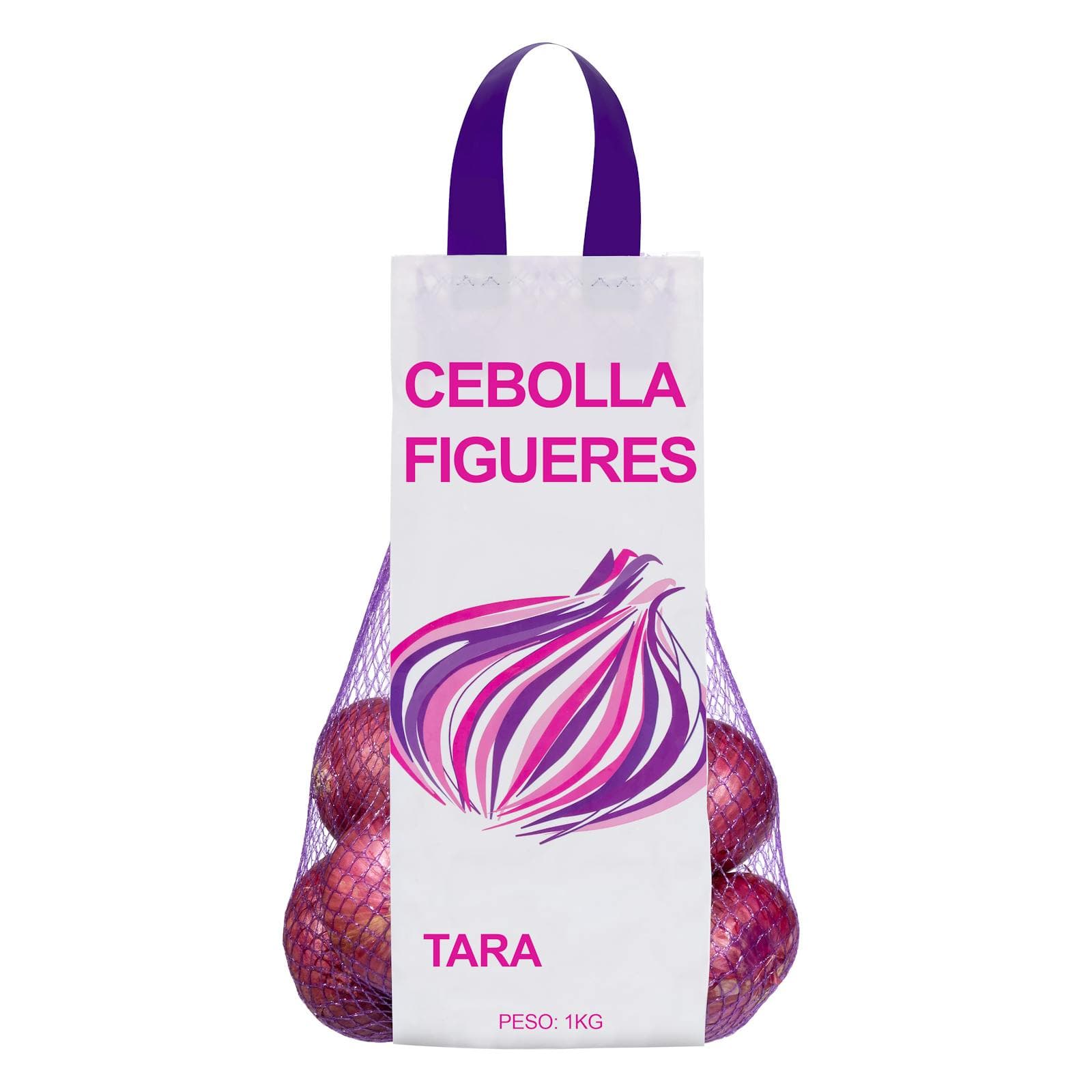 €2.00
€2.00Red Onions
1 kg · Mercadona
 €1.00
€1.00Diced Onion
BONPREU · kg · Bonpreu
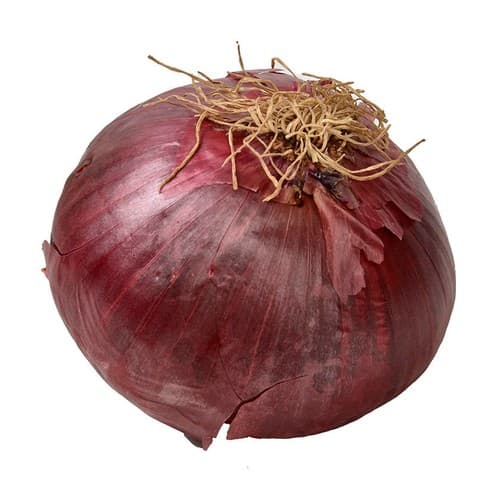 €0.68
€0.68Red Onion 1 unit
ud · Bonpreu
Good to know
- Scientific name
- Allium cepa
- Family
- Amaryllidaceae (formerly Alliaceae)
- Color source
- Anthocyanin pigments (cyanidin-based), concentrated in the outer skin and outer rings
- Flavor profile
- Mild to moderately pungent; sweeter and less sulfurous than yellow onion, sharper than sweet onion
- Raw texture
- Crisp, juicy, with firm concentric rings
- Cooked behavior
- Holds shape better than yellow onion; softens without fully breaking down; color fades to brownish-pink
- pH sensitivity
- Anthocyanins shift toward magenta in acid (vinegar, citrus) and bluish-purple in alkaline conditions
- Storage
- 0–4 °C (32–40 °F), dry, dark, well-ventilated; keeps 1–3 months; do not store with potatoes
Substitutes
- White onion — Closest 1:1 swap; sharper and more pungent, no color. Soak briefly in cold water to mellow and mimic red onion's milder bite.
- Sweet onion (Vidalia, Walla Walla, Maui) — Milder and sweeter; use raw only — they collapse and lose all color when cooked.
- Yellow onion — Stronger and more sulfurous; acceptable in cooked dishes where color is not critical and deeper caramelization is wanted.
- Shallot — Use 2–3 shallots per red onion; milder and slightly garlicky; excellent in vinaigrettes and pan sauces, but no color.
- Red or white pearl onions — Best for pickling and skewers; smaller, so adjust by count rather than weight.
- Scallions (red or regular) — Best for garnishes and fresh salsas; milder and more herbaceous, no soak needed.
Pairs with
Also called
purple onion