Natural form
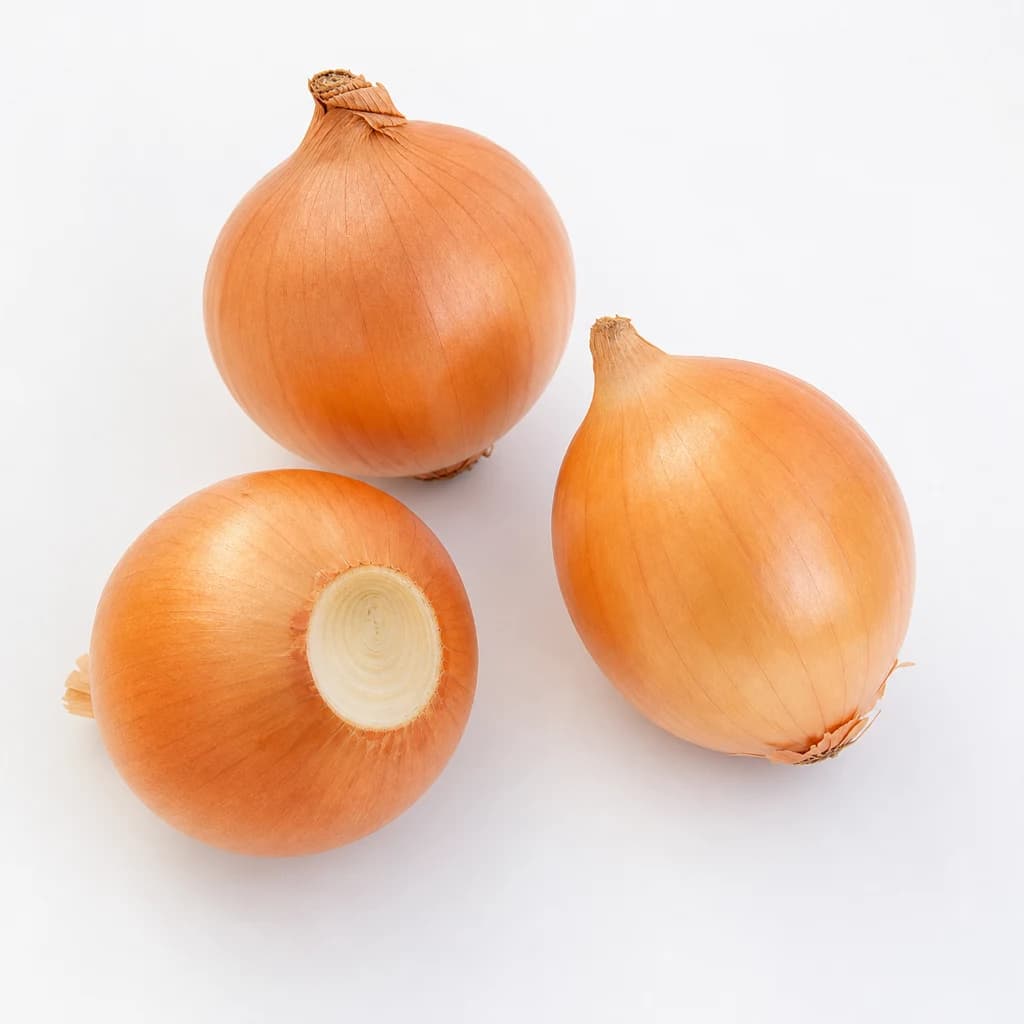
Three whole yellow onions showing papery outer skin, layered structure, and root end.
Shows the intact bulb exactly as purchased — outer skin color, dry papery texture, and characteristic teardrop shape help readers recognize onions at market.
Produce
Onion
The universal aromatic base bulb, used raw, sautéed or caramelized in cuisines worldwide.
Onions are layered bulbs in the allium family and the foundational aromatic of nearly every cuisine. Sautéed they sweeten and soften to build the flavor base of stews, curries and sauces; raw they add sharp bite to salads and salsas. Brown, yellow, white and red varieties differ in pungency and sweetness.
The onion (Allium cepa) is a bulb vegetable originating in Central Asia and cultivated for over 5,000 years, making it one of humanity's oldest food plants. Its structure is simple—a modified leaf structure storing energy as sugars in concentric layers—but its behavior in cooking is anything but simple. Raw onions deliver sharp, pungent, sulfurous bites that transform dramatically under heat: the same onion that makes you cry when sliced raw becomes sweet, mellow, and complex after 30 minutes of slow caramelization. This duality makes onions perhaps the single most versatile ingredient in any kitchen, appearing in virtually every savory preparation from a quick weeknight sauté to a long-simmered braise.
Onions function as the foundational aromatic in nearly every Western cooking tradition. French cuisine builds its flavors on mirepoix; Italian cooking starts with soffritto; American home cooking begins with sautéed onions as a matter of course. The order is always the same: fat first, onions second, everything else after. This is not convention—it is chemistry. Onions have enough water content to create steam and enough sugars to brown, but they need time and attention to move from raw to softened to properly caramelized. Rushing this process produces bland, undercooked onions in finished dishes, which is one of the most common failures in home cooking.
The tear factor comes from sulfur compounds called lachrymators, released when cell walls are ruptured by cutting. The same compounds that make you cry are responsible for the pungency that stands up to bold flavors in raw applications. Sweet onion varieties like Vidalia and Walla Walla have been bred to contain less sulfur and more sugar, making them mild enough to eat like fruit. Understanding this variation—between varieties and between raw and cooked states—allows you to select and prepare onions strategically for any dish.
- Measured in
- piece
- Storage
- Pantry
Types & varieties
Most common all-purpose variety; strong pungency when raw, sweet when cooked; ideal for caramelizing, roasting, and as a soup base. Stores well.
Milder and slightly sweeter than yellow; traditional in Mexican cuisine; flesh becomes more translucent when cooked; oxidizes faster when cut.
Mild and slightly sweet; vivid color fades with cooking; best used raw in salads, sandwiches, and pickles; excellent sliced thin for grain bowls.
Sweet onion cultivar from Georgia, USA; flat shape with thin skin; very low sulfur content; perishable—refrigerate after purchase; excellent raw or lightly cooked.
Sweet onion from Washington state; large, juicy bulbs; mild enough to eat like an apple; very short summer season; best raw.
Hawaiian sweet onion; mild and crunchy with thin skin; popular grilled whole or sliced raw in salads.
Small, flat Italian onion (1–2 inches diameter); intensely sweet; holds shape when cooked; traditional in Italian braises, roasts, and relishes.
Tiny (½–1 inch); mild and delicate; often blanched and peeled before cooking; traditional in British cuisine, pan-roasted with butter, or pickled.
Technically a different species (Allium cepa var. aggregatum); elongated bulbs with copper-red skin; milder and sweeter than yellow onion, with subtle garlic notes; essential in French cooking; minced finely for dressings and sauces.
Immature onions harvested before bulb forms; long green tops and small white bulb; both parts edible; used raw as garnish, in Asian cooking, and in salads.
Different species (Allium ampeloprasum) but function similarly; large with layered whites and light greens; sandy between layers—split and rinse thoroughly; milder and sweeter; excellent in soups, braises, and gratins.
Mild, faintly sweet purple-skinned onion crisp enough to eat raw in salads, salsas, and sandwiches; quick-pickles to bright magenta and softens when cooked.
Understanding Pungency and Sweetness
The sulfur compounds in onions exist primarily in the outer layers and near the root end. As onions cook, these compounds break down and dissipate, leaving behind the natural sugars that caramelize. This is why long, slow cooking transforms a sharp, aggressive raw onion into something silky and sweet. The water content must evaporate before browning can occur—adding onions to a cold pan with insufficient fat or cooking at too high a heat steams them instead, producing mushy, gray onions with no color or flavor development. Medium-low heat, adequate fat, and patience are non-negotiable for proper caramelization.
- Yellow onions: highest sulfur content, best for cooking where pungency will mellow and sweeten
- Sweet onions (Vidalia, Walla Walla, Maui): lower sulfur, higher sugar, best raw or minimally cooked to preserve their delicate character
- White onions: moderate pungency, good all-purpose choice for both raw and cooked applications
- Red onions: mild enough for raw use, color fades quickly with heat—add at the end of cooking for visual impact
The Technique of Caramelization
Caramelized onions are not an afterthought—they are a deliberate technique that cannot be rushed. A recipe that calls for 'caramelized onions' but gives five minutes of cook time is describing softened, translucent onions, not true caramelization. Real caramelization requires 30 to 45 minutes over medium-low heat for a single large onion. The process: start with medium heat to sweat the onions and release moisture, then reduce to medium-low as the water evaporates and browning begins. Stir occasionally, not constantly. A small pinch of salt draws out additional moisture and accelerates the process. If browning stalls, add a tablespoon of water and scrape up the fond. The result should be deep golden-brown strands with jammy, concentrated sweetness—nothing like the gray, mushy onions produced by rushing or overheating.
- Never use high heat to speed caramelization—it produces bitter, burnt exterior before the interior softens
- Add a pinch of salt once onions are translucent to draw out moisture and aid browning
- If using for French onion soup, deglaze the pan with red wine and beef broth after maximum caramelization
- Refrigerate leftovers: caramelized onions freeze well and are useful for quick weeknight cooking
Professional Knife Skills
Efficient onion prep is a baseline professional skill that directly affects cooking quality. A dull knife crushes rather than cuts cell walls, releasing more sulfur compounds (more tears) and creating ragged edges that brown unevenly. The root end should be left intact until the final cuts to keep the structure stable. The standard technique: cut the onion in half pole-to-pole (through root and tip), peel, place cut side down, make horizontal cuts toward but not through the root, make vertical cuts, then slice across to dice. For slices: halve, peel, slice equatorially. For rings: keep the equatorial slices intact and separate carefully. Chilling whole onions 30 to 60 minutes before cutting significantly reduces tear-inducing compounds.
- Keep the root end intact during prep—the structure holds the onion together for cleaner, more uniform cuts
- Peel easily by slicing off root and top ends, scoring the skin around the equator, then microwaving 30 seconds or blanching 1 minute
- Don't discard papery layers: freeze dried skins for infusing stocks and braises, or use large whole cloves to flavor long-cooking liquids
- Sweet onions spoil faster—store Vidalia and Walla Walla in the refrigerator crisper immediately after purchase
Common uses
Tips & pitfalls
- To reduce tearing: refrigerate whole onions 30–60 minutes before cutting; use a very sharp knife (crushed cell walls release more sulfur compounds); cut near a running fan or open window; light a candle nearby to disperse fumes.
- To dice efficiently: cut onion in half pole-to-pole, leaving root end intact. Peel. Place flat side down. Make horizontal cuts toward (but not through) the root. Make vertical cuts. Then slice across to dice. The root holds pieces together.
- For clean onion rings: use a mandoline or very steady hand. Peel, slice equatorially. Separate rings carefully—they're fragile when raw but become pliable when blanched briefly.
- To peel easily without waste: slice off the root and top ¼ inch. Score the skin around the equator. Microwave 30 seconds, or blanch 1 minute—the skin slides off cleanly.
- Don't discard the papery layers: large whole cloves of peeled skin are excellent for infusing stocks and braises; freeze dried skins for beef broth.
- For proper caramelization: use medium-low heat (never above medium); stir occasionally, not constantly; add a small pinch of salt to draw out moisture; expect 30–45 minutes for one large onion; resist adding liquid unless browning stalls completely.
- Common mistake: adding onions too late to sautéed dishes, leaving them raw and crunchy in finished food. They should always go in first, after the fat, before protein or liquid.
- Overcrowding the pan steams rather than browns. Use a wide pan or cook in batches—browned, not boiled, onions are the goal.
- Sweet onions spoil faster than yellow or white. Store Vidalia and Walla Walla in the refrigerator crisper drawer immediately after purchase.
- If a recipe calls for 'caramelized onions' but gives 5 minutes of cook time, it means merely softened and translucent—not caramelized. Adjust technique accordingly.
Nutrition
Energy
167 kJ · per 100 g
Where the calories come from
Protein
1.1g
2% DV
Carbs
9.3g
3% DV
Fat
0.1g
0% DV
Fiber
1.7g
6% DV
Sugars
4.2g
of which
Sodium
4mg
0% DV
Source · USDA FoodData Central · Onions, raw
View on FDC →In the shops
Matched grocery products
No matched grocery products for Onion yet.
Good to know
- Botanical name
- Allium cepa
- Origin
- Central Asia (Afghanistan, Iran, Pakistan region)
- Cultivation history
- One of the oldest cultivated vegetables, grown for over 5,000 years
- Nutrients
- High in vitamin C, fiber, quercetin, and antioxidants
- 1 medium onion yields
- Approximately 1 cup chopped, ½ cup diced, ¾ cup sliced
- Storage (whole)
- Cool, dry, dark place; 2–3 months shelf life
- Storage (cut)
- Refrigerate in airtight container; use within 7–10 days
- Tear factor
- Sulfur compounds (lachrymators) released when cell walls are ruptured; reduced by refrigerating 30+ minutes before cutting
- Pungency variation
- Yellow onions most pungent; sweet varieties contain less sulfur, more sugar
- pH range
- 5.3–6.0 (mildly acidic)
- Sautéing time
- 3–5 minutes over medium heat until translucent
- Caramelizing time
- 30–45 minutes over medium-low heat for proper browning without burning
Substitutes
- Shallot — Best all-purpose substitute; milder with subtle garlic character; use 2–3 small shallots per medium onion. Not ideal for recipes where onion bulk is structural.
- Leek (white and light green parts only) — Good substitute in soups, stocks, and braises where flavor is the priority over texture; rinse thoroughly to remove grit. Not suitable for raw applications.
- White part of scallions — Workable in Asian dishes or as garnish; lacks the structural integrity and pungency for Western cooking. Use 4–6 scallions per onion.
- Yellow pepper — Provides sweetness and bulk but lacks onion flavor entirely; only acceptable when the onion's flavor is undesirable (allergy, digestion), not as a true flavor substitute.
- Frozen pearl onions — Convenient shortcut when fresh aren't available; thaw and drain before using; acceptable in cooked dishes where small size isn't a structural concern.
Pairs with
Also called
Piaz · Brown Onion · Yellow Onion · White Onion · Red Onion
Appears in these dishes
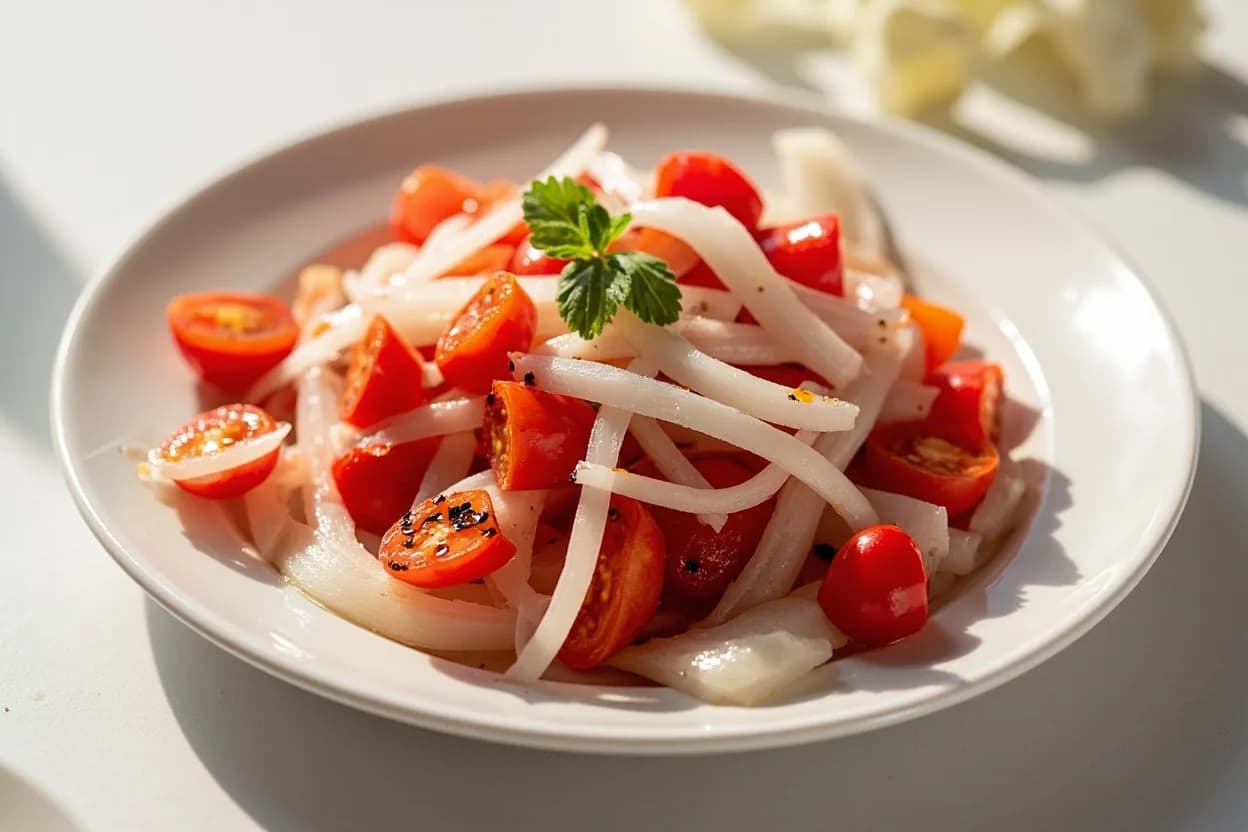
Related
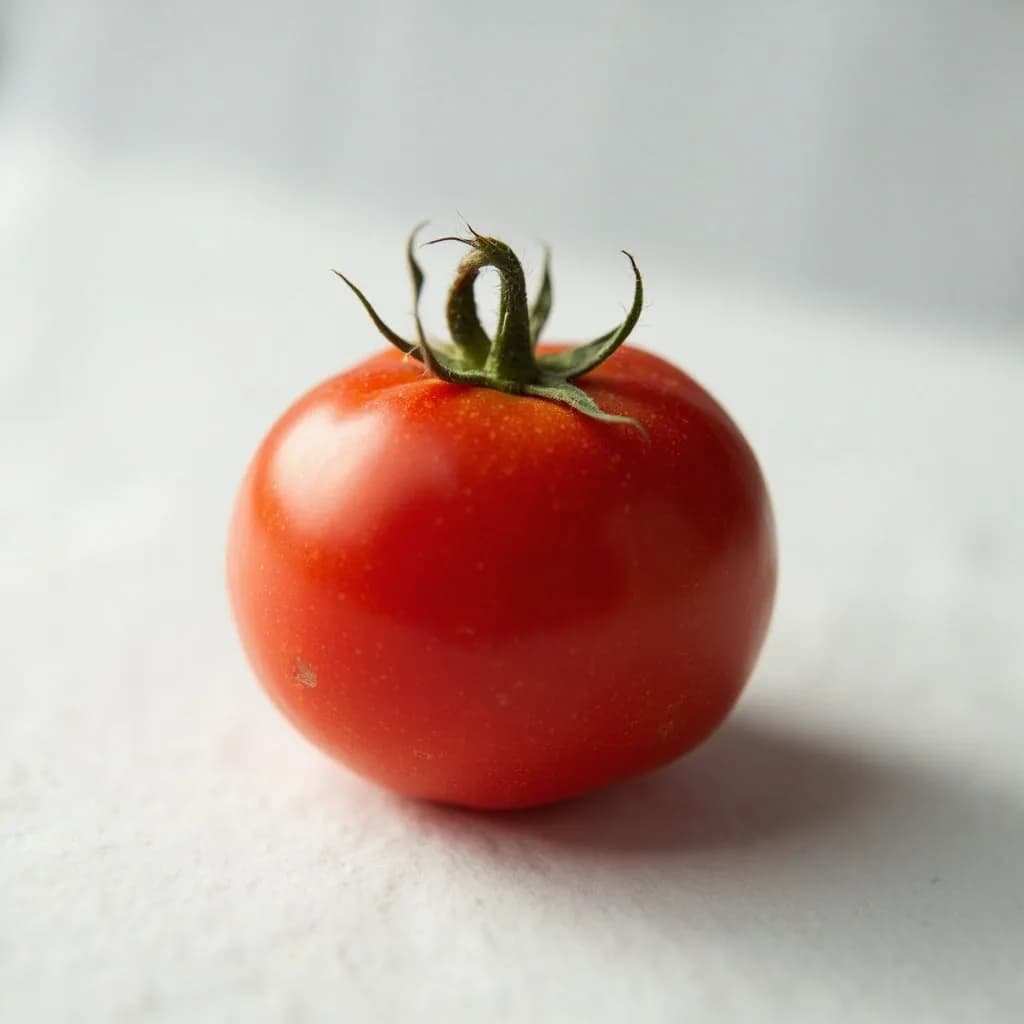
Tomato
Juicy, sun-sweet fruit for sauces, salads, and slow-cooked depth
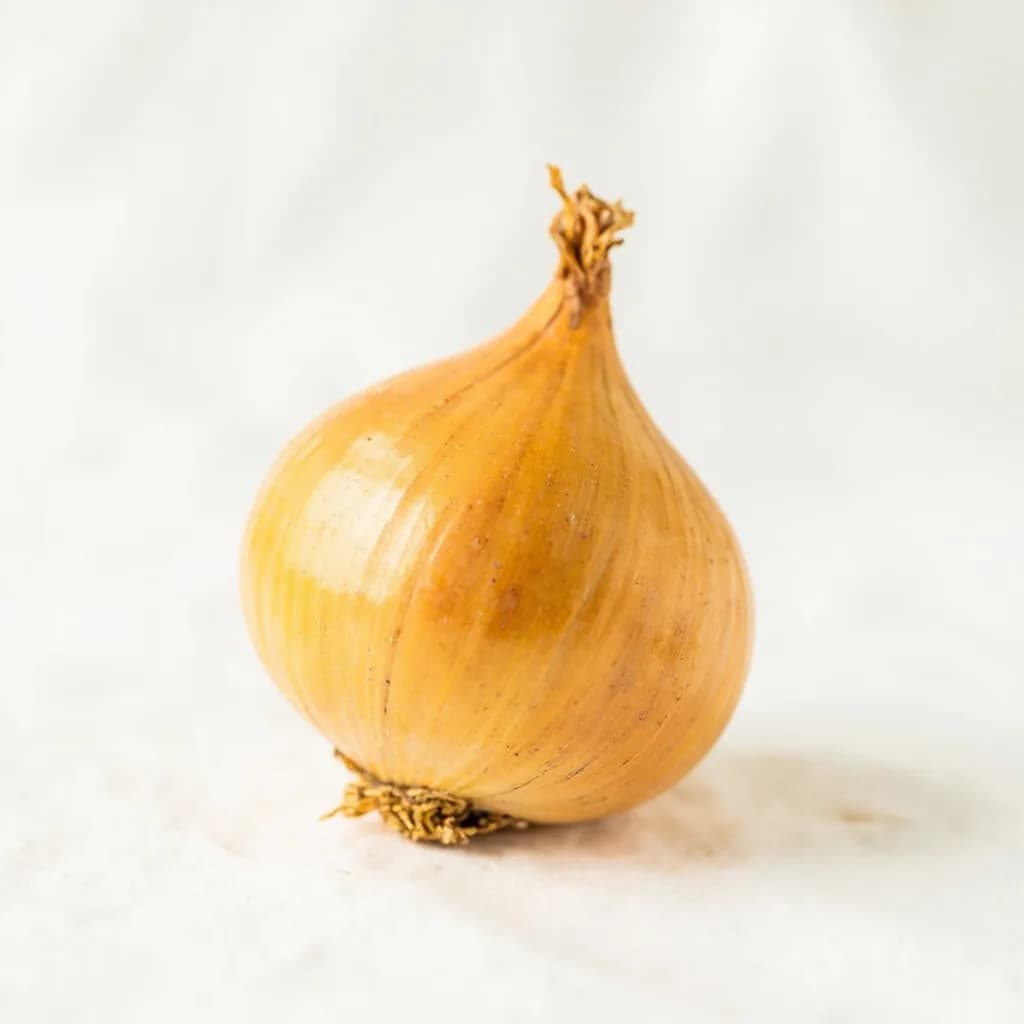
Yellow Onion
The aromatic backbone of soups, sofritos, and braises
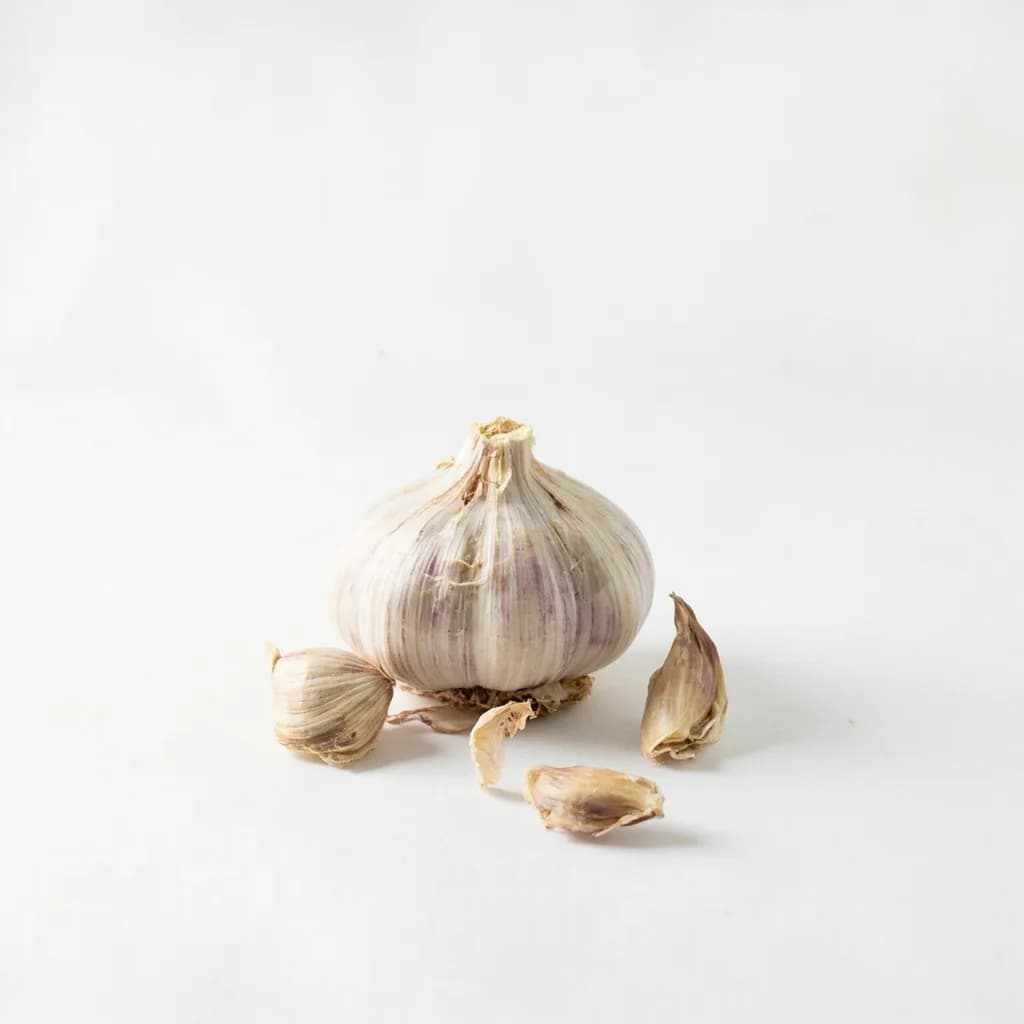
Garlic
Pungent cloves that perfume nearly every savory dish
Lemon
Bright, acidic citrus that wakes up almost any dish
Potato
Humble, hearty staple — roast, mash, fry, or boil
Carrot
Sweet, crunchy root — raw, roasted, or the base of a sofrito
Cucumber
Cool, crisp, and watery — for salads, pickles, and tzatziki

Lettuce
Crisp leaves for salads, wraps, and a fresh crunch