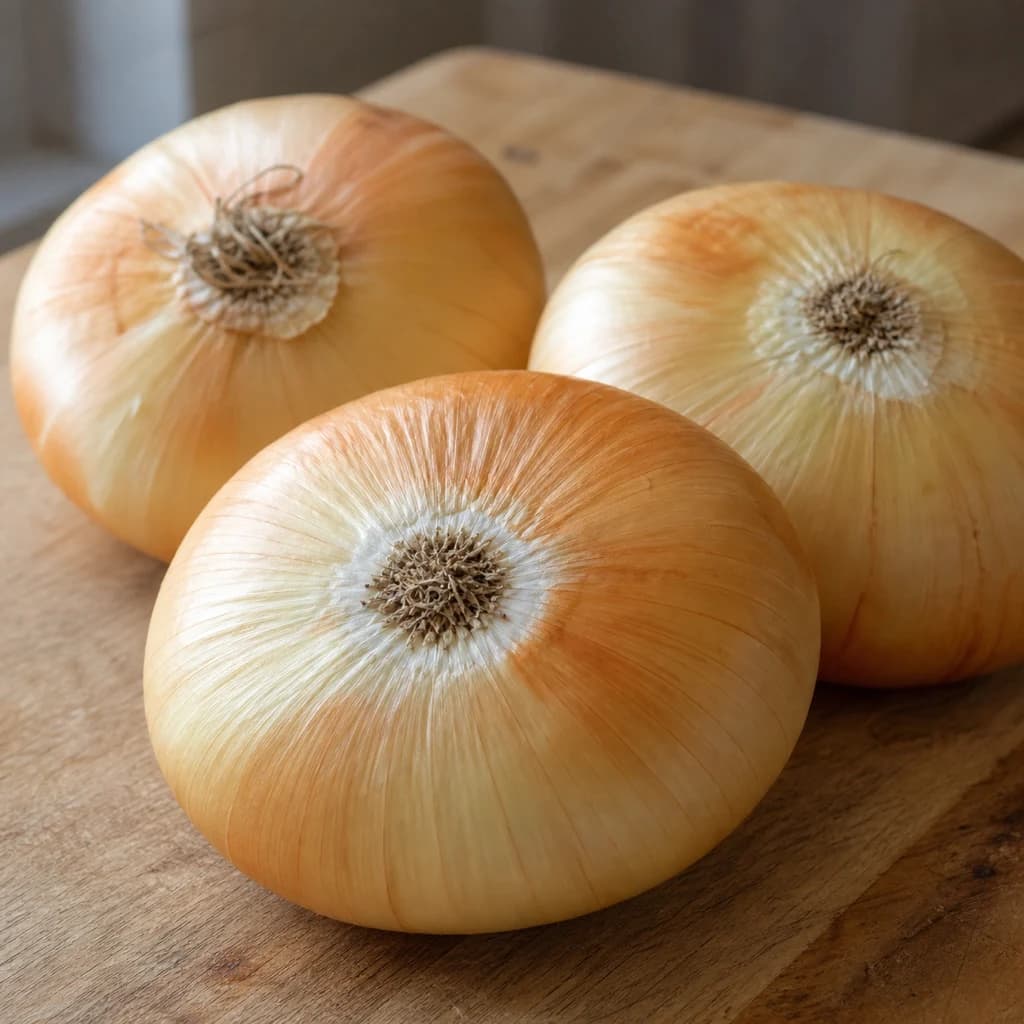
Natural form
Whole Maui sweet onions showing their pale golden skin and slightly flattened globe shape.
Establishes the onion's distinctive appearance — pale straw-yellow skin, squat flattened globe form — so readers recognize it at market.
Produce
Maui Sweet Onion
Mild, high-sugar sweet onion eaten raw in salads or caramelized without bitterness.
The Maui sweet onion is a mild, juicy variety grown in Hawaii's volcanic soil, prized for its low pungency and high sugar content. Its gentle flavor makes it ideal eaten raw in salads, sandwiches, and salsas, or quickly caramelized. Like other sweet onions it stores poorly and is best used fresh.
The Maui Sweet Onion is a short-day onion (Allium cepa) grown in the volcanic soils and intense sunlight of Maui's Upcountry region, where drier conditions limit sulfur uptake by the plants. This environmental stress causes sugar development to outpace pyruvate formation, yielding an onion with significantly higher natural sugar content and notably lower tear-causing compounds than standard bulb onions. The result is a bulb with white-to-pale-yellow flesh, light yellow-brown skin, and a sweetness so pronounced it can be eaten raw without the sharp bite that makes many onions difficult to digest. Unlike storage onions bred for long dormancy, Maui sweets are a seasonal fresh-market product meant for immediate use—they spoil faster because of their higher water content, but they reward that urgency with a sweetness no storage onion can match. The variety emerged in the 1980s as Hawaii's answer to mainland sweet onions and remains integral to local cuisine, from poke bowls to plate lunch condiments.
- Measured in
- piece
- Storage
- Pantry
Types & varieties
Primary named variety; trademarked designation for onions grown in Maui's Upcountry region
Broader regional term encompassing product from multiple Hawaiian islands
Why Maui Sweet Onions Are Different
Most onions contain sulfur compounds that create both the tears when cutting and the sharp, pungent bite when raw. Maui sweets develop in sulfur-poor volcanic soil under intense sun, and the drier Upcountry climate further stresses the plants, slowing sulfur uptake during bulb formation. The onions compensate by converting more starches to sugars, and they never accumulate the pyruvate compounds that create bitterness and heat. The difference is not cosmetic—the flesh is genuinely sweeter, the aroma is milder, and the aftertaste is clean rather than lingering. This makes them one of the few onions that can anchor a raw dish without overwhelming delicate proteins or bright acids.
- Grown in volcanic soil with limited natural sulfur
- Higher altitude and drier conditions stress the bulbs into higher sugar production
- The combination produces an onion suited exclusively to fresh-market use
Cooking Behavior
The Maui Sweet Onion's high water content changes how it behaves under heat. Where a standard yellow onion browns readily and develops concentrated, nutty sweetness through caramelization, Maui sweets first have to shed considerable moisture before their sugars can deepen. They do not achieve the deep mahogany crust of a properly caramelized Spanish onion; instead, they soften into a translucent, lightly sweet mass with a gentler character. Grilling works differently too—where other onions char and caramelize on high heat, Maui sweets tend to steam and caramelize, developing a jammy sweetness without bitter char notes. They are poorly suited to applications requiring a crispy, deeply browned finish.
- High moisture delays browning; expect 45–60 minutes for proper caramelization versus 30–40 minutes for yellow onions
- Do not expect crisp fried onion rings—they steam before they brown
- Grilled slices concentrate sugars into a jammy, sweet texture rather than a charred one
Common uses
Tips & pitfalls
- Select firm, heavy-for-size bulbs with tight, papery outer skins; avoid any with soft spots, blemishes, or visible sprouting
- Store unwashed in the refrigerator crisper drawer immediately—high moisture content causes rapid spoilage at room temperature
- Bring to room temperature before raw service; cold suppresses volatile aromatic compounds and mutes the perceived sweetness
- Slice the root-end last and reserve it to hold the layers together during cutting; the root structure is less fibrous than storage onions
- When caramelizing, start over medium heat with a pinch of salt to draw out moisture first, then reduce to medium-low; expect 45–60 minutes total
- Do not substitute red onions—they lack the same sugar depth and will assert sharply in raw applications
- Use within the first two weeks of purchase for peak sweetness; older specimens degrade toward ordinary onion flavor
- The high water content makes them unsuitable for crisps, deeply browned applications, or any dish requiring structural integrity from the onion
Nutrition
Energy
134 kJ · per 100 g
Where the calories come from
Protein
0.8g
2% DV
Carbs
7.6g
3% DV
Fat
0.1g
0% DV
Fiber
0.9g
3% DV
Sugars
5g
of which
Sodium
8mg
0% DV
Source · USDA FoodData Central · Onions, sweet, raw
View on FDC →In the shops
Matched grocery products
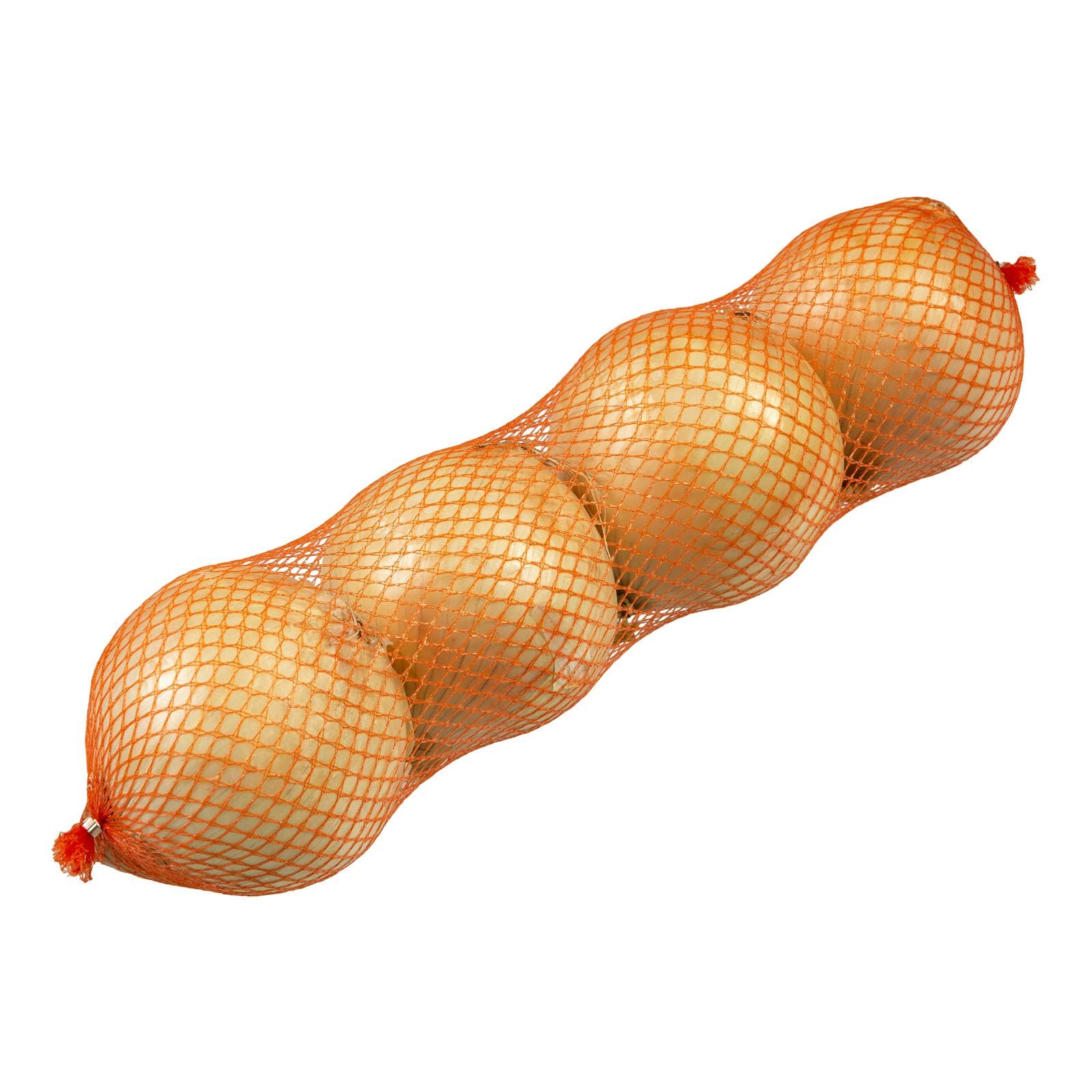 €2.40
€2.40Onions
1 kg · Mercadona
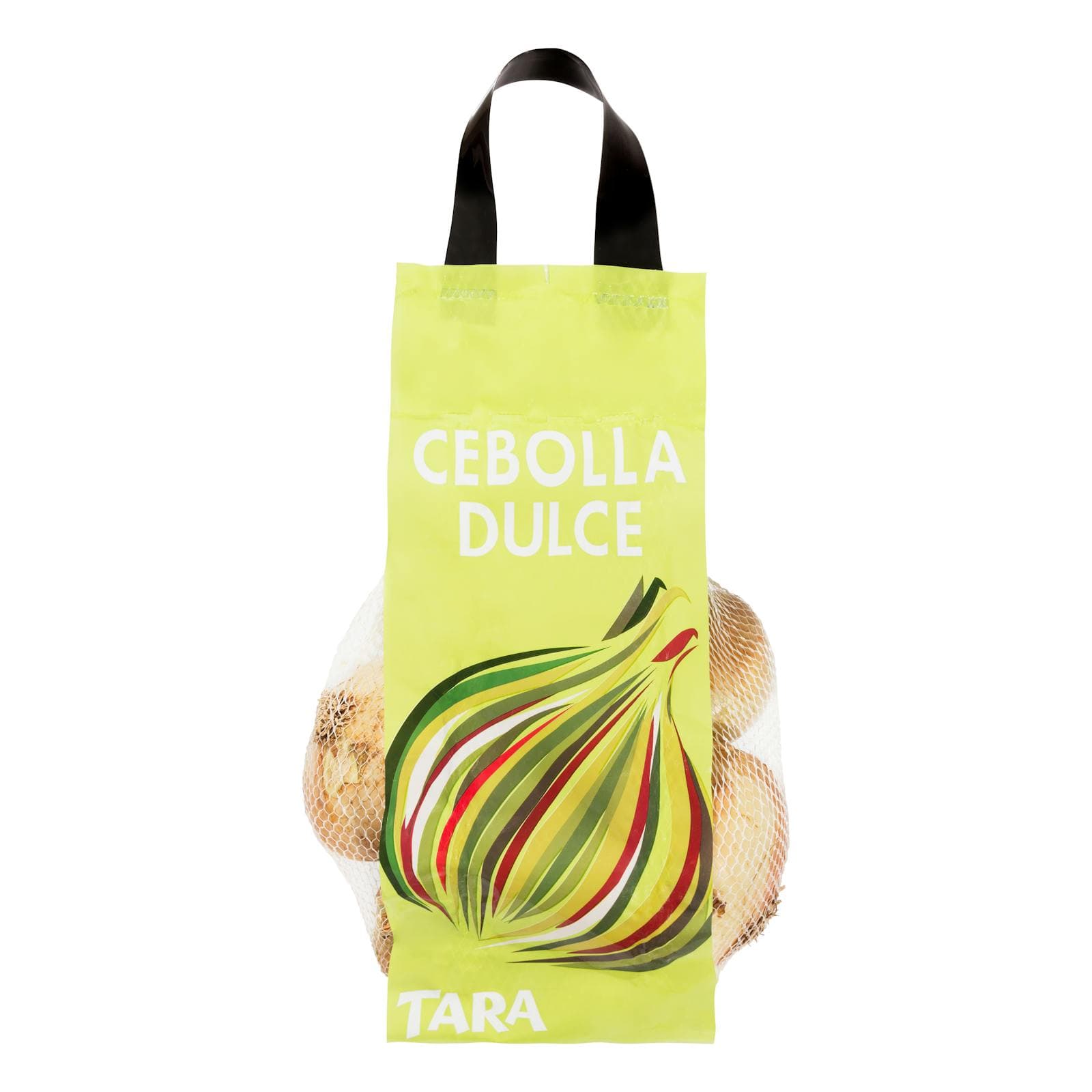 €2.50
€2.50Sweet Onions
1 kg · Mercadona
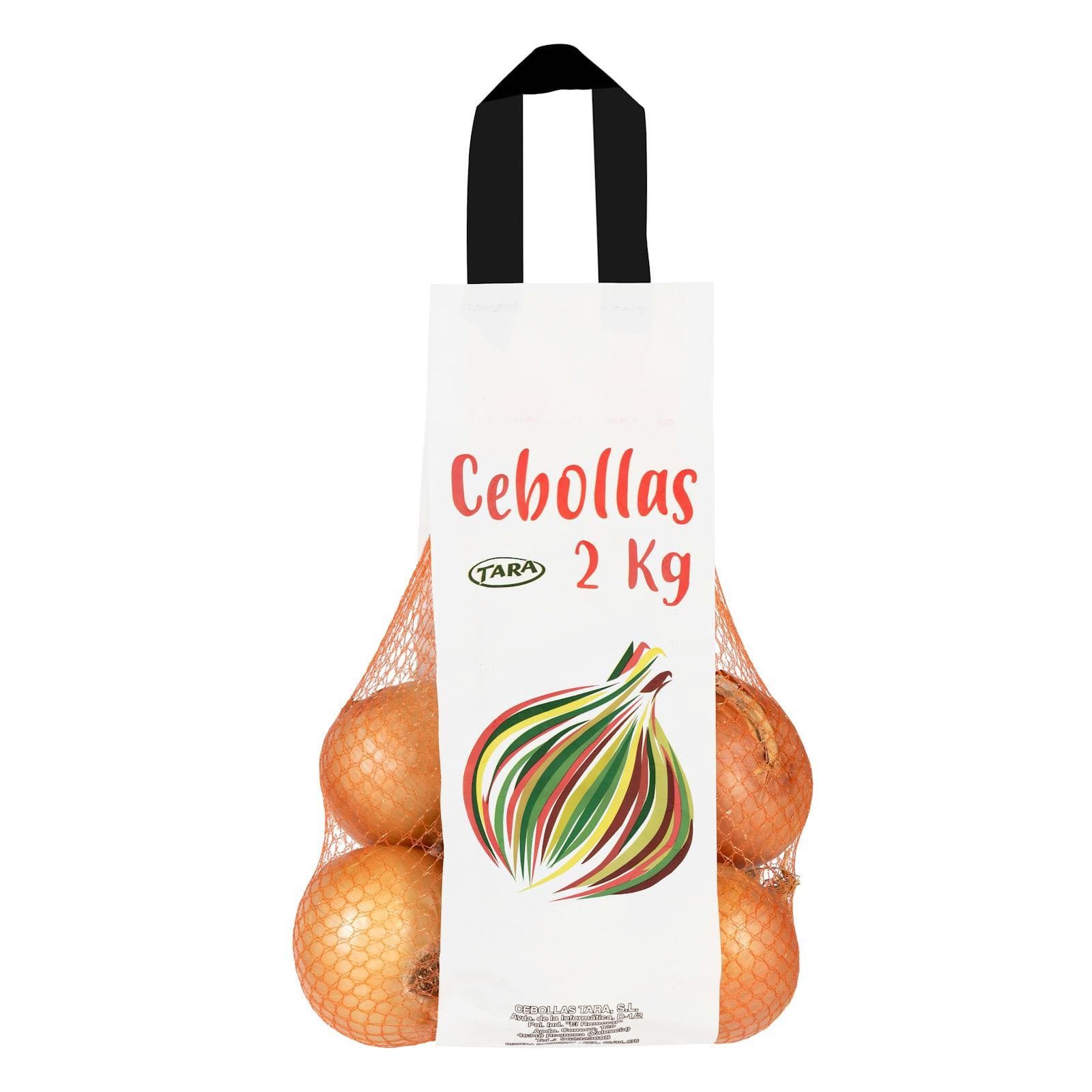 €3.90
€3.90Onions
2 kg · Mercadona
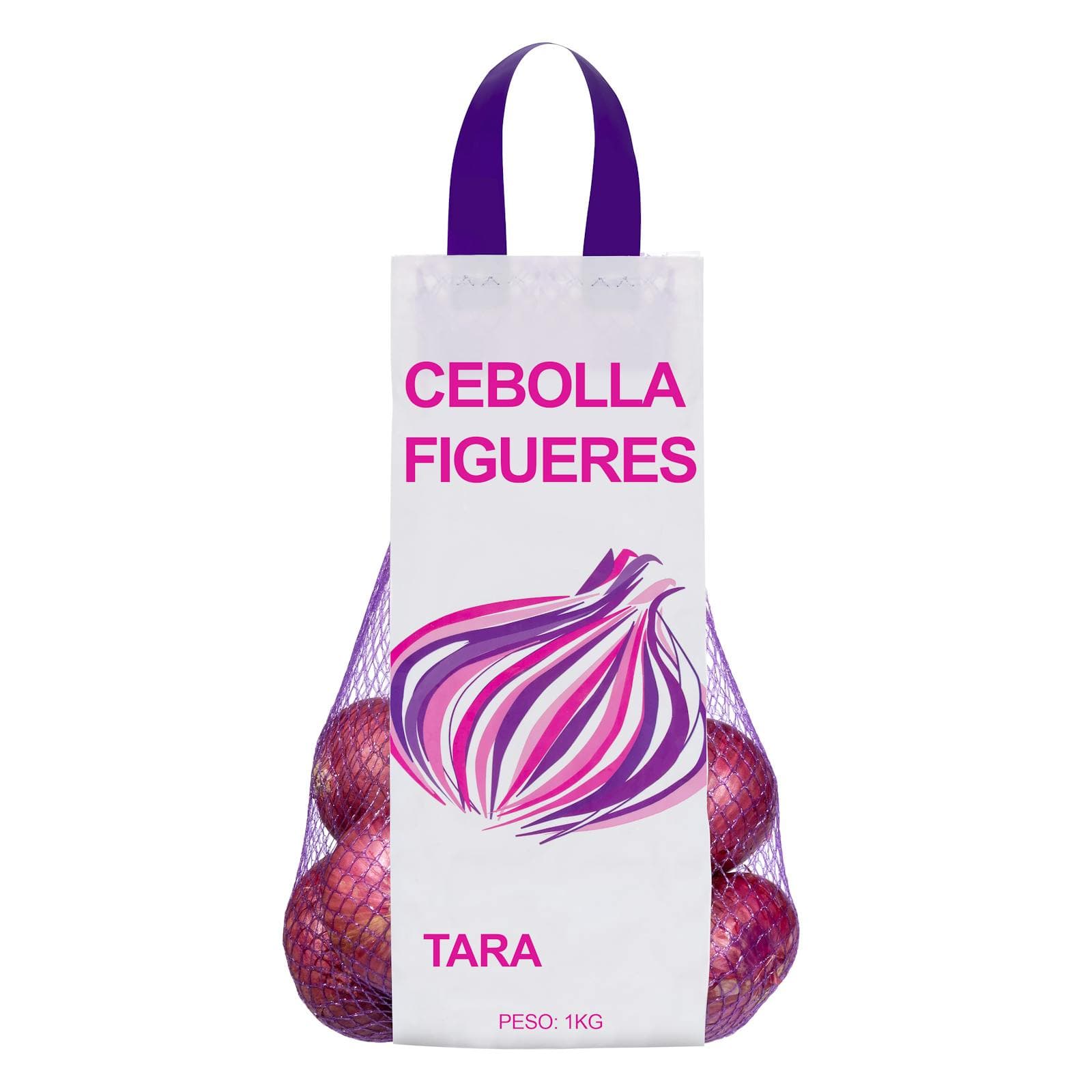 €2.00
€2.00Red Onions
1 kg · Mercadona
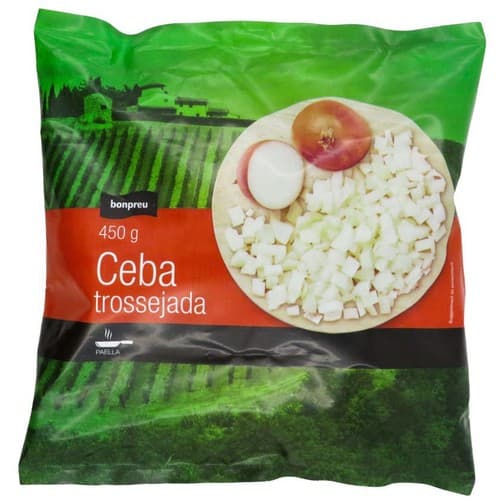 €1.00
€1.00Diced Onion
BONPREU · kg · Bonpreu
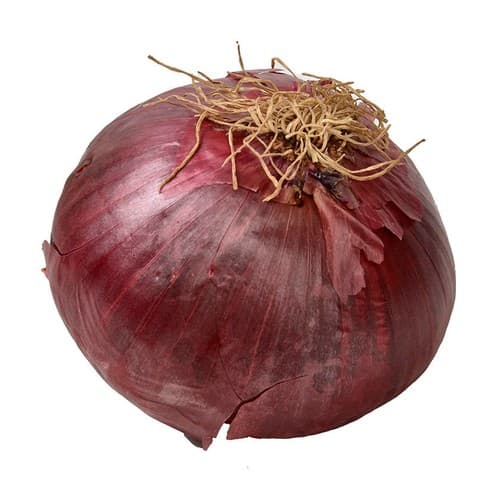 €0.68
€0.68Red Onion 1 unit
ud · Bonpreu
Good to know
- Origin
- Maui, Hawaii; Upcountry Maui's volcanic soil and high-altitude dryness
- Season
- April through August harvest; spring to summer availability
- Classification
- Short-day onion (Allium cepa)
- Sugar Content
- Significantly higher than standard storage onions
- Pyruvate Content
- Very low; minimal tear-causing compounds, virtually no bitterness
- Water Content
- Higher than standard onions; contributes to shorter shelf life
- Shelf Life
- 2–4 weeks refrigerated; does not store well at room temperature
- Regulatory Status
- "Maui Sweet" is a protected regional descriptor for authentic Maui-grown product
Substitutes
- Vidalia Onion — Closest equivalent; Georgia-grown short-day sweet onion with comparable sugar-to-sulfur ratio
- Walla Walla Sweet Onion — Washington state sweet onion; slightly more pungent raw but similar gentle caramelizing behavior
- Texas 1015 Super Sweet — Large Texas sweet onion; excellent raw, slightly higher water content than Vidalia
- Persian Onion — Small, very mild white onion; adequate substitute in raw applications only
Pairs with
Also called
Sweet Onion · Maui Onion
Appears in these dishes
Related

Tomato
Juicy, sun-sweet fruit for sauces, salads, and slow-cooked depth

Yellow Onion
The aromatic backbone of soups, sofritos, and braises

Garlic
Pungent cloves that perfume nearly every savory dish

Lemon
Bright, acidic citrus that wakes up almost any dish

Potato
Humble, hearty staple — roast, mash, fry, or boil

Carrot
Sweet, crunchy root — raw, roasted, or the base of a sofrito

Cucumber
Cool, crisp, and watery — for salads, pickles, and tzatziki

Lettuce
Crisp leaves for salads, wraps, and a fresh crunch