Varieties
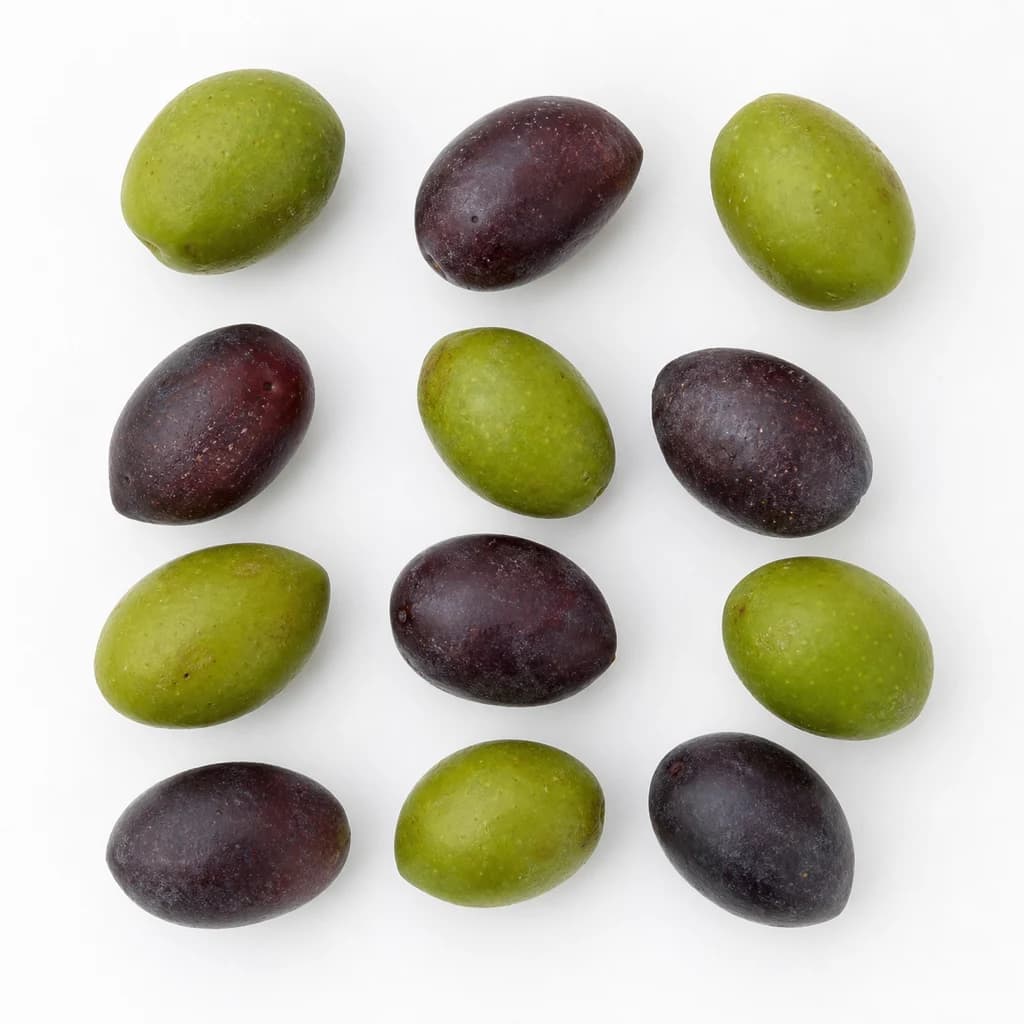
Green and black olives side by side show how ripeness determines olive color.
Comparing unripe green and mature black olives in one scene teaches the single most important recognition fact about olives.
Produce
Olive
Brined or cured fruit of the olive tree, eaten whole or chopped into Mediterranean dishes.
Olives are the small, oval fruit of the olive tree, inedibly bitter when raw and made palatable by curing or brining. They are eaten as a snack and stirred into salads, breads, tapenades, stews, and pasta across the Mediterranean. Color depends on ripeness, with green olives picked young and black olives left to mature on the tree.
The olive is a small, oval fruit from the Olea europaea tree, cultivated along the Mediterranean basin for at least 6,000 years and now grown in California, Australia, and other warm-climate regions. Unlike most fruit, olives are almost never eaten fresh from the tree—they contain a bitter compound called oleuropein that causes severe gastric distress. Fresh olives must undergo curing, a process that leaches this bitterness and transforms the fruit into the briny, complex ingredient central to Mediterranean cooking. The curing method matters enormously: lye-curing (common for Spanish-style green olives) works quickly but produces a milder flavor; brine fermentation develops tangy, complex flavors over months; dry-curing in salt wrinkles the skin and concentrates flavor intensely. The color of an olive—green, rose-brown, or black-purple—indicates ripeness at harvest rather than a different variety, though darker olives tend toward more fermented, rich flavors while green olives offer firmer texture and brighter, sometimes tangier notes.
- Measured in
- g
- Storage
- Pantry
Types & varieties
Small, bright-green Spanish olive; firm flesh; commonly pitted and stuffed with pimiento; mild, slightly tangy flavor
Bright-green Sicilian olive; buttery, mild, almost sweet; excellent for eating out of hand; does not hold up well to cooking
Dark purple-brown, almond-shaped Greek olive; fruity, tangy, slightly smoky; packed in brine or wine vinegar; ideal for salads and grain bowls
Tiny, dark-brown to black French olive; pungent, intensely flavored; traditional in Salade Niçoise and tapenade; often oil-cured or dry-cured
Green, elongated French olive; nutty, slightly bitter; firm texture; traditional in the south of France with fish or cheese plates
Small, dark-purple Italian olive; wrinkled skin; earthy, wine-like acidity; traditional in Rome and southern Lazio, often served with bread and oil
Very large, bright-green Italian olive; meaty, mild; often served as an appetizer; also available in red and black varieties
Small, brownish Spanish olive; fruity, floral aroma; primarily pressed for oil but occasionally found cured; buttery finish
Dark, wrinkled, intensely flavored; cured in salt and olive oil; rich, fruity, slightly fermented taste; common in Morocco and Greece
Understanding Curing Methods
The method used to cure olives fundamentally shapes their flavor and texture. Brine fermentation submerges olives in salted water where beneficial bacteria develop over weeks or months, producing tangy, complex flavors—these are the olives that define Greek and many Italian preparations. Lye-curing uses a caustic solution that penetrates the olive flesh rapidly, removing bitterness in hours rather than months; the lye is thoroughly rinsed away, leaving a milder, more uniform flavor typical of most supermarket green olives. Dry-curing coats olives in salt, which draws out moisture over several weeks, concentrating flavor and creating the wrinkled, intensely savory olives common in North African and some Greek traditions. Oil-curing is a variation where olives are packed in olive oil after dry-curing, adding richness and extending shelf life. Know your cure: brined olives excel in dressings, salads, and preparations where their acidity brightens a dish; oil-cured and dry-cured olives bring intensity to spreads, rustic braises, and situations where they can stand up to bold flavors.
- Brine-cured: tangy, complex, acidic; ideal for salads and Mediterranean cooked dishes
- Lye-cured: mild, uniform flavor; common in stuffed green olives; good for antipasto
- Dry-cured: intensely savory, wrinkled; excellent for tapenade and robust preparations
- Oil-cured: rich, fermented; strongest flavor; best for spreads and rustic dishes
Common uses
Tips & pitfalls
- Taste before buying: flavor varies dramatically by variety and cure—sample to find preferences, from buttery-mild to pungent and complex
- Refrigerate after opening: even though olives in brine are shelf-stable sealed, refrigeration slows fermentation and preserves quality
- Rejuvenate dried-out olives: soak in quality olive oil for 24–48 hours or briefly in warm salted water to restore moisture
- Do not discard olive brine: the briny, umami-rich liquid seasons dressings, braises, martinis, and bloody marys
- Remove pits efficiently: use a sturdy olive pitter or push pits out with your thumb from the stem end; freezing olives makes pitting easier
- Avoid overcooking delicate varieties: add Castelvetrano or other mild green olives in the last 5 minutes to prevent mushiness
- Never eat fresh olives from the tree: they contain oleuropein, which causes severe gastric distress; only properly cured olives are edible
- Match cure to dish: brined olives work in dressings and salads; oil-cured olives shine in spreads and rustic dishes; dry-cured olives add intensity to braises
Nutrition
Energy
983 kJ · per 100 g
Where the calories come from
Protein
11.8g
24% DV
Carbs
9.2g
3% DV
Fat
16.5g
21% DV
Fiber
0g
0% DV
Sugars
0g
of which
Sodium
964mg
42% DV
Source · USDA FoodData Central · Olive loaf, pork
View on FDC →In the shops
Matched grocery products
No matched grocery products for Olive yet.
Good to know
- Origin
- Mediterranean basin; cultivated for over 6,000 years, with Spain, Italy, Greece, Turkey, and Morocco as leading producers
- Processing
- Fresh olives are intensely bitter (oleuropein) and must be cured—commonly by water-brine fermentation, lye-curing, or dry-salt curing
- Color progression
- Green (unripe) → rose/brown (mid-ripening) → black/purple (fully ripe), with curing methods varying by color
- Primary styles
- Spanish-style (green, lye-cured, often stuffed); Greek-style (dark, dry-cured or brine-cured); Italian-style (various, often brine-fermented)
- Flavor range
- From mild and buttery (Castelvetrano) to fruity and grassy (Arbequina) to tangy, complex, and mildly bitter (many brined varieties)
- Storage (brined)
- Refrigerate once opened; keeps 3–6 months in brine; can freeze pitted olives for up to 1 year for cooking use
- Storage (dry-cured)
- Keep sealed in a cool, dark place; refrigerate after opening and use within 1–2 months
- Storage (dry-cured in oil)
- Refrigerate; best consumed within 2–3 months of opening
- Nutrition note
- High in monounsaturated oleic acid; contains iron, vitamin E, and dietary fiber when cured without excessive added sodium
Substitutes
- Capers — Provide briny, slightly floral contrast; use sparingly as they are more potent per volume; excellent in salads, sauces, and as pizza garnish
- Capberries — Larger, milder caper buds; provide similar briny flavor with a slightly sweeter finish; good for appetizer plates
- Pickled pearl onions — Offer a similar pickled brine flavor and pop of texture; work in salads and charcuterie applications
- Sun-dried tomatoes — Provide concentrated savory, slightly tangy flavor; use in pasta, salads, and sauces; different texture but complementary flavor profile
- Roasted red peppers — Add sweet, smoky complexity and textural contrast; useful in Mediterranean salads and sandwiches as a garnish
Pairs with
Also called
Ullinj · Olives · Black Olive · Black Olives · Green Olive
Appears in these dishes

Related

Tomato
Juicy, sun-sweet fruit for sauces, salads, and slow-cooked depth

Yellow Onion
The aromatic backbone of soups, sofritos, and braises

Garlic
Pungent cloves that perfume nearly every savory dish

Lemon
Bright, acidic citrus that wakes up almost any dish

Potato
Humble, hearty staple — roast, mash, fry, or boil

Carrot
Sweet, crunchy root — raw, roasted, or the base of a sofrito

Cucumber
Cool, crisp, and watery — for salads, pickles, and tzatziki

Lettuce
Crisp leaves for salads, wraps, and a fresh crunch