Heat & Safety
Dish Brush
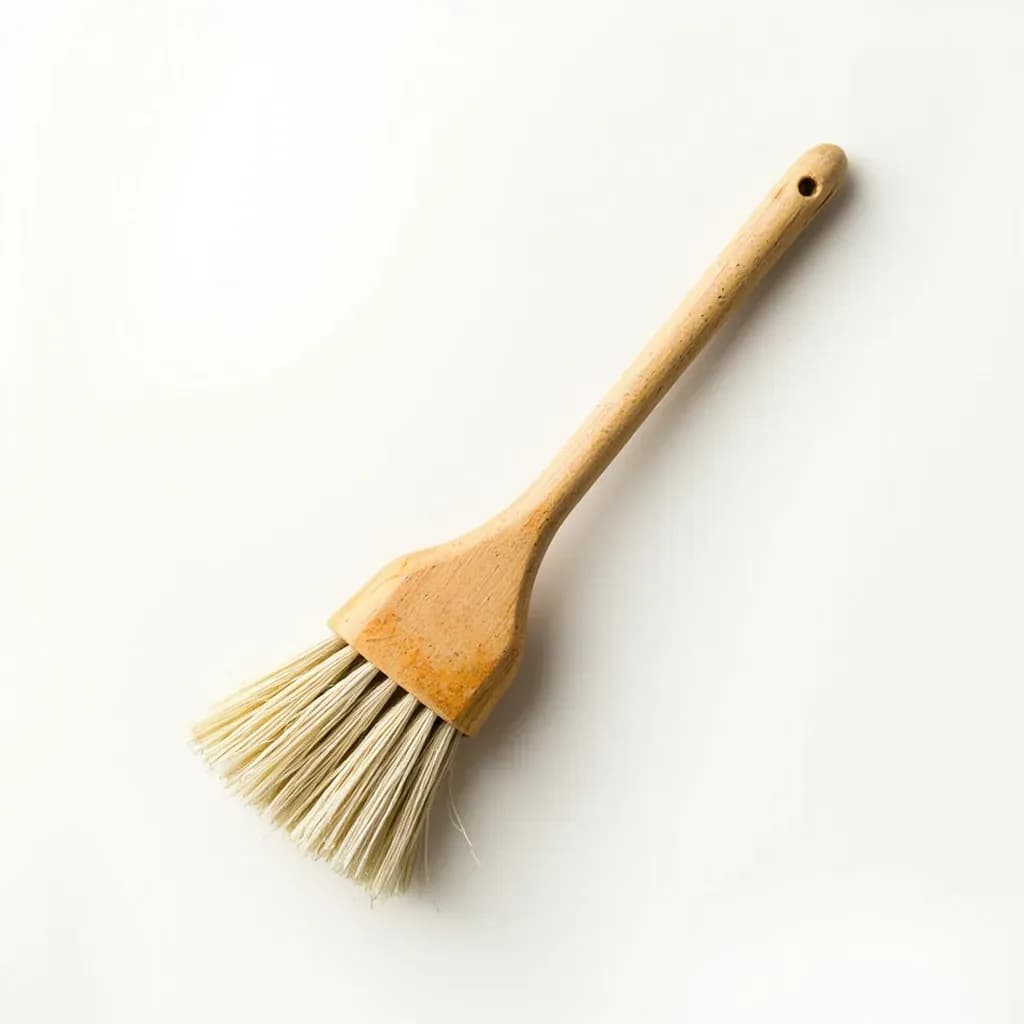
Stiff-bristled handled brush for scrubbing dishes, pots, and pans.
A dish brush is a hand brush with stiff nylon or plant-fiber bristles set in a long handle for scrubbing cookware and tableware. The handle keeps hands out of hot water and lets you reach into pots, while the firm bristles lift baked-on food better than a soft sponge. Many have a built-in scraper edge or refillable heads, and they dry faster than sponges so they harbor fewer bacteria.
A dish brush is the workhorse of hand-washing: a stiff-bristled scrubber on a short handle that lets you apply pressure and reach into corners without the wear that steel wool inflicts on cookware. The classic form — a curved wooden handle with a dense tuft of natural or synthetic fiber — originated in early-20th-century Scandinavia (the Swedish diskborste) and has barely changed because the geometry works. The handle keeps knuckles out of hot water, the tuft holds soap, and the bristles do the lifting rather than the abrasive, so food releases before you have to bear down.
The choice of bristle fiber matters more than most cooks realize. Tampico, spun from agave leaf, is medium-stiff and water-absorbent, so it holds lather well and flexes around contours. Palmyra and union fiber (a palmyra-bassine blend) are stiffer and less absorbent, which makes them aggressive on baked-on food but less forgiving on softer surfaces. Nylon is firm, uniform, and dishwasher-safe, but it softens above roughly 170 °F (77 °C), so it is best kept to warm soapy water rather than scalding rinse cycles. Matching the fiber to the job — softer for nonstick, stiffer for cast iron and sheet pans — is what separates a brush that lasts a season from one that scratches a pan or frays in a month.
A dish brush lives or dies at the ferrule, the spot where the bristles are bound into the handle. Moisture trapped there swells wood and loosens the tuft, which is why brushes that sit soaking in a sink caddy rarely survive. Hang the brush bristle-up, dry it between uses, and a quality one will scrub a surprising number of pans before the bristles splay and need replacing. The replacement cue is the brush itself: when the tuft stops springing back and starts shedding onto plates, it is no longer cleaning, it is just smearing.
Alternatives
Types & varieties
Curved wooden handle with a dense round bristle tuft; the classic silhouette, sold by makers like Iris Hantverk and Redecker
Handle ends in a rigid nylon or rubber edge for lifting baked-on food before scrubbing
Modular design where only the bristle refill is discarded; popular for reducing plastic waste
Stout, round bristle head, often with a pointed tip for reaching into corners of stockpots
Long, narrow tufted stem for tall vessels, narrow jars, decanters, and water bottles
Small, flat brush designed to be gripped in the palm for light scrubbing and produce washing
Compact brush with stiffer vegetable-fiber bristles for scrubbing potatoes, carrots, beets, and other root produce
Larger rectangular head with stiff synthetic bristles for grills, sheet pans, and sink cleaning
Matching the brush to the cookware
Most home cooks need only two or three brushes to cover the full range of washing jobs, and choosing them by the surfaces they touch prevents both scratched pans and wasted effort. The point is to match stiffness to the coating, not to the food — a stiff brush is a poor choice if the pan underneath is soft.
- Stainless steel and seasoned cast iron: Tampico, palmyra, or union fiber — stiff enough to lift fond and stuck-on starches without harming the pan
- Nonstick (PTFE or ceramic) and hard-anodized aluminum: A palm brush or a soft sponge only; stiff natural bristles will score the coating
- Enameled cast iron and stoneware: Tampico or nylon, paired with a scraper-tip brush for baked-on residue; skip metal scrapers that chip enamel
- Glass bakeware, porcelain, and delicate ceramics: Tampico or soft nylon; avoid on thin, hand-blown, or leaded crystal that flexes under pressure
- Produce: A dedicated vegetable brush with stiffer fiber, kept separate from the dish brush so soap residue never touches food
Common uses
Tips & pitfalls
- Apply dish soap directly to damp bristles rather than to the dish; it foams faster and uses far less soap per wash
- For nonstick cookware, switch to a softer palm brush or a sponge — stiff natural bristles can scratch PTFE and ceramic coatings in a few scrubs
- Hang or stand the brush bristle-up after each use; trapped moisture at the ferrule is the main reason handles crack and bristles loosen
- Sanitize weekly by soaking the bristles for 10 minutes in 1 part white vinegar to 2 parts hot water, or a brief dilute bleach dip, then rinse and air-dry
- Rub a wooden handle with a light coat of food-grade mineral oil every few months to prevent splitting and to repel water at the ferrule
- Replace the brush as soon as bristles splay outward, lose their spring, or shed onto dishes — splayed bristles no longer scrub, they only smear
- Avoid soaking wood-handled brushes in standing water; prolonged immersion swells the handle and breaks the bristle tuft loose from its binding
- For burnt-on food, simmer or soak the pan first so the brush does the lifting rather than the scrubbing — less effort and far less wear on the bristles
Good to know
- Primary materials
- Tampico (agave), palmyra, union fiber (palmyra/bassine blend), or nylon bristles; beech, maple, bamboo, or plastic handles
- Typical handle length
- About 6–8 in (15–20 cm); bristle head roughly 2–3 in (5–7 cm) across
- Bristle stiffness
- Tampico is medium-stiff and water-absorbent; palmyra is stiffest and least absorbent; nylon is firm and uniform
- Heat tolerance
- Natural plant fibers handle hot water and steam well; nylon softens above ~170 °F (77 °C)
- Dishwasher safe
- Only plastic-handled, all-synthetic brushes; wood-handled versions must be hand-washed and air-dried
- Recommended replacement
- Every 2–6 months, or sooner if bristles splay, mat, or fall out
- Storage orientation
- Stored bristle-end up or hanging so water drains out of the handle
- Origin
- The familiar handled dish brush traces to early-20th-century Scandinavian design (notably the Swedish diskborste)
Also called
washing-up brush · pot brush · scrub brush
Related

Paper Towels
Disposable sheets for spills, drying, and patting dry

Kitchen Towels
Reusable cloths for drying, gripping, and wiping

Oven Mitts
Heatproof gloves to handle hot pans and trays safely

Disposable Gloves
Single-use gloves for safe, mess-free handling

Cleaning Cloths
Reusable cloths for wiping counters and spills

Tortilla Warmer
Insulated holder that keeps tortillas warm and soft

Trivet
Heatproof stand that shields surfaces from hot pots

Ice Bath Setup
Bowl of ice water that halts cooking and sets color