Storage & Containers
Freezer Bag
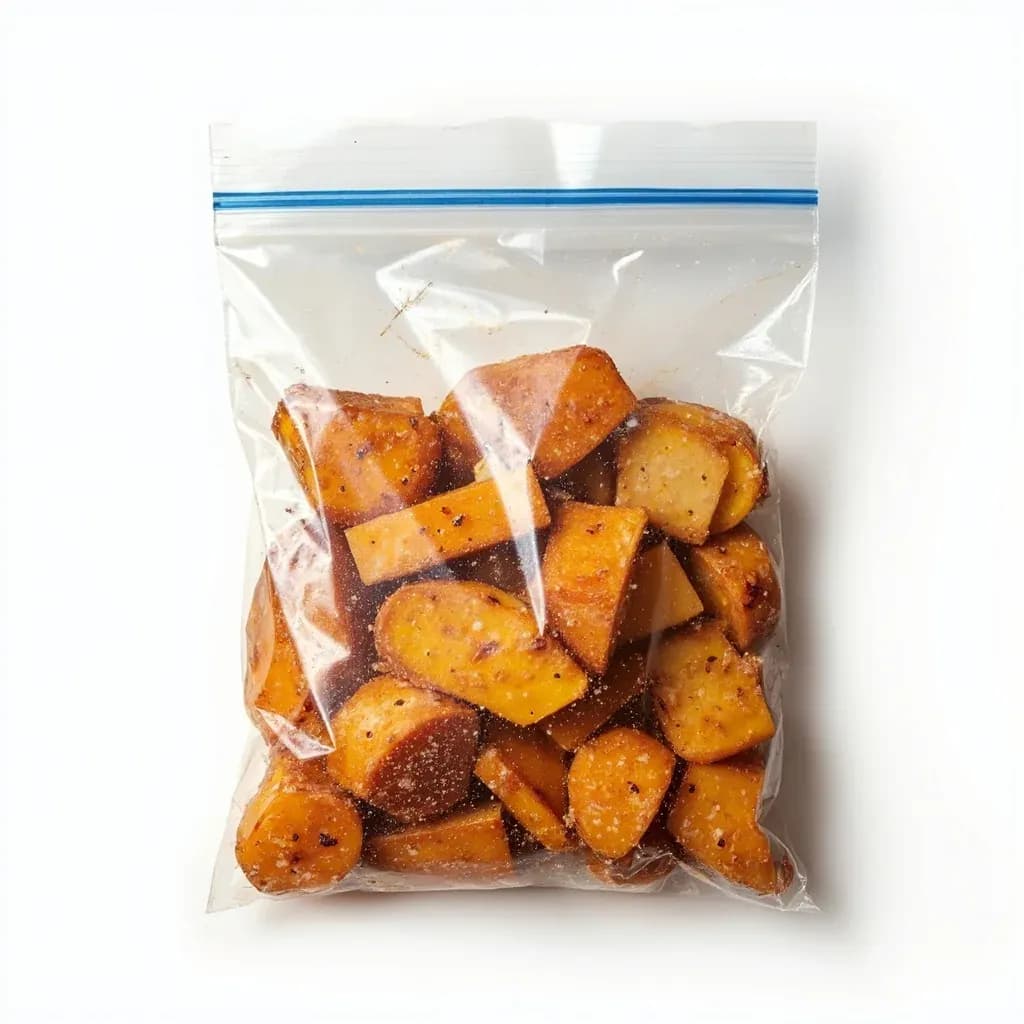
Thick resealable plastic bag built to store food in the freezer without freezer burn.
A freezer bag is a thicker, more durable resealable plastic bag made to withstand cold and resist tearing in the freezer. Cooks use them to freeze portioned proteins, soups, and prepped vegetables, pressing out air to prevent freezer burn. Laying them flat saves space and lets food thaw quickly, and a labeled date helps track how long contents have been stored.
A freezer bag is a resealable plastic storage bag manufactured from low-density polyethylene (LDPE) or linear low-density polyethylene (LLDPE) with walls thick enough to withstand freezer temperatures without becoming brittle. The critical difference between freezer bags and standard storage bags lies in wall thickness: freezer bags measure 2–3 mil versus the 1–1.5 mil of regular bags. At freezer temperatures, thinner bags crack and split, allowing air to infiltrate and contact the food surface directly, which causes the dehydration and ice-crystal damage known as freezer burn. The denser molecular structure of a 2–3 mil bag remains flexible and maintains a reliable seal even at -40°F, protecting food from exposure and dramatically extending both safety and quality.
Alternatives
Types & varieties
Plastic slider joins the two sides of the zipper; easier for children and those with grip issues; slightly higher seal integrity
Standard press-to-seal zipper; requires two-handed operation; most economical option
Gusseted bottom allows bag to stand open while filling; ideal for liquids and messy items
Compatible with handheld vacuum pumps; significantly extends freezer life by removing air entirely
Smallest capacity; ideal for individual portions, herbs, small batches of sauces, or marinating single cuts
Most versatile; fits 1–2 pounds of meat, 2–3 cups of vegetables, or standard soup portions
Large capacity; suited for family-sized portions, bulk purchases, or batch-cooked meals
The Science of Freezer Burn
Freezer burn occurs when ice crystals on the food surface sublimate—transitioning directly from ice to vapor—leaving the tissue dehydrated and oxidized. The thick walls of a freezer bag prevent this by creating an effective barrier against air infiltration. Additionally, removing as much air as possible from the bag itself, whether by pressing out excess or using the water-displacement method, further reduces the moisture molecules available to form damaging ice crystals. The result is food that retains its cellular structure, color, and flavor far longer than food wrapped in standard plastic or foil.
- Ice crystals form when water molecules migrate to the coldest point in your freezer and freeze; thick bags slow this migration
- Air inside a bag carries moisture; less air means fewer ice crystals forming on food surfaces
- A tight seal prevents the temperature fluctuations that accelerate sublimation
Water-Displacement Air-Removal Method
This technique achieves near-vacuum air removal without specialized equipment. Submerge the filled bag in a bowl of water up to the zipper line, then lift the bag out—water pressure forces air out through the still-open zipper. Seal the zipper while the top portion remains above water, then remove and dry the bag. This method works particularly well for flat-pack portions of ground meat, marinated items, or sauces where maximizing storage space matters.
- Works best with gallon or 2-gallon bags filled with liquid or semi-liquid foods
- The bag must be on a flat surface when you begin submerging to prevent spillage
- Dry the zipper completely before sealing to ensure a tight closure
Common uses
Tips & pitfalls
- Remove as much air as possible before sealing; use the water-displacement method (submerge bag to zipper, then lift out) for maximum air removal
- Label every bag with contents and date using a grease pencil or freezer tape before freezing; faded labels are a common source of mystery freezer contents
- Lay bags flat to freeze for stackable, space-efficient storage; once solid, stand them upright like files in a bin
- Use quart bags for individual portions of ground meat, which thaw faster and reduce waste from refreezing
- Double-bag high-fat proteins (ground beef, pork) to prevent fat migration and rancidity from light freezer exposure
- Never freeze liquids to the brim; leave 1-inch headspace to allow for expansion without rupturing the seal
- For sous vide, use freezer-grade bags only if specifically labeled food-safe for sous vide; standard bags may soften or leach chemicals at sustained high temperatures
- Store bags away from the freezer door opening where temperature fluctuations are greatest; interior freezer shelves maintain more consistent cold
Good to know
- Material
- Low-density polyethylene (LDPE) or linear low-density polyethylene (LLDPE)
- Thickness
- 2–3 mil (0.002–0.003 inch); regular storage bags are 1–1.5 mil
- Temperature Range
- -40°F to 200°F (-40°C to 93°C)
- Closure Type
- Zip-top or slider mechanism; some feature press-to-close seals
- Key Distinction
- Thicker walls create tighter molecular structure that reduces ice crystal formation and freezer burn
- Origin
- Ziploc introduced the first consumer zippered storage bags in 1968; freezer-specific versions followed shortly after
- Food Safety
- FDA-approved food-grade plastic; BPA-free is standard across major brands since the 2000s
- Freezer Life
- Food remains safe indefinitely when stored properly; quality peaks within 3–6 months for most items
- Reusability
- Single-use disposable; reusable silicone alternatives exist (Stasher, UberBento)
- Typical Sizes
- Quart (sandwich), gallon, and 2-gallon capacities
Substitutes
- Glass Containers with Airtight Lids — Impermeable and reusable but inflexible; do not conform to irregular shapes or fit efficiently in tight freezer spaces
- Vacuum-Sealed Mylar Bags — Superior air removal extends freezer life significantly but require specialized equipment and are single-use
- Silicone Stasher Bags — Reusable and food-safe at freezer temperatures but significantly higher per-use cost; hand-washing required
Also called
freezer-bags
Related

Freezer Bags
Thick, sealable bags built to fight freezer burn

Storage Bags
Resealable bags for fridge storage and marinating

Storage Container
Lidded container for leftovers, prep, and meal kits

Glass Container
Oven-to-fridge glass that won't stain or hold odors

Plastic Container
Lightweight, stackable storage for everyday leftovers

Vacuum Sealer Bags
Airtight bags for long freezing and sous-vide

Reusable Bags
Washable silicone bags that replace single-use plastic

Mason Jar
Sealed glass jar for preserves, pickles, and storage