Storage & Containers
Glass Bottle
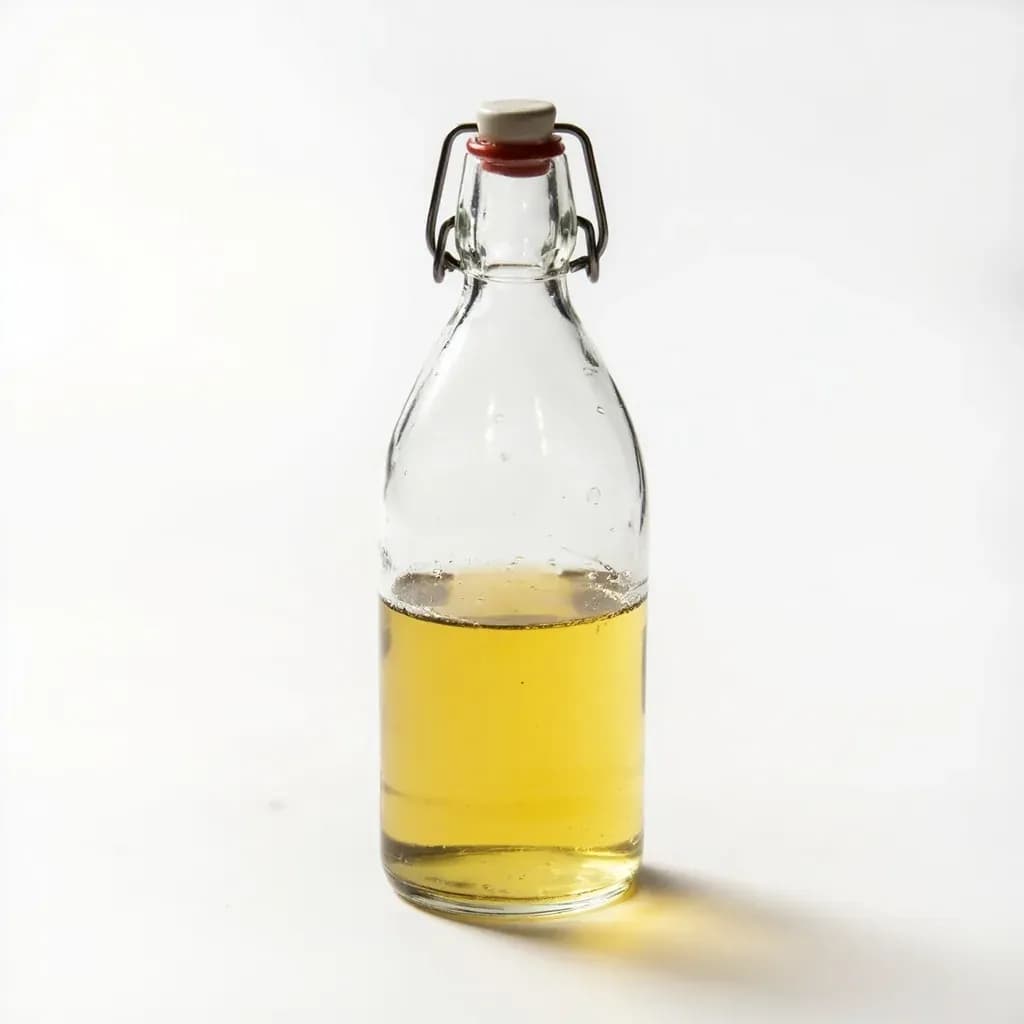
Reusable glass bottle for storing oils, vinegars, syrups, and fermented drinks.
A glass bottle used to store and serve oils, vinegars, cordials, cold-brew, and home-fermented drinks like cider and kombucha. Glass is inert, so it preserves flavor and resists staining and odor retention. Swing-top (Grolsch-style) bottles seal pressure for carbonated brews, while plain cappable bottles suit still liquids.
A glass bottle is a rigid, impermeable container made from silica-based glass — most commonly soda-lime for everyday use, or borosilicate when thermal shock is a concern. In the kitchen it is the most forgiving storage material for anything acidic, fatty, or alcoholic: vinegar, citrus, wine, oil, and ferments all stay clean-tasting because glass is non-reactive and won't leach or absorb. The trade-off is weight and breakage risk, but for pantry and fridge storage of flavor-sensitive ingredients, that trade is almost always worth making.
Glass also blocks oxygen and moisture completely, which is why aged vinegars, vanilla extract, and homemade liqueurs hold up so well in it. Color matters as much as material — amber and cobalt filter the UV that turns delicate oils and hoppy ferments rancid or skunky, while clear glass is the right call when you want to see the contents, such as layered syrups or jewel-toned shrubs at the table.
Bottles vary widely in shape and closure, and those choices dictate what the bottle is actually good for. A woozy with a dripper top pours hot sauce by the drop; a swing-top with a rubber gasket holds carbonation under pressure; a carboy is sized for primary fermentation; a cruet is meant to live on the table. Matching bottle to task is the whole game.
Alternatives
Types & varieties
Cylindrical with rounded shoulders; the workhorse for oils, extracts, and tinctures; pairs with screw caps or droppers
Square-shouldered bottle that saves shelf space; common for syrups and bitters
Tall, slender 5-oz bottle with long neck; standard for commercial hot sauce
Wire-bail closure with porcelain or rubber gasket; reusable; popular for fermented sodas, kombucha, and homebrew
Typically 32 or 64 oz; originally for draft beer take-home; dark amber is standard
Large (1–6+ gal) wide- or narrow-mouth vessel for primary fermentation of wine, beer, kombucha, or vinegar
Small handled or stoppered bottle for table service of oil or vinegar
Blocks UV light; preferred for essential oils, vanilla extract, tinctures, and hop-infused ferments
Decorative and UV-blocking; used for decorative oils, liqueurs, and blue curaçao-style spirits
Lab-grade or commercial kitchen use; tolerates boiling water and rapid temperature change; ideal for hot-fill canning
Choosing the right closure
The closure is what actually does the work; the bottle is just the vessel. Match the cap to the contents and the storage conditions.
- Screw cap with polycone (cone-shaped plastic) liner: the best seal for oils because it conforms to the bottle rim
- Bar-top T-cork: traditional for vinegars, infused oils, and small-batch liqueurs
- Swing-top (Grolsch-style): rated for carbonated ferments and homebrew; the gasket is the seal, so replace it the moment it cracks, flattens, or smells off
- Dropper insert: for extracts, tinctures, and the standard woozy-bottle hot sauce format
- Pump top or sprayer: for high-volume condiments, soap, or misting oil and vinegar
Light protection
UV is the enemy of fat, alcohol, and hops. Pick colored glass whenever the contents are light-sensitive and the bottle will sit on an open shelf.
- Amber: the standard for essential oils, vanilla extract, tinctures, and hoppy ferments
- Cobalt blue: decorative and UV-blocking, good for liqueurs and display oils
- Green glass: blocks some UV but less effectively than amber or cobalt
- Clear glass: only when you want to see the contents (layered syrups, jewel-toned shrubs) and the contents are not light-sensitive
Glass for fermentation
Carbonation is a pressure event, and not all glass handles it equally. For active ferments and anything sealed for fizz, stick with vessels designed to take pressure.
- Carboy (1–6+ gal): primary fermentation of wine, beer, kombucha, or vinegar
- Swing-top bottle: second fermentation of kombucha, water kefir, or ginger beer; rated to hold carbonation pressure
- Growler: short-term storage of finished draft beer; not designed for active fermentation
- Never fill a fermenting vessel more than ~85% — trapped CO₂ needs room to expand or it will push liquid out the seal or burst the bottle
- Inspect reused bottles for stress cracks at the neck; a hairline crack will fail under carbonation pressure
Common uses
Tips & pitfalls
- Choose amber or cobalt glass for anything light-sensitive — oils, vanilla, tinctures, and hoppy ferments go rancid or skunky faster in clear glass on a sunny shelf
- Reserve swing-tops specifically for carbonated ferments; the rubber gasket is the seal, so replace it the moment it cracks, flattens, or smells off
- Never fill a fermenting bottle more than ~85% full — trapped CO₂ will push liquid out the seal or burst the bottle
- Before refilling a used bottle, wash with hot soapy water and a bottle brush, then rinse; for ferments, follow with a sanitizer like starsan or a boiling-water bath
- Check used wine or liquor bottles for stress cracks at the neck before re-corking; a hairline crack will fail under carbonation pressure
- Use polycone-lined caps (cone-shaped plastic liner) for oil — they seal against the bottle rim far better than flat phenolic liners
- Skip twist-off commercial bottle caps; they are not designed to be re-sealed and will leak after a single use
- Label every bottle with contents and date — dark glass hides what is inside and how old it is
- Avoid thermal shock: do not pour hot liquid into a cold bottle or set a hot bottle on a wet stone counter
- Do not freeze liquids in glass unless there is significant headspace — water expands ~9% and will crack the bottle
Good to know
- Material
- Silica-based glass; soda-lime is standard, borosilicate (e.g., Pyrex) for thermal-shock resistance
- Common capacities
- 2 oz–32 oz for pantry; 750 ml for wine; 64 oz growler; 1–6 gal carboy
- Standard shapes
- Boston round, French square, woozy, decanter/cruet, growler, carboy, swing-top
- Color options
- Clear, amber, cobalt blue, green, frosted; amber and cobalt block UV and protect light-sensitive contents
- Closure types
- Screw cap (polycone or phenolic lined), bar-top cork, swing-top, pump top, sprayer, dropper, glass stopper
- Reactive?
- Non-reactive — safe for acids, alcohol, oils, and essential oils; will not leach chemicals
- Temperature range
- Soda-lime tolerates roughly -40 °F to 200 °F; borosilicate ~-40 °F to 500 °F; both dislike sudden swings
- Sterilization
- Dishwasher-safe (top rack) for most; can be boiled or baked at 250 °F for canning prep
- Food-safety note
- Use only food-grade bottles; never repurpose commercial bottles (e.g., former chemical containers) without confirming prior contents
- Recyclability
- 100% recyclable; cullet melts at lower temperature than raw materials
- Origin
- Glass vessels date to Mesopotamia and Egypt (~1500 BCE); modern automatic bottle production began with Michael Owens' machine (1903)
Also called
Glass Cider Bottles · Swing-Top (Grolsch) Bottles · Glass Bottle · Swing-Top Bottle
Related

Freezer Bags
Thick, sealable bags built to fight freezer burn

Storage Bags
Resealable bags for fridge storage and marinating

Storage Container
Lidded container for leftovers, prep, and meal kits

Glass Container
Oven-to-fridge glass that won't stain or hold odors

Plastic Container
Lightweight, stackable storage for everyday leftovers

Vacuum Sealer Bags
Airtight bags for long freezing and sous-vide

Reusable Bags
Washable silicone bags that replace single-use plastic

Mason Jar
Sealed glass jar for preserves, pickles, and storage