Wraps & Liners
Greaseproof Paper
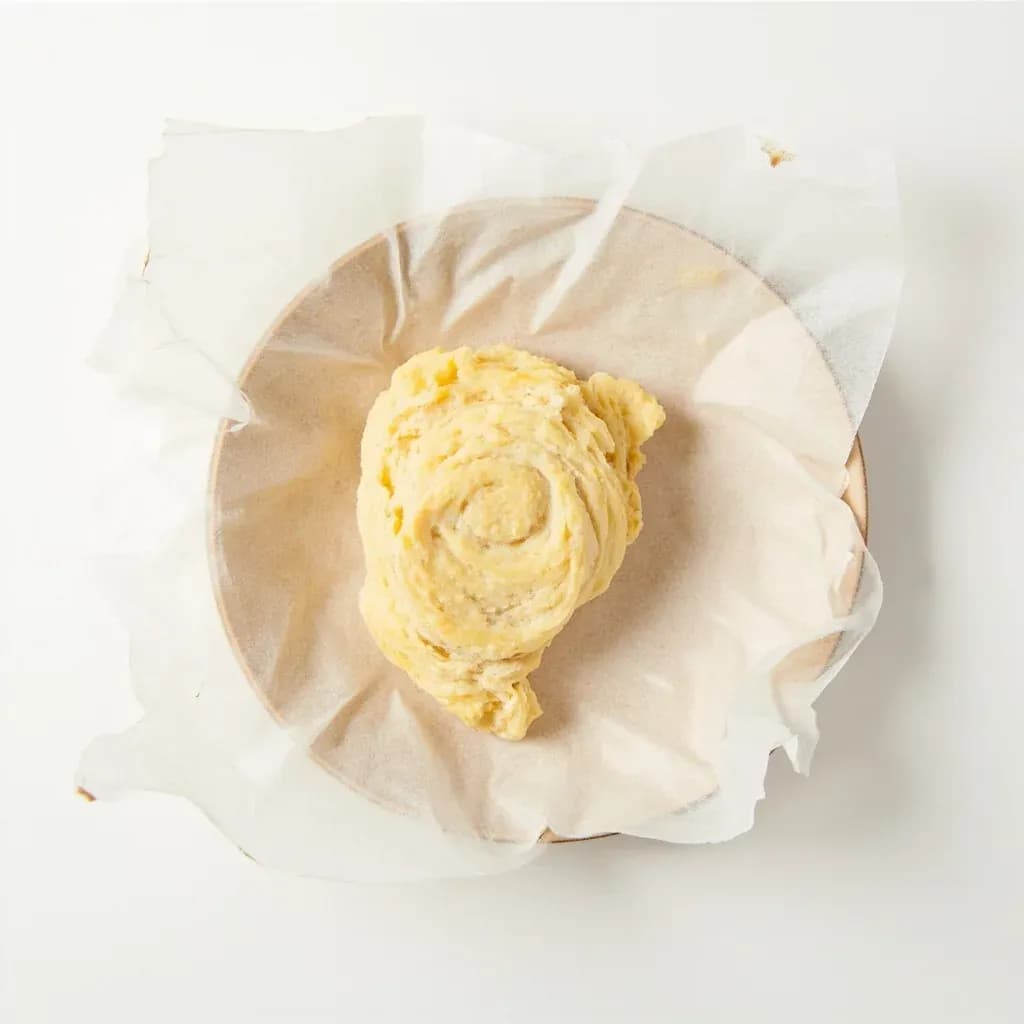
Grease-resistant paper for wrapping fatty foods and lining trays and baskets.
Greaseproof paper is a dense, calendered paper that resists oil and fat soaking through, used to wrap butter, cheese, and fried foods and to line baskets and trays. Unlike parchment it is not always heat-rated, so it is mainly for wrapping and serving rather than baking. It keeps oily foods from leaking through their packaging.
Greaseproof paper is a dense, lightweight paper made from refined vegetable pulp that has been mechanically compressed to eliminate the microscopic gaps between fibers. It is this density — not a surface coating — that gives the paper its defining property: genuine resistance to the penetration of fats and oils. Developed in the early 20th century for commercial bakeries and food service, it has since become a standard domestic staple wherever greasy foods need to be wrapped, separated, or contained without making a mess. The paper is thinner and more flexible than card, typically weighing 30–40 gsm, and is produced in both bleached (white) and unbleached (brown) forms. Its grease resistance is excellent, but its water resistance is limited to light moisture — saturated wetness will cause it to break down. Crucially, standard greaseproof paper is not designed for oven use; only the silicone-coated variety (often called siliconised baking paper) can safely handle heat, making it reliable up to roughly 220–230°C (430°F). Understanding this distinction is the single most important thing a cook can know about this product.
Alternatives
Types & varieties
Bleached pulp; clean, bright appearance; the standard choice for professional and domestic use
Unbleached; slightly more rustic in look; functionally identical to white in grease resistance and performance
Greaseproof base with a silicone coating; adds non-stick surface and heat resistance up to ~220–230°C (430°F); the most versatile product in this family
A highly polished, semi-transparent variant; denser and more grease-resistant than standard greaseproof; smooth surface ideal for wrapping delicate items
Lighter-weight greaseproof; designed specifically for wrapping sandwiches and light foods; not suitable for oven use
Greaseproof, Parchment, and Wax: Knowing the Difference
These three papers are frequently confused, but they behave very differently and are not interchangeable in every situation. Greaseproof paper resists grease through the density of its fiber structure. It has little to no heat resistance and should not be used in ovens unless it is specifically silicone-coated. Parchment paper — also called baking paper or siliconised parchment — is a paper base treated with a silicone coating that gives it both non-stick properties and heat resistance up to 220–230°C (430°F); it is safe for oven use and is the product most recipes refer to when they say 'line with paper.' Wax paper has a thin coating of wax on one or both sides, which makes it resistant to moisture and grease at room temperature, but the wax will melt under heat — never use it in an oven. For oven tasks, reach for silicone-coated parchment or siliconised baking paper. For room-temperature wrapping, lining, and separating, standard greaseproof paper is perfectly adequate and often preferable.
- Greaseproof paper: dense fiber structure, grease-resistant, not heat-safe unless silicone-coated
- Parchment paper: silicone-coated, heat-safe to ~220–230°C, non-stick — what most recipes mean by 'paper lining'
- Wax paper: wax-coated, moisture and grease barrier at room temperature, melts in heat — oven use is dangerous
- Siliconised greaseproof paper: greaseproof base plus silicone coating; the closest thing to parchment and the most versatile option in this group
Common uses
Tips & pitfalls
- Do not confuse greaseproof paper with wax paper or parchment paper — each has distinct properties and heat tolerances, and substitutions matter
- For oven use, check the packaging carefully for 'silicone-coated' or 'silicone paper'; standard greaseproof paper is not designed for heat
- Write directly on the paper with a marker or pen — this is a practical way to label portions, date foods, or mark portioned dough before storage
- Store flat or rolled in a dry place; damp conditions will degrade the paper over time and compromise its grease resistance
- For lining tins, lightly grease the tin first if the batter or dough is wet — greaseproof resists grease but does not guarantee complete non-stick with moist batters
- Use glassine when you need superior grease resistance or a completely smooth surface for wrapping delicate pastries or confections
- If a recipe calls for parchment paper and you only have standard greaseproof, substitute only for room-temperature uses — do not use un-coated greaseproof as an oven substitute for parchment
- Siliconised greaseproof paper is the most useful 'all-rounder' to keep in your kitchen — it handles greasy foods, lines tins, and works in the oven with no issues
Good to know
- Material
- Refined vegetable pulp, fibers heavily compressed to eliminate gaps between them
- Grease resistance mechanism
- Density of fiber structure — not a surface coating
- Weight
- Typically 30–40 gsm (grams per square metre)
- Color
- White (bleached) or brown/natural (unbleached)
- Heat resistance
- Low to moderate; NOT safe for oven use unless silicone-coated
- Water resistance
- Limited to light moisture; saturated wetness will cause deterioration
- Typical formats
- Sheets, rolls, and pre-cut squares or rectangles
- Common names
- Greaseproof paper, bakery paper; called papier sulfurisé in France (though that usually refers to parchment)
- Oven safe
- Only if siliconised (silicone-coated); standard greaseproof is not oven-safe
Also called
food-wrap-paper-2 · grease-proof paper · greaseproof wrapping paper
Related

Aluminum Foil
Wraps, covers, and tents food for the oven and grill

Parchment Paper
Nonstick liner for clean, even baking and easy release

Wax Paper
Moisture-resistant sheet for wrapping and counter prep

Plastic Wrap
Clings tight to cover bowls and wrap leftovers

Silicone Baking Mat
Reusable nonstick liner that replaces parchment

Cheesecloth
Loose-woven cloth for straining stock and bundling herbs

Beeswax Food Wrap
Reusable wax wrap that molds around bowls and produce

Piping Tips
Shaped nozzles that turn frosting into stars and rosettes