Storage & Containers
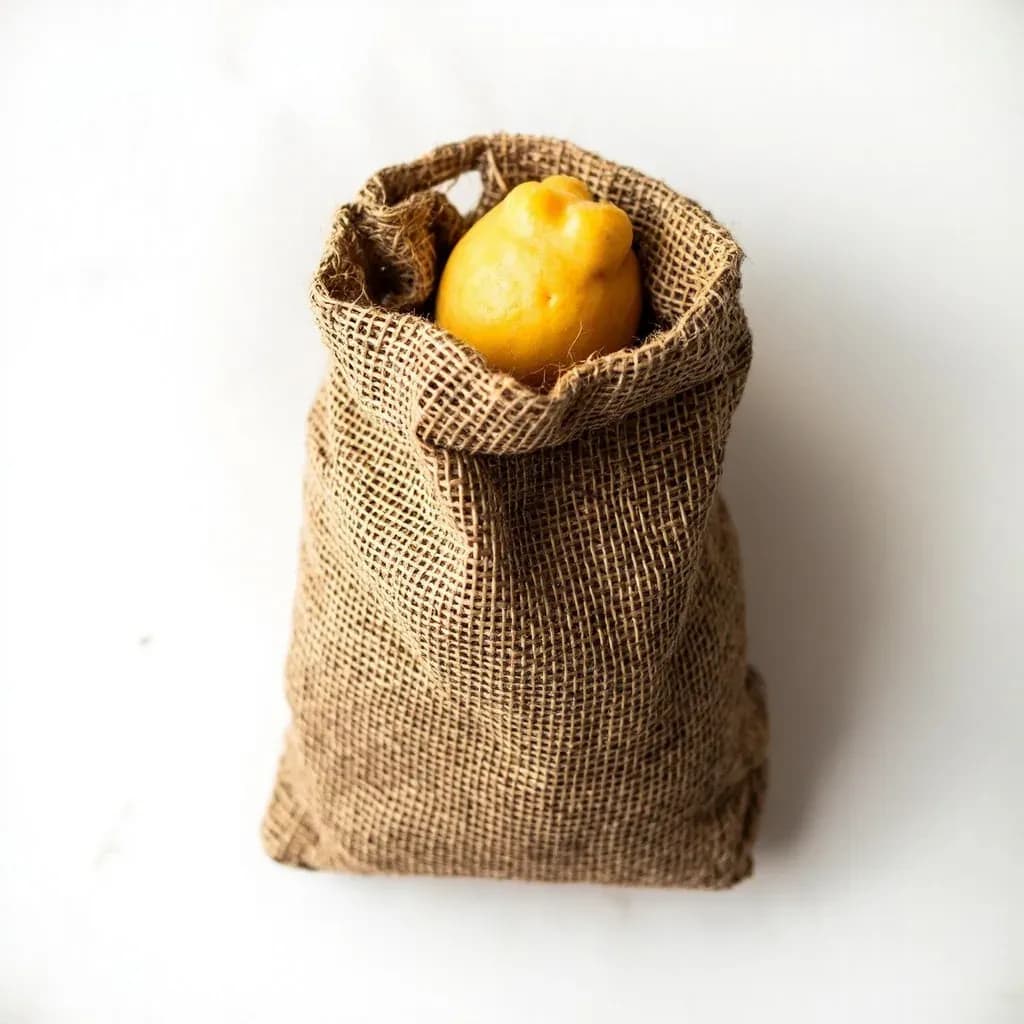
Jute Grain Sack
A breathable woven sack for storing and transporting grains, beans, and root vegetables.
A jute or woven grain sack is a coarse natural-fiber bag used to store and haul bulk dry goods like rice, flour, beans, potatoes, and onions. Its breathable weave lets air circulate, reducing moisture buildup and spoilage in bulk storage. The same sacks are repurposed as produce liners and pantry bins in many kitchens.
A jute grain sack is a storage container woven from fibers of the Corchorus plant, primarily cultivated in India and Bangladesh. The coarse, durable weave creates a porous structure that distinguishes these sacks from sealed plastic containers: air moves freely through the fabric while contents remain contained. This breathability actively regulates moisture within stored goods, drawing excess humidity away from grains and produce while preventing the stagnant, anaerobic conditions that lead to mold and spoilage. Jute sacks represent one of humanity's oldest continuous storage technologies, remaining largely unchanged for centuries—farmers, millers, and home cooks still rely on them for simplicity, durability, and superior preservation of dry goods.
The material's inherent breathability solves problems that sealed containers create. When grains or legumes retain even slight moisture from washing or processing, that trapped humidity promotes mold growth and insect activity in sealed environments. A jute sack allows moisture to escape gradually while maintaining a stable internal atmosphere. Root vegetables stored in jute keep longer than those in plastic bags because the exchange of air prevents condensation that causes premature rotting. For fermentation, the controlled moisture escape supports favorable conditions for beneficial bacteria while helping manage the environment.
Jute sacks come in two functional sizes relevant to home cooks: small retail sacks (roughly 12 by 20 inches) hold about 25 pounds of grain, suitable for a household's annual rice or flour supply; large bulk sacks (24 by 36 inches) handle 100 pounds or more for serious storage or small-scale commercial use. Both sizes close at the neck by drawstring or simple tying. The empty weight ranges from four to eight ounces depending on size, making them light enough to handle when full without structural strain. With proper care, a jute sack lasts several years; without it, prolonged exposure to sunlight or dampness breaks down the fibers within a single season.
Alternatives
Types & varieties
Unlined woven jute; suitable for large grains and root vegetables
Inner cotton layer prevents fine grains like flour or semolina from sifting through weave
May be jute, hemp, or linen depending on manufacturer; verify material composition if specific properties matter
Common uses
Tips & pitfalls
- Always ensure sacks are completely dry before filling to prevent mold and spoilage
- Store in a cool, dark, dry location; direct sunlight degrades jute fibers over time
- Place sacks on wooden pallets or shelves rather than concrete floors to avoid moisture wicking
- Check contents periodically for signs of moisture, pests, or spoilage
- Clean with a dry brush; do not machine wash as agitation breaks fibers
- If sacks become damp, empty contents, dry thoroughly in sun, then air completely before reuse
- For long-term storage, consider double-sacking or using food-grade plastic liner inside the jute
- Label sacks with contents and date; jute accepts chalk or pencil for temporary marking
- Avoid using for strongly aromatic items without thorough air-out periods between different contents
- In climates with ambient humidity above 70 percent, add desiccant packets for sensitive items
Good to know
- Material
- Woven jute fiber (derived from Corchorus plants, primarily cultivated in India and Bangladesh)
- Primary Function
- Breathable storage for dry goods and produce
- Key Property
- Allows air circulation while containing contents; absorbs excess moisture
- Typical Capacity
- 25 lb to 100 lb depending on size
- Common Sizes
- Small (12×20 in) for retail; large (24×36 in) for bulk storage
- Lifespan
- Several years with proper care; fibers degrade with prolonged sun or moisture exposure
- Closure
- Drawstring or tied at the top neck
- Weight Empty
- Approximately 4–8 oz depending on size
Also called
jute-storage-sack · grain-sack · sack-bag · Woven Grain Sack · Burlap Sack
Related

Freezer Bags
Thick, sealable bags built to fight freezer burn

Storage Bags
Resealable bags for fridge storage and marinating

Storage Container
Lidded container for leftovers, prep, and meal kits

Glass Container
Oven-to-fridge glass that won't stain or hold odors

Plastic Container
Lightweight, stackable storage for everyday leftovers

Vacuum Sealer Bags
Airtight bags for long freezing and sous-vide

Reusable Bags
Washable silicone bags that replace single-use plastic

Mason Jar
Sealed glass jar for preserves, pickles, and storage