Heat & Safety
Lint-Free Cloth
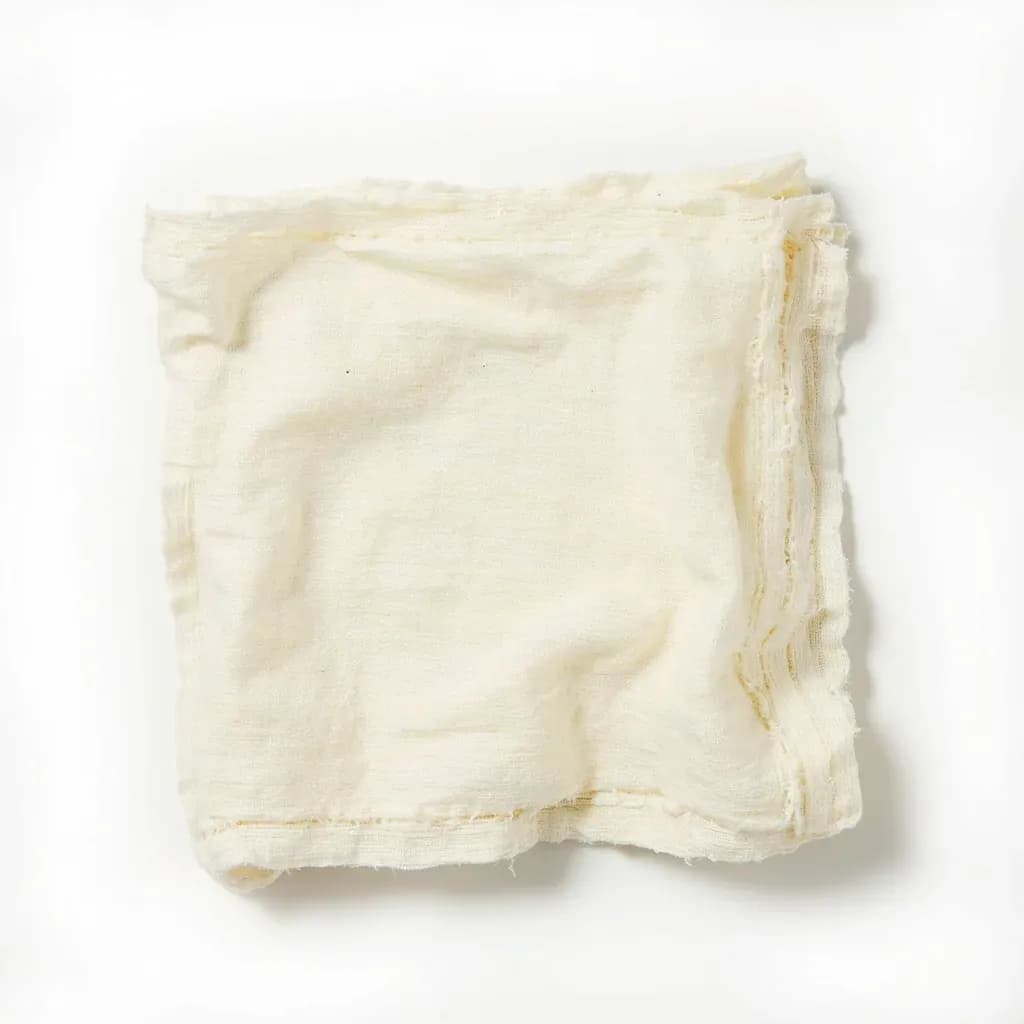
A smooth cloth that wipes and dries surfaces, tools, and glassware without shedding fibers.
A lint-free cloth is a tightly woven or microfiber textile that cleans and dries without leaving fibers behind. Cooks use it to wipe down plate rims before service, dry delicate tools, polish glass, and clean lenses on thermometers or scales. Its smooth weave makes it the right choice anywhere stray fibers would spoil a finish or contaminate a sensitive surface.
A lint-free cloth is defined as much by what it doesn't do as by what it does: it doesn't shed. In a kitchen, that single property touches three overlapping concerns — appearance, safety, and function. A shedding towel ruins the very surface you're trying to clean, smearing rather than lifting, and deposits visible fibers on a polished wine glass, a finished plate, or a touchscreen. Lint is also combustible; a stray tuft catching on a gas burner pilot is one of the classic line-cook near-misses, which is why the cloth earns its place in a Heat & Safety category rather than simply "cleaning."
The modern kitchen standard is split microfiber, a polyester-and-polyamide blend where each filament is split into wedge-shaped micro-fibers finer than one denier. The vastly increased surface area and the wedge geometry generate a static charge that actively pulls dust, grease, and moisture into the cloth rather than pushing them around. Quality split microfiber absorbs six to eight times its weight in water — far more than a cotton terry of equal size — and can be reused through hundreds of wash cycles if cared for properly. Cheaper flat-weave microfiber that isn't split behaves much more like an ordinary cloth and is noticeably less effective at lifting grease.
Traditional kitchens reached for Huck towels — a tight, low-lint cotton weave originally sold for surgical use — and heavy linen tea towels for the same task. They shed far less than terry, but the fine-dining pass and the bar have largely replaced them with true split microfiber for the final polish. Whatever the material, the working principle is the same: the cloth is often the last thing to touch the surface before the guest does, and it must leave nothing behind.
Alternatives
Types & varieties
The workhorse lint-free cloth; ultra-fine split fibers (often <1 denier) lift grease and dust on contact; ideal for general wiping, polishing stainless steel, and streak-free glass.
Woven specifically for stemware and crystal; often a flat-weave linen-cotton or a tight microfiber weave used dry after a hot rinse to bring glass to a shine.
Soft, often non-woven or sueded microfiber used for silver, cutlery, and plated finishes; sometimes treated with anti-tarnish compounds.
Disposable cellulose/poly blends used in commercial kitchens where reusables cannot be laundered; low-lint, single-use.
Heavy cotton weave with very low lint, traditional in butcher shops and bakeries; absorbent, durable, and can be boiled for sanitation.
Composite of cellulose and cotton; absorbs many times its weight, compostable, and leaves very little lint when wiping counters or produce.
Care & Longevity
One wash with fabric softener, or one dryer load shared with cotton towels, can permanently degrade a microfiber cloth. The split fibers become coated in silicone (from softener) or grab loose cotton lint (in the dryer), and the cloth never quite recovers its static charge or absorbency. Treat microfiber the way you treat a good knife: wash it on its own, dry it gently, and retire it the moment the performance slips. Huck towels and linen glass cloths are more forgiving, but they reward the same kind of attention.
- Wash in warm (not hot) water with a mild, fragrance-free detergent; skip bleach entirely.
- Tumble dry low or line dry — high heat distorts the split-fiber geometry.
- Replace the cloth when it pills, feels smooth, or starts leaving streaks it used to prevent; crushed fibers smear instead of lifting.
- Store dry and unfolded in a clean bin; a damp, crumpled cloth harbors bacteria and develops odor.
- For Huck towels and linen glass cloths, hot wash and a quick iron yields a perfectly flat polishing surface.
Common uses
Tips & pitfalls
- Wash brand-new microfiber separately two or three times before first food-contact use to flush out factory sizing and loose fibers.
- Never combine microfiber with cotton towels in a dryer — the cotton sheds and the microfiber grabs every fiber, ruining both loads.
- Skip fabric softener and dryer sheets entirely; the silicone coating destroys the cloth's absorbency and static charge for good.
- Color-code by task — red for floors, blue for glass, green for food contact — to prevent cross-contamination and stop grabbing the wrong cloth under pressure.
- For glassware, rinse in very hot water, drip briefly, then buff with a dry, flat microfiber; the cloth is used dry because residual water is what causes streaking.
- Fold the cloth into quarters so you have eight clean faces per cloth; rotate as you wipe and refold to a fresh section rather than reaching for a new cloth mid-task.
- Replace a cloth the moment it pills or feels smooth — once the split fibers are crushed, the cloth no longer picks up particles, it just smears them.
- Never use a lint-free cloth to grab a hot pan handle; the synthetic fibers will melt and can fuse to skin or cookware.
Good to know
- Material
- Most often split microfiber (typically 80/20 or 70/30 polyester/polyamide); also tightly woven linen, glass-cloth cotton, Huck cotton, and cellulose blends.
- Common sizes
- 12 × 12 in (30 × 30 cm) and 16 × 16 in (40 × 40 cm) are standard; bar and glass cloths often 18 × 28 in.
- Absorbency
- Quality split microfiber holds roughly 6–8× its weight in water — significantly more than a cotton terry towel of equal size.
- Heat tolerance
- Microfiber scorches around 130 °C / 266 °F and melts near 150 °C / 302 °F; never use near open flame or on hot cookware.
- Reusability
- Typically rated for 300–500 wash cycles before pilling and loss of effectiveness.
- Wash care
- Machine washable separately from lint-shedding cottons; no bleach; no fabric softener, which coats fibers and ruins absorbency.
- Fire safety
- Lint near gas burners is a documented ignition hazard; switching the line to a true lint-free cloth is standard professional kitchen practice.
Also called
Lint-Free Towel · Non-Linting Cloth
Related

Paper Towels
Disposable sheets for spills, drying, and patting dry

Kitchen Towels
Reusable cloths for drying, gripping, and wiping

Oven Mitts
Heatproof gloves to handle hot pans and trays safely

Disposable Gloves
Single-use gloves for safe, mess-free handling

Cleaning Cloths
Reusable cloths for wiping counters and spills

Tortilla Warmer
Insulated holder that keeps tortillas warm and soft

Trivet
Heatproof stand that shields surfaces from hot pots

Ice Bath Setup
Bowl of ice water that halts cooking and sets color