Wraps & Liners
Loaf-Pan Liner
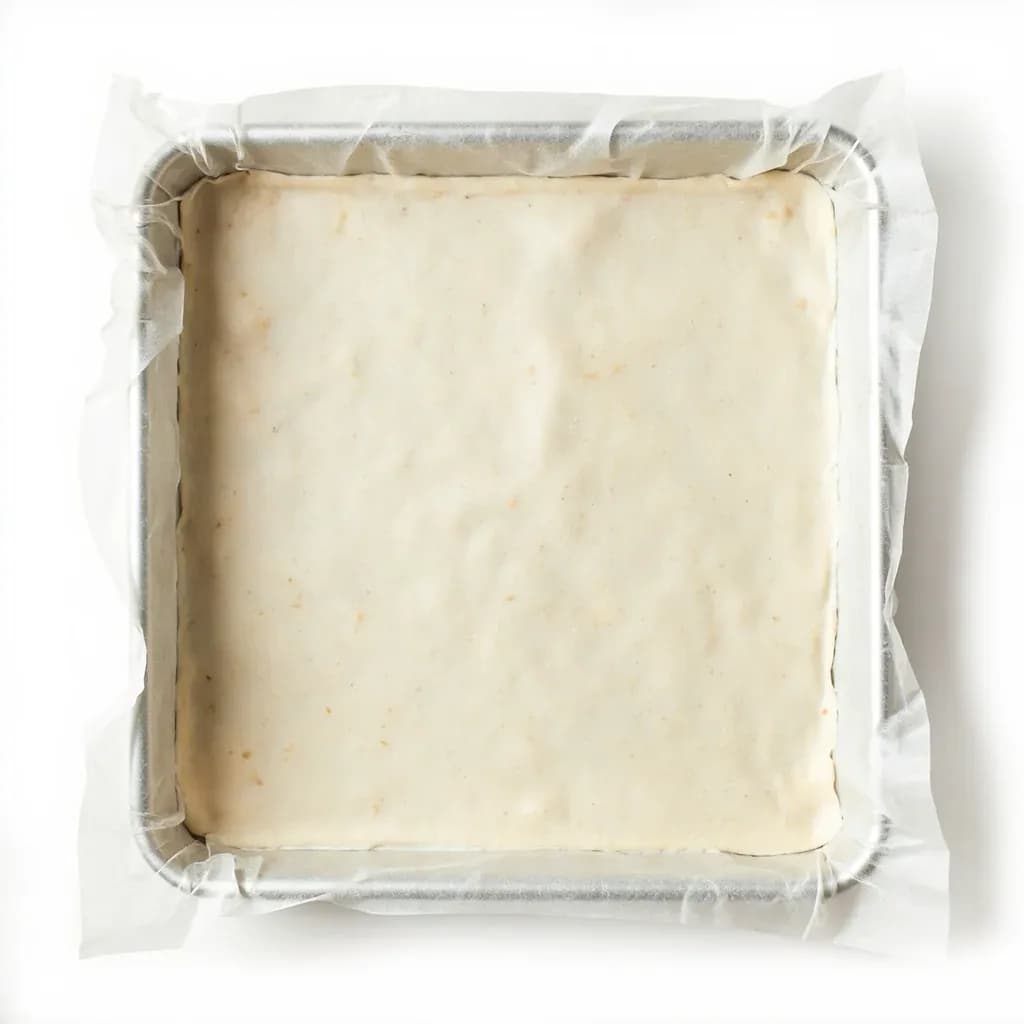
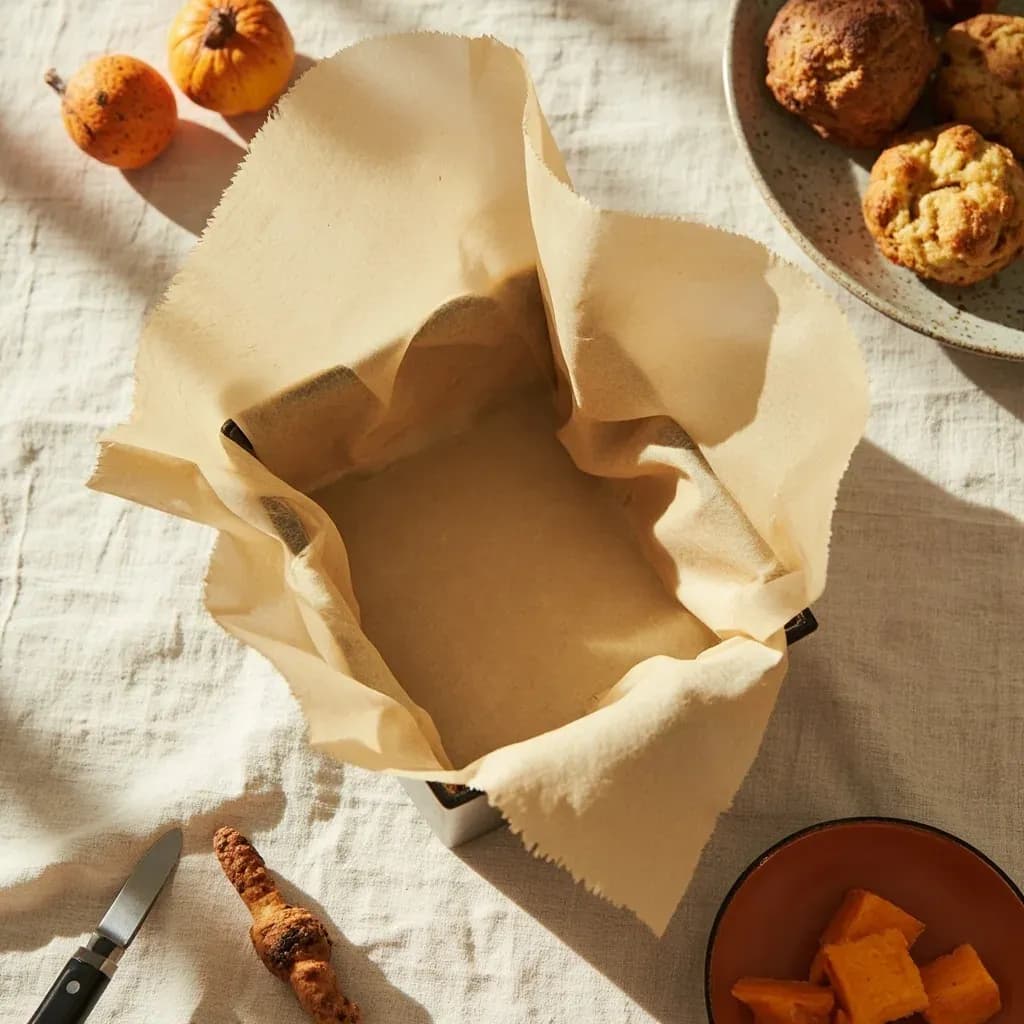
A pre-folded parchment sheet sized to a loaf tin with overhanging edges that act as lifting handles, freeing banana bread or pâté in one clean pull without greasing.
A loaf-pan liner is a fitted insert — most often unbleached or silicone-coated parchment, sometimes flexible silicone — pre-cut to the inside dimensions of a standard loaf pan with two long-edge "ears" that rise above the rim. Drop it in, press it into the corners, fill with batter, and after baking the whole loaf lifts out by those overhanging tabs without inverting the pan or running a knife around the edges. The format grew out of professional bakeries that built parchment slings by hand; the consumer pre-cut sheet became mainstream in the 2000s once parchment paper moved from specialty supply to grocery shelves.
The appeal is more than nonstick release, though that alone justifies the drawer space. The liner lets you unmold delicate things — a pâté en terrine, a chilled compound-butter log, a fragile pound cake — without ever touching the pan. Because the bread comes up resting on the liner itself, there is no flipping, no spatula digging at the corners, and no scrubbing flour paste off aluminized steel. For wet, sugary batters that would otherwise weld themselves to the pan (banana, pumpkin, zucchini, lemon poppy seed), the liner is the difference between a clean slice and a crumbled loaf.
Parchment versions are single-use and rated to roughly 420–450 °F; silicone versions are reusable for hundreds of bakes and tolerate higher oven temperatures, but cost more upfront and want careful washing to keep their release properties. Neither material is a complete substitute for greasing — very lean cake batters and some yeasted doughs still benefit from a light oil spray on the liner.
Alternatives
Types & varieties
Individual sized sheets with long-edge overhang, sold in counted packs; the most common consumer format
Boxed roll with pre-scored sheets sized for loaf pans; tear off as needed, cuts down on packaging waste
Flexible silicone mat cut to fit a loaf pan; dishwasher-safe and good for hundreds of bakes
Smaller pre-cut sheets around 6 × 3.5 in for mini loaf pans — gift loaves, samplers, and tea breads
Unbleached (brown) is the more common, eco-friendly choice; bleached (white) parchment releases identically
Parchment vs. Silicone
The two materials solve the same problem with different economics and trade-offs.
- Choose parchment for pâté, terrines, and any recipe where you want to lift the liner away with the loaf still on it — the paper gives under the knife and peels cleanly off the food. It is cheap, compostable when ungreased, and heat-tolerant to about 450 °F.
- Choose silicone when you bake loaf-pan recipes weekly, want higher heat tolerance for deep crust, or want to skip the recurring cost. Silicone does not behave like parchment for unmolding — you still have to turn the pan or peel the mat away from the loaf — but it is dishwasher-safe and lasts years.
- Bleached vs. unbleached parchment is purely a color and sourcing question; release performance is identical.
Common uses
Tips & pitfalls
- Spritz the liner lightly with cooking spray for very lean batters (low-fat cake, some yeasted doughs) — parchment alone is not always fully nonstick on its own
- Press the liner firmly into the corners and up the long sides before adding batter so it conforms to the pan rather than folding inward into the crumb
- Trim the short ends flush with the rim; leave overhang only on the two long sides so the liner does not buckle and fold into the batter
- If using an 8.5 × 4.5 in liner in a 9 × 5 in pan, fold the long edges inward slightly to fit — or simply buy the size that matches your pan
- For very moist batters (pumpkin, banana), let the loaf cool 10–15 minutes before lifting — pulling too early can tear the bottom and leave the crust behind in the pan
- Do not exceed parchment's rated 420–450 °F ceiling; for very dark crusts at 450 °F+ switch to a silicone liner or use a parchment sling only on the base
- Save the used (un-greased) liner to rub out the next batch of crumbs or to line a sheet pan for toasting nuts — one more bake out of the paper
Good to know
- Typical Material
- Silicone-coated or unbleached parchment paper; reusable silicone versions also exist
- Standard US Sizes
- 8.5 × 4.5 in (1-lb pan) and 9 × 5 in (1.5-lb pan); mini-loaf versions around 6 × 3.5 in are common
- Heat Tolerance
- Parchment liners rated to roughly 420–450 °F (215–230 °C); silicone versions tolerate higher oven temperatures
- Pack Quantities
- Most often sold in packs of 25, 50, or 100 pre-cut sheets; perforated continuous-roll formats are sold by linear length
- Pan Compatibility
- Works in metal, aluminized steel, glass, and ceramic loaf pans
- Greasing Required
- Designed to release without greasing or flouring, though a light oil spray helps with very wet or low-fat batters
- Storage
- Store flat in a dry drawer; silicone versions can be rolled or laid flat, kept away from sharp edges
- Disposal
- Ungreased unbleached parchment is compostable; silicone versions are reusable for years
Also called
loaf pan parchment · loaf liner · bread pan liner