Storage & Containers
Maple Syrup Bottle/Tin
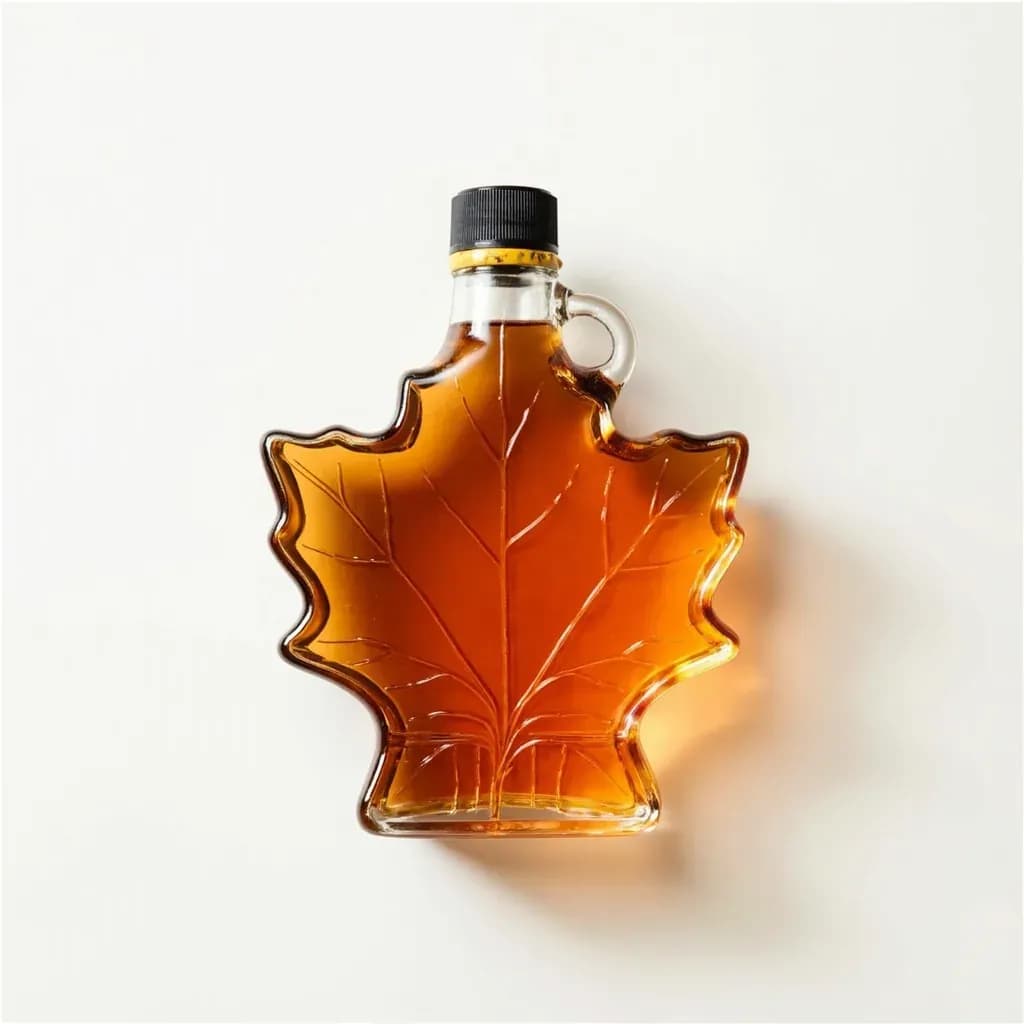
A glass bottle or metal tin for packaging, storing, and selling graded maple syrup.
A maple syrup bottle or tin is the finished package for bottling pure maple syrup, ranging from leaf-shaped glass bottles to lined metal tins. Sugarmakers fill them hot and seal them so the syrup keeps without refrigeration until opened. The tin's lined interior resists the syrup's acidity and protects flavor from light, while glass shows off the syrup's amber grade.
The maple syrup bottle is a specialized food container shaped by a century of dairy-counter and pancake-house trade, distinct from a generic syrup jug. A good vessel does three jobs at once: it shields the syrup from light and air, pours cleanly without sticky drips, and signals what is inside — the pressed maple-leaf bottle is the most recognized shape in the category, while amber glass, tin, and HDPE plastic each bring a different balance of cost, durability, and flavor protection. For the home cook, the format matters because maple syrup is sensitive to UV, picks up fridge odors through plastic over time, and expands roughly 5–8% when frozen.
Beyond packaging, these containers work as everyday kitchen tools: a countertop pour vessel, a long-term storage jar, and even a canning container for homemade syrup. The practical hierarchy is straightforward — glass and tin preserve opened syrup the longest (six to twelve months refrigerated), plastic jugs are convenient for working supply but allow faster flavor drift, and the leaf-shaped or fluted glass bottles pull double duty as gift presentation. Choosing by use case (display, storage, freezer, gift) matters more than the brand on the label.
Alternatives
Types & varieties
Workhorse grade-A retail bottle; UV-protective; suitable for hot-fill or cold-fill.
Pressed-glass 250 mL bottle with a leaf silhouette — the visual shorthand for Quebec syrup and the most-collected format.
100–200 mL bottles with embossed maple motifs; sold as gift and carafe formats.
Lightweight, shatterproof, cheap; the standard for value-grade retail in North America.
Common 1 L and 1 U.S. gallon format; the practical kitchen pour-and-store container.
Used for foodservice, export, and institutional packs from 1 L up; opaque and stackable, but dents easily, can rust at the seam if stored wet, and may impart a faint metallic note over very long storage.
Decorative flat or squat tins used for gift, single-serve, and candy/syrup combos.
Reusable countertop carafe; airtight only when the cork is sound; not freezer-safe and prone to chipping if dropped.
The home cook's decanting and refill choice; wide mouth for easy pouring and cleaning; freezer-safe with proper headspace.
Choosing a bottle by use
Match the container to how and where the syrup will live. The same syrup will taste noticeably different after a season in clear glass on a sunny counter versus in amber glass tucked in the back of the fridge.
- Countertop display or tableservice: amber glass or a decorative fluted bottle — both pour cleanly and protect against ambient light.
- Working supply in the fridge: a 1 L HDPE jug is convenient, but plan to use it within 3–6 months before flavor drift sets in.
- Long-term storage beyond a season: amber glass or tin, refrigerated and tightly sealed — these preserve opened syrup 6–12 months.
- Freezer surplus: wide-mouth glass jars or rigid plastic jugs with at least 1–2 inches of headspace; mason jars are ideal for measured portions.
- Gifts and presentation: 100–250 mL leaf-shaped or fluted glass bottles, ideally with a tamper-evident cap and a hand-tied tag.
Common uses
Tips & pitfalls
- Choose amber glass or tin if the bottle will sit on a sunny counter or windowsill — UV degrades both the color and the delicate maple flavor.
- Decant only what you'll use in 4–8 weeks into a countertop pour bottle; keep the bulk in the original sealed container, refrigerated.
- Inspect reused retail bottles carefully — flavored syrups (bourbon, vanilla) leave oils that can taint plain syrup, and any hairline crack will split open when filled with hot syrup.
- If freezing, never fill to the rim — syrup expands and will crack glass or split a plastic jug.
- Plastic jugs are semi-permeable: over months they can absorb fridge odors and let maple aroma escape; switch to glass or tin for any storage beyond a season.
- Hot-pack syrup only into glass bottles that have been warmed first; pouring boiling syrup into cold glass causes thermal shock and cracking.
- Wipe the seams and cap area of tin cans dry before refrigerating — trapped moisture at the seam is the most common cause of rust and off-flavors.
- Match the cap to the job: a built-in pour spout is best for waffle service, a plain screw cap is best for storage, and a cork is decorative but not airtight long-term — swap it for a food-safe stopper if the bottle will be in rotation for weeks.
Good to know
- Category
- Storage & Containers / Food Packaging
- Primary materials
- Glass (often amber), food-grade HDPE plastic, tin-plated steel
- Common retail sizes
- 50 mL, 100 mL, 250 mL, 500 mL, 1 L; tins and jugs up to 1 U.S. gallon (3.78 L)
- Iconic shape
- Pressed maple-leaf glass bottle, 250 mL — the most recognized tourist and grade format, originating in Quebec
- Light protection
- Amber glass and opaque tin block UV; clear glass and translucent plastic do not
- Tamper evidence
- Most retail bottles use a pressure-sealed or heat-shrunk tamper-evident band over the cap
- Headroom for freezing
- Syrup expands 5–8% when frozen; containers need 1–2 inches of headspace to avoid cracking glass or splitting plastic
- Cap types
- Screw cap (PP or metal), flip-top with hinge, built-in pour spout, and decorative cork
- Shelf life impact
- Glass and tin preserve opened syrup 6–12 months refrigerated; plastic jugs allow faster flavor drift (3–6 months)
Also called
Maple Syrup Tin · Syrup Bottle · Maple Leaf Bottle
Related

Freezer Bags
Thick, sealable bags built to fight freezer burn

Storage Bags
Resealable bags for fridge storage and marinating

Storage Container
Lidded container for leftovers, prep, and meal kits

Glass Container
Oven-to-fridge glass that won't stain or hold odors

Plastic Container
Lightweight, stackable storage for everyday leftovers

Vacuum Sealer Bags
Airtight bags for long freezing and sous-vide

Reusable Bags
Washable silicone bags that replace single-use plastic

Mason Jar
Sealed glass jar for preserves, pickles, and storage