Wraps & Liners
Newspaper (Wrapping / Table Cover)
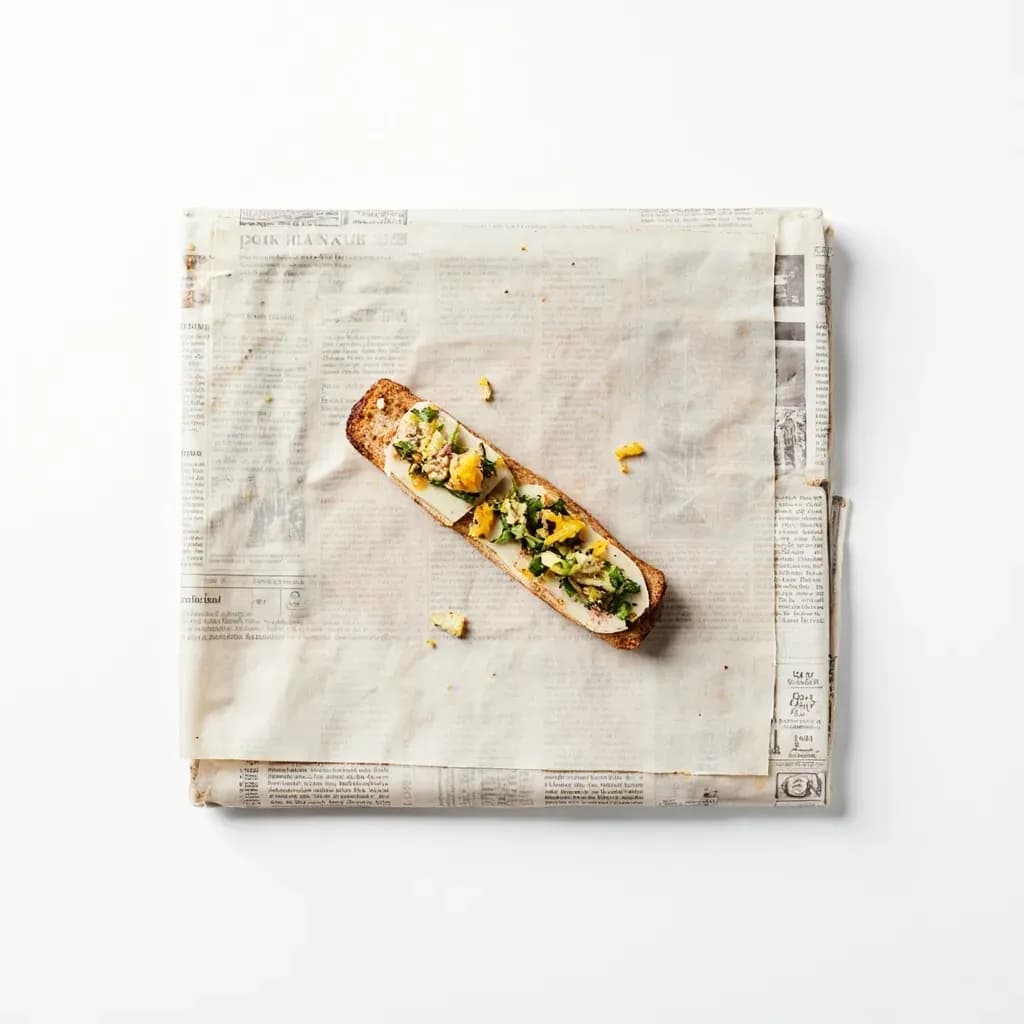
Plain newspaper used to wrap charred vegetables or cover a communal table.
Ordinary newsprint pressed into kitchen service to wrap and steam charred vegetables and to cover tables for messy communal feasts. At a calçotada, grilled spring onions are bundled in newspaper to soften and stay warm; at seafood boils it lines the table to catch shells. It is cheap, absorbent, and discarded after one use.
Newspaper holds an unlikely but genuine place in the kitchen as both a finishing wrap for just-cooked vegetables and a disposable table covering for communal, hand-to-eat meals. As a wrap, a sheet of newsprint tucked around steaming-hot roasted peppers, potatoes, or corn traps the vegetable's own moisture against its skin, finishing the flesh to a silky, fully tender texture while the condensate loosens the peel so it slips off with almost no effort. As a table covering, it does the work of a tablecloth, a plate, and a napkin in one — a sheet of newsprint spread over a picnic table becomes the entire serving surface for a crawfish boil, a fried-chicken dinner, or a pile of crabs, rolled up and discarded at the end of the meal.
The material is plain, inexpensive wood-pulp paper printed with contemporary soy- or vegetable-oil-based inks, which makes brief contact with warm, low-fat food broadly acceptable to working cooks. It is not, however, oven-safe, microwave-safe, or suitable for foods dripping in hot fat, and the colored or glossy insert sections of a modern paper should always be set aside. For a cleaner wrap without any ink concern, cooks turn to unprinted newsprint or kraft butcher paper, which performs the same steam-trapping job.
The technique is older than the paper itself. Wrapping roasted roots in cloth or burying them in hay to finish cooking by residual heat is a practice newspaper simply made cheap and disposable in the twentieth century, and the table-covering tradition is rooted in American coastal one-pot cookouts where shellfish, corn, potatoes, and sausage are poured straight onto newsprint and eaten by hand.
Alternatives
Types & varieties
Black ink on uncoated wood-pulp paper — the default for table coverings and finishing wraps for potatoes, chiles, and peppers
Run-of-press paper carried off the line before the inking station; eliminates any ink-transfer concern and is the purist's choice for wrapping delicate items
Larger format (roughly 22–24 in. wide) that gives a generous table cover with fewer seams and spreads easily over a long table
Smaller format (11–17 in.) that folds neatly around individual vegetables or single portions
Food-grade kraft paper used interchangeably where a cleaner, ink-free wrap is wanted, with the same steam-trapping behavior
The steam-wrap technique
The principle is simple: a hot vegetable continues to cook from its own retained heat, and enclosing it in paper holds that heat and moisture against the skin. The steam does two things at once — it finishes the flesh to a uniform, melting tenderness, and it condenses under the skin of peppers, chiles, eggplant, and roasted potatoes, lifting the peel away in sheets. The wrap should go on while the food is still steaming-hot, and it should be tight enough to trap vapor without crushing the contents.
- Best candidates: poblano, Anaheim, bell, and jalapeño peppers; eggplant; Yukon Gold, russet, and sweet potatoes; whole heads of roasted garlic; grilled corn; roasted tomatillos; chestnuts and plantains straight from the grill
- Rest time inside the wrap: 10 to 20 minutes for most peppers and potatoes; longer rest for larger items like whole eggplants
- Use two or three layers where the wrap will be handled a lot — a single sheet tears quickly once it has absorbed steam
The newspaper table
Spreading newspaper across a picnic table turns the table itself into a serving surface, a plate, and a napkin. Diners eat with their hands, the paper absorbs drips and shells, and at the end of the meal the whole thing is folded up and thrown away. It is the defining surface of the American coastal one-pot cookout — the Chesapeake crab feast, the Louisiana crawfish boil, the New England clambake — and it has carried over to fried-chicken suppers, fish fries, and any meal meant to be loud, shared, and unceremonious.
- For a wooden table, lay a sheet of kraft or butcher paper underneath to keep any ink rub-off off the finish
- Pour the boil — shellfish, corn, potatoes, sausage, lemons, and all — straight onto the paper so the juices season everything beneath them
- Provide a small bowl or bucket for shells and a roll of paper towels for hands; the newspaper handles the rest
Common uses
Tips & pitfalls
- Tear off colored, glossy, or heavily illustrated sections before use — these carry heavier pigmented inks and coatings that can transfer to food
- Wrap vegetables while they are still steaming-hot; the trapped moisture is what does the work, finishing the interior and loosening skins for chiles, peppers, and eggplant
- Use two or three layers where the wrap will be handled a lot — a single sheet tears quickly once it has dampened
- Do not put newspaper in the oven or microwave; it can scorch and, with metallic inks in some inserts, can spark
- Avoid wrapping foods swimming in hot fat or oil straight from the fryer — the fat wicks into the paper and mobilizes ink
- When using as a tablecloth, lay a layer of kraft or butcher paper underneath on a wooden table to protect the finish from ink rub-off
- Discard after one food-contact use; recycle the rest with regular paper, provided it is not heavily greased
- For the most polished service, choose unprinted newsprint or butcher paper — the look is the same, with no ink transfer to worry about
Good to know
- Material
- Wood-pulp newsprint printed predominantly with soy- or vegetable-oil-based black ink; colored inserts and glossy ad pages use heavier pigments and coatings that should be avoided for food contact
- Form
- Folded broadsheet (roughly 22–24 in. wide) or tabloid (11–17 in.) sheets, used either folded as a wrap or unfolded as a table cover
- Heat tolerance
- Suitable for steam and ambient warmth only; not oven-safe, not microwave-safe, and not appropriate for very hot fats
- Ink safety
- Modern U.S. and U.K. press runs use soy or vegetable-oil inks considered safe for brief, incidental food contact with warm, low-fat foods
- Cost
- Essentially free; commonly sourced as out-of-date back issues or end-of-run overruns
- Reusability
- Single-use for direct food contact; may be reused as a counter or drawer liner once it has been allowed to dry
- Recyclability
- Fully recyclable through standard paper streams once soiled, provided the paper is not heavily greased
Also called
Newspaper (for Wrapping Calçots) · Newspaper Boil Table Cover · Newsprint · Newspaper Wrap
Related

Aluminum Foil
Wraps, covers, and tents food for the oven and grill

Parchment Paper
Nonstick liner for clean, even baking and easy release

Wax Paper
Moisture-resistant sheet for wrapping and counter prep

Plastic Wrap
Clings tight to cover bowls and wrap leftovers

Silicone Baking Mat
Reusable nonstick liner that replaces parchment

Cheesecloth
Loose-woven cloth for straining stock and bundling herbs

Beeswax Food Wrap
Reusable wax wrap that molds around bowls and produce

Piping Tips
Shaped nozzles that turn frosting into stars and rosettes