Storage & Containers
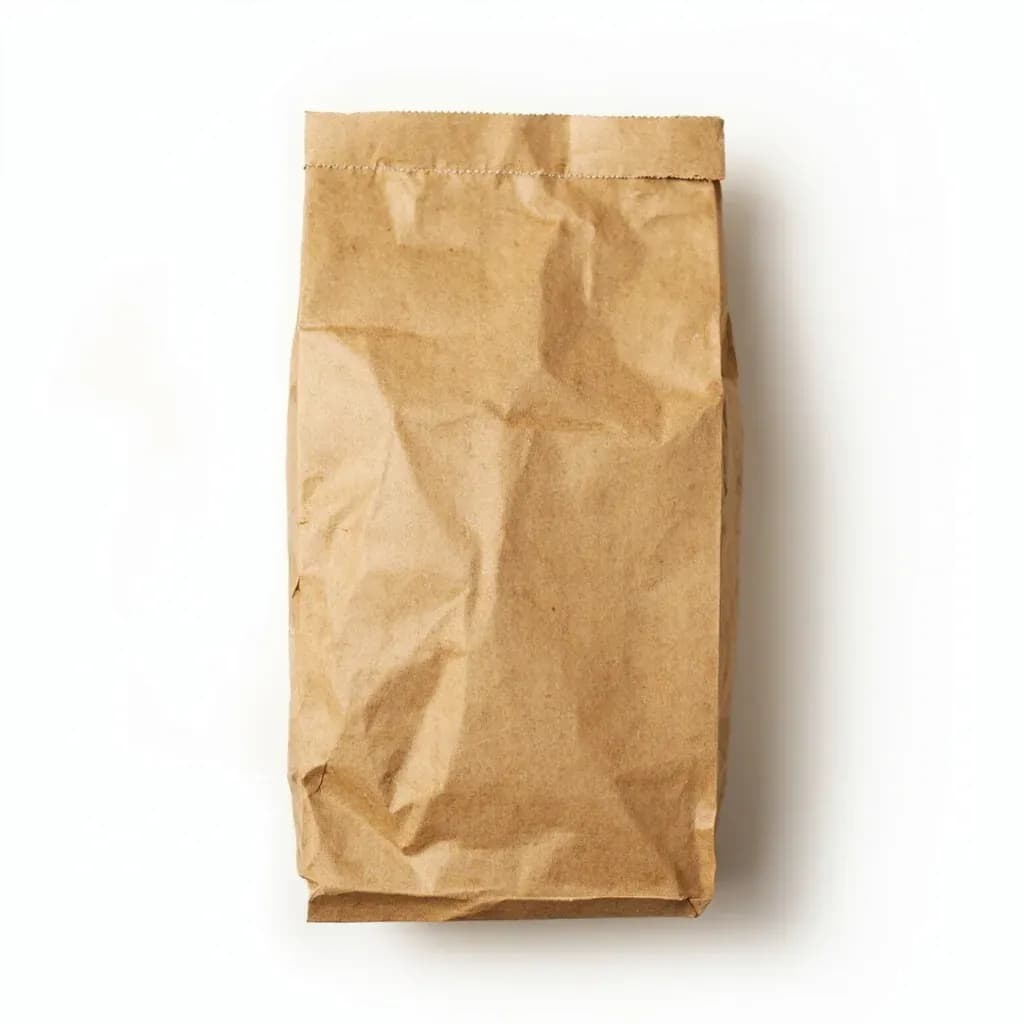
Paper Bag
A simple paper sack for storing produce, ripening fruit, and draining fried food.
A paper bag is a plain kraft sack used to store mushrooms and produce, ripen avocados and stone fruit by trapping ethylene gas, and drain fried foods. Its breathable paper prevents the condensation that makes produce rot in plastic. It is a cheap, compostable staple in most kitchens.
The humble paper bag is one of the most useful storage tools in a working kitchen, and it owes that usefulness to a single material property: porosity. Made from kraft pulp — typically unbleached wood fiber, though bleached and specialty grades exist — a paper sack breathes. Air and water vapor pass freely through its walls, while the bag itself acts as a loose enclosure that concentrates the atmosphere immediately around whatever is inside. That combination of breathability and containment is the engine behind nearly every cooking application, from ripening a stubborn avocado to draining a batch of just-fried chicken.
The ripening trick is the most celebrated use, and it rests on plant physiology. Climacteric fruits — bananas, avocados, pears, peaches, tomatoes, kiwis, mangoes — continue to ripen after harvest, driven by ethylene gas the fruit itself emits. A closed paper bag traps that ethylene around the fruit while letting excess humidity escape through the fibers, accelerating ripening in a day or two without the soggy, rot-inducing condensation that builds up inside a plastic bag. Adding a ripe apple or banana, both prolific ethylene producers, pushes the process further. The same porosity that handles ethylene also makes the bag a good home for onions, garlic, shallots, and potatoes, which need dry, circulating air to stay sound in a cool pantry.
Beyond storage, a paper bag is a working tool at the stove. A folded sack absorbs the oil that bleeds out of fried food, performing the same job as a paper towel liner but with sturdier walls. Most kraft grocery bags sold in the United States are made from virgin fiber and are FDA-approved for direct food contact, so a cook can use them confidently for both produce and fried food — though a bag that has held raw meat, fish, or pungent alliums should be retired rather than reused for fresh food.
Alternatives
Types & varieties
The workhorse unbleached bag; the standard choice for ripening fruit, draining fried food, and storing bread.
Bleached version with a cleaner appearance; same functionality, slightly weaker fiber.
Squared-off base lets it stand upright; preferred for storing onions, potatoes, or ripening stone fruit on the counter.
Smaller, sealed-bottom bag; useful for portioning dry goods or folding into a quick piping cone.
Wider, taller format designed for loaves and rolls; lets the crust breathe while keeping out dust.
Coated interior resists oil penetration; used by fishmongers, butcher counters, and for very greasy fried foods.
Multi-wall construction for hot or wet takeout; not the same as a plain kraft bag and not compostable.
A flat sheet of parchment or kraft folded into a triangle and rolled into a cone; a one-time-use bag for piping, not for storage.
The Paper Bag as a Ripening Chamber
A paper bag works as a ripening chamber because its fibers strike a balance that plastic cannot: they hold ethylene in while letting water vapor out. Climacteric fruit continues to metabolize after harvest, converting starches to sugars and producing ethylene (C₂H₄) as a natural ripening hormone. In open air, the gas diffuses away and ripening is slow. In a sealed plastic bag, ethylene accumulates but so does transpired water vapor, and the surface of the fruit stays wet enough to invite mold. Kraft paper's porous structure retains the gas while wicking humidity, creating a humid-but-not-wet microclimate that drives ripening forward in a fraction of the time.
- Choose unripe but mature fruit: avocados that yield slightly to a gentle squeeze, pears with a little give at the neck, peaches with a faint fragrance, bananas still mostly green at the stem.
- Place the fruit in a single layer or in a small bunch; do not pack the bag tight, since airflow around each piece matters.
- Fold the top over once or twice to close loosely. A fully sealed or stapled bag behaves like plastic and traps condensation.
- Check once a day. If you see beads of moisture on the inside of the bag, open it for ten minutes or punch a few small holes to vent.
- To accelerate further, add a ripe apple, banana, or kiwi — the heaviest ethylene emitters in a typical kitchen.
- Move ripe fruit to the refrigerator to slow the process; the cold dramatically slows ethylene-driven ripening and buys you several extra days.
Common uses
Tips & pitfalls
- Choose paper, never plastic, when ripening fruit — plastic traps moisture and causes rot, while paper concentrates ethylene without drowning the fruit in condensation.
- Speed ripening by adding a ripe apple or banana to the bag; both are among the highest natural ethylene producers.
- Fold the top loosely rather than sealing it; if condensation beads inside, open the bag or punch a few holes to vent humidity.
- For draining fried food, line a bowl or rimmed sheet pan with the bag and top with paper towels — a flat-laid bag will pool grease and leak from the seams.
- Replace the bag between batches when draining fried food; once the paper is saturated, it transfers grease rather than absorbing it.
- Use unbleached brown kraft for high-moisture or warm applications; bleached white bags are slightly weaker and tear more easily when wet.
- Never put a paper bag in the oven, broiler, or microwave for general cooking — it can scorch or ignite. Microwave popcorn bags are an engineered exception, not a plain kraft bag.
- Don't reuse a bag that held raw meat, fish, or pungent alliums for fresh produce; retire it to the trash. Allium-only bags can go into the compost.
Good to know
- Material
- Kraft paper (unbleached wood pulp is most common; bleached white kraft also exists)
- Standard grocery sizes (US)
- #1 (~6 lb), #2 (~12 lb), #6 (~25 lb, the everyday sack), #12 (~50+ lb); specialty bread and lunch sizes also made
- Breathability
- Porous; permits gas exchange (including ethylene) while releasing excess moisture
- Heat tolerance
- Low; paper ignites around 451°F / 233°C; not safe for oven, broiler, or stovetop use
- Food contact
- FDA-approved for direct food contact when made from virgin kraft pulp
- Compostability
- Compostable in municipal and yard programs; degrades in weeks under proper conditions
- Origin of the machine-made bag
- First mass-production machine patented by Francis Wolle, 1852 (Bethlehem, PA); flat-bottom bag patented by Margaret E. Knight in 1870
- Pantry storage life
- Indefinite when kept dry; loses strength quickly with prolonged moisture
Also called
kraft paper bag · brown paper bag · grocery bag
Related

Freezer Bags
Thick, sealable bags built to fight freezer burn

Storage Bags
Resealable bags for fridge storage and marinating

Storage Container
Lidded container for leftovers, prep, and meal kits

Glass Container
Oven-to-fridge glass that won't stain or hold odors

Plastic Container
Lightweight, stackable storage for everyday leftovers

Vacuum Sealer Bags
Airtight bags for long freezing and sous-vide

Reusable Bags
Washable silicone bags that replace single-use plastic

Mason Jar
Sealed glass jar for preserves, pickles, and storage