Storage & Containers
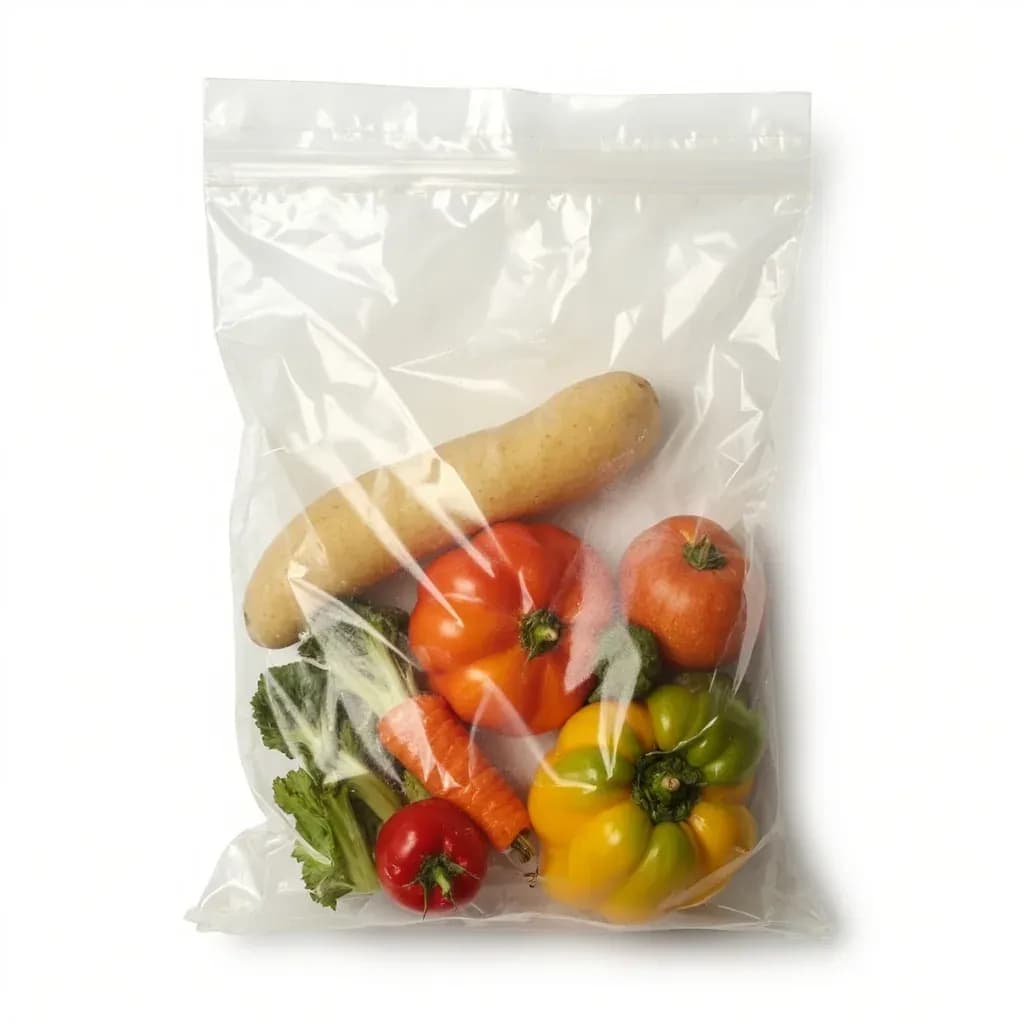
Plastic Produce Bag
Thin clear poly bag for holding produce, meat, and bulk ingredients.
A thin, clear polyethylene bag used to hold loose produce, portioned meat, and bulk dry goods during shopping, prep, and short-term storage. Lightweight and disposable, it keeps items separated and contains drips from raw meat. Heavier-gauge poly meat bags resist puncture and leakage for wetter cuts.
Plastic produce bags are the flat, transparent polyethylene bags that hang in perforated rolls in every grocery produce section. Made from low- or high-density polyethylene (LDPE/HDPE) at roughly 0.5 to 1.0 mil thick — thinner than a human hair at the lighter end — they are deliberately lightweight, which is what keeps them cheap enough to be given away free at the store. They are FDA-compliant for short-term direct contact with raw and fresh foods, but the thin film is not built for heat above about 220 °F (104 °C) and is too thin to block air in the freezer.
In the kitchen these bags earn their keep far beyond holding apples and broccoli. Their flexibility, transparency, and food-safe surface make them a disposable vessel for brining, marinating, dredging, piping, and draping — tasks that would otherwise dirty a bowl, a pastry bag, or a length of plastic wrap. A cook who keeps a small stack on a shelf reaches for them as readily as parchment or twine.
The flip side of that thinness is real and worth knowing: produce bags puncture easily against bones, leak past any closure that isn't a tight knot or clip, and trap humidity fast enough to wilt greens overnight. Recognizing what they can and can't do — and the difference between a thin PE produce bag and a heavier freezer-grade zip bag — is the difference between a useful tool and a soggy mess in the crisper drawer.
Alternatives
Types & varieties
The flat, gusseted, perforated bag pulled from a wall dispenser. The most common form factor and what most cooks mean by 'produce bag.'
Heavier 0.7–1.0 mil LDPE with vest-style handles; useful as a brining or roasting sack when doubled.
Slightly thicker LDPE, often tinted red or blue, designed to resist puncture from bones and reduce visible leakage.
Made from PLA (sometimes blended with PBAT); visually identical to PE but only breaks down in industrial composting facilities, not a backyard bin.
A thicker LDPE bag with a polyethylene zipper track; technically not a produce bag but routinely substituted for produce storage.
Stacked on a wire wicket for high-speed filling in commercial bakeries and meat plants; rarely seen in home kitchens.
Beyond the produce aisle
The thin, clear, food-safe film that makes a produce bag good for apples also makes it useful as a disposable working tool. The trick is to lean into its strengths — flexibility, transparency, and a willingness to be thrown away — rather than its weaknesses.
- Brining: submerge a whole chicken or large roast inside a doubled or heavy-duty produce bag set in a cooler or stockpot. The bag keeps the protein fully submerged and lifts out cleanly, sparing you from fishing a slippery bird out of a deep pot.
- Marinating: seal meat or vegetables with the marinade, then massage through the film to coat evenly. No dirty bowl, no splashing across the stovetop.
- Dredging: drop chicken pieces or fish fillets into a bag with seasoned flour, seal with a tight knot, and shake. The result is an even coat with no floury countertop and no patchy bare spots.
- Piping: snip a corner and the bag becomes a disposable pastry bag for whipped cream, choux, pancake batter, or deviled-egg filling. Snip smaller than you think — you can always enlarge the hole.
- Draping: lay a sheet loosely over a cake or glazed ham, then pull away for a smooth, lint-free finish that a paper towel can't match.
- Portioning: pre-portion chopped herbs, mirepoix, or other mise en place into bags, label with a Sharpie, and stack in the fridge for grab-and-go cooking.
Storage hierarchy and disposal reality
Produce bags are versatile, but they are the lightest-duty plastic in the kitchen and they are poorly served by most disposal systems. A few working rules keep them useful and keep them out of the waste stream where they cause the most damage.
- Use them for the fridge and short pantry holds only — never for the freezer. At 0.5–1.0 mil the film cannot stop air exchange, and food frost-burns within days.
- Never seal wet greens or washed herbs in a closed produce bag. Line the bag with a dry paper towel, or leave the top open and folded; trapped humidity causes soft rot in under 24 hours.
- Keep raw-meat bags physically separate from produce in the shopping cart and in the fridge — many jurisdictions actually require this at the meat counter for cross-contamination reasons.
- Curbside recycling will not accept them. Film jams optical sorters and the pieces are too small to recover, so they downgrade entire bales.
- Home composting will not break them down either. Even PLA versions need industrial heat; ordinary PE persists for decades in soil.
- The best end-of-life path is a grocery store's front-of-store film recycling bin, which most chains now run specifically for clean, dry produce and bread bags.
Common uses
Tips & pitfalls
- Double-bag when brining or holding anything with sharp bones — a single 0.5 mil film will pierce against a backbone or rib in minutes.
- Tie a tight knot or fold the top over several times and clip it; LDPE doesn't seal against itself, so a loose closure will leak.
- When using a produce bag as a piping bag, snip less than you think — you can always enlarge the hole, but you cannot shrink it.
- Label any pre-portioned bag with date and contents using a Sharpie; the ink holds on PE film and won't smear in the fridge.
- For anything that will sit in the freezer more than a week, switch to a thicker freezer-grade zip bag; the thin film frost-burns food quickly because it cannot block air exchange.
Good to know
- Material
- Low- or high-density polyethylene (LDPE/HDPE); compostable versions use PLA from corn or other plant starches, sometimes blended with PBAT
- Thickness
- Roughly 0.5–1.0 mil (0.012–0.025 mm), the thinnest film commonly sold in a supermarket
- Standard size
- Produce roll bags measure about 11 × 17 in (28 × 43 cm); t-shirt bags are similar with vest-style handles
- Form
- Sold as flat, perforated bags on a wall roll in produce, or as handled t-shirt bags at checkout
- Heat tolerance
- Not intended for hot-fill above about 220 °F (104 °C); the film softens and can leach above that
- Food-safety status
- FDA-compliant for short-term direct contact with raw and fresh foods, including raw meat
- Recyclability
- Rejected by most curbside programs — the film jams optical sorters and the pieces are too small to recover
- Cost
- Pennies per bag; generally provided free in produce and meat departments
Also called
Poly Meat Bag · Produce Bag · Plastic Bag · Poly Bag
Related

Freezer Bags
Thick, sealable bags built to fight freezer burn

Storage Bags
Resealable bags for fridge storage and marinating

Storage Container
Lidded container for leftovers, prep, and meal kits

Glass Container
Oven-to-fridge glass that won't stain or hold odors

Plastic Container
Lightweight, stackable storage for everyday leftovers

Vacuum Sealer Bags
Airtight bags for long freezing and sous-vide

Reusable Bags
Washable silicone bags that replace single-use plastic

Mason Jar
Sealed glass jar for preserves, pickles, and storage