Wraps & Liners
Silicone Baking Mat
Reusable nonstick sheet that lines baking trays for even, no-stick baking.
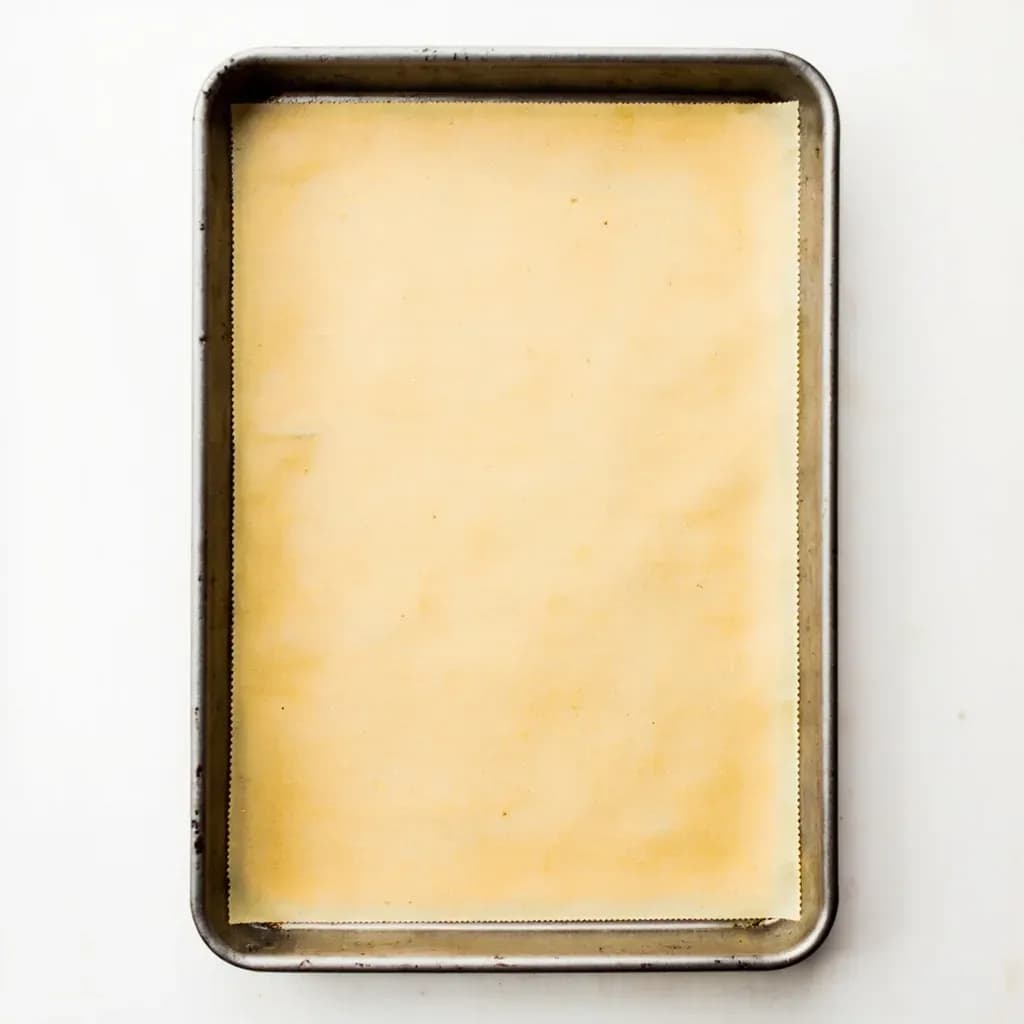
A silicone baking mat is a flexible, reusable nonstick liner laid into a baking tray in place of parchment or grease. It gives even heat, releases cookies, pastries, and roasted vegetables cleanly, and withstands repeated oven use for years. Perforated versions like Silpain let air through for crisp-bottomed breads and pastries, while solid mats suit cookies and candy work.
A silicone baking mat is a flexible, reusable liner made from food-grade silicone reinforced with a fiberglass mesh core. The mesh core is what separates a quality mat from a flimsy sheet of silicone—it prevents warping, provides dimensional stability on the baking sheet, and promotes even heat transfer across the surface. Placed on a standard half-sheet pan, it replaces parchment paper indefinitely while delivering superior nonstick performance for everything from fragile macarons to heavy candy work.
Unlike parchment, which absorbs moisture and can char at high temperatures, a silicone mat tolerates temperatures from –40°F to 480°F and will not smoke or degrade under normal oven conditions. The mat itself imparts no flavor, transfers no odor, and cleans with simple soap and water. Over time, however, the surface can wear: a mat that feels tacky rather than smoothly slick, shows visible cuts, or has warped out of flat should be replaced. With proper care—a gentle wash, flat or rolled storage, and avoidance of direct broiler heat—a good mat will serve reliably for several years.
The mat's primary virtue is consistency. Cookies release cleanly without greasing, roasted vegetables brown evenly without sticking, and delicate sugar work like pulled sugar or caramel spreads without tearing. It eliminates an ongoing consumable, reduces cleanup, and can support cleaner results because it promotes browning without added fat.
Alternatives
Types & varieties
Smooth surface; general-purpose for cookies, roasting, and candy work
Embossed measurement markings (inches, centimeters, circles for tart sizing); ideal for rolling and shaping doughs
Standard reinforced mat; resists warping and provides stable, even heat distribution
Flexible but less stable; prone to sliding on baking sheets and less durable over time
Small holes allow air circulation from below; used for foolproof macarons and lace cookies
Heavier, non-slip surface; often sold with silicone scrapers for dough work
A glass-fiber mat riddled with tiny holes that let steam escape and air circulate, giving bread, tarts, and laminated pastry a crisp browned underside a solid mat can't.
Why the Fiberglass Core Matters
Not all silicone mats are equal. An unbacked silicone sheet is essentially a flexible, heat-resistant piece of rubber—it slides on the baking sheet, buckles under the weight of heavy dough, and degrades quickly. The fiberglass mesh embedded in quality mats (such as Silpat or MacMat) provides structural rigidity: the mat stays flat on the pan, slides neither during loading nor during removal, and distributes oven heat evenly rather than creating hot spots over the metal bars of the rack. When shopping, flex the mat gently; a good one springs back flat. A poor one flexes and stays bent.
- Mesh-core mats lie flat without curling at the edges
- Unbacked silicone is prone to sliding and warping
- Look for approximately 1 mm thickness as a quality indicator
Silicone Mat vs. Parchment Paper
The comparison comes up constantly in the kitchen, and the answer depends on the task. Parchment is disposable, which matters when working with very sticky or high-sugar batters that could bond permanently to any surface. Silicone mats are not inherently stick-proof against caramel, toffee, or certain sugar cookie batters—in those cases a light dusting of flour or cornstarch on the mat is warranted. For heat-sensitive tasks like macaron baking or sugar pulling, silicone wins decisively because it provides even, controlled heat transfer that parchment cannot. For everyday cookies and general roasting, either works; the mat simply costs less over time and produces more consistent results.
- Parchment excels with ultra-sticky batters where even a light dusting might transfer unwanted flour
- Silicone outperforms parchment for any task requiring precise, even heat distribution
- Silicone eliminates the ongoing cost and waste of parchment rolls
Common uses
Tips & pitfalls
- Lightly dust with flour or cornstarch for very sticky doughs—high-sugar mixtures can still bond to the surface even though the mat is nonstick
- Never cut on the mat with knives; the surface will puncture and tear, destroying the nonstick properties permanently
- Avoid using under the broiler element or direct flame—silicone is designed for indirect oven heat only and can melt or char at extreme direct exposure
- For macarons, the perforated mat produces better foot development than a solid mat by allowing air circulation from below the batter
- Allow the mat to cool to room temperature before washing; rapid temperature shock can warp the silicone over time
- Place the mat on the baking sheet before loading, pressing the edges down firmly—this keeps it flat and prevents sliding while arranging sticky dough or batter
- Use as a liner inside any rimmed baking sheet, not just a dedicated sheet pan—it fits most standard kitchen equipment
- Replace the mat when the surface becomes tacky, shows cracks, or warps noticeably—worn mats can cause sticking where they once released cleanly
Good to know
- Material
- Food-grade silicone reinforced with fiberglass mesh core
- Typical Size
- 11–12 in × 16–17 in (fits standard half-sheet pan)
- Temperature Range
- –40°F to 480°F (–40°C to 250°C)
- First Introduced
- 1965, France (Silpat); MacMat followed from Japan
- Thickness
- Approximately 1 mm; mesh-core mats are more stable and durable than unbacked silicone
- Lifespan
- 2–5+ years with proper care; replace when surface turns tacky or shows damage
- Cleaning
- Hand wash with mild soap or top-rack dishwasher; avoid abrasive scrubbers
- Storage
- Store flat or rolled; never fold—folding creates permanent creases that ruin the surface
Also called
baking-mat · silpat · Perforated Silicone Baking Mat (Silpain) · silpain · Perforated Baking Mat · Silicone Steamer Mat
Related

Aluminum Foil
Wraps, covers, and tents food for the oven and grill

Parchment Paper
Nonstick liner for clean, even baking and easy release

Wax Paper
Moisture-resistant sheet for wrapping and counter prep

Plastic Wrap
Clings tight to cover bowls and wrap leftovers

Silicone Baking Mat
Reusable nonstick liner that replaces parchment

Cheesecloth
Loose-woven cloth for straining stock and bundling herbs

Beeswax Food Wrap
Reusable wax wrap that molds around bowls and produce

Piping Tips
Shaped nozzles that turn frosting into stars and rosettes