Wraps & Liners
Steamer Liner
Perforated paper or cloth liner that stops dumplings and buns from sticking to the steamer.
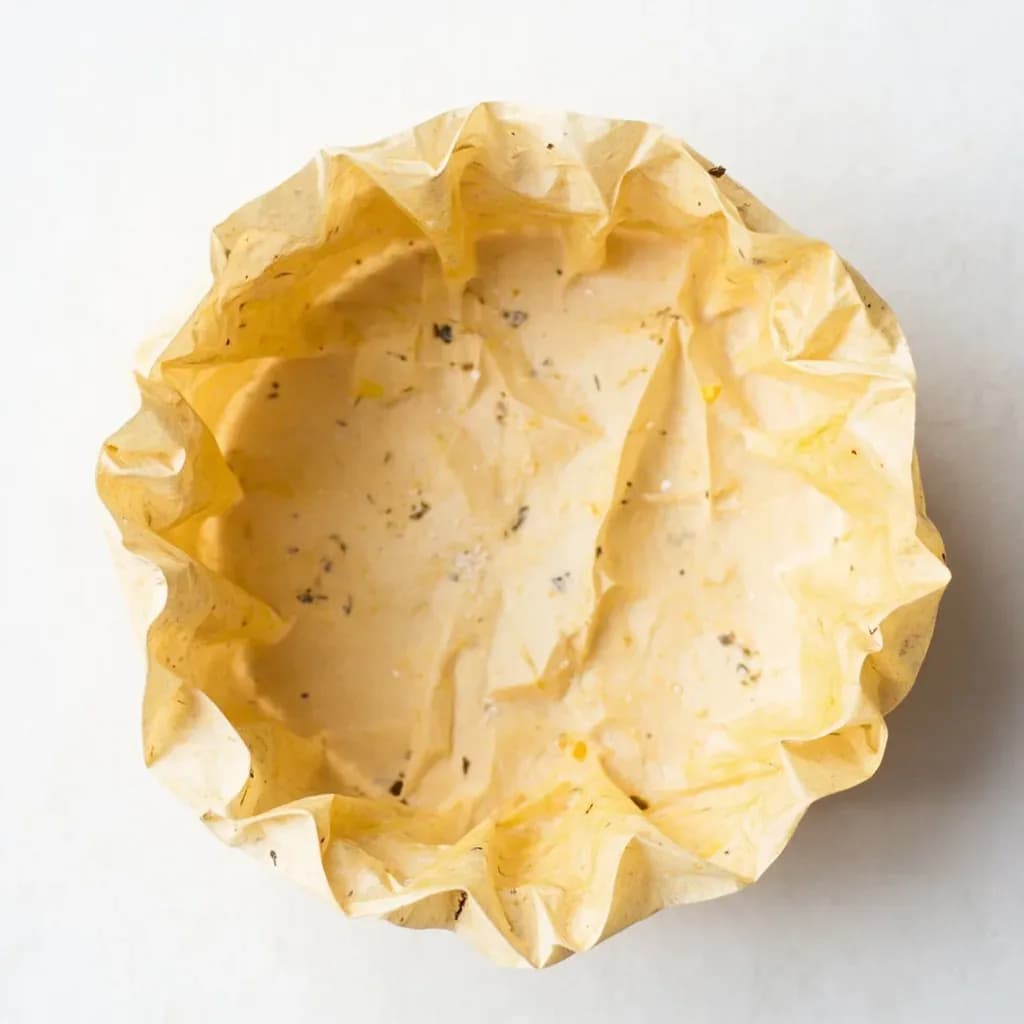
A steamer liner is a perforated parchment round, cloth, or leaf placed in a bamboo or metal steamer to keep dumplings, buns, and fish from sticking while letting steam circulate. Cloth and paper versions are common for dim sum, while cabbage or lotus leaves serve as edible liners. The perforations are key so steam reaches the food from below.
A steamer liner is a permeable barrier placed between food and the steaming surface—be it bamboo, metal, or wok—to prevent sticking while allowing steam to circulate freely. It addresses a fundamental problem: doughs and batters rich in starch or sugar (like bao, har gow wrappers, and tamale dough) grip both bamboo and metal with tenacious force, often tearing apart when you try to lift them. The liner solves this cleanly, producing steamed items with intact, presentable undersides.
The materials used as liners fall into three broad categories, each with distinct properties. Paper liners—unbleached parchment or waxed paper—are single-use, heat-safe to 400°F, and produce the cleanest release with no flavor transfer. Cloth liners (cotton muslin, cheesecloth) are washable and reusable but must be dampened before use to prevent sticking and ensure steam penetration. Leaf liners—banana, cabbage, and lettuce—offer traditional authenticity in Chinese, Southeast Asian, and Korean kitchens, and they impart subtle flavor and aroma that paper cannot.
Choosing a liner affects more than just release. Paper produces a clean, dry bottom on buns and dumplings. Cloth absorbs excess condensation, which can be helpful for very wet batters but may make some items slightly gummy. Leaf liners—cabbage and banana leaves especially—add gentle sweetness or tropical aroma, making them integral to certain dishes rather than mere non-stick solutions. For home cooks who steam regularly, keeping a small stock of parchment rounds and a few clean muslin squares covers most needs; for those exploring specific cuisines, leaf liners unlock more authentic results.
Alternatives
Types & varieties
Pre-cut circles for round steamers; naturally non-stick, heat-safe to 400°F, and most common in home kitchens. Look for pre-cut packs near parchment paper in grocery stores.
Slightly waxed surface provides extra release; Japanese-style steamers commonly use pre-cut waxed squares. The wax makes release effortless but limits heat resistance slightly below parchment.
Reusable cloth cut into 8–10 inch squares. Must be dampened before use—dry muslin sticks to dough and can scorch. Rinse after each use and launder regularly.
Loosely woven cotton for lining steamer baskets or wrapping individual items like fish. Use 2–4 layers for adequate support; single-layer cheesecloth tears too easily under weight.
Traditional in Thai, Vietnamese, and Filipino cuisines. Wipe the shiny side with a damp cloth before use; trim torn edges. Adds subtle tropical aroma; sold frozen in Asian markets.
Traditional lining for Chinese bao (steamed buns). Core leaves are firmest. Prevents sticking and adds slight natural sweetness; disposable but natural.
Used in Korean and Chinese kitchens for buns and dumplings. Boston or butter lettuce leaves work well; choose leaves without tears. Gentle flavor, fully disposable.
Parchment folded into pleated cups holds small items like har gow or jiaozi individually, allowing steam from below and all sides for even cooking.
When Paper Beats Cloth (and Vice Versa)
Paper and cloth liners are not interchangeable in every situation. Paper excels when you want a completely dry, clean bottom on buns and dumplings, and when you need hassle-free disposal. It is also preferable for wet doughs like har gow (shrimp dumplings) where the wrapper is thin and prone to tearing. Cloth liners shine with denser doughs—baos, mantou, and similar items—because the fabric absorbs excess condensation that would otherwise pool and make the underside soggy. Cloth also becomes necessary when steaming items in multiple batches, as it stays in place and continues to work; paper, once wet through, can disintegrate or stick on subsequent batches. For fish, delicate proteins, or items that benefit from gentle moisture absorption, cloth is the better choice.
- Paper: clean release, dry bottoms, single-use convenience; best for wet, thin doughs and one-batch steaming
The 1–2 Inch Rule
This is the most important sizing principle for steamer liners. Cut paper or cloth liners 1–2 inches smaller in diameter than your steamer basket interior. This margin is not wasted material—it is functional. Steam must escape around the edges of the liner to circulate properly. If your liner fits snugly against the basket walls, steam becomes trapped beneath the food, creating uneven cooking and soggy bottoms. For rectangular bamboo steamers, trim to fit the interior dimensions, leaving clearance on all sides. With tiered steamers, each tier may need its own liner sized to that tier's dimensions.
Dampening Cloth: Timing and Technique
Cloth liners must be damp but not dripping wet. Submerge the muslin or cheesecloth in water, then wring it out thoroughly—you want the fabric moist but not streaming. Lay it flat in the steamer basket, smoothing out wrinkles before placing food. If the cloth is too wet, the bottom of your buns or dumplings will be pale and gummy. If too dry, it sticks to dough. The ideal dampness prevents sticking while allowing steam to penetrate the cloth fibers and reach the food. After steaming, remove the cloth immediately and rinse it clean; dried-on dough is harder to wash off.
- Soak cloth, then wring until moist—not dripping
- Smooth flat before placing food
- Remove immediately after steaming while still warm
Common uses
Tips & pitfalls
- Always cut paper liners 1–2 inches smaller than the steamer basket diameter to allow steam to circulate around the edges—overly large liners trap steam beneath the food
- Dampen cloth liners (muslin, cheesecloth) before placing food on them—dry cloth sticks to dough and can scorch on the steamer surface
- For very wet doughs like har gow or xiaolongbao wrappers, lightly grease parchment with a neutral oil or use folded parchment cups for individual dumplings
- Leaf liners (cabbage, lettuce) work best with denser items like bao; tender leaves are too fragile for soft, tacky doughs that would tear on removal
- Pre-cut parchment rounds are faster than cutting custom sizes—keep a stack near your steamer for quick setup
- If using banana leaves, wipe the shiny side with a damp cloth and trim any torn edges before lining the steamer; the dull side should face the food
- Remove the liner immediately after steaming while hot—letting condensation pool makes the underside of buns and dumplings soggy
- Store cloth liners in a sealed bag in the freezer between uses to keep them clean and prevent stale, off odors from developing
Good to know
- Materials
- Unbleached parchment paper, waxed paper, cotton muslin, cheesecloth, or fresh leaves (banana, cabbage, lettuce)
- Heat Resistance
- Up to 400°F (200°C) for parchment; natural leaf and cloth liners tolerate steam temperatures indefinitely
- Reusability
- Paper and leaf liners are single-use; muslin and cheesecloth are washable and reusable for months with proper care
- Typical Size
- Cut 1–2 inches smaller than the steamer basket diameter, typically 6–12 inches (15–30 cm) square or round
- Critical Feature
- Perforation or weave spacing must allow steam circulation—solid barriers defeat the purpose of steaming
- Origin
- Essential in Chinese, Japanese, Korean, Vietnamese, Thai, and Southeast Asian cuisines for buns, dumplings, and dim sum
- Storage
- Paper liners flat and dry; cloth liners clean and completely dry (or frozen) to prevent mold and stale odors
- Common Names
- Steamer paper, steaming paper, bun liner, dumpling liner, parchment rounds, cheesecloth squares
Also called
steamer-cloth · steamer-paper · steamer-parchment-liner · bamboo-steamer-liner · paper-drop-lid · Steamer Cloth
Related

Aluminum Foil
Wraps, covers, and tents food for the oven and grill

Parchment Paper
Nonstick liner for clean, even baking and easy release

Wax Paper
Moisture-resistant sheet for wrapping and counter prep

Plastic Wrap
Clings tight to cover bowls and wrap leftovers

Silicone Baking Mat
Reusable nonstick liner that replaces parchment

Cheesecloth
Loose-woven cloth for straining stock and bundling herbs

Beeswax Food Wrap
Reusable wax wrap that molds around bowls and produce

Piping Tips
Shaped nozzles that turn frosting into stars and rosettes