Storage & Containers
Trash Bag
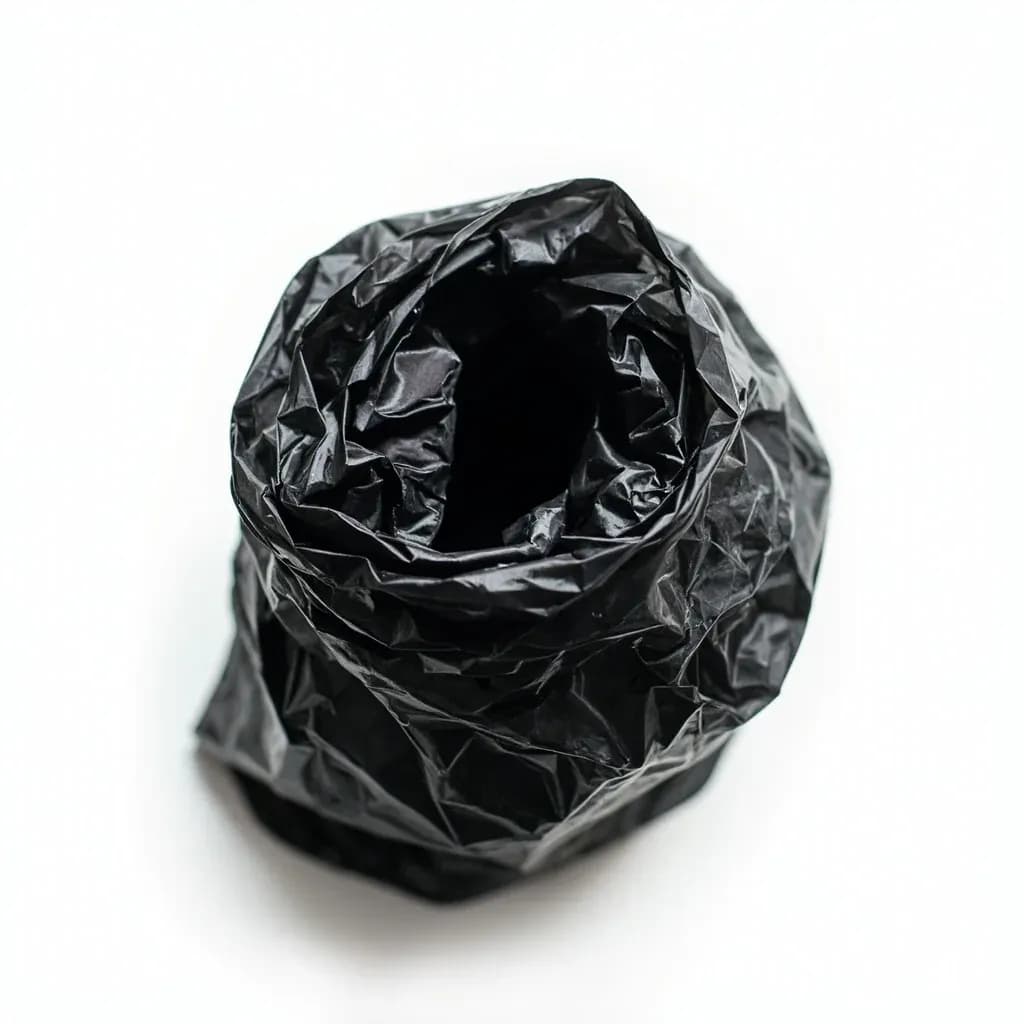
Plastic liner that contains kitchen waste and trimmings for easy disposal.
A trash bag is a large plastic liner that fits inside a bin to collect kitchen scraps, packaging, and trimmings for clean disposal. Cooks line prep stations and bins with them so peelings and waste can be gathered and tied off without messing the can. Bags come in different gauges, with sturdier ones used for heavy or wet kitchen waste that would tear a thin liner.
A trash bag is a disposable plastic liner designed to line waste receptacles and contain the byproducts of food preparation and service. In a working kitchen, it is not merely a convenience—it is a frontline defense against cross‑contamination, pest attraction, and the spread of spoilage organisms. Trash bags are manufactured primarily from high‑density polyethylene (HDPE) or linear low‑density polyethylene (LLDPE), materials chosen for their balance of strength, flexibility, and moisture resistance. Thickness, measured in mils (thousandths of an inch), determines load‑bearing capacity: a 0.9‑mil bag suits light dry waste, while 1.5–2.0‑mil contractor bags resist tears from sharp bones, wet trimmings, or heavy loads. Closure type—drawstring, flap‑tie, tab‑tie, or open—affects how securely the bag seals and how easily it transfers from can to disposal point. The single most critical property to understand is that standard trash bags are not rated for food contact; they belong in the waste stream, never in the food‑storage chain.
Alternatives
Types & varieties
Standard 13‑gallon size, 24–26" tall; fits most kitchen trash cans with drawstring or flap‑tie closure
Built‑in drawstring at the rim for cinching and carrying; prevents hand contact with waste
Pre‑attached ties integrated into the bag lip; secures quickly when the bag is full
1.5–2.0 mil thickness; for renovation debris, deep cleaning, or large volumes of wet trimmings; oversized for most kitchen cans
Embedded baking soda or light fragrance to manage food‑waste odor between pickups
Contains post‑consumer recycled plastic; performance equivalent to standard bags
Certified compostable polymer (PLA or PBAT); requires industrial composting conditions and does not degrade in conventional landfills
Scented liners add fragrance but may be unwelcome near active food‑prep areas
Matching Bag to Can
Size mismatch is the leading cause of bag failure in commercial and home kitchens. A bag too small bunches at the sides, creating stress points that tear under load. A bag too large slips down into the can, allowing waste to collect between the liner and the metal or plastic walls—a sanitation nightmare that breeds bacteria and odor. The correct fit leaves 2–3 inches of rim above the waste line and drapes evenly over the lip of the can without bunching.
- Measure your can's height and diameter before purchasing bags
- For rectangular or oddly shaped cans, look for bags labeled with dimensions rather than gallon alone
- Keep the bag secured at the rim with the can's built‑in ring or clips if your can has them
Odor Management
Standing food waste generates hydrogen sulfide, putrescine, and cadaverine—compounds responsible for the foul, persistent odors associated with kitchen trash. In warm kitchens or during warm months, these compounds begin forming within hours. Daily emptying is the most effective control. When daily pickup is not possible, odor‑control bags extend usability by 12–24 hours, but they are a mitigation, not a solution. Wet, aromatic waste—fish bones, strong cheeses, raw organ meats—should be double‑bagged and removed as soon as practical.
- Never let food waste sit overnight in a warm kitchen if possible
- Wrap highly aromatic scraps in newspaper or paper towels before placing in the bag to absorb moisture and dampen odor release
- Chill wet waste briefly before bagging to reduce bacterial activity
Common uses
Tips & pitfalls
- Store a fresh roll of bags inside the empty trash can or in the cabinet directly beneath it—out of sight but immediately accessible when you need to change the liner mid‑prep
- For wet, heavy, or sharp waste (fish frames, meat bones, citrus rinds), use a heavy‑duty contractor bag or double‑line with two standard bags to prevent puncture and leakage
- Pre‑load the can: place a new bag in the empty bin before you insert the full one; swapping takes seconds and keeps the workspace moving without hunting for a fresh bag
- Never overfill past the rim—excess weight concentrates at the lip, and snagging the bag edge on the rim causes tears exactly when the bag is heaviest
- In warm weather or with aromatic waste, empty daily; standing food waste at room temperature multiplies bacteria rapidly and attracts fruit flies, ants, and rodents
- For sous vide, brining, or marinating: use ONLY USDA‑compliant food‑grade vacuum bags or food‑storage bags explicitly rated for food contact—never a standard trash bag, which may leach chemicals and is not tested for food safety
- Biodegradable and compostable bags require specific disposal infrastructure (industrial composting facility); do not assume they will break down in a conventional landfill—check local collection programs
- Keep a roll of small 4–6‑gallon bags for quick cleanup during service, office desks, or bathroom use—do not break into the kitchen supply for these minor tasks
Good to know
- Common Kitchen Size
- 13‑gallon (roughly 50 L) for standard kitchen trash cans
- Primary Materials
- High‑density polyethylene (HDPE) or linear low‑density polyethylene (LLDPE)
- Thickness Range
- 0.9 mil (light duty) to 2.0 mil (heavy duty)
- Standard Height
- 24–26 inches for kitchen bags; width matches can diameter
- Closure Options
- Drawstring, flap tie, tab tie, or no closure
- Temperature Limit
- Generally 170–190 °F; never suitable for hot liquids or cooking fats
- Food‑Safe Status
- Standard trash bags are NOT food‑contact safe; use only FDA‑compliant food‑storage bags for actual food
Also called
trash-bags · garbage-bag · garbage-bags · rubbish-bag · rubbish-bags · bin-bag · bin-bags · bin-liner
Related

Freezer Bags
Thick, sealable bags built to fight freezer burn

Storage Bags
Resealable bags for fridge storage and marinating

Storage Container
Lidded container for leftovers, prep, and meal kits

Glass Container
Oven-to-fridge glass that won't stain or hold odors

Plastic Container
Lightweight, stackable storage for everyday leftovers

Vacuum Sealer Bags
Airtight bags for long freezing and sous-vide

Reusable Bags
Washable silicone bags that replace single-use plastic

Mason Jar
Sealed glass jar for preserves, pickles, and storage