Bakeware & Pans
Tulip Baking Liner
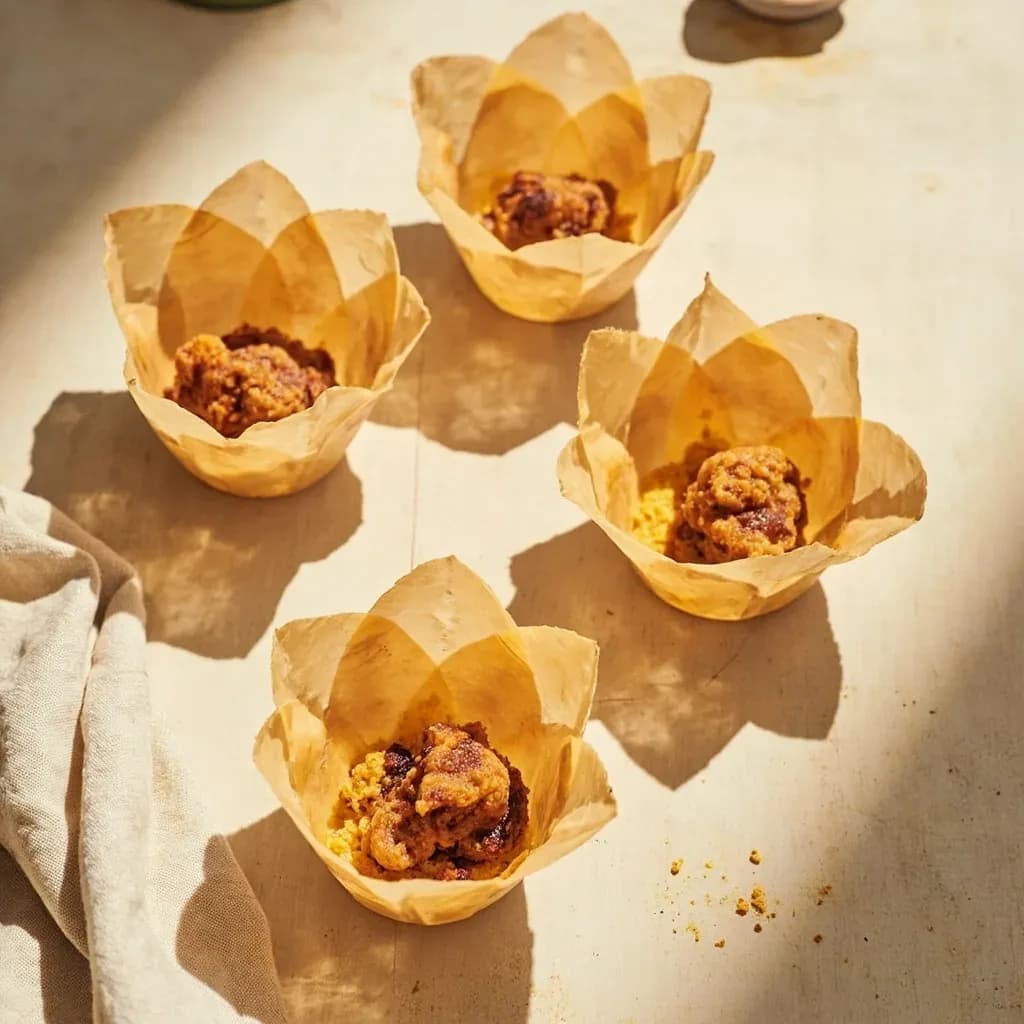
Tall, free-form parchment cupcake liner with a flared petal edge that holds rustic muffin and cupcake batter higher than a standard fluted paper cup, giving a bakery-style domed top.
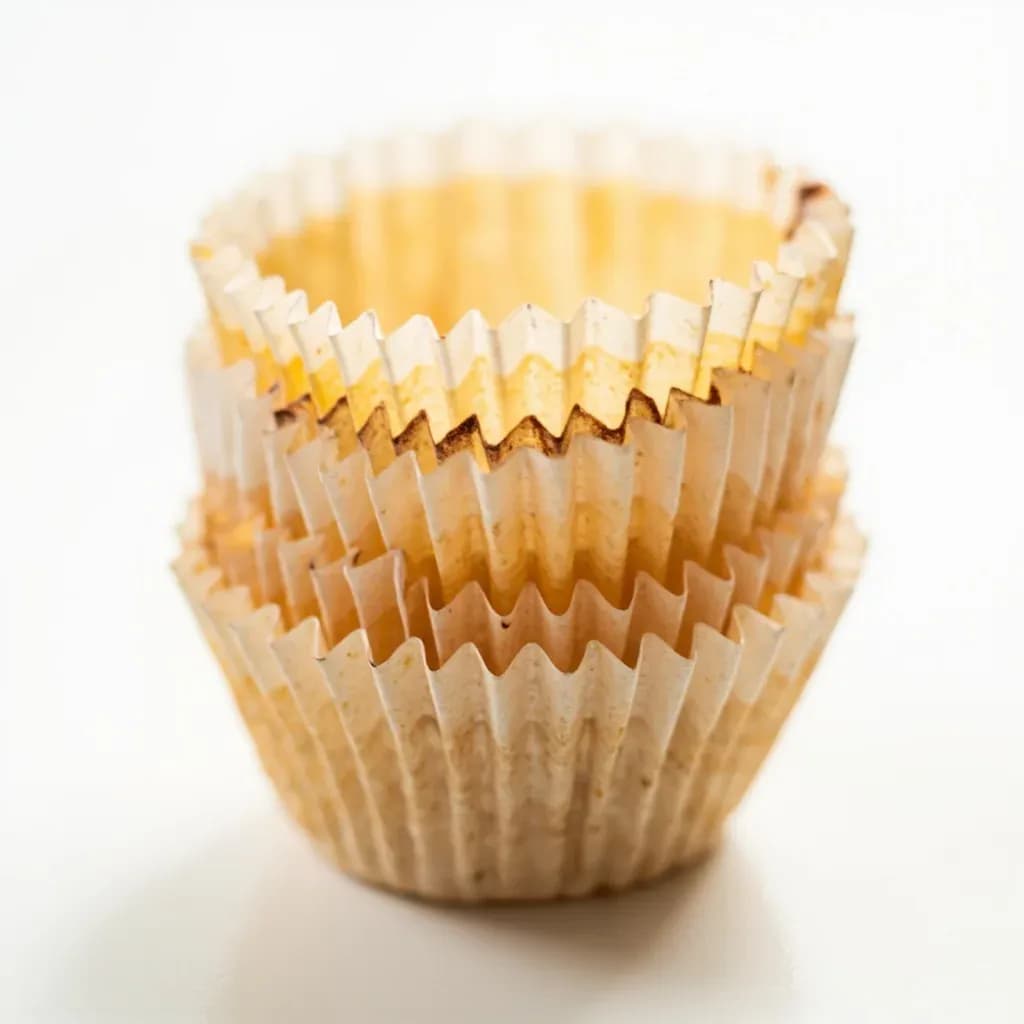
The tulip baking liner is a fluted paper cup whose rim pinches outward into a soft crown of petal-like points, giving it a flared, free-form silhouette that stands upright on a flat sheet tray. The shape has roots in European pleated baking cups and crossed into mainstream baking through the mid-2000s cupcake boom, when bakeries wanted a more elegant presentation than the flat-rimmed American muffin case. Because the wall extends well above the batter line, a cupcake baked in one rises into a tall, slightly crackled dome that reads as artisanal without any special technique from the baker.
Most tulip liners are made from silicone-coated parchment, not wax paper, which gives them genuine grease resistance up to about 220 °C / 425 °F. That coating is what allows the high-fat batters typical of bakery cupcakes — sour cream, butter, oil — to release cleanly once cooled, and what lets the fluted edges hold their pinched shape through baking. Reusable rigid versions (plastic-coated board or silicone molds) carry the same tulip silhouette into chilled desserts and savory work where paper would wilt or leak.
Reach for a tulip liner when the presentation is doing some of the work: filled desserts served in the cup, cupcakes meant to tower above the rim, holiday gifting, or any bake where the petal-edge becomes part of the plating. For everyday lunchbox muffins, a standard fluted paper cup is cheaper and just as functional.
Alternatives
Types & varieties
The 5–6 cm parchment cup with gently flared, frilled top; the everyday retail workhorse.
Extra height (~7–8 cm) and deeper petal flare for dramatic domed tops and piped decorations in patisserie work.
Smaller base (~4 cm) for two-bite cupcakes, amaretti, bonbons, and amuse-bouche.
Larger 110–160 ml capacity for oversize muffins, brioche buns, and individual quiches.
Stiffer coated board (e.g., PaperChef Tulip Mold); reusable 3–5 times, holds crisp flutes, ideal for layered mousses and chilled desserts.
Parchment laminated to aluminum; holds color and shape through long bakes and freeze-thaw cycles.
Chlorine-free natural-brown parchment; compostable and free of bleaching residues.
Reusable, dishwasher-safe rigid mold with the tulip silhouette; used for jellies, panna cotta, and savory timbales.
How the tulip shape works in the oven
The petal-edge is the whole point of the liner, and a little oven craft makes the most of it. The taller wall gives batter room to climb before the crumb sets, producing a higher rise than a standard cup. Bakers chasing a clean bakery dome — the look where the top mushrooms over the rim with a slightly crackled surface — typically start the oven a little hotter for the first five minutes (around 180–190 °C / 350–375 °F, then 160–170 °C / 325–340 °F to finish), which lifts the cupcake quickly before the structure sets.
- Fill no more than two-thirds of cup height — overfill is the most common error and produces batter 'horns' baked onto the petals.
- Chill eggs and bring butter to cool room temperature so the batter rises cleanly without slumping.
- If a liner leans or unfolds on the sheet tray, pinch two opposing pleats together at the top before baking to lock the silhouette.
- Let tulips rest 5 minutes in the tin or on the tray before moving — parchment relaxes as it cools and the flutes flatten if handled too soon.
Choosing paper, rigid, or silicone
The three formats serve different jobs. Paper tulips are the right default for baked cupcakes and muffins: cheap, compostable, and forgiving. Rigid plastic-coated tulips earn their place for chilled, layered desserts where the flutes have to stay crisp — a piped lemon mousse or a chocolate cup that needs to release with sharp edges. Silicone tulip molds sit between the two: more durable than paper, sharper than silicone cupcake pans, and useful for gelatin-based or egg-rich custards that need to unmold.
Common uses
Tips & pitfalls
- Place liners on a flat half-sheet tray so they self-support; for tall or jumbo tulips, set them in a muffin tin for the first 10–15 minutes, then transfer to a flat tray so the sides brown evenly.
- For a clean bakery dome, start at a slightly higher oven temperature (around 180–190 °C / 350–375 °F) for the first 5 minutes, then lower to 160–170 °C / 325–340 °F to finish without sinking.
- Even rigid, non-stick tulip molds benefit from a light oiling for egg-rich custards; rinse in cold water immediately after unmolding so residual fat doesn't set on the flutes.
- Do not preheat an empty tulip liner without batter — thin parchment can scorch at the fluted top edges.
- For chocolate-dipped or ganache-filled tulip cups, brush a thin layer of melted cocoa butter inside the cup first so the parchment releases cleanly from the chocolate.
- If using foil-lined tulips for savory bakes (cheese, bacon), drop in a small parchment round to prevent metallic taste transfer during long bakes.
- Store baked goods in the cup overnight uncovered or loosely tented — sealed containers soften the fluted edge.
Good to know
- Category
- Disposable paper bakeware (rigid and silicone variants are reusable)
- Material
- Silicone-coated food-grade parchment; rigid versions use plastic-coated board or molded silicone
- Standard Height
- 5–6 cm (2–2.5 in); tall/jumbo 7–8 cm (2.75–3 in)
- Base Diameter
- Mini ~4 cm (1.5 in); standard ~5 cm (2 in); jumbo ~6 cm (2.4 in)
- Capacity
- Standard 60–90 ml (2–3 fl oz); jumbo 110–160 ml (3.75–5.5 fl oz)
- Heat Tolerance
- Parchment versions rated to ~220 °C / 425 °F; rigid and silicone 200–230 °C
- Standing Method
- Self-supporting on a flat half-sheet tray; tall/jumbo often need a muffin tin for the first 10–15 minutes
- Disposal
- Unbleached parchment is compostable where accepted; foil-lined and plastic-coated versions are not
Also called
tulip cupcake liner · tulip muffin cup · parchment tulip liner · tulip wrap