Bakeware & Pans
Paper Baking Cup
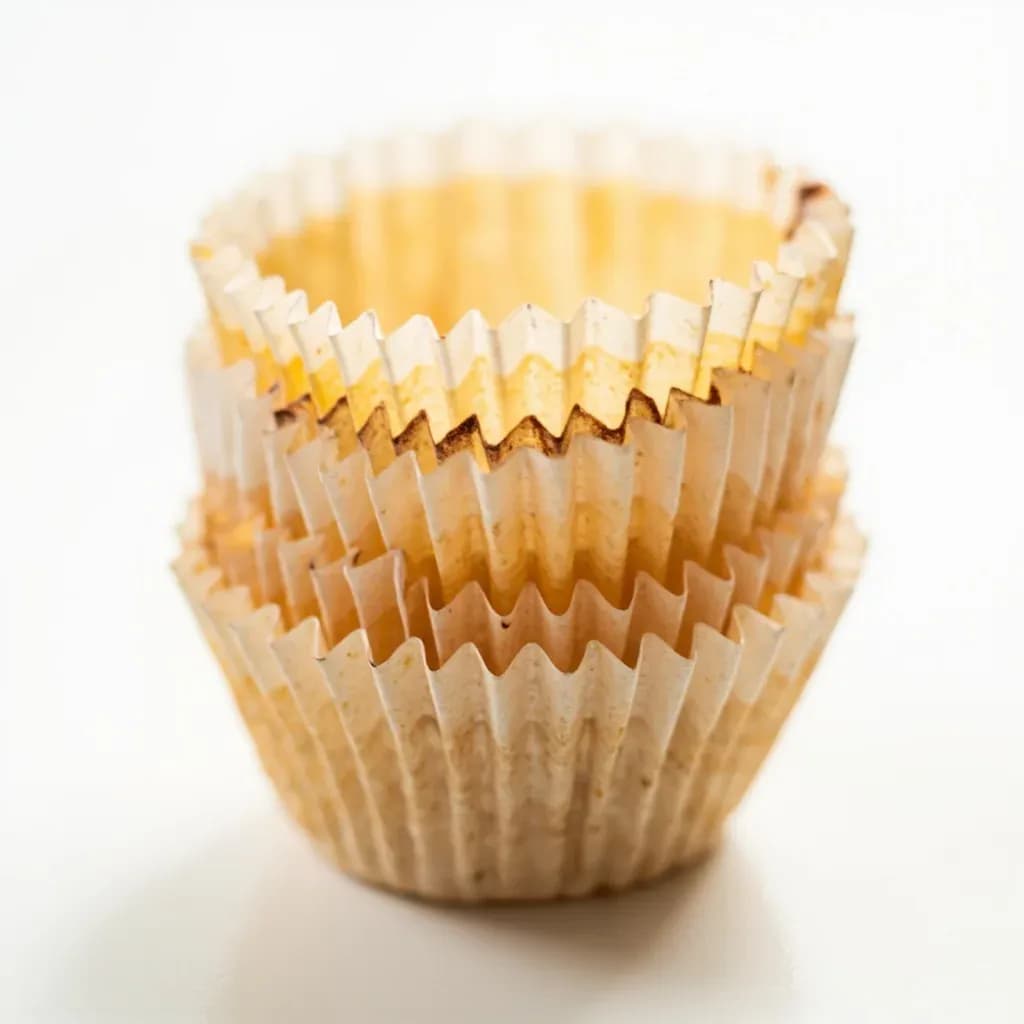
Pleated paper liner that holds cupcake and muffin batter for clean baking and serving.
A paper baking cup is a pleated paper liner set into a muffin tin to hold cupcake or muffin batter while it bakes. It keeps the bake from sticking, makes cleanup easy, and gives each cake a tidy, portable wrapper for serving. Cooks also use small ones as bento dividers or to portion candies, and greaseproof or foil-lined versions release more cleanly from rich batters.
Paper baking cups are pleated paper liners that hold batter during baking and serving, forming a barrier between batter and pan to prevent sticking and eliminate greasing. The accordion folds let the cup expand as batter rises, while greaseproof paper, paperboard, or parchment—sometimes silicone‑ or foil‑coated—moderates heat transfer without compromising structure. Beyond practicality, they portion batter, protect bakeware, and serve as attractive, disposable serving vessels for parties, bake sales, and everyday use.
Alternatives
Types & varieties
Most common design; tapered sides with accordion folds that fit standard 12‑cup muffin tins
Decorative pleating at the rim; popular for parties and presentations where visual appeal matters
Foil exterior provides a crisp appearance and even heat conduction; paper interior prevents sticking; holds shape well for heavier batters
Unprinted paper cups available in a wide range of colors for customizing with food coloring or matching party themes
Decorative patterns, seasonal designs, or branded prints; commonly used for holidays, celebrations, and themed events
Made from pre‑cut parchment paper circles; can also be formed from a square of parchment; naturally nonstick surface
Paper with a thin silicone layer for easy batter release; do not grease these—silicone provides the nonstick surface
Smaller diameter for bite‑sized cupcakes, muffins, or savory appetizers such as mini quiches and egg cups
Tall, expanding design that stands unsupported on the oven rack or pan; used for jumbo muffins and cupcakes for a bakery‑style presentation
Tall, free-form parchment cupcake liner with a flared petal edge that holds rustic muffin and cupcake batter higher than a standard fluted paper cup, giving a bakery-style domed top.
A pleated aluminum cup rigid enough to stand free on a tray without a muffin pan; holds its shape for cupcakes and muffins and won't go translucent with greasy batters like paper.
Why Paper Cups Matter in Your Kitchen
While a greased muffin tin works, paper baking cups offer advantages that go beyond convenience. They provide consistent portioning—each cupcake or muffin bakes to the same size because the cup constrains lateral spread. They prevent the stubborn caramelization that occurs when batter contacts bare metal, making unmolding effortless even with sticky or high‑sugar batters. For serving, the cup transforms a humble muffin into a neat, grab‑and‑go item. In commercial settings, they enable rapid plating and simple disposal. At home, they eliminate the need to scrub baked‑on batter from tin cavities, extending the life of your bakeware.
- Paper cups prevent batter from baking onto pan surfaces, protecting nonstick coatings from metal utensils and abrasive cleaning
- The pleated sides allow controlled expansion during rising, producing a uniform rounded top
- Cups can be used to bake directly on an oven rack with tulip‑style designs, freeing up muffin tins for other uses
- Colored or patterned cups add visual appeal without any additional decoration or frosting
Heat Behavior and Baking Dynamics
Paper baking cups brown the outer layer of batter similarly to a bare pan, though heat transfer is slightly moderated by the paper barrier. This means cupcakes and muffins baked in paper cups develop a tender, golden crust while the sides remain protected from direct metal contact. Steam is generated during baking and is partially contained by the cup walls during the initial rise phase, which supports even leavening. However, prolonged exposure to steam after baking—leaving cupcakes in a hot tin—softens the cup's base, potentially causing it to stick to the baked good or fall apart. This is why prompt removal from the tin is critical, especially for high‑moisture batters like cornbread or banana muffins.
- Steam trapped under the cupcake softens paper cups; remove from tin within 5 minutes of pulling from the oven
- Very wet batters can cause cups to become saturated; double‑cupping or foil‑lined cups provide insurance against leakage
- Paper cups placed directly on oven racks require tulip‑style or rigid paperboard cups rated for free‑standing use
Common uses
Tips & pitfalls
- Always place paper baking cups in a muffin tin cavity for stability—the paper alone cannot support the batter's weight during rising and baking
- For silicone‑coated or high‑quality paperboard cups, do not grease; the nonstick coating or paper's own greaseproof property is sufficient
- Grease standard paper cups with butter or nonstick spray only if batter is very thick or contains little fat; over‑greasing can cause batter to slide and cupcakes to crown unevenly
- Do not exceed the manufacturer's stated temperature limit; paper baking cups placed directly on an oven rack at high heat can scorch or char
- If placing cups directly on the oven rack (no tin), use tulip cups or very rigid paperboard cups rated for free‑standing use, and keep a tray below to catch any drips
- For very wet batters such as cornbread or banana bread, consider foil‑lined cups or double‑cupping—two standard cups nested together—for extra leak protection
- Remove cupcakes from the tin promptly after baking, within 5 minutes, to prevent steam from softening the cup's base
- Store unused cups flat in a dry location; humidity can cause pleated cups to lose their shape over time
- When piping batter into cups, fill only two‑thirds full to allow room for rising without overflow
- For a more professional bakery look, use tulip cups that stand alone and do not require a muffin tin
Good to know
- Common Names
- Cupcake liner, muffin liner, pleated baking cup, Patty paper
- Material
- Greaseproof paper, paperboard, or parchment; some varieties have a silicone or foil coating for enhanced release or structure
- Standard Size
- 1.75–2 in (4.4–5 cm) base diameter, 1.75–2.5 in tall; mini cups are typically 1.25 in diameter
- Heat Resistance
- Typically 400–425 °F (204–218 °C); verify per manufacturer—exceeding this limit can cause scorching or ignition
- Origin
- Mid‑20th‑century United States, developed alongside standardized cupcake and muffin pans during the home‑baking boom
- Reusability
- Single‑use in commercial settings for food safety; some rigid paperboard cups can be washed and reused at home if undamaged
- Packaging
- Sold in multi‑packs of 12 to 50 or more; widely available at grocery stores, craft stores, and restaurant‑supply outlets
Also called
baking-paper-cup · baking-paper-cups · baking-cups · paper-baking-cup · baking-paper-cases · baking-cases · paper-cake-cases · cupcake-cases · cupcake-liner · paper-cupcake-liner · muffin-liner · muffin-liners · muffin-cases · baking-paper-muffin-liner · paper-muffin-liner · bento-divider-cups
Related

Baking Sheet
Flat rimmed tray for cookies, roasts, and sheet dinners

Cooling Rack
Wire grid that lets bakes and fried food breathe

Muffin Tin
Multi-cup pan for muffins, cupcakes, and egg cups

Cake Pan
Round pan for even-baking layer cakes

Loaf Pan
Rectangular pan for bread, banana loaf, and terrines

Proofing Basket
Rattan banneton that shapes and marks rising dough
Disposable Piping Bag
Single-use cone bag for piping icing, batter, fillings, and purees with a tip.
Disposable Aluminum Tray
Single-use foil pan for roasting, baking, and transporting food without cleanup.