Bakeware & Pans
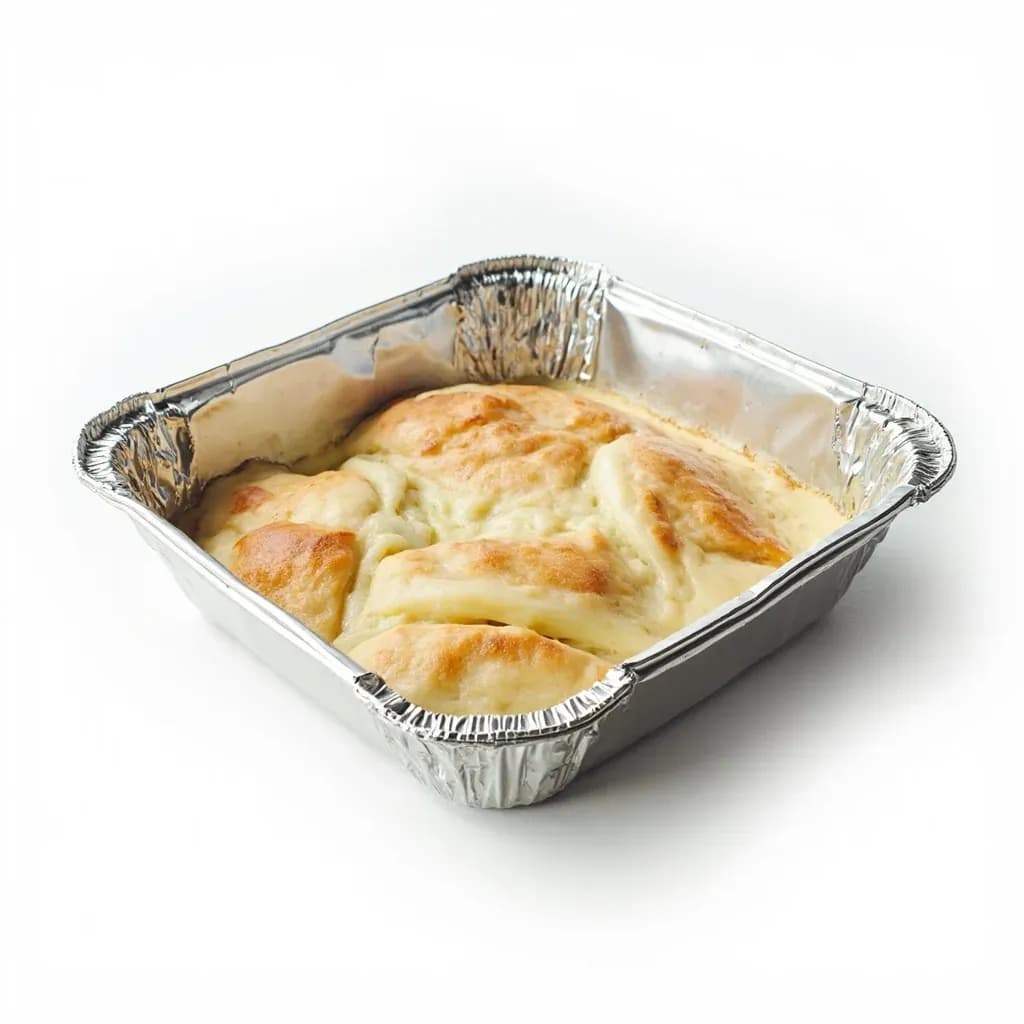
Disposable Aluminum Tray
Single-use foil pan for roasting, baking, and transporting food without cleanup.
A disposable aluminum tray is a lightweight stamped-foil pan used for roasting, baking, catering, and carrying food to potlucks. Its even heat conduction makes it good for roasts and casseroles, and it can go straight from oven to table to trash. Common sizes range from small loaf pans to full steam-table trays.
A disposable aluminum tray is a lightweight foil pan manufactured from aluminum alloy in gauges typically ranging from 35–45 (0.014–0.018 inches thick). These trays bridge the gap between heavy-duty commercial bakeware and single-use convenience, offering reasonable heat conduction in a format designed primarily for one-time use or limited reuse. Their widespread adoption in both home and professional kitchens stems from a practical combination of affordability, thermal efficiency, and the singular advantage of requiring no washing after use. Aluminum's excellent thermal conductivity means food heats quickly and relatively evenly, though the thin gauge produces faster cooling as well—a characteristic worth considering when timing dishes from oven to table. The trays serve equally well as cooking vessels, transport containers, and serving pieces, making them indispensable for high-volume cooking, catered events, and any situation where post-event cleanup is a concern.
Alternatives
Types & varieties
Lightweight, economical, single-use; dents easily; best for transport, freezing, and low-stress applications
Thicker walls with better structural integrity; reusable 2–3 times if hand-washed gently; suitable for actual baking
Silicone-coated interior for easier food release; avoid metal utensils to preserve the coating
Full, half, and quarter sizes with rolled rims; designed to fit standard steam table wells for catering service
Rectangular shape with folded handle tabs; sized for poultry, roasts, and larger cuts of meat
Multiple individual wells for appetizers, condiments, or portioned components of a meal
Rectangular with 1–2" sides; ideal for meatloaf, quick breads, and gift cakes
Shallow with decorative rim; elegant for baked pasta, scalloped potatoes, and gratins
When to Choose Aluminum Over Permanent Bakeware
Aluminum trays earn their place in any kitchen through practicality rather than performance. Heavy-duty stainless steel or cast iron provides superior heat retention and longevity, but aluminum trays excel when speed, convenience, or volume takes priority. Reserve permanent bakeware for dishes where precise browning, even heat retention during service, or aesthetic presentation in the pan itself matters. Choose aluminum trays for make-ahead meals destined for the freezer, dishes requiring transport without retrieval, high-volume cooking where washing becomes a bottleneck, and situations where the pan will be discarded after serving anyway. The environmental and economic calculus shifts toward permanent cookware when a pan might see hundreds of uses over years, but for seasonal baking, event catering, or weekly meal prep, aluminum trays often make more sense.
- Permanent bakeware: precise browning, long-term investment, aesthetic service
Temperature and Handling Considerations
Aluminum trays perform reliably within the 400–500°F range typical of most home and professional ovens, but pushing beyond this threshold invites warping, buckling, and potential leaching of aluminum into food. Watch for pans that begin to discolor or develop a whitish film—signs of excessive heat exposure that weaken the structure. Dense, heavy dishes like lasagna or casserole benefit from a slightly thicker semi-rigid pan rather than standard foil, which may flex uncomfortably when full. For recipes requiring broiler heat, transfer to permanent ovenproof cookware rather than relying on aluminum's thinner walls. When placing aluminum trays on wire racks or cooling surfaces, protect countertops from residual heat and potential warping by using a trivet or heat-resistant mat.
- Stay within 400–500°F to prevent warping and structural failure
- Use semi-rigid pans for heavy, dense dishes that may cause lighter pans to flex
Common uses
Tips & pitfalls
- Grease the pan or line with parchment for sticky dishes like casseroles with cheese or sugary toppings—cleanup becomes genuinely difficult otherwise.
- Never use metal utensils on non-stick coated aluminum pans; the silicone layer scratches and degrades quickly, defeating its purpose.
- Fold the edges of a standard foil pan inward for added rigidity if you need slightly more structural support without switching pan types.
- Use two nested standard pans for heavy dishes like meatloaf instead of buying heavy-duty pans—provides insulation and prevents catastrophic failure.
- Semi-rigid pans can handle 2–3 uses if hand-washed gently in warm water with mild soap, then dried immediately to prevent oxidation.
- Always clean food residue from aluminum pans before recycling—food waste contaminates the recycling stream and many facilities reject dirty aluminum.
- Aluminum trays are excellent for oven-to-freezer meal prep: bake a week's worth of dinners, cool completely, cover tightly, and freeze directly in the pan for later reheating.
- For acidic foods like tomato-based casseroles or lemon-based baked pasta, transfer to permanent cookware for serving rather than storing in aluminum to prevent metallic taste and pan degradation.
Good to know
- Material
- Aluminum alloy, typically 35–45 gauge (0.014–0.018 in / 0.35–0.46 mm)
- Temperature Limit
- 400–500°F (204–260°C); exceeding this risks warping or structural failure
- Standard Sizes
- Quarter pan (9×6.5"), half pan (12×10"), full hotel pan (20×12"), 8×8", 9×13"
- Available Shapes
- Rectangular, square, round, oval, and compartmentalized with multiple wells
- Thermal Conductivity
- Excellent—heats and cools rapidly for quick, responsive cooking
- Reusability
- Limited; degrades with each use; washing accelerates pitting and weakening
- Coating Options
- Standard plain aluminum or non-stick silicone interior coating
- Recyclability
- Fully recyclable when cleaned of food residue in most municipalities
Also called
aluminum-tray · disposable-foil-tray · foil-pan · aluminum-foil-pan · foil-container · foil-takeaway-pack · Foil Pan
Related

Baking Sheet
Flat rimmed tray for cookies, roasts, and sheet dinners

Cooling Rack
Wire grid that lets bakes and fried food breathe

Muffin Tin
Multi-cup pan for muffins, cupcakes, and egg cups

Cake Pan
Round pan for even-baking layer cakes

Loaf Pan
Rectangular pan for bread, banana loaf, and terrines

Proofing Basket
Rattan banneton that shapes and marks rising dough
Paper Baking Cup
Pleated paper liner that holds cupcake and muffin batter for clean baking and serving.
Disposable Piping Bag
Single-use cone bag for piping icing, batter, fillings, and purees with a tip.