Bakeware & Pans
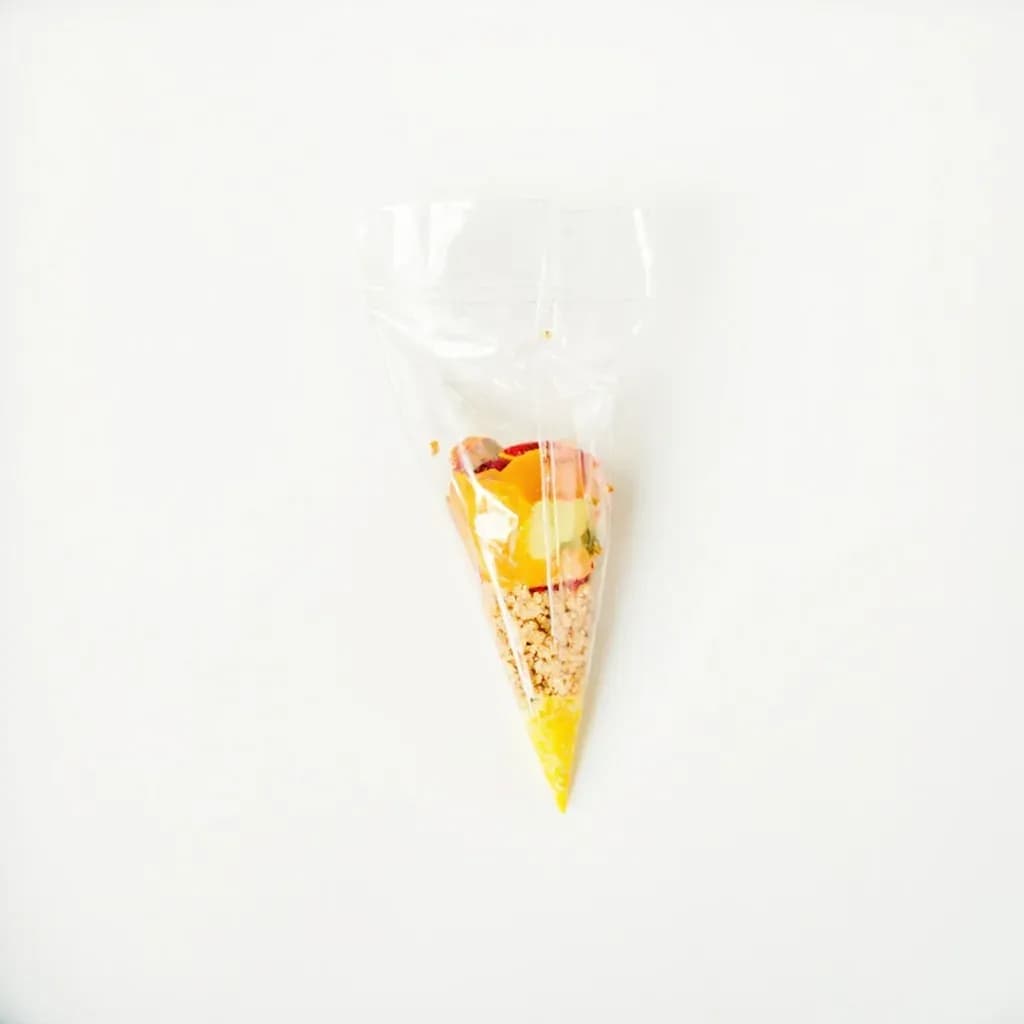
Disposable Piping Bag
Single-use cone bag for piping icing, batter, fillings, and purees with a tip.
A disposable piping bag is a single-use plastic cone used to pipe frosting, batter, choux, whipped cream, and fillings with precision. Cooks snip the tip, drop in a nozzle, fill the bag, and squeeze to decorate cakes, fill pastries, or portion macarons and deviled-egg filling. Being disposable, it skips the cleanup of reusable bags and avoids cross-contaminating colors or flavors between batches.
A disposable piping bag is a single-use cone-shaped bag made from food-grade polyethylene plastic, designed for controlled dispensing of icings, batters, fillings, and purées through a piping tip. It is the practical descendant of reusable canvas bags, gaining dominance in commercial bakeries and home kitchens alike during the mid-20th century precisely because it eliminates cleanup entirely and prevents cross-contamination between colors or products—a critical concern when switching from, say, lemon curd to chocolate ganache mid-decoration. The plastic is thin enough to feel the mixture's resistance, giving decent tactile feedback, yet strong enough to hold up under considerable squeeze pressure when the contents are at proper working consistency. Temperature sensitivity is the main behavioral constraint: above 140°F (60°C), the plastic softens and may warp or burst, making these bags unsuitable for hot sauces or caramel. For most decorating tasks—royal icing, buttercream, meringue, ganache, batter, and soft purées—a disposable bag is the right tool when hygiene, convenience, or color-switching speed matters more than the long-term durability of a reusable silicone or canvas option.
Alternatives
Types & varieties
Thinner plastic; economical for light-duty tasks like thin royal icing, gel-based colors, or delicate transfers
Thicker polyethylene; resists bursting under pressure from dense mixtures like stiff buttercream, mashed potato, or thick royal icing
Small opening already cut at the tip; convenient for beginners but limits tip versatility and nozzle changes
Extra plastic layer at the opening prevents tearing when hand-tightening the coupler ring
Textured exterior surface; helps maintain control with greasy, wet, or butter-slicked hands
Plant-based plastic (e.g., PLA); compostable under commercial composting conditions; shares the same temperature limitations as standard polyethylene—do not use with hot mixtures
Why Disposable Over Reusable?
The core trade-off is hygiene and convenience versus tactile control and sustainability. Disposable bags win decisively when you need to switch between multiple colors or products without washing—a commercial bakery piping dozens of daily cake orders, or a home decorator working with several icings, benefits from zero cross-contamination risk. Reusable silicone bags offer a more responsive, fabric-like feel that some decorators prefer for high-volume squeezing, but they require thorough cleaning and drying between uses, and any residual fat or protein can harbor bacteria. If you decorate rarely or with a single product, reusables may be more economical long-term; if you decorate often with varied products, disposables save significant time and cleanup effort.
- Disposable bags are mandatory in professional kitchens where food-safety regulations require single-use items for allergen control
- Reusable silicone bags develop a slick interior over time from fat buildup, making them harder to squeeze cleanly
- Disposables eliminate the risk of residue contamination when switching from, say, a nut-based filling to a dairy-free icing
Choosing the Right Bag for the Task
Match bag weight to mixture density. Standard-weight bags handle thin royal icing, melted chocolate, and light aerated batters without issue. Attempting to pipe stiff mashed potato or dense holiday cookie dough through a standard bag invites rupture and frustration—the heavy-duty grade exists precisely for these higher-pressure jobs. For very fine detail work, a standard-weight bag actually offers a slight advantage: the thinner walls transmit hand pressure more immediately, giving better feel for delicate control. When using multiple colors in one session, keep several pre-filled bags on standby with tips attached, resting tip-down in tall cups to prevent drying.
- 12-inch bags suit cupcake decorating and small-batch cookie work
- 16-inch bags are the versatile all-purpose length for most cake and dessert work
- 18-inch bags handle large volumes like full-sheet cake coverage or batch macaron piping
- Heavy-duty bags are not much more expensive—keep a box on hand for stiff icings and savory applications
Common uses
Tips & pitfalls
- Roll the unfilled bag like a tube before filling to minimize trapped air bubbles that cause sputtering and uneven lines
- Cut only the very tip of the bag initially—you can always snip more off, but you cannot add plastic back
- Use a large rubber band clipped around the top of the bag as a makeshift cuff to keep it open while filling
- Work with buttercream and royal icing at room temperature; cold mixtures require excessive pressure and cause bags to burst
- Always twist the bag just above the filling line to push product toward the tip before piping, maintaining steady pressure
- Squeeze from the top of the bag toward the tip—squeezing near the coupler creates uneven pressure and hand fatigue
- Hold the bag at a 45° angle for most piping tasks; lower angles for lettering, higher for peaked decorations
- Keep a damp cloth nearby to wipe tip edges between strokes when switching colors or designs
- Never substitute a zip-lock or grocery bag—these lack the pointed tip, are too flexible, and burst easily under pressure
- Rest the filled bag tip-down in a tall cup between uses to prevent drying and clogging of the tip
- For heavy-duty tasks like stiff royal icing or mashed potato, use the heavy-duty grade bag paired with a metal tip
- Mixtures above 140°F require reusable silicone or canvas bags—disposable plastic will soften and fail regardless of grade
Good to know
- Material
- Food-grade polyethylene plastic (single-use); eco-friendly versions in plant-based bioplastic (PLA)
- Common Sizes
- 12-inch, 16-inch, and 18-inch lengths; various widths to match task scale
- Temperature Limit
- Not recommended for mixtures above 140°F (60°C); plastic may warp or burst under heat
- Tip Compatibility
- Standard coupler and metal piping tips fit all sizes; some bags have pre-cut or reinforced tip openings
- Packaging
- Sold in packs of 12–100 bags; bulk pricing makes home decorating economical
- Typical Use
- Single application; discard after use to prevent cross-contamination between colors or products
- Origin
- Practical evolution of reusable canvas piping bags, popularized mid-20th century for commercial and home baking
Also called
Disposable Piping Bag · disposable-pastry-bag · piping-bag · pastry-bag
Related

Baking Sheet
Flat rimmed tray for cookies, roasts, and sheet dinners

Cooling Rack
Wire grid that lets bakes and fried food breathe

Muffin Tin
Multi-cup pan for muffins, cupcakes, and egg cups

Cake Pan
Round pan for even-baking layer cakes

Loaf Pan
Rectangular pan for bread, banana loaf, and terrines

Proofing Basket
Rattan banneton that shapes and marks rising dough
Paper Baking Cup
Pleated paper liner that holds cupcake and muffin batter for clean baking and serving.
Disposable Aluminum Tray
Single-use foil pan for roasting, baking, and transporting food without cleanup.