Prep Tools
Airtight Storage Canister
A sealed container that keeps dry goods, coffee, and tea fresh and protected from air.
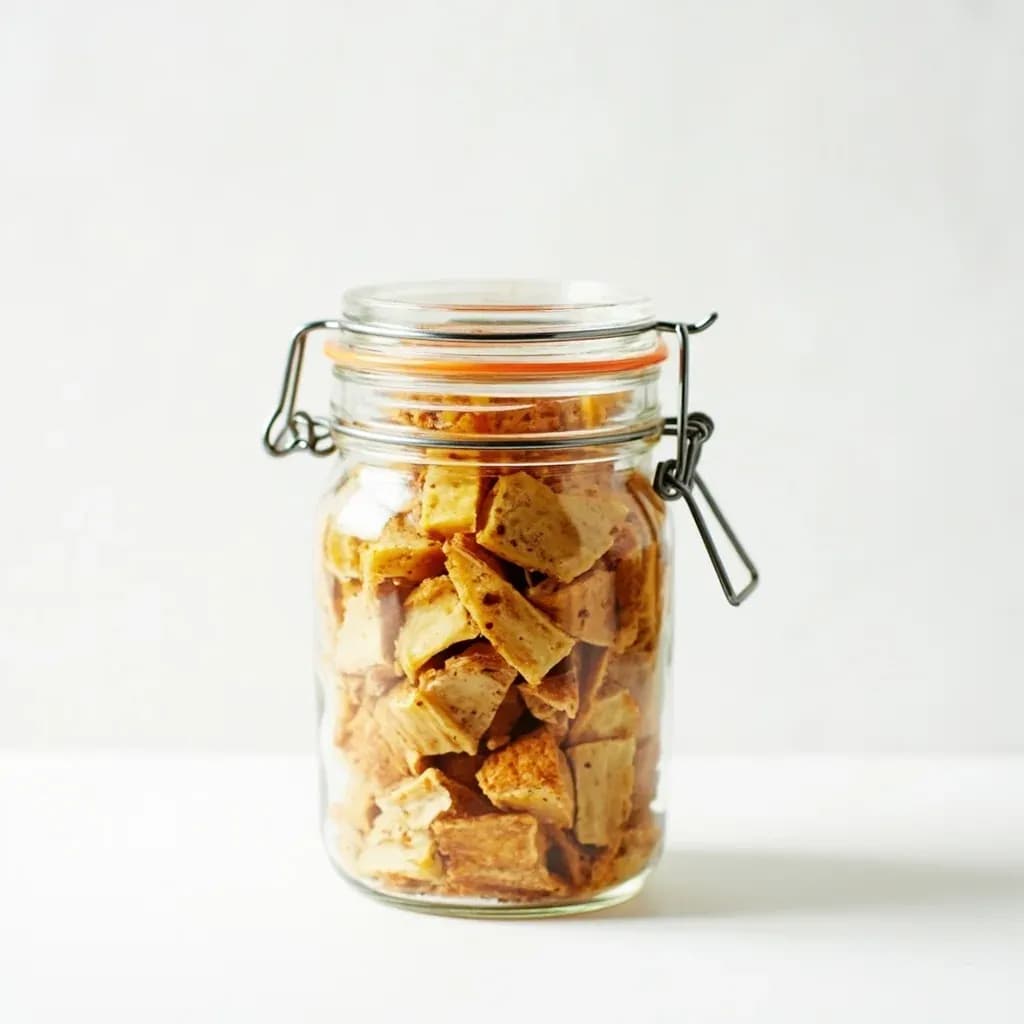
An airtight storage canister is a jar or tin with a gasketed clamp or screw lid that forms a seal against air and moisture. Cooks use it to store flour, sugar, coffee, tea, and other dry pantry goods, preserving freshness and keeping out pests. Opaque tins (tea caddies) additionally shield light-sensitive contents like tea and spices.
An airtight storage canister is the unsung workhorse of a well-run pantry. Unlike a generic jar with a plain screw-on lid, an airtight canister creates a genuine seal — usually through a silicone or rubber gasket compressed against a rim — that blocks air exchange, moisture, and pantry pests. For dry goods that lose quality to oxidation (coffee, nuts, whole grains) or absorb ambient odors (tea, flour, cereal), that seal is the difference between ingredients that last weeks and ingredients that go stale in days.
The technology is older than most cooks realize. Clamp-style glass jars with rubber gaskets — Fido, Le Parfait, Weck, Kilner — were designed more than a century ago for home canning, and that same bail-and-gasket mechanism remains the benchmark for a reliable home seal. Modern airtight canisters fall into several families: traditional clamp jars that double as fermentation vessels, modular push-button or screw-top canisters engineered for uniform pantry stacking, and vacuum-pump canisters built for items that stale fastest. The common thread is the gasket, which is the only replaceable wear part and the single biggest variable in whether a container actually delivers on its airtight promise.
For a serious cook, a small working set — a few clamp jars in graduated sizes plus one or two larger modular canisters for flour and sugar — covers nearly every dry-storage need in a home kitchen, and most of the jars will pull double duty when the season turns to small-batch ferments.
Alternatives
Types & varieties
Glass body with a wire bail and rubber gasket; the classic airtight design, also used for canning and fermentation. Available in terrine, round, and tulip shapes.
Modular rectangular or round plastic bodies with a button-activated silicone seal; designed to be stackable and uniform for pantries.
Hand-pump lid removes air before sealing; best for coffee, nuts, and anything that stales quickly.
Glass body with a metal or plastic screw lid and silicone gasket; common for cookies, sugar, and tea.
Heavy ceramic with a silicone or rubber-gasketed lid; opaque, so light-sensitive items are protected but contents are hidden.
Durable, opaque, and non-reactive; popular for sugar, flour, and salt where light is not an issue and dent-resistance matters.
Stackable, same-footprint containers in graduated sizes (often with a lid-label or chalkboard surface) for uniform pantry storage.
Two-piece metal lid with a separate flat seal and screw band; airtight for canning, but the band alone does not hold a long-term airtight seal once the flat's sealing compound is broken.
The Gasket Is the Seal
An airtight canister is only as good as its gasket, and the gasket is the part most cooks neglect. A rubber or silicone ring that is stiff, cracked, stretched, or coated in a thin film of oil or flour will pass air without any visible sign of failure. Before each refill, pull the gasket out, wash it in warm soapy water, dry it fully, and inspect it under good light. Run a finger along the sealing rim of the jar and the corresponding surface on the lid — both must be clean and dry, with no nicks in the glass. Replace the gasket at the first sign of brittleness, persistent odor, or loss of elasticity; most manufacturers sell spares, and a fresh ring restores a tired canister to like-new performance.
Heat is the gasket's enemy. Dishwashers, especially on the heated-dry cycle, warp rubber and silicone rings enough that they no longer seat evenly, even if they look fine. Hand-wash gaskets and air-dry them seated loosely in the lid. With reasonable care, a quality gasket lasts several years; a neglected one fails in months.
- Pull and hand-wash the gasket every time you refill the canister, and dry it fully before reseating.
- Inspect the rim and gasket for nicks, oil film, crumbs, or brittleness — any of these break the seal.
- Replace the gasket when it loses elasticity, cracks, or holds a smell; spares are inexpensive and restore performance.
- Keep gaskets out of the dishwasher; heat warps rubber and silicone and ruins the seal.
Coffee, Nuts, and the Oxidation Problem
A few pantry staples — whole-bean and ground coffee, nuts, seeds, and dried fruit — go stale faster than anything else because they oxidize rapidly and, in the case of fresh-roasted coffee, off-gas CO₂ for days after roasting. An airtight canister that does not vent will trap that CO₂, building internal pressure that makes the lid hard to lift and that escapes in a rush every time you open the jar — admitting fresh oxygen in the process. The two practical solutions are a canister with a one-way valve (air exits, air cannot enter) or a vacuum-pump canister that pulls air out after each opening. Many roasters ship beans in valve bags for exactly this reason, and a useful workaround is to clip the original valve bag closed and stand the whole bag inside a decorative canister — the canister blocks light and adds a second barrier, while the bag handles the gas exchange.
- For fresh-roasted whole beans, choose a canister with a one-way CO₂ valve or a vacuum-pump lid.
- Ground coffee and shelled nuts oxidize faster than whole beans; vacuum or valve canisters extend their usable life noticeably.
- Pre-ground and decaf coffee stales in days without protection — even an ordinary airtight canister is a meaningful upgrade over the folded-bag original.
- Storing the unopened valve bag inside a canister gives you the best of both worlds: gas venting plus light and air protection.
Common uses
Tips & pitfalls
- Wash and fully dry the gasket and sealing rim every time you refill the jar; even a thin film of oil or a few crumbs will break the seal and let air (and pantry moths) in.
- Replace gaskets at the first sign of brittleness, cracking, or a persistent smell — the gasket is the part that actually does the work.
- Don't overfill. Contents packed against the lid prevent the gasket from seating; leave a headspace of at least 1–2 cm.
- For coffee, choose a canister with a one-way valve or a vacuum pump, or store beans in the original valve bag clipped inside the canister.
- Use opaque (ceramic, stainless, or coated) canisters for light-sensitive items like spices, dried herbs, and any contents that degrade in light.
- Square or rectangular modular containers make better use of shelf space than round ones, but round glass is easier to clean and ideal for ferments you need to watch.
- Label the lid or side with the date the goods were opened; flour and nuts in particular lose quality long before they spoil.
- Match container size to the amount you actually use in 2–4 weeks. A 5 L canister for a small bag of flour means lots of trapped air, which shortens shelf life.
- Avoid the dishwasher for any jar with a rubber or silicone gasket; the heat warps them and they stop sealing. Hand-wash gaskets in warm soapy water and air-dry them in the lid.
- For pantry pest control, canisters are the first line of defense — but only if the goods go in clean and pest-free.
Good to know
- Also called
- Airtight jar, storage jar, canister, keeper (as in 'bread keeper,' 'coffee keeper')
- Primary purpose
- Keep dry pantry goods, coffee, tea, and snacks protected from air, moisture, and pests
- Common body materials
- Glass (most common), ceramic, stainless steel, food-grade plastic, bamboo with glass insert
- Common closure types
- Clamp/clip with rubber gasket; push-button (pop-top) silicone seal; screw-top with silicone gasket; vacuum-pump lid; bail/lever lid
- Air-tightness source
- A silicone or rubber gasket compressed against a glass or metal rim; quality depends on the gasket's condition and the lid's even pressure
- Typical capacities
- 0.4 L / ~14 oz (spices) up to 5 L / ~5 qt (flour, sugar, cereal); modular sets sold in graduated sizes
- Reusability
- All major designs are reusable indefinitely; gaskets are the replaceable wear part
- Dishwasher safety
- Glass, ceramic, and stainless steel bodies are usually dishwasher-safe; many gaskets and plastic lids are top-rack only or hand-wash only
- Best for coffee
- Containers with a one-way CO₂ valve (so beans can off-gas without admitting air) or vacuum-pump models
Also called
Tea Caddy (Storage Tin) · Airtight Tea Canister · Tin Canister · Storage Canister
Related

Peeler
Swift blade for stripping skin off fruit and vegetables

Grater
Sharp-toothed surface for shredding cheese and vegetables

Microplane
Ultra-fine rasp for citrus zest, garlic, and hard cheese

Mixing Bowl
All-purpose bowl for combining, whisking, and tossing

Whisk
Looped wires that beat air into eggs, cream, and sauces

Spatula
Flat blade for flipping, lifting, and scraping

Slotted Spoon
Pierced spoon that lifts solids and drains the liquid behind

Wooden Spoon
Gentle, heat-friendly spoon for stirring anything