Baking & Pastry
Cake / Baking Mold
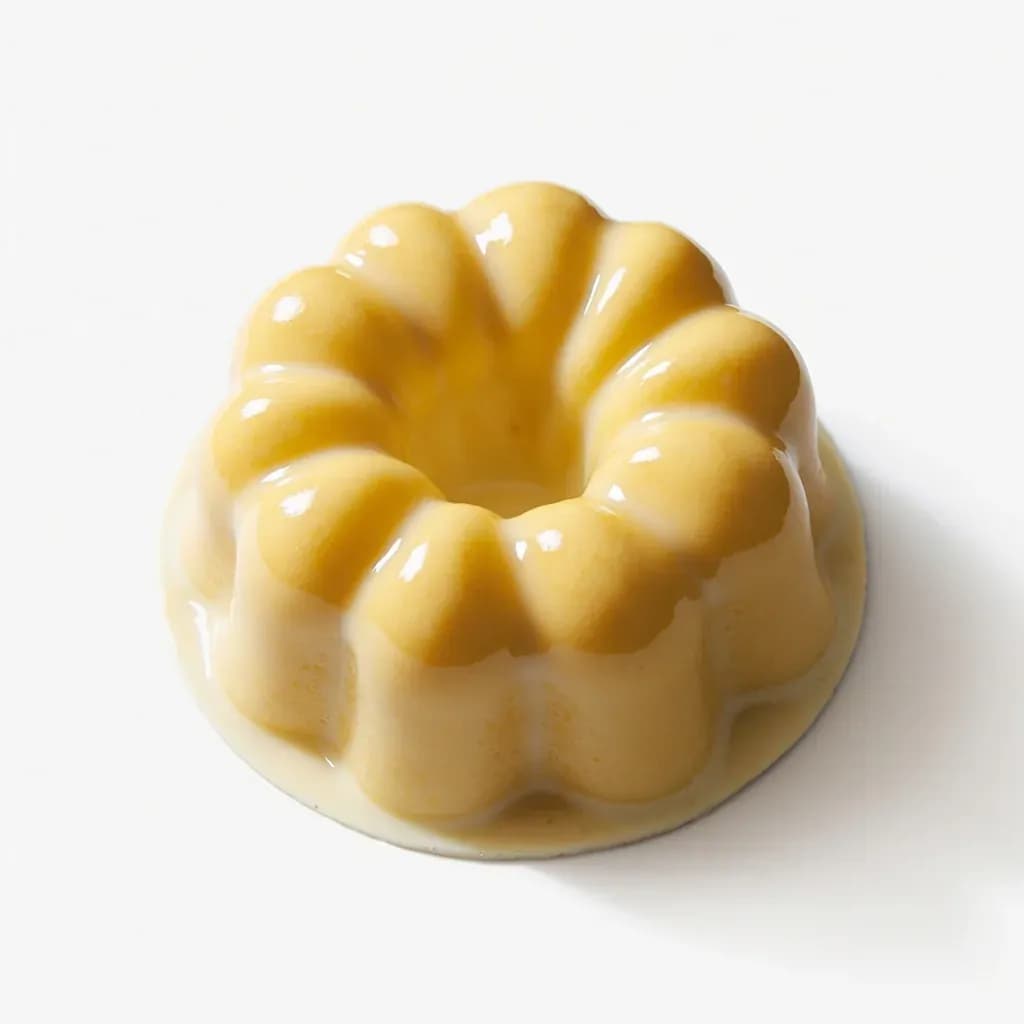
Shaped pan that gives cakes, flans, and pastries their form as they bake or set.
A baking mold is a shaped pan or form used to give cakes, flans, tarts, and other desserts their final shape as they bake or chill. Sizes and shapes range from round springform and tube pans to fluted flan and bundt molds, in metal, silicone, or ceramic. Greasing or lining the mold ensures the finished dessert releases cleanly.
A baking mold is any vessel that holds a batter, dough, custard, or frozen mixture while it sets under heat or cold, and — equally important — releases it cleanly when the bake is done. Beyond shape, the pan you choose changes the bake itself: copper and thin aluminum run hot and brown deeply, heavy anodized aluminum gives the most even rise, dark non-stick pans accelerate browning, and glass or ceramic bake slowly but hold residual heat long after the timer stops. The right mold is the difference between a génoise that climbs the wall and one that slumps, between a financier with a crackled crust and one that sticks and tears.
Molds are sold in standardized sizes and depths so recipes can be written for predictable volumes — an 8-inch round by 2-inch deep pan holds roughly 6 cups (1.4 L) of batter, a standard 9x5-inch loaf pan holds about 7–8 cups, and a 12-cup muffin tin takes about 1/3 to 1/2 cup of batter per well. Knowing these references is what lets you swap pans confidently and scale recipes up or down without guesswork.
The practical categories to keep in your head are: pan material (which controls heat), pan geometry (which controls shape and rise), and release surface (greased metal, non-stick, anodized, silicone, or parchment-lined). Once you understand those three axes, almost any pan question — why did my cake stick, why is the bottom scorched, can I bake this in a glass dish — has a clear answer.
Alternatives
Types & varieties
Straight-sided, 6–12 in across, 1.5–3 in deep; the workhorse for layer cakes, sponges, and tortes.
Common sizes 8x8, 9x9, and 9x13 in; for sheet cakes, brownies, bar cookies, and slab tortes.
Side wall unclips and base drops free; essential for cheesecakes, mousse cakes, and anything you cannot invert. Not watertight — wrap the seam in foil for a water bath.
Tall pan with a central tube that heats the center of the batter; can have a removable bottom or a two-piece design that lifts the cake off the tube.
Fluted ring with a central chimney; the modern American descendant of the German Gugelhupf. Heavily detailed pans need a careful grease-and-flour to release cleanly.
Rectangular with straight or sloped sides; for quick breads, pound cakes, banana bread, and meatloaf. 9 x 5 in is standard.
Straight-sided loaf pan with a sliding lid that bakes a square, fine-crumb sandwich loaf.
6, 12, or 24 well pans; for muffins, cupcakes, popovers, Yorkshire puddings, and individual egg bakes.
Shallow pan with a removable bottom, straight or fluted edge; tinned steel is the traditional professional choice.
1.5–3 in shallow mold, round or shaped, for individual tarts and financiers.
Shell-shaped multi-cavity pan (usually 6 or 12 wells) for madeleines and financiers.
Small fluted cylinder with a ribbed, tapered exterior; traditionally copper with a beeswax or tin lining for Bordeaux canelés.
Ring mold with a central tube, larger and shallower than a Bundt; for baba au rhum and savarin.
Tall, slightly tapered straight-sided mold (often with a handle) for molded charlottes, bavarois, and panna cotta.
Fluted, slightly tapered small mold, often with a domed top; for brioche, timbales, and individual rice or pasta molds.
Hemispherical silicone or metal mold for entremets, glazes, and mirrored desserts.
Single-use aluminum or paperboard pan for petit fours, cheesecakes, and catering.
Material matters more than most recipes admit
Pan material genuinely changes the bake, which is why professional bakers are fussy about it. Copper and thin-gauge aluminum conduct heat quickly and brown aggressively — perfect for a crackled canelé crust or a deep génoise color, less ideal for a delicate sponge you want to climb evenly. Heavy anodized aluminum is the professional all-purpose default: it heats evenly, won't rust, is non-reactive with acidic batters, and releases well without a synthetic coating. Dark non-stick pans brown fast and release easily, but they can over-brown thin batters; drop the oven temperature 25°F (about 15°C) compared to a light aluminum pan. Silicone is unbeatable for unmolding frozen or delicate batters but is floppy when empty — always set it on a sheet pan to move it safely. Glass and ceramic heat slowly and retain heat long after leaving the oven, so they keep browning — pull batters 5–8 minutes earlier than the recipe's minimum bake time.
- Copper and thin aluminum: hot, fast browning; choose for financiers, canelés, and génoise.
- Anodized aluminum: even rise, naturally stick-resistant, the workhorse choice.
- Dark non-stick: fastest browning, easiest release; reduce oven temp 25°F.
- Silicone: best unmolding, but needs a rigid sheet pan for transport.
- Glass and ceramic: slow to heat, keeps cooking after the timer; pull early.
Pan-size conversion, the practical rule
When a recipe calls for a pan you do not own, scale the batter by the area of the pan (or use the standard cook's shortcut that everyone keeps on the fridge). These pans hold roughly the same volume of batter, so you can swap them with only small adjustments to bake time — pans with more surface area and shallower depth finish faster.
- 1 x 8 in round (2 in deep) ≈ 1 x 9 in square (shallower) ≈ 1 x 9 x 5 in loaf ≈ 12 standard cupcakes
- 2 x 8 in rounds ≈ 1 x 9 x 13 in sheet cake (slightly thinner batter, bake a few minutes less)
- 1 x 10 in tube pan ≈ 1 x 12-cup Bundt pan (fill both no more than 2/3 to 3/4 full)
- Always measure pans across the top inside, not the bottom, and check the depth — a 1.5 in shallow pan is not the same pan as a 3 in deep one, even at the same diameter.
Common uses
Tips & pitfalls
- Grease and flour (or use a pan release like Baker's Joy) for butter-based cakes; line the bottom with a parchment round for insurance, especially in springform pans, which can weep butter at the base seam.
- Dark, non-stick, and dark anodized pans brown faster than light aluminum — drop the oven temperature by 25°F (about 15°C) or shorten bake time to avoid a burnt crust and raw center.
- Glass and dark ceramic pans keep browning after they leave the oven; pull the bake 5–8 minutes earlier than the recipe's minimum time, then test for doneness.
- Fill pans no more than two-thirds to three-quarters full — overflowing batter is the most common cause of sunken centers in layer cakes and muffins that bake over the tin.
- Springform pans are not watertight: wrap the base seam in heavy-duty foil before setting the pan in a water bath (bain-marie), or set the springform inside a larger roasting pan filled with hot water.
- For tube and Bundt pans, cool the cake upright in the pan for 10–15 minutes, then invert onto a rack; cooling fully in the pan traps steam and turns the crumb gummy.
- Never use metal utensils, knives, or abrasive scrubbers on non-stick or silicone pans — they scar the release surface and shorten the pan's life.
- Never put a hot glass or ceramic pan on a cold or wet surface — thermal shock can shatter it.
- Toast or preheat a heavy metal mold (canelé, financier) before pouring in a delicate batter to get the signature crackled or crusted exterior.
- Wash pans by hand even if the label says dishwasher-safe: dishwasher detergent is alkaline, strips seasoning, and dulls non-stick coatings and bare aluminum over time.
Good to know
- Common materials
- Aluminum, aluminized steel, anodized aluminum, stainless steel, cast iron, carbon steel, copper, silicone, glass, ceramic, and disposable foil or paperboard.
- Heat conductivity (high to low)
- Copper > aluminum > aluminized steel > cast iron > carbon steel > stainless steel > glass/ceramic > silicone.
- Standard round cake pans
- 6, 7, 8, 9, 10, and 12 in (15–30 cm) across the top inside; 1.5, 2, and 3 in are the standard depths, with 2 in most common.
- Standard loaf pan
- 9 x 5 in is the workhorse; 8.5 x 4.5 in for smaller loaves, 13 x 4 in for a long pound-loaf.
- Standard muffin tin
- 12-cup tin is the default; each well is roughly 2.75 in across the top and 1.75 in deep, holding about 1/3–1/2 cup of batter when filled.
- Temperature rating
- Metal pans handle 500°F (260°C) and up; silicone typically 400–450°F (200–230°C); tempered glass and ceramic to about 450°F (230°C).
- Bundt name origin
- "Bundt" is a Nordic Ware trademark (registered 1950); the German/Austrian original is called Gugelhupf or Kugelhopf.
- Yield reference
- An 8 in x 2 in round pan holds about 6 cups (1.4 L) of batter and serves roughly 8 slices as a layer cake.
Also called
baking-mold · cake-pan · cake-tin · sponge-cake-tin · flan-mold
Related

Muffin Pan
Multi-cup pan for muffins, cupcakes, and egg bites

Bundt Pan
Fluted ring mold for showstopping cakes with a center hole

Springform Pan
Latch-release pan that frees delicate cakes without flipping

Pie Dish
Sloped round dish for crisp-bottomed pies and quiches

Tart Pan
Fluted pan with a pop-out base for clean-edged tarts

Rolling Pin
Rolls dough into even sheets for pastry and bread

Pastry Brush
Brushes on egg wash, glaze, butter, and marinades

Bench Scraper
Flat blade that divides dough and clears your work surface