Baking & Pastry
Baking Stone
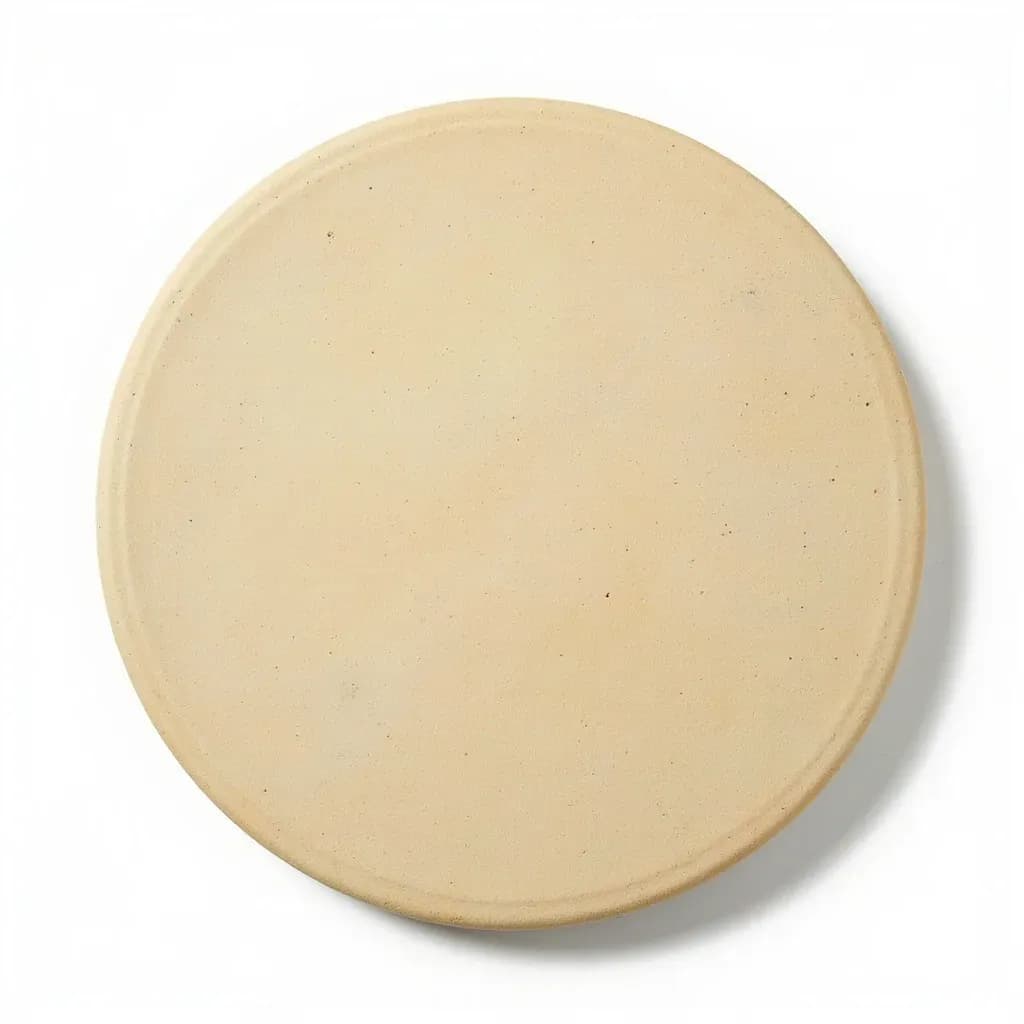
A ceramic or stone slab that holds oven heat to bake pizza and bread with crisp crusts.
A baking stone is a flat slab of ceramic, cordierite, or fired clay that is preheated in the oven to mimic a brick hearth. Its mass radiates steady heat into pizza and bread dough for an evenly browned, crisp bottom and good rise. The porous surface also draws moisture from the dough, and cooks must heat and cool it gradually to avoid cracking from thermal shock.
A baking stone is a dense slab of refractory material — most commonly cordierite, soapstone, or fireclay ceramic — that lives on an oven rack to mimic the thermal mass of a brick-oven floor. When preheated for 45 minutes to an hour, it absorbs a remarkable amount of heat and releases it directly into whatever touches it. The food that benefits most is dough: pizza, free-form bread, flatbreads, biscuits, anything that needs a fierce burst of bottom heat to set its structure and drive off surface moisture before the top overcooks.
The effect on a pizza crust is immediate and visible. Where a sheet pan gives a soft, pale underside, a hot stone dries the bottom of the dough in seconds, producing the speckled, blistered cornicione and crisp base associated with Neapolitan and New York pizzerias. For bread bakers, the same thermal transfer translates to stronger oven spring — the dramatic final rise in the first ten minutes of baking — because the dough's bottom sets quickly enough that rising gas is forced upward rather than spreading outward. The tool is essentially a heat battery: it doesn't cook differently, it simply refuses to cool down when cool dough is set on it.
A baking stone is not a non-stick surface and it isn't seasoned like cast iron. Its only job is to hold heat and give it up on contact. Most home bakers now reach for cordierite because it tolerates the temperature swings of pizza ovens without cracking, but baking steel — a thick carbon-steel plate — has become a serious alternative since the early 2010s, heating faster and producing a darker, more aggressive char on the crust.
Alternatives
Types & varieties
Most common; gray-tan, very resistant to thermal shock, tolerates extreme heat; standard choice for pizza and bread.
Dense and very heat-retentive; heats slowly but holds temperature once hot; brittle and sensitive to thermal shock.
Traditional off-white baking tiles; cheap and effective but more prone to cracking than cordierite.
Heavy, smooth, and heat-retentive; often sold as pre-cut remnants; can stain and chip at edges.
Best for cold work — tempering chocolate, rolling pastry, plating oysters — not recommended as a hot baking surface.
Thick carbon-steel plate (often 1/4 to 1/2 inch); heats faster than stone, transfers more heat, produces a darker, crispier crust; popular since the early 2010s.
Stone vs. Baking Steel
Baking steel — a thick carbon-steel plate, usually 1/4 to 1/2 inch — has become the preferred tool for many serious pizza bakers. Steel conducts heat roughly twenty times faster than cordierite, so it heats in 20 to 30 minutes instead of an hour and recovers temperature almost instantly between pies. The result is a darker, more aggressive char on the bottom of the crust and a cornicione that puffs faster. The trade-offs are real: a half-sheet of 3/8-inch steel weighs around 20 pounds, must be dried immediately after any contact with water to prevent rust, and cannot be left soaking in a sink. Cordierite is lighter, more forgiving, and works for bread as well as pizza; steel is pizza's specialist. For a baker who makes two pies a month, cordierite is the more versatile choice. For someone running a home pizzeria on Saturday nights, steel is worth the weight.
Why a Cold Stone Is Worse Than No Stone
The single most common mistake with a baking stone is underheating it. A stone that has only been in the oven for 15 or 20 minutes has barely absorbed heat through its full thickness, and the moment a room-temperature dough touches the surface, the stone's temperature drops sharply. The dough essentially bakes on a tepid surface for the first couple of minutes: the bottom stays soft and pale, the cornicione never gets the burst of energy it needs to blister, and oven spring is blunted. The fix is simple — give the stone at least 45 minutes, and ideally 60, at the full target temperature. An infrared thermometer aimed at the center of the stone is the easiest way to confirm it has reached baking temperature before you launch the dough.
Common uses
Tips & pitfalls
- Preheat the stone for at least 45 minutes — an hour is better — at the full baking temperature; a lukewarm stone gives a pale, soft crust.
- Place the stone on an oven rack in the lower third (or directly on the oven floor if your oven allows) so the top of the food still receives radiant heat from above.
- Dust the peel and dough underside with semolina or coarse cornmeal, not flour, to act as ball bearings and prevent sticking.
- Never put a cold or wet stone into a hot oven, and never pour water on a hot stone — thermal shock will crack cordierite and shatter soapstone or marble.
- Do not use soap, detergent, or the dishwasher; the stone is porous and will absorb flavors and soap. Scrape off burnt bits and wipe with a dry or barely damp cloth.
- Dark spots and a patina on the surface are normal; they do not affect performance and should not be scrubbed off.
- If smoke appears during the first few uses, it's likely food residue or factory oils burning off; run the stone empty at 500°F for an hour before first use.
- Use a metal peel rather than a wood peel to launch dough onto a hot stone; wood peels are less rigid and absorb moisture from the dough, which can cause sticking.
- For thick-crusted pan pizza, warm the stone in the oven while the dough proofs so the pan sizzles on contact.
- Store the stone dry on a rack or trivet inside the oven or on a countertop; never sealed in plastic or left damp.
Good to know
- Also called
- Pizza stone, baking slab, hearth stone
- Primary materials
- Cordierite, soapstone, granite, marble, fireclay ceramic, steel
- Typical thickness
- 1/2 to 3/4 inch (1.3–2 cm)
- Common shapes
- Round (12–16 in) and rectangular (up to half-sheet 18x13 in)
- Recommended preheat
- 45–60 minutes at full target temperature
- Maximum oven temperature
- 500–550°F / 260–290°C; cordierite rated higher than soapstone
- Thermal shock resistance
- Cordierite best; soapstone and marble poor; never place a cold stone in a hot oven
- Cleaning
- Dry brush or scrape only — no soap, no soaking, no dishwasher
- Effect on food
- Dries the dough surface rapidly, producing a crisp, blistered, well-risen crust
- First mass-market appearance
- Late 1980s in U.S. home kitchens, modeled on brick-oven floors
Also called
Pizza Stone · Bread Stone
Related

Muffin Pan
Multi-cup pan for muffins, cupcakes, and egg bites

Bundt Pan
Fluted ring mold for showstopping cakes with a center hole

Springform Pan
Latch-release pan that frees delicate cakes without flipping

Pie Dish
Sloped round dish for crisp-bottomed pies and quiches

Tart Pan
Fluted pan with a pop-out base for clean-edged tarts

Rolling Pin
Rolls dough into even sheets for pastry and bread

Pastry Brush
Brushes on egg wash, glaze, butter, and marinades

Bench Scraper
Flat blade that divides dough and clears your work surface