Prep Tools
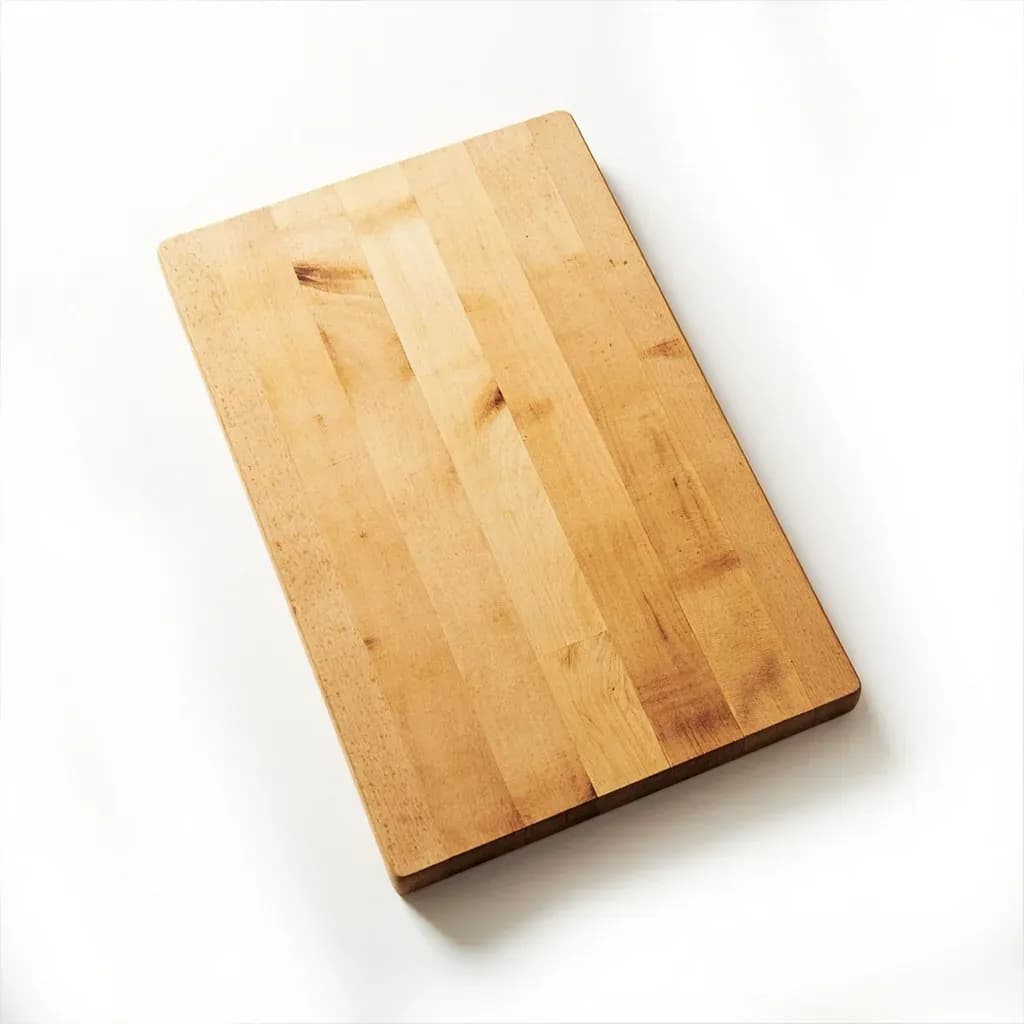
Butcher Block
A thick end-grain hardwood block built to absorb chopping and heavy knife work.
A butcher block is a heavy cutting surface made from thick hardwood, often end-grain maple, that self-heals around the blade and resists deep gouging. It stands up to forceful chopping, jointing, and breaking down meat, which is why butchers and serious home cooks rely on it. End-grain construction keeps knives sharper longer and, with regular mineral-oil treatment, lasts for decades.
Strictly speaking, a butcher block is a thick work surface built from small hardwood billets stood on end and glued together so the cut ends of the wood form the working face. That end-grain construction is what gives the classic block its two signature behaviors: the vertical wood fibers part to accept a knife blade and spring back over the cut, hiding scoring and protecting the edge, and the dense, vertically oriented grain absorbs the impact of cleavers and chop work that would dent or split a flat board. Hard maple, the traditional species, supplies the closed grain, density, and neutral color that nineteenth-century European and American butcher shops standardized on, and it remains the reference for serious prep work today.
In modern retail the term has loosened to cover almost any thick wooden prep surface. Edge-grain boards (long planks stood on edge and glued face to face) and face-grain boards (wide planks laid flat) are widely sold as butcher blocks too; they are stiffer, cheaper, and often more attractive, but they show cuts more readily and offer less protection to a fine edge. The end-grain block still rules for heavy knife work, and the difference shows up in how the surface looks and feels after years of daily use.
Thickness matters as much as construction. Portable boards run 1.5 to 4 inches deep — heavy enough to sit still on the counter and absorb shock — while permanent installations as countertops or islands run 2 to 6 inches and are often built up in laminated layers. A good block should feel like a piece of furniture: dense, stable, and substantial enough that you can lean into a cut without it skating across the counter.
Alternatives
Types & varieties
Small square billets stood on end and glued; the traditional butcher block. Self-healing and the kindest to knife edges.
Long planks stood on edge and glued face-to-face. Stiffer and cheaper than end-grain, but more visible scoring and slightly harder on edges. Common in commercial butcher shops.
Wide planks glued face-up. The most affordable and best-looking option, often used for serving; the least durable for heavy prep.
The standard butcher-block wood — dense, closed grain, neutral color, and the species specified in most commercial shop boards.
Dense hardwood with a deep chocolate tone; slightly softer than maple and prized for kitchen islands and serving boards.
Moderately hard, fine-grained; darkens noticeably to a rich reddish brown with age and oiling.
Very hard and durable; the prominent open grain can feel rougher to a fine edge and holds moisture longer.
Naturally oily and water-resistant; favored for tropical climates and boat galleys.
Pale, fine-grained, and food-safe; the common species in European butcher blocks and chopping blocks.
Oiling and Maintenance Routine
A butcher block is a working piece of wood, and like any wood it needs to be kept seasoned or it will dry, check, and harbor food residue in the cracks. The routine is short but non-negotiable: oil, clean, sand when needed, and keep it dry.
- Apply a generous coat of food-grade mineral oil (or a beeswax-and-mineral-oil blend) with a clean cloth, working with the grain. Let it soak for 20–30 minutes, then wipe off the excess. The block should drink the oil readily; if it beads up, the surface is still sealed from a previous treatment.
- Re-oil monthly in a busy home or pro kitchen, every 2–3 months for light use. A block that looks pale, chalky, or feels dry to the touch is overdue.
- Use only food-grade mineral oil. Olive, vegetable, sunflower, coconut, and walnut oils all go rancid in the grain over time and will eventually smell and taste off — walnut oil is also a real allergen risk.
- When the surface is deeply scored, sand it flat: start with 120-grit to level the cuts, finish with 220-grit for a smooth working face, wipe clean, and re-oil. A well-cared-for end-grain block can be resurfaced this way several times over its life.
Choosing Between End-, Edge-, and Face-Grain
The three constructions are not interchangeable, and picking the right one for the job is the single biggest decision when buying a block.
- End-grain is the choice for daily knife work: vegetable prep, slicing roasts, breaking down poultry, and any task where edge retention matters. It is also the most expensive and the heaviest.
- Edge-grain is the workhorse of commercial butcher shops and busy home kitchens. It costs less, resists splitting under repeated impact, and handles cleaver work well enough for most cooks. Expect more visible scoring over time.
- Face-grain is the beauty option. Wide planks of walnut, cherry, or maple read as furniture and make excellent serving boards for charcuterie, cheese, and bread, but they show every cut and are the least durable for heavy prep.
- For a permanent island or countertop, the construction decision is more about appearance and budget than performance — a thick edge-grain top in maple will outlast most cooks and can be sanded and refinished repeatedly.
Common uses
Tips & pitfalls
- Oil with food-grade mineral oil only — never olive, vegetable, sunflower, coconut, or walnut oil, all of which oxidize and turn rancid in the grain.
- Condition monthly in heavy-use kitchens and every 2–3 months for light home use; the surface should never feel dry, chalky, or pale.
- Use separate boards — or at least separate zones — for raw meat, poultry, and produce to avoid cross-contamination.
- Never soak the block or run it through a dishwasher; prolonged water swells the wood, breaks glue joints, and invites mildew.
- Sanitize with hot water and a stiff brush, then a wipe of dilute bleach or white vinegar; towel off and stand on edge to dry.
- When the surface is deeply scored, sand it flat with 120- then 220-grit sandpaper and re-oil to restore a clean working face.
- Rotate which section of the block you cut on so wear and oil absorption stay even across the end-grain.
- Keep the block out of prolonged direct sunlight, which fades the wood and accelerates drying and checking.
Good to know
- Material
- Hardwood, traditionally sugar (hard) maple; also walnut, cherry, oak, beech, teak
- Construction
- End-grain is the classic butcher block; edge-grain and face-grain are common modern variants
- Typical Thickness
- 1.5–4 inches for portable boards; full countertop installations run 2–6 inches
- Knife Impact
- End-grain is gentlest on edges — the blade slips between vertical wood fibers instead of cutting across them
- Self-Healing
- End-grain fibers close back over cut marks; face- and edge-grain show cuts more visibly
- Conditioning
- Food-grade mineral oil or a beeswax/mineral-oil blend, applied monthly in heavy use
- Dishwasher
- Never — prolonged heat and standing water warp the wood and break glue joints
- Sanitizing
- Hot water and a stiff brush, then a wipe of dilute bleach or white vinegar; never soak
Also called
Butcher's Block · End-Grain Cutting Block · Chopping Block
Related

Peeler
Swift blade for stripping skin off fruit and vegetables

Grater
Sharp-toothed surface for shredding cheese and vegetables

Microplane
Ultra-fine rasp for citrus zest, garlic, and hard cheese

Mixing Bowl
All-purpose bowl for combining, whisking, and tossing

Whisk
Looped wires that beat air into eggs, cream, and sauces

Spatula
Flat blade for flipping, lifting, and scraping

Slotted Spoon
Pierced spoon that lifts solids and drains the liquid behind

Wooden Spoon
Gentle, heat-friendly spoon for stirring anything