Natural form
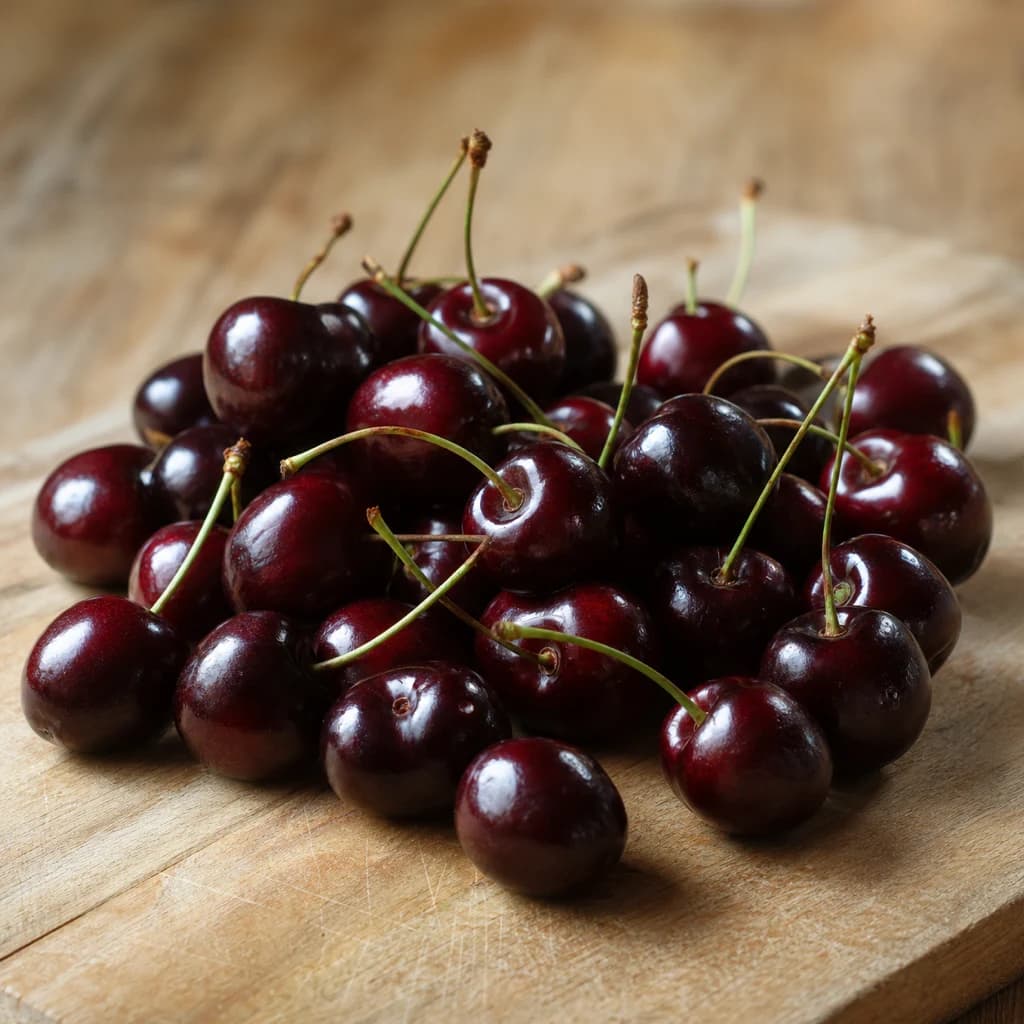
Fresh Bing cherries with stems intact, deep red to near-black, clustered on a wooden surface.
Shows the reader exactly what whole, ripe cherries look like at the market or in hand — glossy skin, stem attachment, and characteristic dark-red color.
Produce
Cherry
Small sweet stone fruit eaten fresh or baked into pies, clafoutis and preserves.
Cherries are small, glossy stone fruits that range from deep red to near-black, with sweet, juicy flesh around a single pit. They are eaten fresh and baked into pies, clafoutis, tarts, and preserves, as well as paired with dark meats and chocolate. Sweet varieties like Bing are eaten out of hand, while their season is short and prized in early summer.
Cherries belong to the genus Prunus, making them botanical cousins to almonds, apricots, plums, and peaches. The two commercial categories—sweet (Prunus avium) and sour/tart (Prunus cerasus)—behave very differently in the kitchen and the distinction matters enormously to cooks. Sweet cherries are eaten fresh or barely cooked; their delicate flesh collapses readily into sauce. Sour cherries hold their shape under heat and provide the bright, complex acidity that defines classic cherry pie and countless European preserves. Both types peak briefly in late spring through early summer in the Northern Hemisphere, though frozen sour cherries are available year-round and perform admirably in baked applications. The short fresh season makes proper selection and storage critical—cherries deteriorate rapidly at room temperature, losing texture and sweetness within hours of harvest.
Color ranges from the pale yellow-blush of Rainiers to the deep mahogany-black of Bing and Black Tartarian, though color alone does not indicate ripeness; the firmness of the flesh and the freshness of the green stems are more reliable indicators. A cherry's thin skin belies its structural role—it ruptures easily, releasing juices that stain surfaces and accelerate spoilage. This fragility shapes every handling decision from market to plate. The pit, technically a drupe's stone, accounts for roughly 10–15% of the fruit's weight and must be removed for most preparations. Whether pitted or left intact (as in traditional clafoutis, where the pit is said to impart a subtle almond note), the stone influences both technique and flavor.
Nutritionally, cherries deliver meaningful amounts of vitamin C, potassium, and dietary fiber, but their true distinction lies in antioxidant compounds—anthocyanins give dark cherries their color and have been linked to anti-inflammatory properties, while quercetin adds to the fruit's appeal as a functional food. The pH range of 3.4–4.5 (sour to sweet) places cherries firmly in the acidic category, a property that affects baking chemistry, preservation methods, and pairing decisions in both sweet and savory cooking.
- Measured in
- g
- Storage
- Fridge
Types & varieties
Dominant sweet variety; deep mahogany red, firm flesh, intense sweetness. Best for eating fresh and presentations where cherries remain whole.
Yellow with red blush; delicate, very sweet, thin skin bruises easily. Premium variety for fresh eating.
Dark red, slightly more acidic than Bing with rich flavor. Good all-purpose sweet cherry.
Deep purple-black, soft flesh, exceptionally sweet. Heirloom variety, best used fresh.
Large, dark red, self-pollinating. Crack-resistant, firm. Versatile for both fresh use and cooking.
Heart-shaped, dark red, sweet. Self-fertile, extended season variety.
The standard sour/tart cherry in the US; bright red, firm, maintains shape when cooked. Essential for pies, preserves, and baking.
Darker sour cherry than Montmorency; sweeter and less acidic, common in European cooking. Popular for preserves and drying.
Light-colored sour cherry with yellow flesh; mildly acidic, common in Eastern Europe for syrups and liqueurs.
Selecting and Storing
Stem condition is the most reliable freshness indicator. Fresh green stems firmly attached to the fruit signal recent harvest; brown or wilting stems indicate age and accelerated deterioration. Avoid any cherries with soft spots, wrinkles, or exuded juice—these signs of overripe or damaged fruit will not improve with storage.
Refrigerate cherries immediately upon returning from market. They suffer more than most fruits from room-temperature storage, losing firmness and sweetness within hours. Keep unwashed cherries in a perforated plastic bag (or a closed bag with a few ventilation holes) in the coldest part of the refrigerator. This extends shelf life to 5–7 days. Do not wash until just before use; surface moisture accelerates spoilage and promotes mold.
For extended storage, freeze pitted or whole cherries on a sheet pan until solid, then transfer to airtight containers. Frozen cherries keep up to 12 months. Measure frozen cherries by weight before thawing, as they release juice when defrosted and will yield more volume than initially measured.
- Choose firm cherries with fresh green stems; avoid brown stems, soft spots, or exuded juice
- Refrigerate immediately and store unwashed in a perforated bag for up to a week
- Freeze pitted or whole on a sheet pan, then transfer to airtight containers for up to 12 months
Pitting Techniques
Removing cherry pits can be accomplished with dedicated tools or improvised methods depending on batch size. A handheld cherry pitter (scissor-style) is the fastest option for large quantities, driving the pin through the fruit and ejecting the pit cleanly. Plunger-style pitters work well for smaller batches but require more force and tend to crush softer cherries.
For quick work on a small number of cherries, pinch the fruit firmly between thumb and forefinger at the widest point until the pit pops free. This requires ripe but firm cherries; overripe fruit will simply squish. Alternatively, insert a piping tip or small closed star tip into the blossom end and push through—the pit will attach to the metal and pull free.
Note that pitted cherries lose additional juice compared to unpitted; expect a weight loss of 10–15% from pitting alone, plus the juice that follows. For recipes where moisture control matters (certain pastries, for instance), account for this liquid when adjusting thickeners.
- Scissor-style cherry pitter is fastest for large batches; plunger type works better for small quantities
- Pinch method works well for small batches of firm cherries—avoid with overripe fruit
- Pitting adds 10–15% weight loss plus additional juice release; adjust thickeners accordingly in pies and tarts
Sweet vs. Sour: Choosing for the Recipe
The distinction between sweet and sour cherries determines your result more than any other factor. Sour cherries—Montmorency dominates in the United States—have firm flesh that maintains structural integrity when heated. They release a complex, bright acidity that balances sugar and creates the characteristic depth of cherry pie, preserves, and European tarts. If you want whole or half cherries in a baked filling that holds its shape, sour varieties are non-negotiable.
Sweet cherries—Bing is the most common—collapse readily when cooked, making them ideal for sauces, compotes, and fresh applications. Their sugars concentrate with brief cooking, creating jammy results without the need for as much thickener. In pies, sweet cherry fillings tend toward soupy unless you compensate with extra cornstarch or tapioca starch and pre-cook the filling.
Out of fresh season, frozen sour cherries (available year-round) are often preferable to fresh sweet cherries for baking. They have superior acidity and structural behavior, and their texture after thawing is appropriate for most cooked applications. For fresh eating, dried cherries rehydrated in warm water, wine, or juice can substitute in a pinch for baked goods and sauces, though not for garnishing.
- Sour cherries (Montmorency, Morello) hold shape when cooked—essential for classic pies and preserves
- Sweet cherries (Bing, Rainier) collapse into sauce—choose for fresh eating, brief cooking, or jammy results
- Frozen sour cherries are often preferable to fresh sweet cherries for year-round baking
- Match cherry type to your intended result: structural integrity vs. saucy collapse
Common uses
Tips & pitfalls
- Purchase cherries with fresh green stems firmly attached; avoid any with brown stems or wilting fruit
- Refrigerate immediately upon returning from market; cold storage dramatically extends shelf life
- Do not wash cherries until just before use; excess moisture accelerates spoilage
- To pit efficiently, use a proper cherry pitter—the handheld scissor-style works faster than the plunger type for large quantities
- For pies, macerate halved cherries with sugar for 30–60 minutes before adding thickener to prevent a gummy filling
- Sour cherries (Montmorency) hold their shape when cooked; sweet cherries (Bing) tend to collapse into sauce—choose accordingly for presentation
- Frozen cherries should be measured while frozen; they will yield more volume once thawed due to juice release
- Roasting sweet cherries with a touch of sugar intensifies flavor and creates a natural sauce component
- Cherries oxidize quickly once cut; work efficiently and use immediately or toss with lemon juice to slow browning
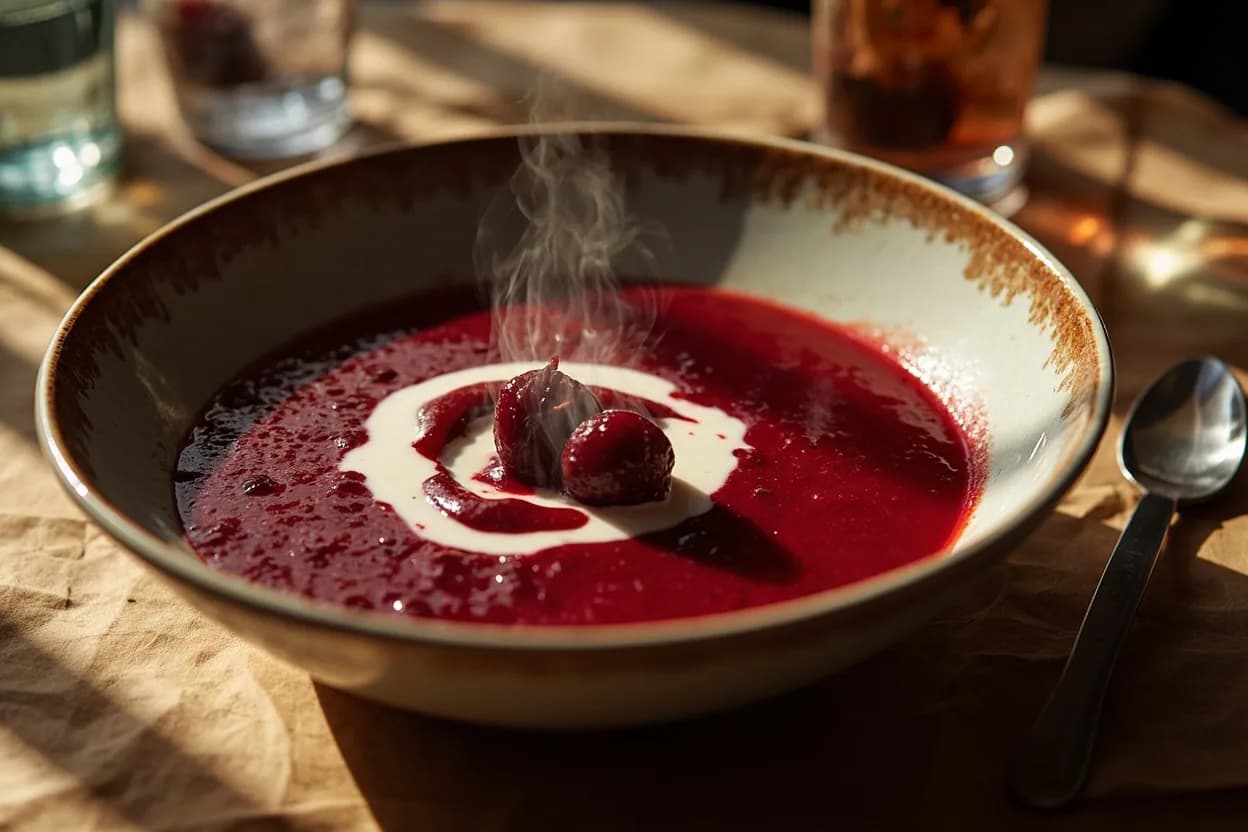
- For smooth cherry soup or sauce, strain cooked cherries through a fine-mesh sieve to remove skins if desired
- When making cherry preserves, use firm, slightly under-ripe fruit for better texture in the finished product
- Classic clafoutis traditionally uses unpitted cherries—the pit is said to release amygdalin, adding subtle almond flavor, though pitting is standard for easier eating
Nutrition
Energy
264 kJ · per 100 g
Where the calories come from
Protein
1.1g
2% DV
Carbs
16g
6% DV
Fat
0.2g
0% DV
Fiber
2.1g
8% DV
Sugars
12.8g
of which
Sodium
0mg
0% DV
Source · USDA FoodData Central · Cherries, sweet, raw
View on FDC →In the shops
Matched grocery products
No matched grocery products for Cherry yet.
Good to know
- Type
- Stone fruit (drupes), genus Prunus
- Primary varieties
- Sweet (Prunus avium) and sour/tart (Prunus cerasus)
- Peak season
- Late May through July (Northern Hemisphere); December–February (Southern Hemisphere)
- Typical size
- 1–2.5 cm diameter depending on variety
- Color range
- Yellow-blush to deep burgundy-black
- Nutrients
- Vitamin C, potassium, fiber, antioxidants (anthocyanins, quercetin)
- Storage (fresh)
- Refrigerate unwashed in perforated bag; 5–7 days
- Storage (frozen)
- Pitted or whole, up to 12 months
- Pitting yield loss
- Approximately 10–15% by weight
- pH (sweet)
- 4.0–4.5
- pH (sour)
- 3.4–3.6
Substitutes
- Sour cherries (for sweet) — Add 1–2 tablespoons sugar per cup to offset acidity; best for pies and cooked applications.
- Red or black plums — Similar stone fruit texture and sweetness; substitute 1:1 in cooked applications.
- Dried cherries (rehydrated) — Soak in warm water, wine, or juice for 30 minutes; use for baking or sauces.
- Frozen cherries (for fresh, out of season) — Thaw and drain well; best for cooking; texture will be softer than fresh.
- Fresh raspberries or blackberries — Not a close substitute but work for fresh applications; omit stone pit if relevant.
- Morello cherry preserves — Drain syrup and use cherries; add lemon juice to boost acidity for baking.
Pairs with
Also called
Sweet Cherry
Appears in these dishes

Related
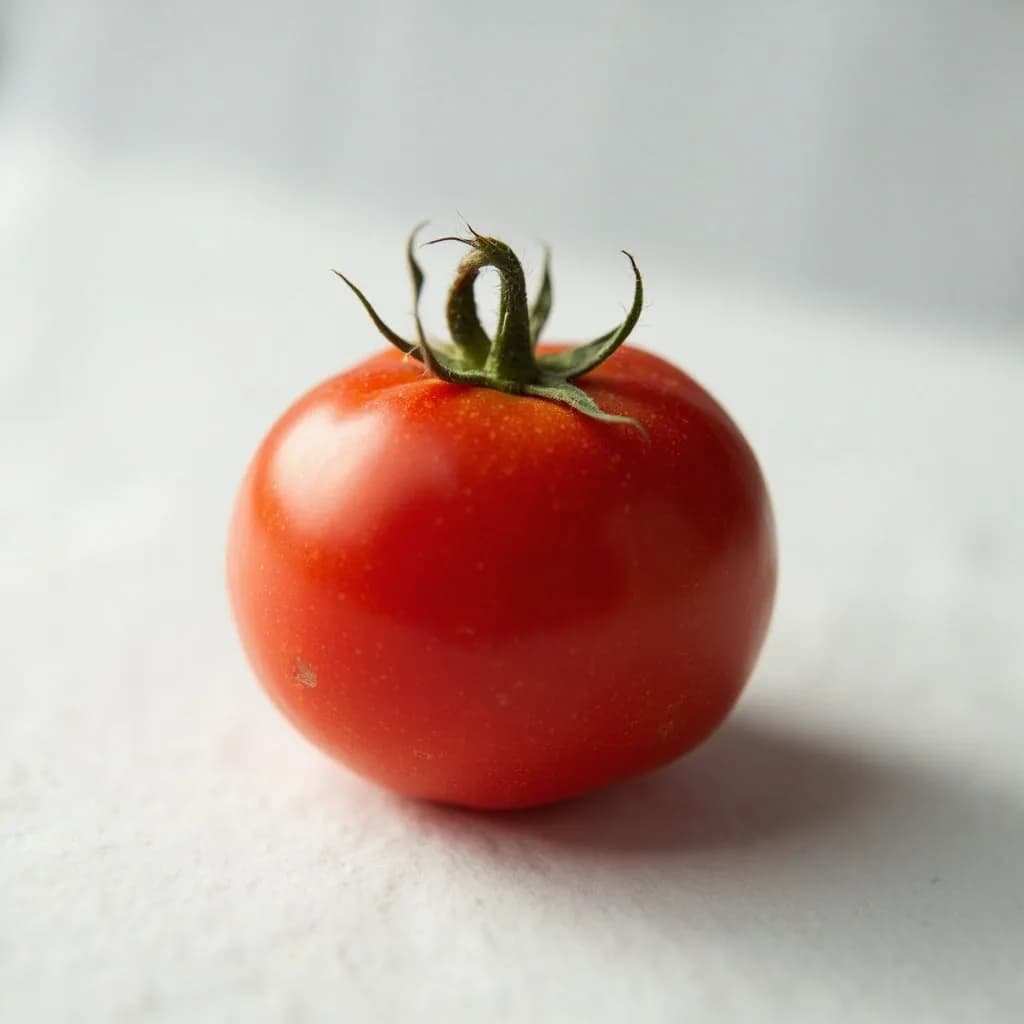
Tomato
Juicy, sun-sweet fruit for sauces, salads, and slow-cooked depth
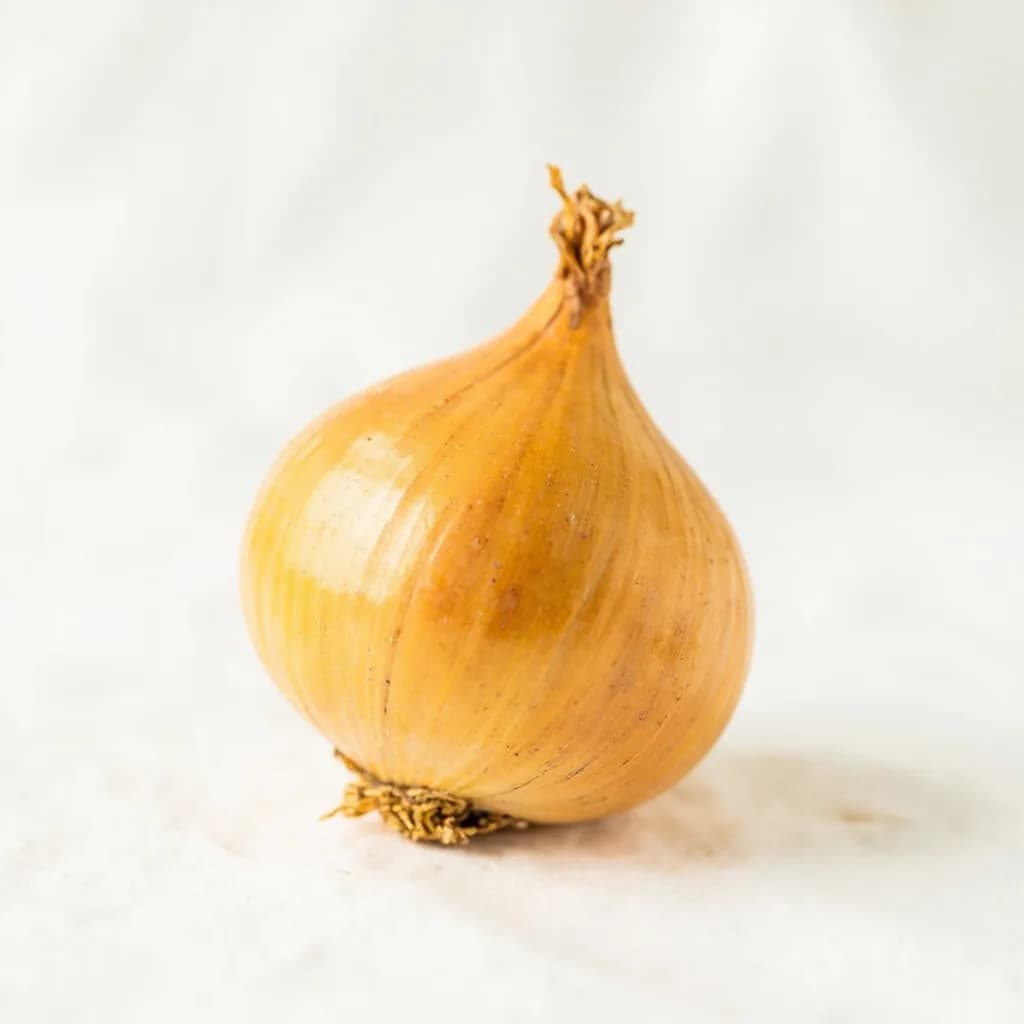
Yellow Onion
The aromatic backbone of soups, sofritos, and braises
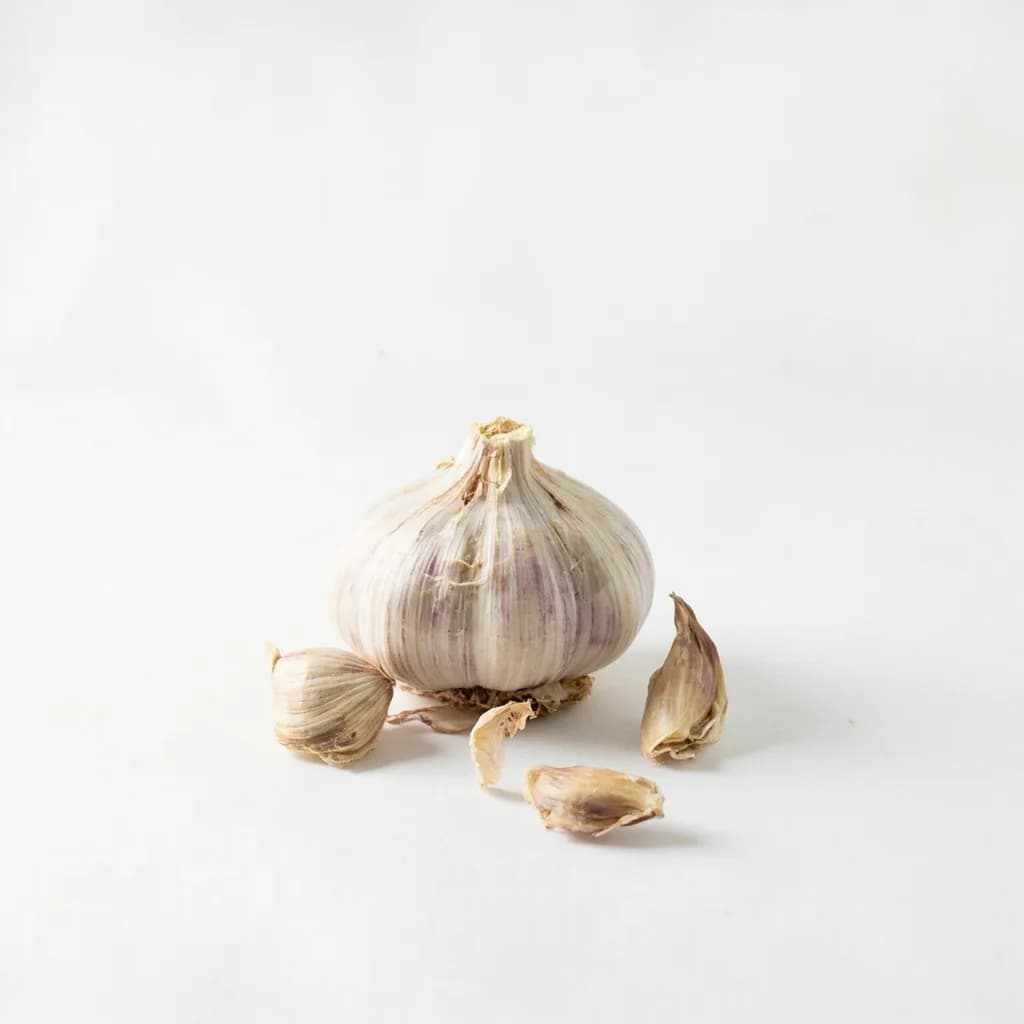
Garlic
Pungent cloves that perfume nearly every savory dish
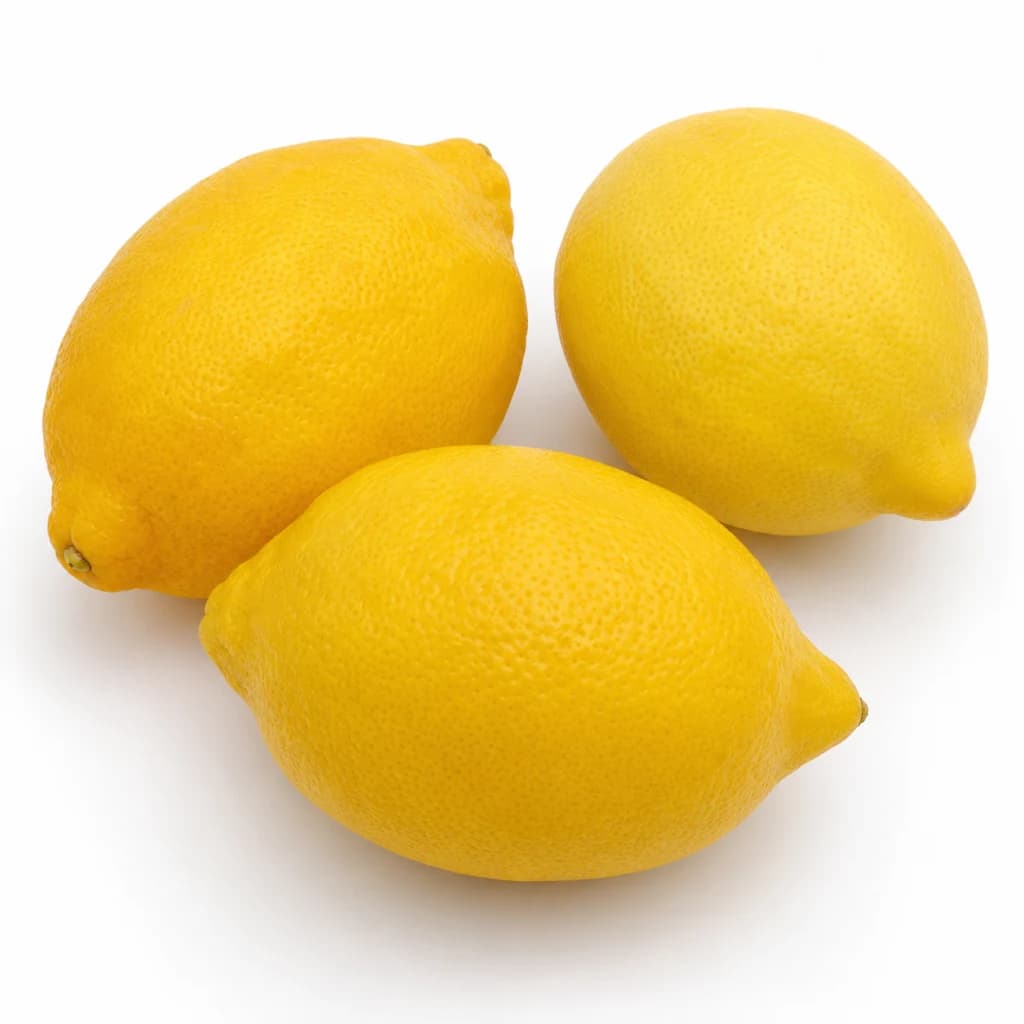
Lemon
Bright, acidic citrus that wakes up almost any dish
Potato
Humble, hearty staple — roast, mash, fry, or boil
Carrot
Sweet, crunchy root — raw, roasted, or the base of a sofrito
Cucumber
Cool, crisp, and watery — for salads, pickles, and tzatziki

Lettuce
Crisp leaves for salads, wraps, and a fresh crunch