Prep Tools
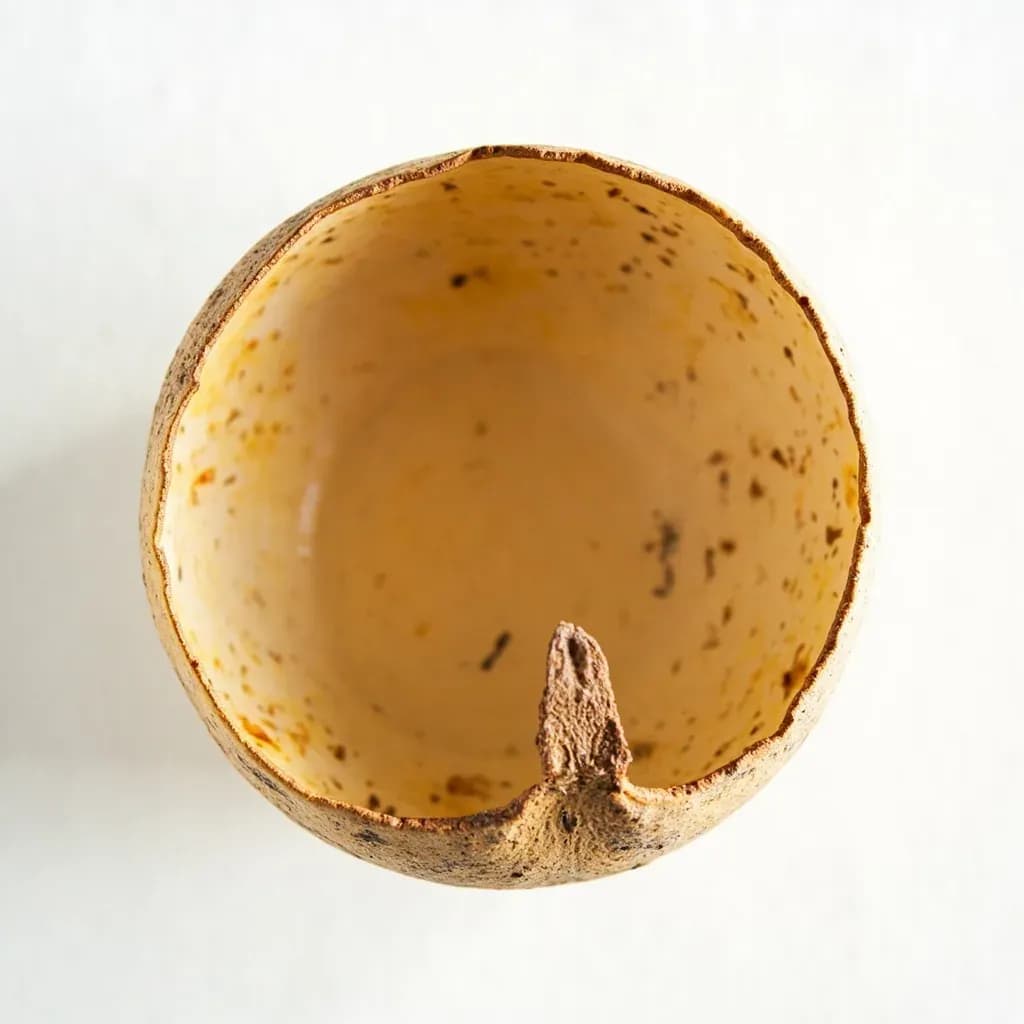
Calabash Gourd Bowl
A dried, hollowed gourd used as a natural bowl for serving, mixing, and storing food.
A calabash is a bowl or vessel made from a dried, hardened gourd shell, used across Africa, Latin America, and Asia for serving, mixing, fermenting, and storing food and drink. Lightweight and durable, it holds everything from porridge and palm wine to mate tea, where it is the traditional drinking cup. Each gourd is naturally shaped, so sizes and forms vary from small cups to large mixing basins.
The calabash is a bowl, cup, or storage vessel made from the dried, hollowed shell of the bottle gourd (Lagenaria siceraria), a hard-shelled annual vine in the Cucurbitaceae family. Once cured, the shell becomes a rigid, lightweight container that has been used to hold, serve, and store food for at least ten thousand years, making it plausibly the oldest food vessel humans ever made. In practical kitchen terms it behaves like a hybrid of wood and thin ceramic: light, naturally insulating, pleasantly tactile, and quietly beautiful on a table, but also slightly porous, sensitive to prolonged moisture, and unsuited to heat or the dishwasher.
What sets a calabash apart from a wooden or ceramic bowl is its origin as a once-living thing. The shell is a dried plant rind, not a fired or milled material, so it carries warmth against the hand, mellows with use, and will biodegrade at end of life. It also accumulates character — a patina of food oils, a deepening color, the faint memory of past contents — which most cooks either prize as the point of the vessel or learn to manage with sealing oil. In kitchens from Senegal to Jamaica to Argentina, the calabash is not a rustic curiosity but the everyday bowl, carrying fufu, thiéboudienne, jerk, and yerba mate with equal authority.
For the modern cook, the practical facts are these: a cured calabash is essentially indestructible under normal kitchen conditions, holds both dry and wet foods well when seasoned, and weighs a fraction of an equivalent ceramic bowl. It is not, however, a workhorse piece for hot stovetop work, soaking, or the dishwasher, and a careless first encounter with water is the surest way to crack one.
Alternatives
Types & varieties
Small South American drinking vessel, 6–10 cm, traditionally filled with yerba mate and hot water sipped through a bombilla straw
Wide, round serving or eating bowl common across West and East Africa, used for staples like fufu, ugali, and stews
Slender bottle-shaped gourd with a long stem, used for scooping and drinking water in Malawi and surrounding regions
Round to oval bowl used in Jamaica, Haiti, Trinidad, and Guyana to serve jerk, rundown, and ackee and saltfish
Small, round, apple-sized variety suited to individual serving cups or single-portion bowls
Classic bottle or dumbbell shape; the most widely used form worldwide for water storage and drinking
Very large, flattened-round gourd used as bulk storage vessels or for communal serving
Extra-long, serpentine form often dried and used decoratively or for narrow storage
Decorative variants burned, carved, or inlaid with wax or resin; common in Senegal and the Caribbean as presentation bowls
Curing a Fresh Gourd
A gourd picked from the vine is not yet a bowl. The thick green rind must dry slowly until the internal pulp and seeds shrivel, the shell hardens, and the seeds rattle when shaken. Rushing this step with heat is the single most common cause of cracking and should be avoided at all costs.
- Harvest when the stem browns and the skin begins to dull; cut with 5–8 cm of stem attached.
- Wash off surface dirt with plain water and a soft brush, then dry thoroughly with a towel.
- Set the gourd in a dry, shaded, well-ventilated spot on a wire rack or newspaper, ideally with airflow on all sides.
- Turn weekly and check for soft spots, mold, or weeping — surface mold is normal and can be wiped off.
- Test readiness by shaking: the seeds should rattle freely, and the shell should feel hard, light, and hollow when tapped.
- Expect 2–6 months depending on size; bushel gourds at the long end, small drinking gourds at the short end.
Care and Seasoning
An unsealed calabash is mildly porous, which is both its charm and its chief vulnerability. A thin coat of food-grade oil or melted beeswax inside and out slows moisture exchange, deepens the color, and prevents the transfer of strong odors between uses.
- Rub a sparing coat of food-grade mineral oil or melted beeswax into the entire surface, then buff dry after 20 minutes.
- Re-oil monthly if used for dry goods; less often if used for occasional serving.
- Never soak, submerge, or run through the dishwasher — the shell will swell and split.
- If the gourd develops a sour or musty smell, moisture is trapped inside; set it in a warm, airy spot for several days before reusing.
Choosing a Good One
Whether buying at a market, a craft fair, or online, a few simple checks separate a properly cured vessel from one that will crack on first use.
- Tap it — a fully cured gourd sounds hard, hollow, and almost ceramic; an undercured one sounds dull and heavy.
- Inspect for soft spots, dark stains, or hairline cracks, especially around the rim and base.
- Smell it — a clean gourd smells faintly nutty or neutral; a sour or fermented smell signals trapped moisture.
- Weigh it in hand relative to size; it should feel much lighter than a wooden or ceramic equivalent.
Common uses
Tips & pitfalls
- Cure a fresh gourd in a dry, shaded, well-ventilated spot for several months until the outer skin is hard and the seeds rattle inside; never rush with heat, which causes cracking.
- Clean only with warm water and mild soap, then towel-dry and air-dry upright; never soak or run through a dishwasher, as prolonged moisture swells and splits the shell.
- Condition an unsealed gourd with a thin coat of food-grade mineral oil or beeswax inside and out to slow moisture absorption and staining.
- Reserve a calabash for one purpose — dry storage versus wet serving — if you are not sealing it, as oils and odors transfer into the porous shell.
- Avoid sudden temperature changes such as moving a cold gourd into hot soup, which can crack the shell; bring it to room temperature first.
- If the rim chips, sand it smooth and seal with food-safe beeswax; a nicked gourd will often serve for years.
- Keep out of prolonged direct sunlight, which over-dries the shell and fades any natural or carved decoration.
- Smell-test an old gourd before use: a sour or musty odor means moisture is trapped inside and it should be aired out or retired from food use.
Good to know
- Material
- Dried, hollowed shell of the bottle gourd (Lagenaria siceraria), a hard-shelled annual vine in the Cucurbitaceae family
- Curing time
- Fresh gourds require 2–6 months of air-drying in a ventilated, shaded space before they are usable
- Typical sizes
- Range from 6–10 cm drinking gourds up to 30–60 cm serving and storage bowls; bushel gourds can exceed 50 cm in diameter
- Weight
- Very light when fully cured; a 30 cm bowl typically weighs 200–500 g depending on shell thickness
- Heat tolerance
- Resists ambient and warm food temperatures; not suitable for stovetop, oven, microwave, or dishwasher use
- Moisture behavior
- Untreated shell is slightly porous; absorbs oils and patinas over time, or swells and stains if left wet
- Shelf life
- Decades if kept dry and out of direct sunlight
- Average cost
- Roughly $15–$60 for a small drinking gourd; $30–$200+ for a large hand-finished African or Caribbean serving bowl
Also called
Calabash Bowl · Jícara · Mate Gourd · Gourd Bowl
Related

Peeler
Swift blade for stripping skin off fruit and vegetables

Grater
Sharp-toothed surface for shredding cheese and vegetables

Microplane
Ultra-fine rasp for citrus zest, garlic, and hard cheese

Mixing Bowl
All-purpose bowl for combining, whisking, and tossing

Whisk
Looped wires that beat air into eggs, cream, and sauces

Spatula
Flat blade for flipping, lifting, and scraping

Slotted Spoon
Pierced spoon that lifts solids and drains the liquid behind

Wooden Spoon
Gentle, heat-friendly spoon for stirring anything