Prep Tools
Cassava Grater
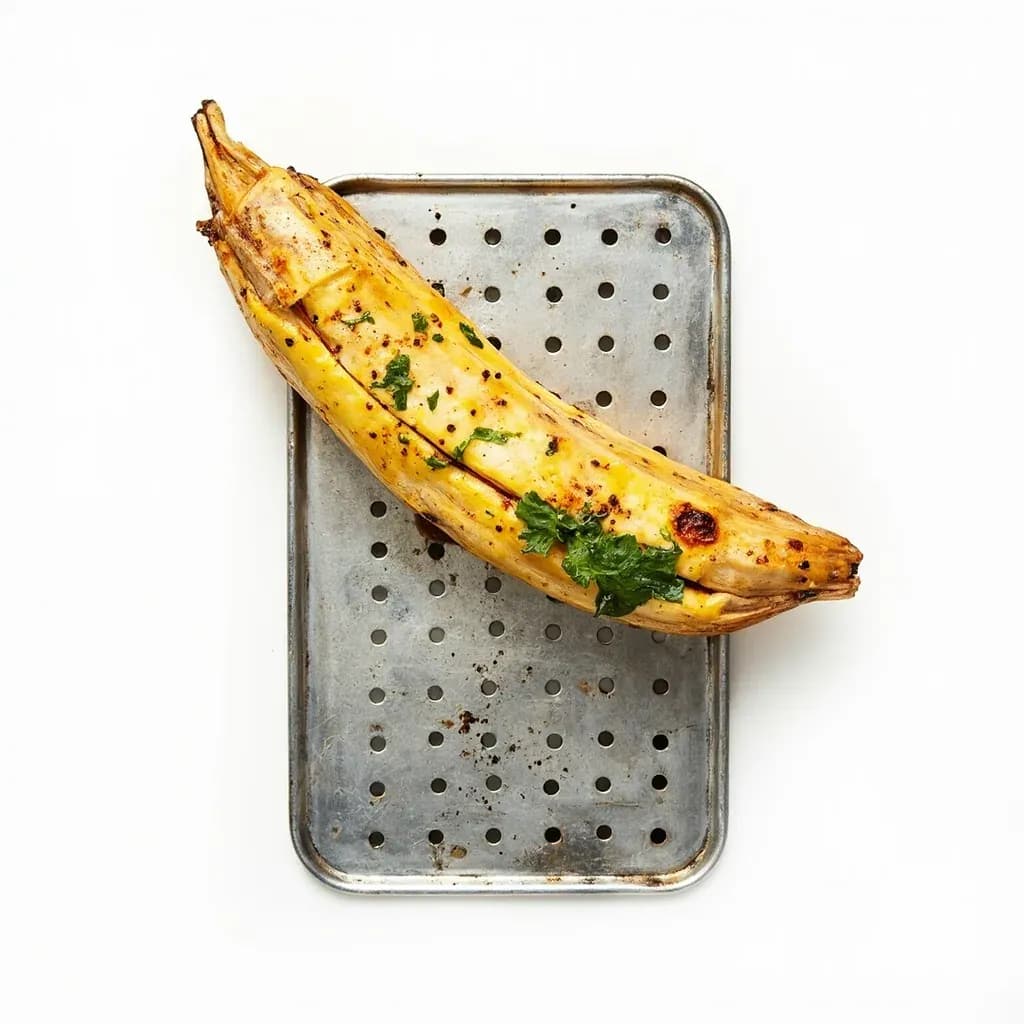
A rough rasping surface for grating cassava (and coconut) into pulp for flatbreads and starches.
A cassava grater is a board or drum studded with sharp metal points or a punched metal sheet that shreds peeled cassava root into a fine pulp. The grated mash is pressed to remove liquid and toasted into farinha or fufu or used in flatbreads across West Africa, the Caribbean, and Latin America. Powered drum graters speed the heavy work in markets and large kitchens, while hand boards serve home cooks.
A cassava grater is a coarse, abrasive surface — almost always a sheet of tin- or zinc-plated steel punched with sharp, raised teeth and mounted on a wooden base — used to shred starchy cassava root into a wet, fibrous pulp. Unlike a cheese grater or Microplane, which cuts thin, defined shreds, a cassava grater rasps and tears the root at the same time, breaking open the cells that hold the root's granular starch while shortening its long fibers. That dual action matters because nearly every cassava product — garri, fufu, farinha, bammy, tapioca starch — depends on a pulp with starch fully released and fibers uniformly cut.
Cassava is an unusually demanding root to grate: dense, fibrous, and loaded with starch that turns gummy the instant cells rupture. The traditional grater handles this by giving the user a broad, aggressive surface to rub against, and the most efficient designs — the Philippine foot-pedal kayo and modern hand-crank rotary drums — keep that surface moving so pulp doesn't build up and the worker's hands stay free to feed. The output is not a fine, dry grate but a damp, fluffy mash that is then pressed, fermented, toasted, or cooked depending on the dish.
Food processors have displaced hand graters in many urban kitchens, but across West Africa, Brazil, the Philippines, and the Caribbean the metal grater persists because its pulp has a more open, even texture — critical to the body of garri, fufu, and bammy. The tool is also the first step in a safety chain: cassava contains cyanogenic glycosides, and thorough grating, followed by pressing, fermenting, or thorough cooking, is what makes the root safe to eat.
Alternatives
Types & varieties
Flat galvanized or tin plate punched with sharp raised holes, nailed or screwed to a wooden base. The classic West African and Caribbean form; the user rubs peeled cassava across the holes by hand.
Standing or hand-held metal grater, often with a curved rasping surface, used to make farinha de mandioca and to extract wet tapioca starch.
A low wooden stool with a serrated metal sheet fixed to one end, seated in a cradle. A foot pedal rotates the drum, leaving both hands free to feed cassava or coconut.
A modernized drum grater turned by a handle; the workhorse of commercial garri, farinha, and tapioca production.
Smaller, often bowl-shaped version of the same principle, used to shred coconut meat for fresh coconut milk and oil.
From root to pulp: the safety chain
The cassava grater is the first step in a processing chain that exists primarily to make cassava safe to eat. Both 'sweet' and 'bitter' cassava contain cyanogenic glycosides (mainly linamarin), which release hydrogen cyanide when the root's cells are damaged. Bitter varieties carry much higher concentrations and have caused acute poisoning when eaten raw or under-processed. The traditional processing chain addresses this at three points:
- Grating ruptures cells thoroughly and evenly, exposing cyanogenic compounds to air and moisture so the enzyme-driven breakdown can begin.
- Pressing the pulp expels free cyanide and the juice that carries it; this is why nearly every cassava dish starts with grated, pressed pulp, not raw grated pulp.
- Fermenting (as in garri) and thorough cooking further break down residual glycosides, reducing them to safe levels.
Common uses
Tips & pitfalls
- Always peel and wash the cassava thoroughly first; residual skin, cork, or grit will wreck the texture of the final product.
- Replace or resharpen the grating surface as soon as it dulls — a dull grater tears and crushes the root, leaving rubbery fiber that will not blend smoothly into fufu or bammy batter.
- Work in small batches and keep steady, even pressure; overloading the surface causes slippage, wastes pulp, and can bend or tear the metal teeth.
- After grating bitter or unknown cassava varieties, press the pulp immediately in a heavy screw press or weighted sieve to expel the cyanogenic juice, and always cook it through.
- Wear an apron and consider gloves; the surface is sharp, and raw cassava juice stains fabric and skin brown and resists washing out.
- Rinse the grater as soon as you finish. Cassava starch dries rock-hard on metal and is very difficult to remove once set — soak in warm water before scrubbing.
- Mount a hand grater firmly to a sturdy bench or board at a comfortable height so you can press down with body weight rather than wrist strength; this reduces fatigue and the risk of slipping onto the teeth.
Good to know
- Origin
- Independently developed in West Africa and pre-Columbian South America; spread through the Caribbean and the Philippines via trade
- Primary material
- Tin- or zinc-plated steel sheet punched with sharp raised holes, mounted on a wooden frame
- Operation
- Manual hand-rubbing (most common), foot-pedal drum (Philippine kayo), or hand-crank rotary drum (commercial)
- Used for
- Cassava root and coconut meat
- Common regions
- Nigeria, Ghana, Brazil, the Philippines, Jamaica, and across West Africa and the Caribbean
- Output
- Fine wet pulp or mash, almost always further pressed, fermented, or cooked
- Safety
- Raw cassava contains cyanogenic glycosides; grated pulp must be pressed, fermented, or thoroughly cooked before eating
Also called
Manioc Grater · Yuca Grater
Related

Peeler
Swift blade for stripping skin off fruit and vegetables

Grater
Sharp-toothed surface for shredding cheese and vegetables

Microplane
Ultra-fine rasp for citrus zest, garlic, and hard cheese

Mixing Bowl
All-purpose bowl for combining, whisking, and tossing

Whisk
Looped wires that beat air into eggs, cream, and sauces

Spatula
Flat blade for flipping, lifting, and scraping

Slotted Spoon
Pierced spoon that lifts solids and drains the liquid behind

Wooden Spoon
Gentle, heat-friendly spoon for stirring anything