Knives & Cutting
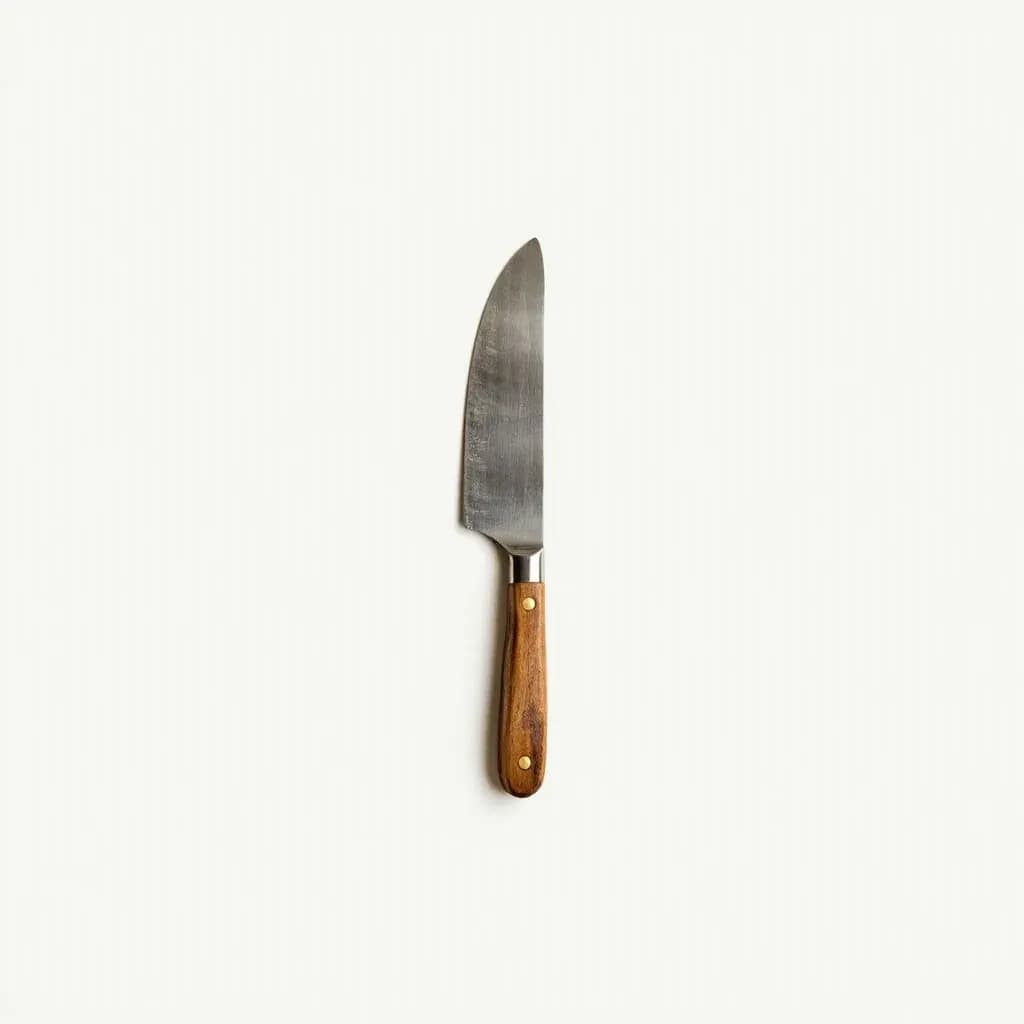
Cheese Knife
Specialized blade shaped to cut cheeses cleanly without sticking or crumbling.
A cheese knife is a knife designed around a cheese's texture so it cuts cleanly rather than dragging or crushing. Open-bladed versions with holes keep soft, sticky cheeses from clinging, while a heavier, sometimes forked-tip blade slices and breaks hard aged cheeses. Many have a pronged tip to spear and serve the cut pieces.
A cheese knife is not a single tool but a small family of blades built around a simple insight: the biggest problems in cutting cheese — sticking, crumbling, splitting — are mostly failures of geometry, not sharpness. Where a chef's knife uses a tall, broad blade to rock-chop through vegetables and meat, most cheese knives are short, flat, and shaped to release the paste cleanly. Perforations in a soft-cheese blade reduce surface contact so a creamy Brie slides off rather than tearing; a slim, pointed hard-cheese knife pierces an aged Gouda and slices in a single stroke instead of fracturing it. A wedge-shaped Parmesan chisel splits brittle, crystalline wheels by leverage rather than by edge pressure. Each form solves one of the three classic cheese-cutting failure modes.
The good news for the home cook is that a cheese knife is among the least intimidating tools in the kitchen. There is no special sharpening regimen, no guard stance, no learned grip — the technique amounts to picking the right blade for the texture on the board and using a decisive single-stroke cut rather than a sawing motion. Most cheese knives are small enough to keep on a board or in a drawer insert, and a sensible starter set of two or three tools will cover the vast majority of entertaining and everyday use.
What separates a thoughtful cheese tool from a gimmicky one is honest design: stainless steel of reasonable gauge, a handle that feels secure with a little butter or oil on the fingers, and a blade shape that actually matches the cheese you cut most often. Beyond that, a cheese knife is a long-lived, low-maintenance tool — well within the reach of a beginner, and quietly satisfying to use once you understand why it is shaped the way it is.
Alternatives
Types & varieties
Blade pierced with round or oval holes; reduces surface contact so soft, sticky cheeses like Brie, Camembert, and triple-crèmes release cleanly instead of clinging and tearing.
Narrow, often slightly curved blade with a fine edge and pointed tip for piercing and slicing firm, aged cheeses such as Cheddar, Gouda, and Manchego without crumbling.
Short, thick, wedge-shaped blade, sometimes with a wood or composite handle; used to split, shave, and break off pieces of very hard, brittle cheeses like Parmigiano-Reggiano and aged Pecorino.
Flat-handled tool with a horizontal slot that exposes a thin cutting edge; drawn across a wheel to produce wafer-thin slices of semi-hard cheeses such as Gouda, Edam, and Tilsit.
Short, broad, blunt blade with a soft edge for portioning and spreading fresh cheeses — cream cheese, ricotta, fresh chèvre — on bread or crackers.
Standard pointed blade with a two-pronged tip; the prongs spear cubes or slices for plating and serving directly from the board.
Spring-steel or stainless wire stretched in a frame; produces clean, even slices of semi-hard cheeses with minimal drag or crumble.
Broad, flat blade, sometimes with a stepped or angled leading edge; used to pierce and lever out wedges from wheels of bloomy-rind and washed-rind cheeses.
Short-bladed (around 3 inches) version of the hard cheese knife; ideal for small wheels, cubes, and crumbly cheeses such as aged blues.
Geometry is the whole point
Most kitchen knives are designed around sharpness and edge geometry — bevels, grinds, hardness. Cheese knives are designed around blade shape because cheese presents a unique set of physical problems. Soft, high-moisture cheeses are sticky and cling to flat metal; aged, low-moisture cheeses are brittle and fracture under the sideways force of a sawing edge; very hard, crystalline cheeses refuse to cut at all and need to be split by force. Each cheese-knife variant is essentially a different answer to one of these failure modes, which is why a single sharp chef's knife is rarely the best tool for a cheese board.
- Perforated or slotted blades minimize contact area so soft paste releases cleanly.
- Slim, pointed tips concentrate force on a small area, allowing aged cheese to be cut rather than crushed.
- Wedge and chisel profiles use leverage and mass to split hard, crystalline cheese from the inside.
- Wire slicers cut by frictionless slicing rather than edge pressure, producing neat, even semi-hard slices.
Building a sensible starter set
Enthusiasts can easily accumulate a dozen cheese tools, but most home cooks get excellent results from two or three well-chosen pieces. The decision should be driven by what you actually buy and serve: a soft-cheese lover who entertains with Brie and triple-crème needs a perforated blade; an aged-cheese household that grates and shaves hard wheels needs a chisel-style knife; a host who lays out a varied board for guests benefits from a slim hard-cheese knife and a cheese plane or forked-tip serving knife.
- Two-knife minimum: a soft-cheese knife (perforated) and a slim hard-cheese knife (pointed) cover roughly 80% of situations.
- Add a cheese plane if you regularly serve semi-hard wheels and want thin, even slices for sandwiches or boards.
- Add a Parmesan chisel only when you regularly buy and break into whole Parmigiano-Reggiano or aged Pecorino wheels.
- A cheese fork paired with a forked-tip knife lets guests serve themselves without juggling tools.
- Skip specialty wire slicers and mini knives unless you entertain often or buy small-format cheeses; a regular knife covers occasional needs.
Common uses
Tips & pitfalls
- Match the knife to the cheese: perforated blades for soft and sticky cheeses, slim pointed blades for semi-hard, chisel-style for hard and brittle.
- Warm the blade briefly under hot water and dry it before cutting harder cheeses — the slight heat softens the paste and reduces fracture.
- For aged cheeses prone to crumbling, cut with a single firm, decisive stroke rather than sawing; a serrated edge is usually the wrong choice.
- Wipe the blade between cheeses with a clean, damp cloth to prevent flavor transfer, especially between mild cheeses and strong blues or washed-rinds.
- Hand-wash knives with wooden handles; dry the blade promptly to prevent spotting and protect the handle from swelling or cracking.
- Don't reach for a chef's knife on soft cheeses — the tall blade traps paste and produces a ragged cut; a flat, perforated blade releases cleanly.
- For very hard cheeses, a true Parmesan or chisel knife will outperform any blade knife — lever and split rather than slice.
- Avoid aggressive sharpening on soft-cheese knives with thin, perforated blades; the holes weaken the cutting surface and aggressive honing can deform it.
- Store cheese knives dry and away from strong-smelling cheeses or alliums to prevent odor absorption, particularly with wooden handles.
Good to know
- Category
- Knives & Cutting
- Primary materials
- Stainless steel blade with wood, plastic, or composite handle
- Typical blade length
- 4–7 inches (10–18 cm); mini and chisel styles shorter
- Distinctive features
- Holes, slots, forked tips, or wedge-shaped edges to reduce sticking and aid serving
- Pairing tool
- Cheese fork, often sold and used together on a cheese board
- Cleaning
- Hand-wash wooden-handled knives; most stainless-steel blades are dishwasher safe
- Skill required
- Beginner — main technique is matching blade to cheese texture
- Cost range
- Under $10 for basic sets; $60+ for forged or handmade knives such as Laguiole
Also called
Hard Cheese Knife · Soft Cheese Knife (Open-Blade) · Cheese Slicer
Related

Knife
The fundamental cutting tool every kitchen is built around

Chef's Knife
The do-everything blade for chopping, slicing, and mincing

Paring Knife
Small, nimble blade for peeling and detailed in-hand work

Serrated Knife
Saw-toothed blade that slices crusty bread without crushing

Cleaver
Heavy broad blade for chopping through bone and bulk prep

Cutting Board
The stable surface every cut starts on

Mandoline
Adjustable blade for paper-thin, perfectly even slices

Kitchen Shears
Heavy-duty scissors for poultry, herbs, and packaging