Prep Tools
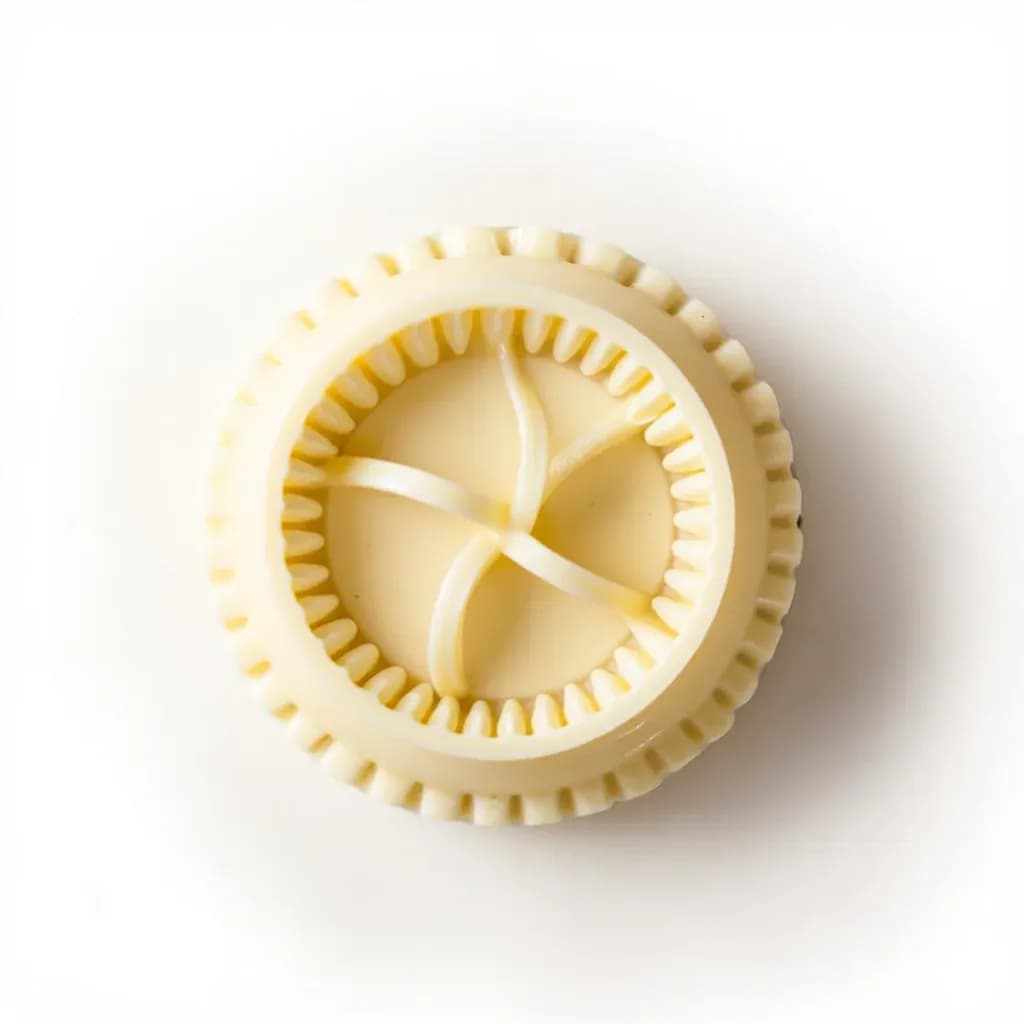
Dumpling Press / Mold
A hinged mold that folds and crimps dumpling wrappers around filling in one press.
A dumpling press is a hinged plastic or metal mold that crimps a filled wrapper into a sealed, pleated dumpling with a single squeeze. It speeds production of jiaozi, momos, pierogi, and pelmeni while giving each piece an even seal and uniform shape. Multi-cavity tray versions can stamp out several dumplings at once for high-volume folding.
Most dumpling presses are round, hinged molds about 3 inches across that produce a half-moon dumpling with a scalloped rim. The basic design scales up for empanadas, down for wontons, swaps in carved wood for pierogi and pelmeni, or builds in multiple cavities for batch work. What the tool offers is consistency: every dumpling comes out the same size and thickness, which means even cooking, a reliable seal, and a tidy plate.
That consistency comes with a visible trade-off. Hand-folded jiaozi carry seven to twelve pleats along the sealed edge, and styles like Cantonese har gow likewise depend on a hand-pleated rim — details that no press can replicate. What the press trades for those pleats is speed and reliability: a practiced user turns out 50 to 100 dumplings an hour versus roughly 30 by hand, and the seal holds through boiling, steaming, and pan-frying far more dependably. For pierogi, pelmeni, empanadas, and weeknight gyoza, where even doneness matters more than the look of the rim, the press earns its place in the drawer.
Choosing one comes down to material and size. A 3-inch plastic or aluminum press covers nearly every dumpling recipe a home cook will encounter; wooden carved molds offer more decorative relief but demand more flour and careful hand-washing; stainless steel is the durable upgrade for serious batch-cookers who want cleanup that is often dishwasher-safe. Mini presses handle wontons and dessert bites, while empanada presses are a different scale of tool in the same family, worth buying only if you actually make empanadas regularly.
Alternatives
Types & varieties
The classic hinged mold; produces a ~3 in half-moon with a scalloped edge; plastic or aluminum.
Same hinged design but often slightly larger and with a deeper, more decorative crimp; sometimes wooden.
Single-piece wooden or metal stamp rather than a hinged mold; cuts and seals square or round ravioli.
Larger hinged mold (~5–6 in) designed for half-moon Latin American empanadas; often with a fluted crimp.
Smaller version (~1.5–2 in) for wontons, small filled dumplings, or sweet bites; the cavities are often lightly oiled.
Plastic mold with several small cavities per side; faster but harder to fill evenly than single-cavity designs.
Traditional-style mold with deeper relief, often used for pelmeni, manti, or decorative edges; must never be soaked.
Durable, more expensive alternative to plastic; often dishwasher safe and prized by heavy users.
Wrapper and filling prep
The press performs best with round wrappers in the 3 to 3.5 inch range, rolled to roughly 1.5 mm thick. Store-bought gyoza or dumpling wrappers work reliably straight from the package; homemade dough usually wants a slightly higher hydration than pasta dough and a long rest so the gluten relaxes and the wrapper does not spring back under pressure.
- Cold, well-drained filling seals better than warm or wet filling; pat vegetables dry and drain any liquid released by salted cabbage or marinated meat before measuring.
- A thin ring of water or beaten egg brushed along the wrapper edge is what actually fuses the dough — without it, the crimp is decorative, not functional.
- Dust or oil the mold once at the start of a session, not between every dumpling; over-flouring dries the wrapper edge and weakens the seal.
- Keep a stack of wrappers under a barely damp towel while you work — they begin to crack at the edges within minutes of being exposed to air.
Common uses
Tips & pitfalls
- Do not overfill — a heaping teaspoon (10–15 g) is the practical maximum; overfilling bursts the seal during cooking.
- Press with a firm, confident downward motion and lift straight off; hesitating leaves the dumpling stuck to the mold and tears the seam.
- If the seal keeps splitting, your dough is too thick or too dry; roll it thinner, raise hydration slightly, or rest the dough longer so gluten relaxes.
- Hand-wash plastic and wooden presses; dishwashers warp plastic and strip the oils from wood.
- For metal or aluminum presses, dry immediately after washing to prevent water spots and oxidation marks.
Good to know
- Also called
- Dumpling maker, jiaozi press/mold, gyoza press, pierogi mold
- Typical shape produced
- Half-moon (most common), with scalloped or crimped edge
- Common diameter
- 3–3.5 in (7.5–9 cm) per dumpling
- Materials
- Food-grade plastic (most common), aluminum, occasionally wood or stainless steel
- Mechanism
- Two hinged halves with matching cavities; folds wrapper over filling and crimps edges simultaneously
- Output speed
- Roughly 50–100 dumplings per hour with practice vs. ~30/hour by hand
- Origin
- Modern tool, popularized in the late 20th century; descended from earlier hand-folding jiaozi and pierogi traditions
- Care
- Hand-wash only; plastic and wooden molds are not dishwasher safe; never soak wooden versions
Also called
dumpling-mold · momo-press · pelmeni-mold · Dumpling Mold · Empanada Press
Related

Peeler
Swift blade for stripping skin off fruit and vegetables

Grater
Sharp-toothed surface for shredding cheese and vegetables

Microplane
Ultra-fine rasp for citrus zest, garlic, and hard cheese

Mixing Bowl
All-purpose bowl for combining, whisking, and tossing

Whisk
Looped wires that beat air into eggs, cream, and sauces

Spatula
Flat blade for flipping, lifting, and scraping

Slotted Spoon
Pierced spoon that lifts solids and drains the liquid behind

Wooden Spoon
Gentle, heat-friendly spoon for stirring anything