Prep Tools
Funnel
Cone-shaped tool that channels liquids and powders cleanly into narrow openings.
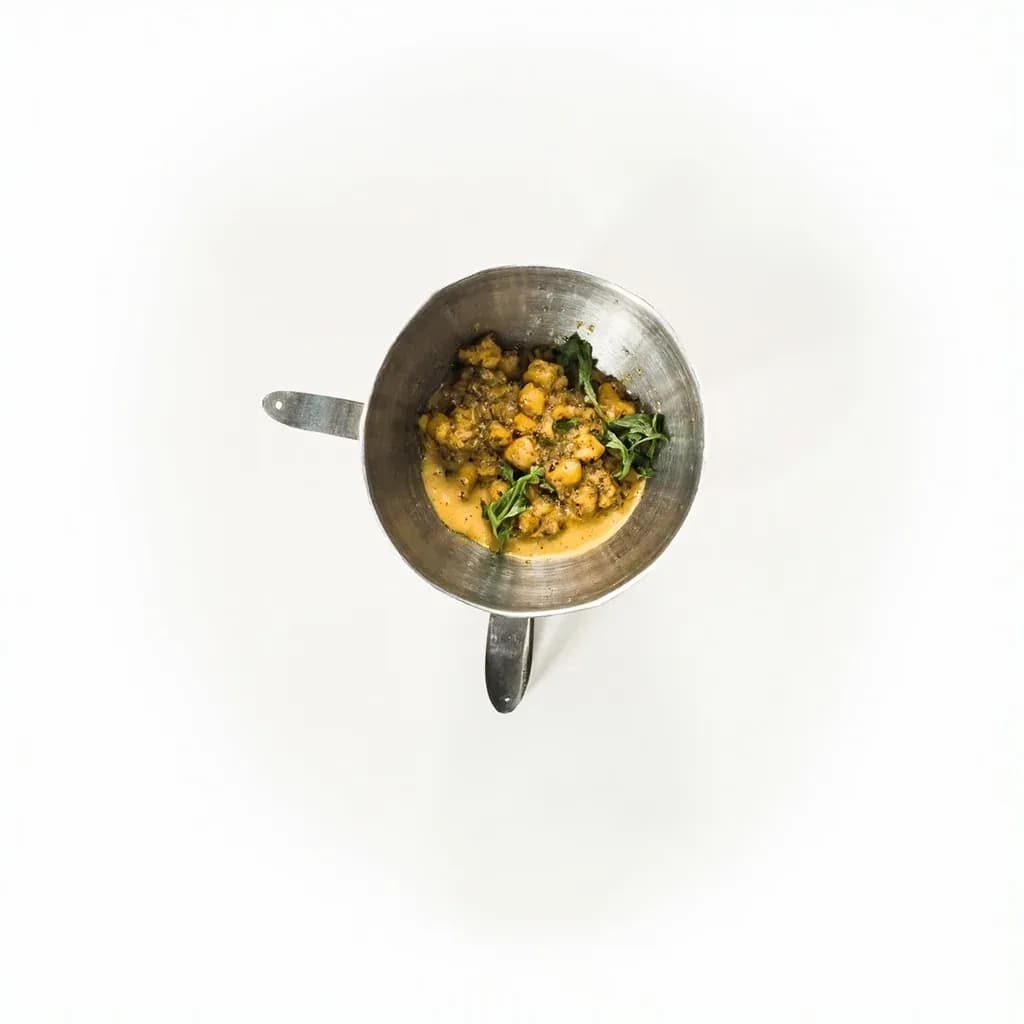
A funnel is a simple cone tapering to a tube that guides liquids, oils, grains, or powders into bottles, jars, and narrow-necked containers without spilling. Cooks use it to decant infused oils and vinegars, fill spice jars, and transfer brines or stocks. Many have a wide mouth and a fine outlet, and some include a built-in strainer screen.
A funnel is the unglamorous hero of clean kitchen transfers. Its cone-shaped body and narrow stem turn a messy pour into a controlled, contained stream, channeling everything from a thin consommé to coarse salt into bottles, jars, and pans without splashing the counter. The shape has been around for centuries — the word traces through Old French to a Provençal term for a sieve or pouring vessel — and despite its simplicity, the right funnel in the right size is the difference between a tidy pour and a wipe-down.
Material is the first decision a cook makes. Stainless steel is the professional standard: it tolerates boiling stocks, rendered fats, and hot oils without warping or leaching, and it does not absorb odors from ingredients like anchovy, garlic, or turmeric. Food-grade silicone offers comparable heat tolerance with a flexible rim that seats on uneven openings and a body that collapses flat for storage. Plastic funnels are inexpensive and fine for cold, dry work, but they stain easily, hold onto aromatic oils, and should not see liquids above roughly 190°F/88°C.
Sizing is the second decision, and it is the one most home cooks get wrong. A narrow bottle funnel clogs the moment it meets a chunky tomato purée; a wide canning funnel is clumsy when decanting a thin syrup into a cruet. Canning funnels deserve a special mention: their tapered base is shaped to perch on the threaded rim of a Mason jar, keeping the sealing surface spotless — a single smear of jam or oil is enough to prevent a two-piece lid from seating properly. Match the funnel to the jar, not the other way around.
Alternatives
Types & varieties
Classic cone with a short straight stem; the generalist for thin liquids and fine dry goods.
Broader bowl for thick or pulpy liquids — stocks, purées, batters — that flow too slowly through a narrow spout.
Small with a narrow stem, sized to drop into wine, oil, vinegar, and sauce bottles.
Tapered base that perches on a Mason jar rim, keeping the sealing threads clean so lids seat properly.
Very narrow spout for filling salt cellars, spice jars, and shaker tops without spills.
Built-in fine mesh, or designed to be paired with a chinois or small sieve, for straining while pouring.
Folds flat for storage; flexible rim seats on uneven openings and is heat-safe.
Durable, non-reactive, and the standard in professional kitchens; tolerates hot liquids.
Inexpensive and lightweight but tends to stain, hold odors, and warp with heat.
Canning funnels and a clean seal
A canning funnel is the one variant worth buying on its own merits, even for cooks who never preserve a bushel of tomatoes. Its base is shaped to perch on the threaded rim of a Mason jar, which keeps the sealing surface — the rim where the lid meets the glass — free of jam, oil, or syrup. That surface must be clean and dry for a two-piece lid to draw down and seal during processing; even a thin film of fat can break the seal and lead to a spoiled jar. The same shape doubles as a tidy way to dust a cake pan with cocoa or powdered sugar, since the wide mouth distributes evenly and the perch on the rim keeps the funnel stable.
- Use the regular-mouth funnel (about 3.5 in) for standard jars and the wide-mouth version (about 4.5 in) for larger openings — the two are not interchangeable.
- Wipe the jar rim with a clean damp cloth after filling, before placing the lid, as a belt-and-suspenders step.
- The funnel's wide mouth also makes it a tidy tool for pouring batter into baking pans or filling a deep cake tin without drips on the rim.
Funnel versus strainer
Funnels and strainers are often mentioned together because they are frequently used in sequence, but they are not the same tool. A funnel is a pourer: it has a solid wall and a closed bottom with a spout, and its job is to direct flow. A strainer — a fine-mesh sieve, chinois, or China cap — is an open mesh that separates solids from liquids. The two are combined when a cook wants a smooth, strained pour into a bottle or jar: set the funnel in the mouth of the bottle and rest a strainer across the funnel's rim, or strain into a bowl first and funnel the refined liquid into a bottle. Either way, the result is a single clean transfer that both strains and channels.
Common uses
Tips & pitfalls
- Match funnel size to the job: a narrow bottle funnel clogs with chunky purée; a wide canning funnel wastes control on thin oils.
- Seat the funnel stably — canning funnels perch on jar rims, and bottle funnels should drop the stem inside the neck so the funnel cannot slip mid-pour.
- Cover the spout with a finger to start and stop flow precisely and to prevent messy drips when lifting the funnel away; this is the single biggest control upgrade over a free pour.
- For powders, tap the funnel gently as you pour to settle the contents and prevent air pockets that later cause the powder to channel or spill.
- Pour down the inner wall of the funnel rather than straight in to cut splashing on thin liquids like stocks, wine, and syrups.
- Use stainless steel or silicone for boiling stocks, rendered fat, and other heated transfers; reserve plastic for cold, dry goods only.
- Avoid plastic funnels with strongly colored or aromatic ingredients — turmeric, anchovy, chili, and curry will stain and linger in the plastic.
- Clean the stem and interior groove with a small bottle brush; residue in the throat is the most common cause of off-flavors on the next use.
Good to know
- Also called
- Kitchen funnel
- Typical materials
- Stainless steel, food-grade plastic, and silicone; occasionally glass or enameled metal
- Top-opening diameters
- Roughly 1.5–6 in (4–15 cm); canning funnels run about 3.5 in for regular-mouth jars and 4.5 in for wide-mouth
- Stem length
- About 1–3 in (2.5–7.5 cm) on most kitchen models
- Heat tolerance
- Stainless steel and silicone handle boiling stocks and hot oils; most plastics are not suited to liquids above about 190°F/88°C
- Canning-funnel standard
- Tapered base sized to rest on the threaded rim of regular and wide-mouth Mason-type jars
- Storage
- Plastic and silicone versions often nest or collapse; metal funnels stack loosely in a drawer
- Cost range
- A few dollars for plastic up to about $15–30 for stainless or specialty sets
Also called
Kitchen Funnel
Related

Peeler
Swift blade for stripping skin off fruit and vegetables

Grater
Sharp-toothed surface for shredding cheese and vegetables

Microplane
Ultra-fine rasp for citrus zest, garlic, and hard cheese

Mixing Bowl
All-purpose bowl for combining, whisking, and tossing

Whisk
Looped wires that beat air into eggs, cream, and sauces

Spatula
Flat blade for flipping, lifting, and scraping

Slotted Spoon
Pierced spoon that lifts solids and drains the liquid behind

Wooden Spoon
Gentle, heat-friendly spoon for stirring anything