Prep Tools
Glass Fermentation Weight
A heavy glass disc that holds vegetables submerged under brine during fermentation to keep them anaerobic.
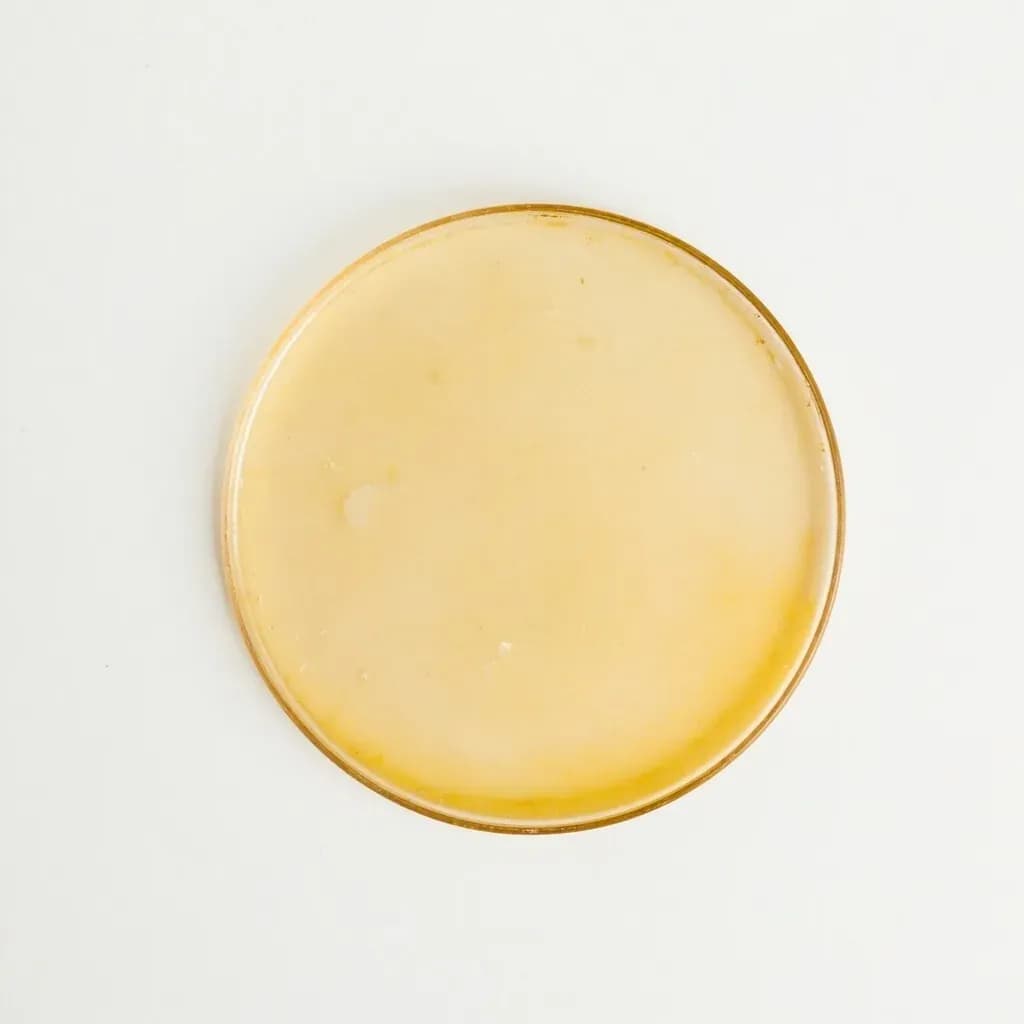
A glass fermentation weight is a smooth, dense glass disc placed on top of vegetables inside a fermentation jar to keep them pressed beneath the brine. Submerging the food prevents mold and yeast that grow when produce contacts air, so ferments like sauerkraut and kimchi stay clean. Glass is inert and dishwasher-safe, making it preferable to improvised weights like rocks or plastic bags.
A glass fermentation weight is a thick, round disc of food-safe soda-lime or tempered glass dropped into a fermentation vessel to keep cut or shredded vegetables pinned beneath the brine. By excluding oxygen from the food surface, the weight creates the anaerobic conditions that lactic acid bacteria need to dominate the ferment while suppressing yeasts and molds. It is a simple tool doing one job well: gravity, applied consistently, across the days or weeks a ferment takes to mature.
Glass is the preferred material for many home fermenters because it is non-reactive with acidic brines, won't absorb odors or flavors between batches the way some porous stoneware can, and its transparency lets you monitor the brine level and the activity below without lifting anything out. A well-chosen weight drops past the jar's shoulder, rests flat on the vegetables, and stays put — denser than water, it never bobs up as CO2 is released. The main practical limit is fit: a weight that wedges against a jar's neck can crack the glass when you try to remove it, so matching the diameter to the vessel is the single most important decision you will make.
Beyond keeping food submerged, the weight also doubles as a visual gauge: a clear view of the brine level and the vegetables settling beneath it lets you spot problems early — a weight breaking the surface, vegetables floating at the edges, or cloudy or discolored brine — before they spoil a batch. A good glass weight will outlast decades of normal use; surface staining from strong pigments like red cabbage or beet is cosmetic, not functional.
Alternatives
Types & varieties
Plain flat round disc, the most common style; sized to drop into a specific jar or crock opening
Disc with a small glass knob in the center for easy lifting out of the brine
Larger diameter designed for wide-mouth Mason jars and similar vessels
Smaller diameter for standard-mouth Mason jars
Larger and heavier disc for half-gallon or gallon fermentation crocks
Weights sold as part of a specific fermentation jar system, guaranteed to fit that vessel's shoulder and mouth
How It Compares to Other Fermentation Weights
Glass is the most common material for fermentation weights in home kitchens, but it is not the only option. Each alternative has tradeoffs in cleanability, fit, and longevity that are worth weighing before you buy.
- Ceramic (stoneware) half-moon weights: dense and traditional, but porous — they can absorb odors and pigments between batches and are opaque, so you cannot see the brine level beneath them.
- Glass marbles in a food-safe bag: an inexpensive, flexible-fit option; a handful of marbles in a small silicone or polyethylene bag can be sized to any vessel, though they can shatter if dropped and the bag itself is a wear item.
- Brine-filled bag: a small food-safe plastic bag filled with 2–3% salt water laid on top of the food conforms to any jar or crock shape with no special tool required. The drawbacks are that bags can leak and the plastic is a long-term consumable.
- Folded cabbage leaf: the traditional Eastern European method. Tuck a large outer leaf over the packed vegetables and press it under the brine. Free and biodegradable, but it breaks down over long ferments and can cloud the brine as it softens.
Choosing the Right Size and Fit
Fit is the single most important decision when buying a glass weight, because an ill-fitting disc is more dangerous than no weight at all. A weight that is too large will jam against the jar's neck on the way out; one that is too small will let vegetables float up around its edges and break the anaerobic seal.
- Measure the inside diameter of the jar's mouth and the diameter at the shoulder (the narrowest point the disc must pass through). The weight should be 5–10 mm smaller than the shoulder, not the mouth.
- Mason jar weights: roughly 6 cm for regular-mouth and 8–9 cm for wide-mouth. Many fermenters keep one of each on hand for whichever jar they are using that week.
- Crock weights: half-gallon crocks usually take a 10–13 cm disc, with proportionally larger discs for gallon-sized vessels. Matched sets from the crock maker are the safest bet for unusual or imported shapes.
- If between sizes, go smaller. A disc that drops in with a little daylight around the rim is far better than one that wedges and cracks the jar — or the disc — when you try to lift it out.
Common uses
Tips & pitfalls
- Choose a diameter that drops in past the jar's shoulder without wedging; a stuck weight can crack the glass when removed.
- Make sure the brine level sits at least 1–2 cm above the weight after a few hours, as vegetables release water and settle.
- Top up with a 2–3% salt solution if the level drops below the weight; pour off excess if it climbs too high.
- Sanitize the weight in boiling water or a food-safe sanitizer before each batch to avoid introducing unwanted microbes.
- Lift the weight straight up with a slight twisting motion to release the vacuum seal that often forms against the vegetables below.
- Expect some staining from strong pigments (red cabbage, beets, turmeric); soak in a dilute baking-soda solution if it bothers you, but it does not affect performance.
- Avoid pouring boiling water over a cold weight or transferring a cold weight into a hot jar; sudden temperature changes can crack the glass.
- Glass is denser than water and will not float, unlike some lighter ceramic weights, so it stays seated on the food throughout fermentation.
- Pair with an airlock lid or loose lid rather than a fully sealed one, so CO2 can escape during active fermentation.
Good to know
- Material
- Food-safe soda-lime or tempered glass; non-reactive with acidic brines
- Shape
- Round disc, typically 1–1.5 cm thick; many have a small center knob or handle for easy lifting
- Common diameters
- Roughly 6 cm (2.5 in) for regular-mouth jars, 8–9 cm (3–3.5 in) for wide-mouth jars, and 10–13 cm (4–5 in) for half-gallon crocks
- Typical weight
- About 200–500 g (7–18 oz), enough to keep vegetables submerged without crushing them
- Working principle
- Gravity holds shredded or cut vegetables beneath the brine surface, excluding oxygen and supporting lactic acid bacteria growth
- Temperature tolerance
- Not intended for stovetop or oven use; thermal shock can crack the glass
- Cleaning
- Wash with hot soapy water or run through a dishwasher; can be sanitized in dilute vinegar or a no-rinse sanitizer
- Lifespan
- Indefinite with normal use; may develop cosmetic surface staining from pigmented ferments
Also called
Pickle Weight · Pickle Pebble
Related

Peeler
Swift blade for stripping skin off fruit and vegetables

Grater
Sharp-toothed surface for shredding cheese and vegetables

Microplane
Ultra-fine rasp for citrus zest, garlic, and hard cheese

Mixing Bowl
All-purpose bowl for combining, whisking, and tossing

Whisk
Looped wires that beat air into eggs, cream, and sauces

Spatula
Flat blade for flipping, lifting, and scraping

Slotted Spoon
Pierced spoon that lifts solids and drains the liquid behind

Wooden Spoon
Gentle, heat-friendly spoon for stirring anything