Prep Tools
Pulled-Meat Claws
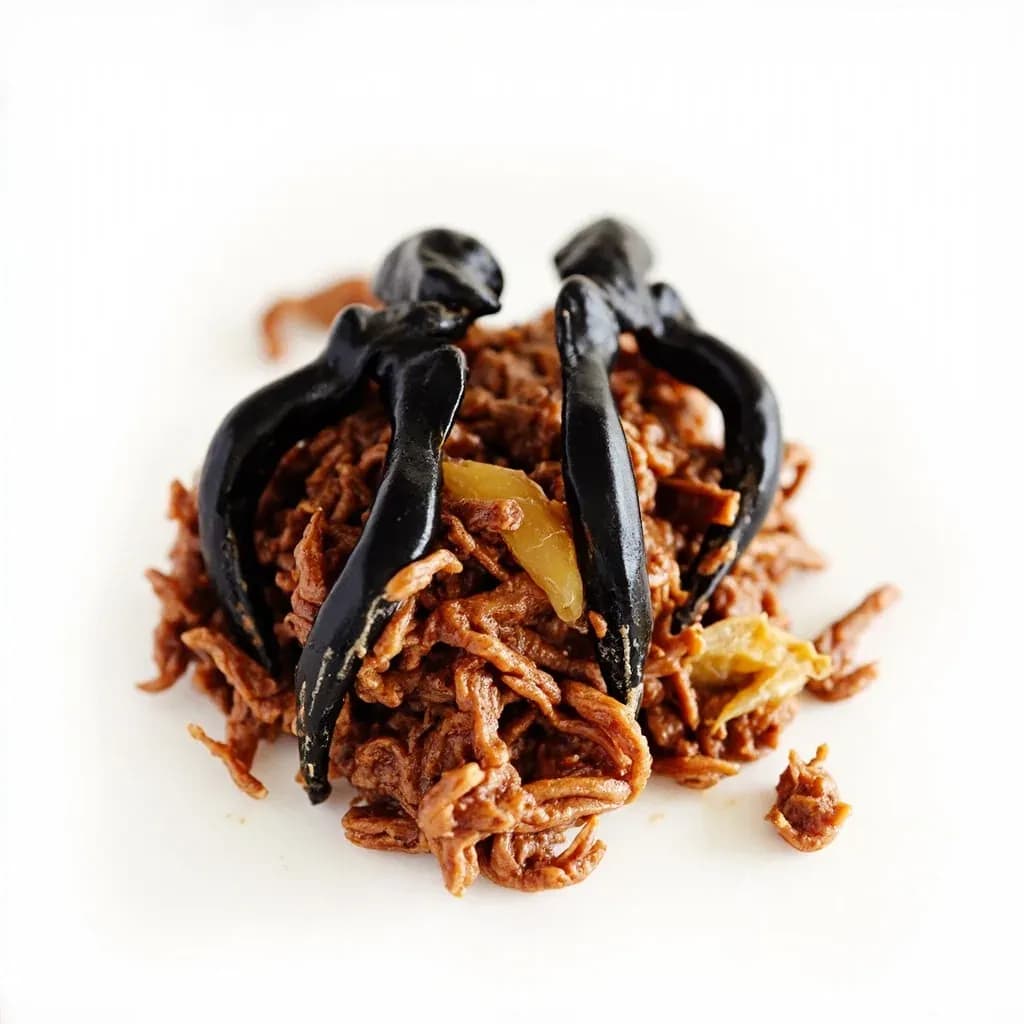
Pronged handheld claws for gripping, lifting, and shredding large cuts of cooked meat.
Meat claws are paired handheld tools fitted with sharp curved prongs, used to dig into and pull apart cooked roasts, brisket, or pork shoulder. The wide grip and multiple tines let the cook shred barbecue into pulled meat fast and lift heavy joints out of a pan or smoker safely. They are a staple of barbecue prep, doing the shredding work that two forks do slowly.
Pulled-meat claws are a matched pair of pronged hand tools, each shaped a little like a small rake or a hairless curry comb, designed to do the messy work of handling and tearing apart large, hot cuts of cooked meat. Most sets have five or six curved tines per side and contoured handles that fit in the palm, so a cook can sink the tines into a pork shoulder or brisket, lift it cleanly out of a pan or off a grate, and then rake the second claw through the meat to pull it into strands. The whole job — lifting, transferring, shredding, and even rough portioning — collapses into a single motion, which is why the tool spread out of American competition barbecue and into ordinary home kitchens in the 2000s.
What makes the claw worth owning is less the speed of tearing through a large butt or brisket and more the simple safety and control it offers. Hot meat is heavy, slippery, and full of juice that you would rather keep in the meat than on a cutting board; the tines pierce and hold, so a roast can be carried, rotated, and pulled apart without tongs, forks, or bare hands. They are not a general-purpose tool — a claw is the wrong answer for fish, for vegetables, for almost anything delicate — but for any cook who braises, smokes, or slow-roasts large cuts even a few times a year, they earn the drawer space almost immediately.
Alternatives
Types & varieties
The everyday workhorse. Light, dishwasher safe, and gentle enough for non-stick pans and enameled Dutch ovens. Rated to roughly 425–480°F, though they will soften if pressed directly against a ripping-hot grate above that limit.
The most durable and heat-tolerant option, and the only one truly comfortable against a screaming-hot grill or smoker rack. Heavier, and the sharp tines can score non-stick coatings, enamel, and wooden boards, so keep them on sheet pans, rimmed baking sheets, and butcher block.
The traditional look and the gentlest on cookware. Hand-wash only and treat occasionally with food-safe mineral oil; never soak, because waterlogged wood will split along the grain.
A larger, more open-framed cousin built for hoisting whole turkeys, hams, and briskets. Tines are wider-set and handles broader, so they grip and carry beautifully but are clumsier for fine shredding.
How to shred well with claws
Claws are simple to use, but a few habits make the difference between juicy pulled meat and a dry, paste-like pile on the board.
- Work as a pair: sink one claw in to anchor the meat, then rake the second claw across the grain in short pulls. Two long-handled forks can substitute, but they are slower and tend to stab the juices out of the meat.
- Rest the meat 10–15 minutes after cooking before you shred. Juices need time to redistribute through the muscle, or they end up on the board instead of in the meat.
- Read the grain before you tear. Pulling perpendicular to the long muscle fibers gives shorter, more tender strands and a better mouthfeel than tearing with the grain.
- Leave some texture: a uniform, finely shredded paste dulls flavor and mouthfeel. For pork butt and brisket, keep bits of bark and fat in the mix for contrast.
- Slide a rimmed sheet pan underneath while you work. It catches every drop of juice, which can be soaked back into the meat or used to build a quick pan sauce.
Choosing the right material
Most home cooks should buy one good pair of nylon claws and stop thinking about it. The other materials earn their place in specific situations.
- Nylon: the default for everyday prep. Safe on non-stick and enamel, dishwasher friendly, and inexpensive enough to replace if a tine eventually snaps.
- Stainless: worth owning only if you regularly handle meat straight off a hot grill, smoker rack, or griddle, where nylon might soften or scorch.
- Hardwood: a gift or display piece as much as a tool — beautiful on a counter, gentle on cookware, but higher maintenance and never put in the dishwasher.
- Bear paws: a third tool, not a replacement. Reach for them when a whole turkey or a large brisket has to come off the smoker in one piece; use regular claws for the shredding that follows.
Common uses
Tips & pitfalls
- Let the meat rest 10–15 minutes before shredding so juices stay in the muscle rather than running onto the board.
- Pull perpendicular to the grain; strands will be visibly shorter and noticeably more tender.
- Reserve stainless claws for metal sheet pans and butcher block, and use nylon or wood on non-stick, enamel, and wooden boards to avoid scoring the surface.
- Respect the temperature rating on plastic claws — pressing a nylon claw flat against a 500°F grate can deform the tines.
- Hand-wash in hot soapy water right after use on poultry, and run nylon and stainless sets through the dishwasher to sanitize; never put wood in the dishwasher.
- Do not use claws to lift or turn raw meat. The tines trap juices in hard-to-clean crevices and can cross-contaminate cooked food.
- Oil wooden claws occasionally with food-safe mineral oil so the grain does not dry, crack, or absorb meat juices.
- Don't over-shred a fatty cut like pork butt or brisket into a uniform paste; leave some bark, chunks, and fat for flavor and texture.
Good to know
- Tool type
- Two-handed pronged meat handler and shredder
- Also called
- BBQ claws, pulled pork claws, bear paws, meat shredder claws
- Materials
- Heat-resistant nylon/plastic, hardwood, or stainless steel
- Prong count
- Typically 5–6 curved tines per hand
- Heat tolerance (nylon)
- Roughly 220–250°C (425–480°F); always check the maker's spec
- Set size
- Sold as a pair, one for each hand
- Best for
- Shredding and lifting pork shoulder, brisket, chicken, turkey, and ham
- Surface safety
- Stainless can scratch non-stick; nylon and wood are safer on coated cookware and boards
- Dishwasher safe
- Nylon and stainless versions generally are; wood is not
Also called
bear claws · meat shredding claws · pulled pork claws · shredder claws
Related

Peeler
Swift blade for stripping skin off fruit and vegetables

Grater
Sharp-toothed surface for shredding cheese and vegetables

Microplane
Ultra-fine rasp for citrus zest, garlic, and hard cheese

Mixing Bowl
All-purpose bowl for combining, whisking, and tossing

Whisk
Looped wires that beat air into eggs, cream, and sauces

Spatula
Flat blade for flipping, lifting, and scraping

Slotted Spoon
Pierced spoon that lifts solids and drains the liquid behind

Wooden Spoon
Gentle, heat-friendly spoon for stirring anything