Prep Tools
Insulated Roti Warmer
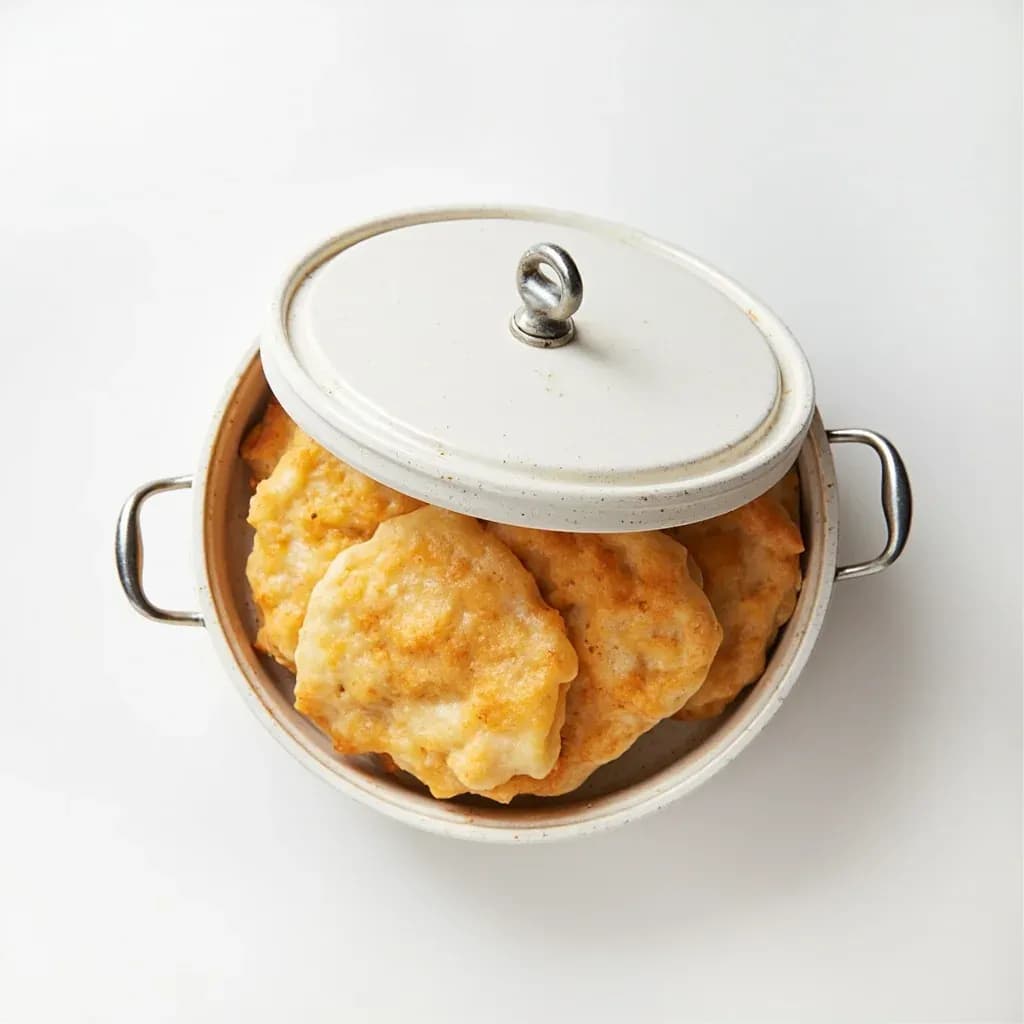
An insulated lidded container that keeps roti, chapati, and tortillas warm and soft.
An insulated roti warmer is a round, foam-lined or fabric container that traps heat to keep flatbreads soft and pliable after cooking. It is used in South Asian and Latin kitchens to hold a stack of roti, chapati, or tortillas ready through a meal. The insulation also keeps steam in so the breads do not dry out or stiffen.
An insulated roti warmer is a small lidded container, usually round, designed to keep freshly cooked flatbreads — rotis, chapatis, phulkas, parathas, and tortillas — soft and pliable from the moment they leave the tawa until they reach the table. The principle is precise: a layer of insulation (an air gap, foam core, or fabric lining) slows heat loss, while a snug lid traps just enough of the bread's own steam to keep the interior moist. Too much steam turns the bread gummy; too little and it dries out and stiffens within minutes. A good warmer threads that needle for one to three hours, the window of a typical home-cooked Indian meal.
Flatbreads are at their best in the first few minutes after cooking, and most cooks make them in batches, faster than the rest of the meal is consumed. The warmer acts as a holding pen that preserves that just-cooked texture, so the last roti eaten tastes like the first. For restaurants, caterers, and anyone feeding a crowd, it is essentially passive serving equipment, with electric variants stepping in when hours of holding are required.
Alternatives
Types & varieties
The most common household type: two nested plastic shells with an insulating air gap or foam core and a tight lid. Lightweight, cheap, and widely sold.
Outer stainless steel with a vacuum or insulated wall, similar in principle to a small thermos food jar. More durable and hygienic, but heavier and pricier.
A wicker or steel basket lined with a clean cotton cloth; the cloth traps steam while the weave lets excess moisture escape. The oldest approach, still used in dhabas and home kitchens.
Made of BPA-free plastic rated for reheating; lets you briefly microwave the box to refresh cold rotis before serving.
Larger electric chafing-style unit used at buffets, weddings, and restaurants to keep dozens of rotis hot for hours.
Often made of clay, ceramic, or fabric; the same concept adapted for flour or corn tortillas in Mexican and Tex-Mex cooking.
How the insulation actually works
A roti warmer is not a heater. It does not warm cold bread; it slows the rate at which hot bread loses heat and moisture. The walls trap a thin layer of still air, and the lid prevents that air from being swept away by convection. Steam rising from the bread is held inside just long enough to keep the surface from drying out, but if the lid seals before excess surface steam has escaped, the bread steams in its own condensate and turns gummy. That is why every good warmer has either a cloth lining (which absorbs and slowly releases moisture) or a brief venting step recommended before the lid is closed.
Substitutes when you don't have one
Any clean, lidded container that holds heat will do in a pinch. The goal is the same: trap the bread's own steam, but not so much that the surface goes soggy.
- A deep stainless steel dabba wrapped in a thick kitchen towel, lid on.
- A casserole dish covered tightly with foil and a folded cloth napkin on top.
- A tortilla warmer from the Mexican kitchen section — same idea, different bread.
- A clean bamboo steamer with its lid, lined with a thin cotton napkin.
Choosing the right size
Match the warmer diameter to the bread you make most often. A 9-inch box suits standard chapatis for one or two people; an 11-inch is the workhorse for a family of four; a 13-inch or oval warmer is for parathas, thepla, or batches for guests. Going too big for a small batch is a mistake — the extra air space cools the bread faster. Going too small forces tight stacking, which causes sticking and uneven softening.
Common uses
Tips & pitfalls
- Line the inside with a clean cotton kitchen towel or muslin cloth; the fabric holds a thin layer of steam against the bread without making it soggy.
- Do not seal freshly cooked rotis inside while they are still dripping with surface steam — leave the lid slightly ajar for 30 to 60 seconds, then close. Trapping too much moisture is the most common mistake and makes the bread gummy.
- Pre-warm the empty box for a minute or two in the sun or by pouring in hot water and draining; a cold box drops the bread's temperature fast and can cause stiffness.
- Stack rotis with a small piece of paper towel or a layer of cloth between them so they do not stick and the top surfaces stay matte, not wet.
- Do not pack them too tightly; air needs to circulate slightly. Overfilling is the main reason rotis turn out chewy or damp in the middle of the stack.
- Designate the box for cooked flatbreads only — avoid using the same container for raw and cooked food, which keeps it clean and odor-free.
- Dry the box thoroughly after washing with the lid off. Moisture trapped in the insulating layer is the leading cause of musty smell or mildew.
- If a roti has gone cold, sprinkle a few drops of water on it and microwave for 10 to 15 seconds inside a microwave-safe version of the box to refresh it.
- For restaurant or buffet service, switch to the electric casserole variant with a low-wattage heating element; it holds 20 to 40 rotis at serving temperature for hours, which passive insulation cannot do.
Good to know
- Also known as
- Roti box, chapati box, chapati container, roti casserole, hot pot for roti
- Primary materials
- Food-grade plastic, stainless steel with insulated core, sometimes fabric-lined baskets or thermocol (EPS) cores
- Typical capacity
- Roughly 6 to 20 rotis depending on diameter; common sizes are 9-inch, 11-inch, and 13-inch
- Shape
- Round or oval, with a snug-fitting lid; many have side handles and a top knob
- Origin
- South Asian (Indian subcontinent) kitchen tool; the modern insulated plastic version became widespread from the 1980s onward, with the cloth-lined bread basket as its older cousin
- Operating principle
- Traps residual steam and heat from freshly cooked flatbreads inside an insulated cavity, keeping them pliable for 1 to 3 hours
- Care
- Hand-wash with mild detergent; dry fully with the lid off to prevent mildew; most plastic versions are not dishwasher safe
- Average cost range
- Very affordable to mid-priced; cheap plastic versions are a common household item across South Asia
Also called
roti box · chapati warmer · tortilla warmer · casserole roti server
Related

Peeler
Swift blade for stripping skin off fruit and vegetables

Grater
Sharp-toothed surface for shredding cheese and vegetables

Microplane
Ultra-fine rasp for citrus zest, garlic, and hard cheese

Mixing Bowl
All-purpose bowl for combining, whisking, and tossing

Whisk
Looped wires that beat air into eggs, cream, and sauces

Spatula
Flat blade for flipping, lifting, and scraping

Slotted Spoon
Pierced spoon that lifts solids and drains the liquid behind

Wooden Spoon
Gentle, heat-friendly spoon for stirring anything