Prep Tools
Steaming Cloth
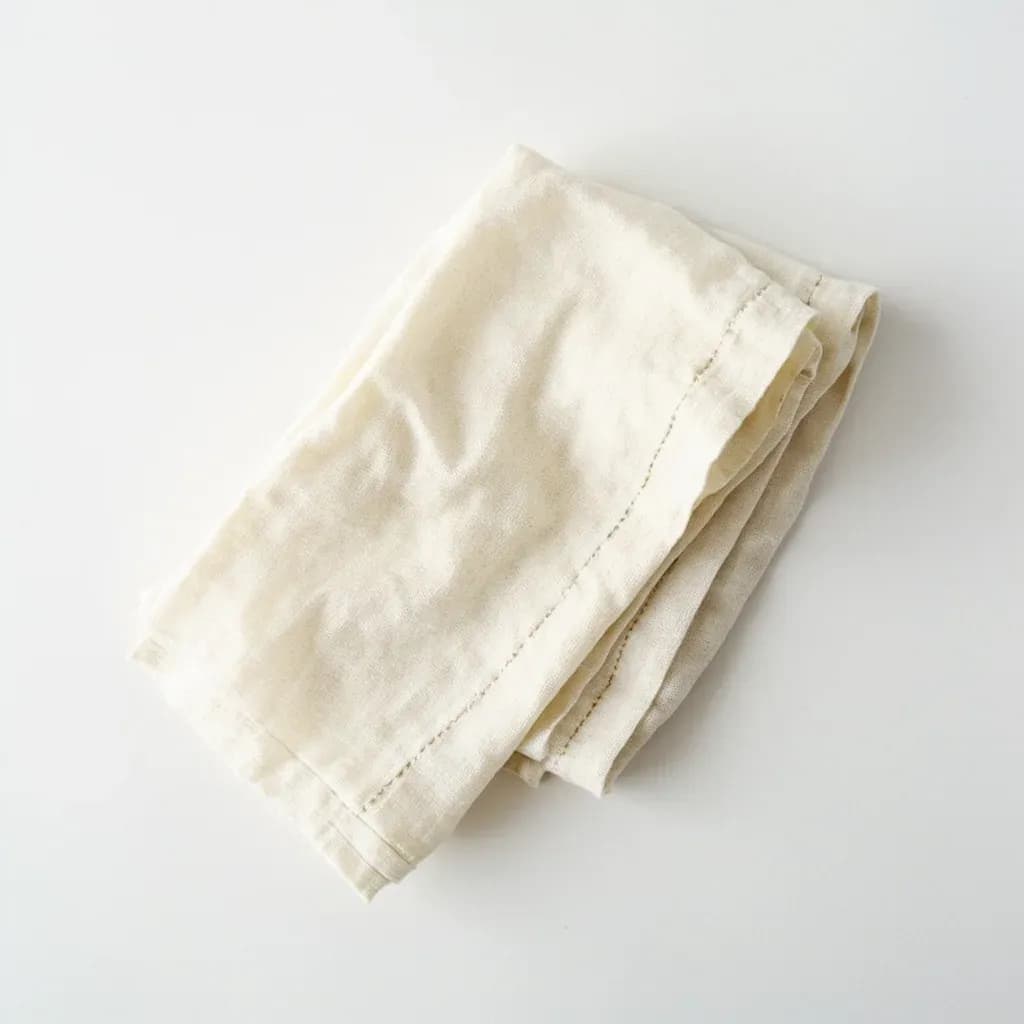
Thin cloth laid in a steamer to keep sticky foods from clinging and to wick excess water.
A thin cloth, often muslin or cheesecloth, lined inside a steamer basket so sticky rice, dumplings, or buns don't fuse to the surface. It also catches drips and lets steam pass through while keeping the food from getting waterlogged. Cooks use it for sticky rice, idli batter, and tamales as a reusable alternative to leaves or parchment.
A steaming cloth is a thin liner — most often a round of cotton or linen — laid inside a steamer basket to keep food from bonding to the surface and to manage the water that condenses on the lid and drips back down. The job sounds humble, but the liner is doing two distinct things at once: it gives sticky doughs (bao, mantou, rice cakes) a clean, slightly absorbent surface to release from, and it catches the droplets that would otherwise pit a glossy custard or pool on a piece of fish. In a bamboo steamer, where the slats are coarse and the wood soaks up pigment, sauce, and starch, the cloth is also what keeps the basket itself serviceable across many rounds of cooking.
Cotton and linen work because they breathe. Steam passes freely through the weave, but the fibers wick a thin film of moisture away from the food, which is exactly what gives a steamed bun a dry, matte skin and a delicate custard a smooth, even top. Modern substitutes — perforated silicone mats and pre-cut parchment rounds with steam holes — solve the release problem and the cleanup problem, but they do not wick. For most jobs that distinction does not matter; for custards, water-sensitive fish, and any dish where the surface must set and dry, it does.
In Cantonese dim sum kitchens, an unbleached muslin round in each bamboo tier is as standard as the bamboo itself, and the same cloths are rotated through service before being laundered at the end of the night. Choosing and caring for a cloth at home is mostly a matter of weave and discipline. A good muslin round, washed in hot water and fully dried between uses, will outlast several bamboo baskets and cost almost nothing.
Alternatives
Types & varieties
Loose-weave, lightweight cotton; cheapest and most disposable; often doubled or tripled for strength because a single layer is flimsy.
Tighter-weave cotton; reusable, holds up to many washings; the workhorse choice for serious home cooks and dim sum kitchens.
Most durable natural option; traditional in some Chinese kitchens; resists odor and mildew better than cotton.
Perforated round or rectangular mat; dishwasher-safe; does not absorb moisture, flavors, or pigment.
Pre-cut parchment with steam holes; a convenient disposable substitute; cannot be reused and does not wick.
Traditional Chinese liner; imparts a faint vegetal note and is edible, so it can be served with the dish.
Used as a liner or wrapper for sticky rice dishes; contribute a subtle grassy aroma in addition to functioning as a non-stick surface.
Cloth, parchment, or silicone: choosing the right liner
The three modern options solve overlapping but not identical problems, and a cook who understands the difference will reach for the right one instinctively.
- Cotton or linen muslin is the only choice that wicks. Reach for it when the surface of the food needs to stay dry and set: glossy custards, fish that should not sit in pooled water, steamed cakes with a tender top.
- Silicone perforated mats are the cleanest option for strong-flavored or pigmented foods — beets, turmeric, fish, shellfish — because they release odor and color in the dishwasher instead of holding onto it.
- Parchment rounds with steam holes are the right call for short, low-stakes jobs where you do not want to wash a cloth: reheating a single bun, steaming a vegetable side, cooking a one-off batch of dumplings.
- A bamboo steamer with coarse slats is the case where a cloth is most clearly superior to the alternatives; silicone and parchment can let small or soft foods sag through gaps that a tight-weave cloth will not.
Common uses
Tips & pitfalls
- Always dampen the cloth before placing it in the steamer; a dry edge that brushes the hot pot wall can scorch or, in extreme cases, ignite over a long cook.
- Do not let the cloth hang over the rim of the steamer or pot — tuck it flat so it only contacts the food or the bottom of the basket, keeping the cloth away from direct heat on the pot wall.
- Avoid terry cloth, flour-sack towels with thick weave, or any fabric with raised loops, which imprint on soft doughs and shed lint onto the food.
- Trim loose threads and replace the cloth once it thins, since frayed fibers transfer onto food and are harder to sanitize than a fresh round.
- Wash steaming cloths separately from kitchen towels and at high heat; they trap starch and protein that can sour and smell if left damp with the rest of the load.
- For long steaming sessions (30 minutes or more), check the water level underneath; the cloth does not block the boil, but dry-boil risk increases with time.
- If you steam strongly colored items (turmeric, saffron, beets), dedicate a cloth to that color so it does not tint neutral foods next time around.
- Silicone mats are the cleaner choice for fish and shellfish, since cotton can hold residual odor even after a thorough wash.
Good to know
- Primary materials
- Loose-weave cotton (cheesecloth), tighter-weave cotton (muslin), or plain linen; silicone perforated mats and pre-cut parchment rounds are the common modern alternatives.
- Typical size
- Cut to fit the steamer; 10–15 in (25–38 cm) rounds are standard for 8–10 in bamboo baskets.
- Weave
- Open enough to let steam through, tight enough to keep small foods (peas, grains of rice, tofu cubes) from falling through the slats or perforations.
- Bleached vs. unbleached
- Unbleached cotton is preferred when flavor transfer matters; bleached is whiter but has been chemically treated.
- Reusability
- Cheesecloth is single- or few-use; muslin and linen are washable and reusable for months; silicone mats last years.
- Heat tolerance
- Cotton and linen handle steam at 212 °F / 100 °C; the cloth should be pre-dampened so a dry edge does not scorch where it meets the pot wall.
- Care
- Wash in hot water with mild detergent; boil or bleach occasionally to prevent mildew and odor; replace when fibers thin or stain permanently.
- Cost
- Very low — a few dollars for enough cloth to last through many steaming sessions.
Also called
Steamer Cloth · Muslin Steaming Cloth
Related

Peeler
Swift blade for stripping skin off fruit and vegetables

Grater
Sharp-toothed surface for shredding cheese and vegetables

Microplane
Ultra-fine rasp for citrus zest, garlic, and hard cheese

Mixing Bowl
All-purpose bowl for combining, whisking, and tossing

Whisk
Looped wires that beat air into eggs, cream, and sauces

Spatula
Flat blade for flipping, lifting, and scraping

Slotted Spoon
Pierced spoon that lifts solids and drains the liquid behind

Wooden Spoon
Gentle, heat-friendly spoon for stirring anything