Appliances & Heat
Stovetop Pressure Cooker
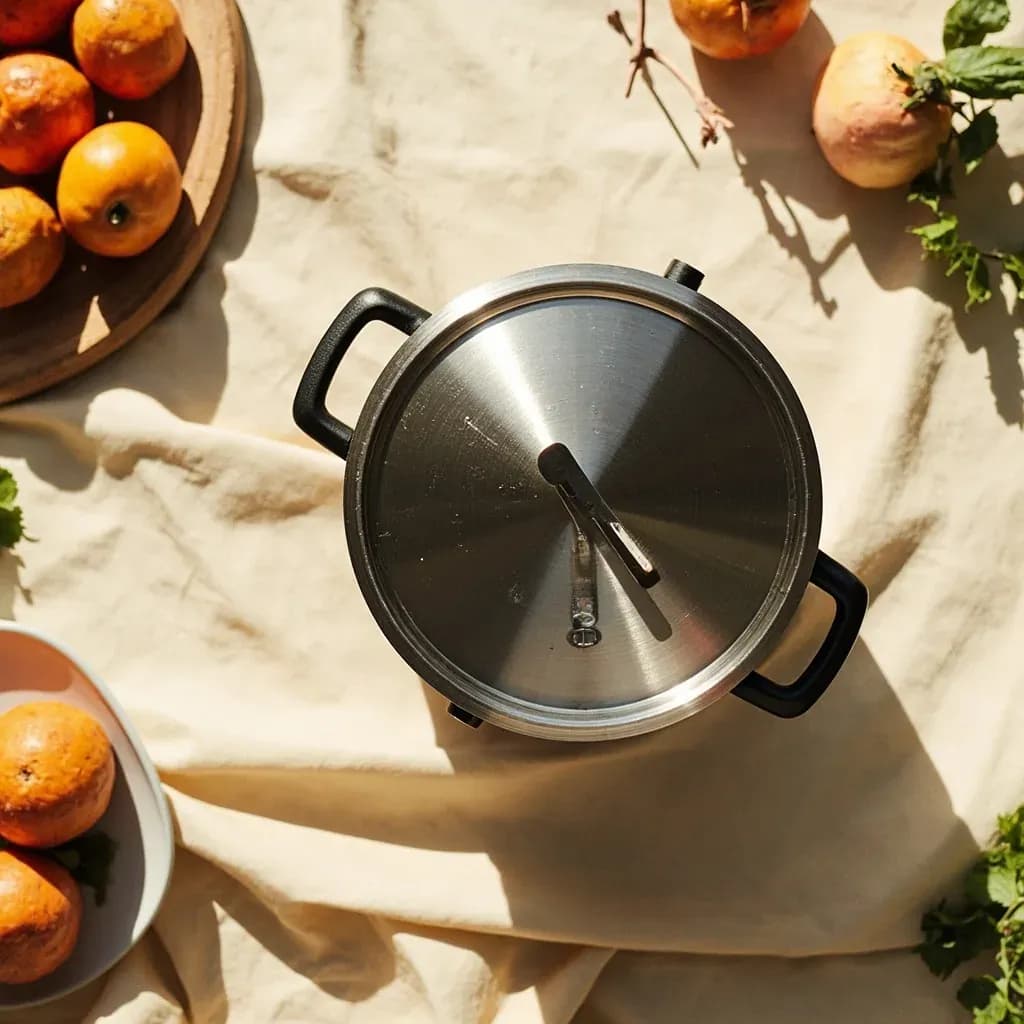
A sealed pot driven by a burner that reaches higher pressure and hotter steam than electric models, cutting beans, stocks, and braises to a fraction of the time with a faster heat response.
A stovetop pressure cooker is a heavy, lidded pot that seals in steam and uses the trapped pressure to push cooking temperatures well above the boiling point. At its standard 15 psi setting the interior reaches roughly 121°C / 250°F — meaningfully hotter than water's atmospheric boiling point of 100°C and several degrees hotter than most electric pressure cookers. That extra thermal headroom is what collapses a four-hour pot of beans into half an hour and turns a chuck roast fork-tender in 45 minutes.
The category dates to Denis Papin's 1679 'Steam Digester,' but the modern home unit took shape in the mid-20th century, when redundant safety valves and twist-lock lids made the device practical for ordinary kitchens. Unlike an Instant Pot–style electric cooker, a stovetop model draws heat directly from your burner, so it heats up, responds to flame adjustments, and cools down faster. That responsiveness is exactly why cooks who care about timing — searing a shoulder before braising, pulling a custard out before it curdles, dropping to low to hold a gentle jiggle — reach for a stovetop pot rather than a countertop unit.
The trade-off is vigilance: you manage the burner, watch the valve, and choose between natural and quick pressure release. For long-simmered foods that benefit from carryover cooking, that attention is an asset. For hands-off weeknight stews, an electric model is a fair substitute.
Alternatives
Types & varieties
Classic American style (Presto, Mirro). A small metal cap rocks on the vent, releasing steam in a steady rhythm at target pressure; a gentle, even jiggle — not a chattering flutter — is the goal.
Common on Fissler, Kuhn Rikon, WMF, and Lagostina. One valve body offers two pressure levels — typically ~8 psi for delicate fish or custards and ~15 psi for beans and braises.
A small pin or rod in the lid that rises as pressure builds and visually locks the lid. It's a status indicator, not the actual pressure regulator.
Lighter and cheaper, heats very quickly, common in Indian brands like Hawkins and Prestige. Plain aluminum reacts with acidic ingredients — choose anodized if you cook tomato or wine-based dishes.
Heavier, more durable, non-reactive, and induction-compatible. Well-regarded options include All-American (canners), Fissler, and Kuhn Rikon.
A 23-quart (and up) stovetop pressure cooker built around a jar rack. In the US, this is the only legal method for home-canning low-acid vegetables, meats, and fish.
Some brands (Kuhn Rikon, Fissler) sell a base pot that accepts a glass lid for everyday cooking and a pressure lid that locks on for pressure work — one pot, two functions.
How It Actually Cooks
A pressure cooker is a steam engine you happen to be cooking in. Sealing the lid traps the steam that would otherwise escape, and that trapped steam raises the boiling point of the liquid inside in direct proportion to the pressure — the same relationship that lets a sealed pot at 15 psi hit 121°C while an open pot stalls at 100°C. To hold a steady pressure, the pot continuously vents just enough steam to bleed off the excess. That constant, gentle vent is the 'jiggle' you hear and watch: when the rocking weight settles into an even rhythm, you've reached cooking temperature.
- 15 psi gives roughly 121°C / 250°F — a ~20% jump in available cooking temperature versus an uncovered pot.
- Pressure is regulated by venting steam, not by sealing the pot airtight; the vent is what holds the temperature steady.
- The liquid inside boils at 121°C, but with the lid sealed, that vapor is held in the pot as a moist, even heat bath — which is why food cooks gently rather than scorching on the bottom.
Managing Heat on the Burner
Unlike an electric pressure cooker, a stovetop unit has no thermostat — you are the thermostat. The single most important skill is learning to read the valve: bring the pot up to high heat until it reaches pressure, then dial down to the lowest flame that keeps the valve rocking in a steady, even rhythm. A valve that flutters wildly, hisses constantly, or chatters is a sign that you're wasting fuel and boiling off liquid you need.
- On a gas burner, medium-low to low is usually right once pressure is reached; on a strong induction burner, you may need the second-lowest setting or to pulse the heat.
- If the valve stops rocking entirely, your flame is too low and pressure is dropping — nudge it back up.
- Heavier stainless-clad pots hold heat longer and respond more slowly to burner changes than thin aluminum ones; plan a few seconds of lag into your adjustments.
Natural vs. Quick Release
How you drop the pressure is as important as how you built it. Natural release (NR) means letting the pot sit off the heat, dropping pressure on its own — usually 10 to 20 minutes. It's the right call for beans, stocks, braises, and anything foamy, because the gradual depressurization keeps meat juicy and gives starchy liquids time to settle so they don't spray out of the vent. Quick release (QR) means lifting the valve manually (with a long-handled spoon, never your hand) to vent steam on demand. Use it for vegetables, fish, custards, and anything you want to stop cooking the instant the timer ends.
- For very foamy or starchy foods, wait 5–10 minutes off heat before quick-releasing; this lets the foam collapse and keeps the vent from clogging.
- Many cooks default to NR for the first 5–10 minutes, then QR the rest of the way for foods that need to hold their shape.
- Running cold water over a hot stovetop lid to force a quick release is not recommended — it can warp the lid or drive thermal-shocked food residue into the vent.
Common uses
Tips & pitfalls
- Always add at least 1/2 to 1 cup of liquid — the pot cooks with steam, and without enough moisture it won't come up to pressure (and may scorch).
- Once the pot is at pressure, drop the burner to the lowest setting that keeps the valve rocking in a steady, gentle rhythm. A violent, chattering jiggle means the flame is too high and you're burning off liquid you need.
- Use natural pressure release for beans, stocks, and braises; use quick release for vegetables, seafood, and quick-cooking foods.
- Wait 5–10 minutes off heat before quick-releasing foamy or starchy foods (beans, grains, pasta water) to prevent the vent from spewing or clogging.
- Inspect the silicone gasket and the vent before every use. A cracked gasket or blocked vent is the single most common cause of pressure-cooker incidents — and both are easy to prevent.
- Replace the silicone or rubber gasket every 1–3 years (or sooner if it looks cracked, stiff, or misshapen), and remove it for long-term storage to prevent odor absorption and deformation.
- On older jiggler-style cookers, replace the rubber overpressure plug (the small red, white, or silicone disc in the lid) whenever it looks hard, swollen, or cracked. It's a deliberate weak point designed to vent safely if the primary valve ever fails.
- Never force the lid. Wait until pressure has fully dropped — on jiggler models, the weight will have stopped moving and dropped; on modern units, the lock indicator will have fully retracted.
- Avoid cold-shocking a hot stainless-clad unit with cold water — let it cool on its own to protect the cladding and prevent warping.
- Add thickeners (cream, butter, cornstarch slurry, reductions) after pressure cooking, not before. Starch-heavy liquids can clog the vent and impede pressure buildup.
Good to know
- Origin
- Invented by French physicist Denis Papin in 1679 as the 'Steam Digester'; the modern home version became widespread from the 1950s onward.
- Operating pressure
- Standard high pressure is 15 psi (about 1 bar gauge), giving an internal temperature of ~121°C / 250°F. Many European units also offer a lower ~8 psi setting for delicate foods.
- Materials
- Heavy-gauge aluminum (fast, even heating, often anodized) or tri-ply / 5-ply stainless-clad (durable, induction-compatible, non-reactive with acidic ingredients).
- Common sizes
- 4, 6, 8, 10, and 12 qt for general cooking; 23 qt 'pressure canners' (and larger) are sized to hold layers of jars for home canning.
- Heat source
- Gas, electric coil, induction (only on ferromagnetic or magnetic-stainless bases), or glass/ceramic cooktops. The base must sit flat for stability and even heat.
- Pressure regulators
- Jiggler or rocking weight (classic American), spring-loaded weighted valve with two settings (premium European), or pop-up indicator rods. The indicator is a visual aid only — pressure is still controlled by a separate vent valve.
- Safety features
- Modern units layer a primary pressure-release valve, a secondary overpressure plug (a small silicone or rubber disc in the lid), and a lid-lock that engages as pressure rises.
- Fill limits
- No more than 2/3 full for most foods; cap foaming foods (beans, grains, pasta, applesauce, dairy-rich soups) at 1/2 full to keep the vent clear.
Also called
stove-top pressure cooker · manual pressure cooker · burner pressure cooker
