Prep Tools
Tea Bowl
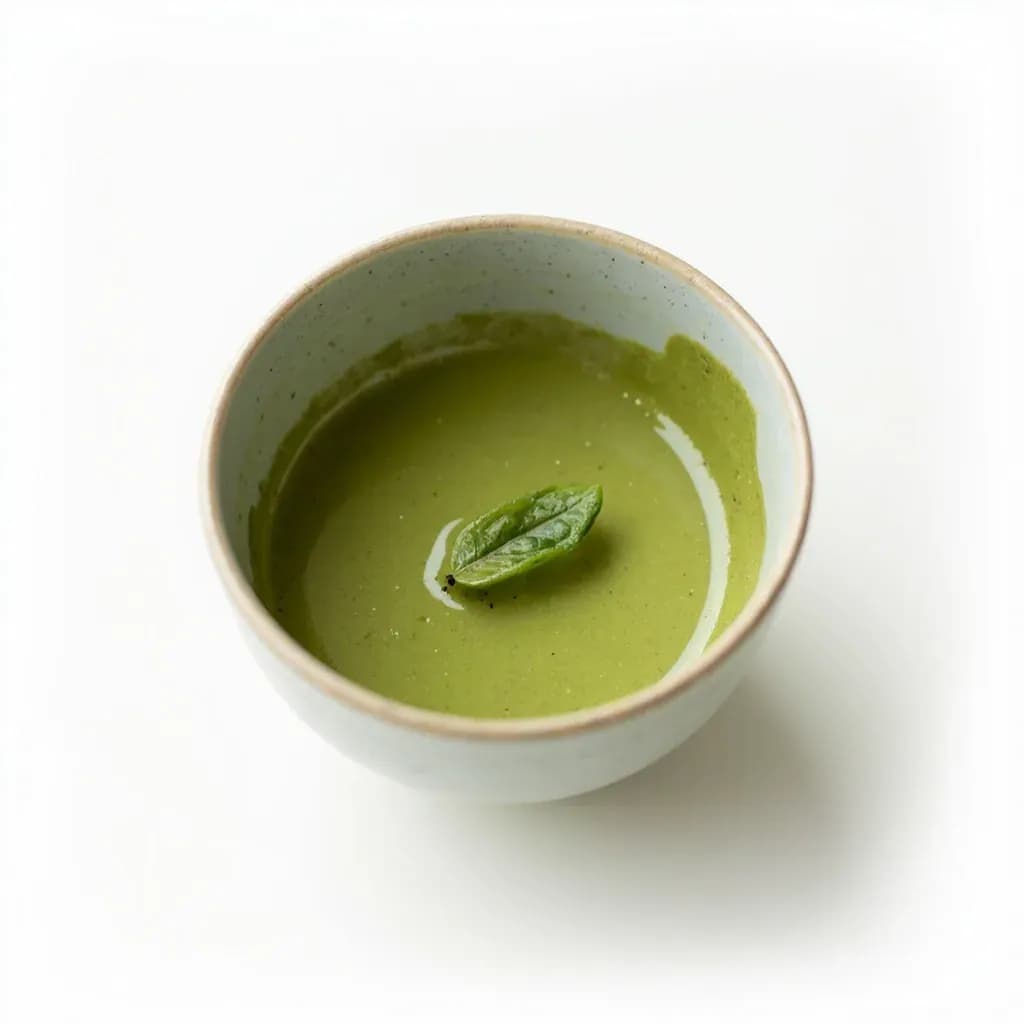
A handleless ceramic bowl for whisking and drinking powdered matcha tea.
A tea bowl (chawan) is a wide, handleless ceramic bowl in which powdered matcha is whisked with hot water and then drunk directly from the rim. Its broad, rounded interior gives the bamboo whisk room to froth the tea. Shapes vary by season, wider and shallow for summer cooling, deeper for winter warmth.
The chawan, or Japanese tea bowl, is a handleless ceramic vessel used to whisk and drink matcha in the context of the tea ceremony (chanoyu) and well beyond it. Where a Western cup or mug is built to insulate the hand from heat and to be gripped by a handle, the chawan is built to be cradled in both palms, its thick walls conducting gentle warmth into the drinker's hands while the broad, open mouth gives a bamboo chasen room to move. That open mouth is not incidental: it is the geometry that allows matcha to be aerated into the fine, pale crema that defines properly made usucha, and it is the same geometry that lets a guest bow, rotate the bowl, and drink from the 'face' presented to them — a choreography encoded in the rim itself.
Although the bowl's earliest ancestors are Chinese tea cups of the Tang and Song dynasties (and the conical Tenmoku form is a direct descendant of Song-dynasty jianzhan), the chawan as we know it was shaped by the wabi-cha aesthetic formalized in 16th-century Japan by Sen no Rikyū. Rikyū and his contemporaries turned away from ornate, imported Chinese karamono in favor of rough, irregular, hand-built vessels — raku, hagi, bizen — and the Japanese tea bowl has carried that wabi sensibility ever since: a small, warm, asymmetric object meant to be felt as much as seen.
Two overlapping axes of variation define any chawan: the ware (the clay-and-glaze tradition it comes from) and the form (its silhouette). Raku, Hagi, Karatsu, Bizen, Shigaraki, and Mashiko are wares — they describe kiln, clay, and glaze. Chigusa, Natsume, Kutsuwa, and Ido are forms — they describe the shape the maker threw or pinched. A bowl can be a Hagi-ware chigusa, a Raku-ware kutsuwa, or a Bizen-ware ido, and each combination carries a slightly different weight, balance, and mouth feel in the hand.
Alternatives
Types & varieties
The classic rounded, gently flared form — the most common everyday chawan shape.
A slightly taller, near-cylindrical profile with more upright walls; named for the shape's resemblance to a jujube (and the natsume tea caddy).
Wheel-thrown, taller, more vertical sides with a defined lip; well suited to usucha and to slow sipping.
Deep, conical Korean-inspired form with a small spur foot, prized in chanoyu for koicha and for slow sipping.
Conical bowl with dark iron-rich glaze; modeled on Song-dynasty Chinese originals.
Hand-shaped, low-fired lead-glazed bowls descended from Chōjirō, the maker Rikyū patronized; iconic in wabi-cha.
Yamaguchi Prefecture; porous, off-white crackling glaze that absorbs tea and changes over years of use.
Saga Prefecture; sturdy stoneware with natural-ash and iron glazes, often with painted motifs.
Okayama Prefecture; unglazed, reddish stoneware prized for its warm, earthy feel in the hand.
Shiga Prefecture; coarse reddish clay often marked by natural ash-glaze drips and kiln effects.
Tochigi Prefecture; robust, folk-style stoneware popularized by potter Shōji Hamada.
Oversized tea bowl (often 14–18 cm) for casual thick tea, modern soup, or porridge service.
Form vs. Ware: Two Axes of Variation
When shopping for or reading about chawan, it helps to separate two vocabulary systems that get conflated in casual writing. The form (kata) describes the silhouette — chigusa, natsume, kutsuwa, ido, tenmoku — and answers 'what shape is it?' The ware describes the clay and glaze tradition — raku, hagi, karatsu, bizen, shigaraki, mashiko, seto — and answers 'where and how was it made?' A single bowl can be described on both axes (a Hagi chigusa, a Raku ido), and the combination strongly affects its feel: a raku chigusa is featherlight and irregular, a hagi chigusa is heavier and chalky, a bizen chigusa is dense and warm.
- Chigusa, natsume, and kutsuwa are the everyday usucha forms; ido and ōchawan lean toward koicha and slow sipping.
- Wares from Hagi, Bizen, Shigaraki, and Mashiko tend to be unglazed or matte; raku, karatsu, and seto include both matte and glossy traditions.
- Tenmoku is unusual: it names both a form (the conical Song-derived cup) and, in some uses, a ware tradition built around that form.
Care and Longevity
A chawan is a working tool, not a display piece, but its lifespan depends on matching the bowl to the way you use it. Porous wares (raku, hagi) absorb tea over time and develop a patina that many tea drinkers prize; this patina is fragile, however, and harsh detergents or sudden temperature swings can craze the glaze or crack the body. Dense wares (bizen, shigaraki, tenmoku) are more forgiving in the kitchen but can fade in direct sun because of their iron-rich surfaces.
- Rinse with warm water only; avoid soap on porous raku and hagi to preserve the patina.
- Never run a chawan through a dishwasher or microwave — thermal shock is the most common cause of cracking.
- Air-dry rim-up on a folded cloth; store out of direct sunlight, especially dark-glazed and iron-rich wares.
- Crackle-glazed hagi will continue to develop new fine lines for years; this is normal and considered a virtue, not damage.
Common uses
Tips & pitfalls
- Warm the bowl (chawan-yurashi) with hot water for 10–20 seconds before adding matcha — cold ceramic drops the temperature and dulls the foam.
- Sift matcha (1–2 chashaku scoops, about 2 g) through a fine sieve into the dry bowl to prevent clumps that the chasen cannot break up.
- Whisk with a bamboo chasen, not a metal whisk — bamboo builds the characteristic fine microbubble crema and won't scratch the bowl's glazed surface.
- Hold the bowl in the palm of your non-dominant hand with your thumbs near the rim and sip from the front so your lips touch only the maker's glazed surface (the omote, or 'face').
- Rotate the bowl twice in your palms before passing it to a guest (or before setting it down) so the 'face' is presented away from you — a small ritual with real practical etiquette.
- Match bowl form to use: a flatter, wider chawan whips a better usucha foam, while a kutsuwa's tall vertical walls or an ido's conical depth support slow sipping and koicha.
- Avoid putting porous raku or hagi bowls in a dishwasher or microwave; thermal shock is the fastest way to crack the body and strip the patina.
- Leave the last sip (nokizake) — a small swallow of sediment at the bottom is considered a sign of respect for the tea and the maker, not sloppy technique.
Good to know
- Japanese name
- Chawan (茶碗)
- Origin
- Japan; evolved from Chinese tea bowls introduced with Zen Buddhist tea culture (~9th century) and codified in chanoyu during the 16th century
- Material
- Ceramic — earthenware, stoneware, or porcelain; hand-built or wheel-thrown
- Typical dimensions
- 11–13 cm diameter × 6–9 cm tall; small styles 8–10 cm; large ōchawan up to 15–18 cm
- Capacity
- ~150–250 ml, holding about 60–90 ml of whisked matcha per serving
- Key associated tools
- Chasen (bamboo whisk) and chashaku (bamboo scoop)
- Companion dish
- Chawan-mushi (savory steamed egg custard) takes its name from this vessel
- Heat tolerance
- Stoneware and earthenware retain heat well; porous raku and hagi are vulnerable to thermal shock
Also called
Chawan · Matcha Bowl · Tea Bowl (Käse)
Related

Peeler
Swift blade for stripping skin off fruit and vegetables

Grater
Sharp-toothed surface for shredding cheese and vegetables

Microplane
Ultra-fine rasp for citrus zest, garlic, and hard cheese

Mixing Bowl
All-purpose bowl for combining, whisking, and tossing

Whisk
Looped wires that beat air into eggs, cream, and sauces

Spatula
Flat blade for flipping, lifting, and scraping

Slotted Spoon
Pierced spoon that lifts solids and drains the liquid behind

Wooden Spoon
Gentle, heat-friendly spoon for stirring anything